

Airborne eDNA, Beetle Jumps, Wordle Psychology, City Pigeons. Jan 21, 2022, Part 2
Science Friday21 Jan 2022

Airborne eDNA, Beetle Jumps, Wordle Psychology, City Pigeons. Jan 21, 2022, Part 2

Identifying Animals Through Airborne DNA

In recent years, the technique of eDNA—environmental DNA, or samples taken from the environment, as opposed to from a specific animal—has changed ecology research. Scientists have learned how to obtain eDNA from water samples, soil, and even the intestinal tract of other animals. Writing recently in the journal Current Biology, two different groups report that air samples collected with filters in a zoo can provide enough DNA to paint a partial picture of the species living in and around the zoo.

After taking over 72 samples from 20 sites around a zoo in the UK, Dr. Elizabeth Clare and colleagues brought their trove back to the lab, and were able to identify 25 different species living in and around the zoo. Some were expected zoo inhabitants, and others were surprises—including DNA from a species of endangered European hedgehog. At the same time, a separate group of researchers performed a similar analysis on a Danish zoo, and achieved similar results.

Dr. Clare joins Ira Flatow to talk about the research, and what the technique of eDNA might be able to bring to the world of conservation ecology.

These Beetles Go Boing

There are plenty of insect species that jump—leafhoppers, crickets, fleas, and more. Some use powerful legs to take to the air. Others, like the click beetle, rely on a latching mechanism built into their bodies to build up energy, then release it suddenly. But writing in the journal PLOS One this week, researchers report that they’ve spotted a species of lined flat bark beetle (Laemophloeus biguttatus) that uses a different method to jump—the beetle larvae dig into a surface with tiny claws, flex, and build up energy, before releasing it and flinging itself into the air in a tiny ring.

“It was really exciting to know that we had seen something possibly for the first time and definitely reported for the first time,” said Matt Bertone, an entomologist at NC State University and one of the authors of the report. The jumps themselves aren’t very impressive—only a few body lengths—but the discovery of a new mechanism that doesn’t rely on a specialized body part is intriguing. The authors aren’t quite sure why the larvae, which live under tree bark, have evolved the jumping behavior, but hypothesize that it may be to rapidly move when their bark habitat is disturbed.

Bertone joins Ira to talk about the unique form of locomotion, and where the researchers might look next for the behavior.

This is Your Brain on Wordle

Five letters, six tries to guess a word. That’s the simple conceit behind Wordle, the new puzzle game that’s sweeping the internet. More than 2.5 million people play this word game, its creator told NPR. The word changes each day and is the same for everyone who plays. Each letter guessed right brings the player one step closer to solving the puzzle. It’s free and simple, and according to many players, completely addictive.

But why is such a simple game so compelling? And how does it compare to viral games of the past, like Pokemon Go or Words with Friends?

Ira is joined by Dr. Matthew Baldwin, assistant professor in social psychology at the University of Florida in Gainesville, Florida, to unlock the reasons why Wordle both satisfies the brain and brings us closer to our peers.

Pigeons Are More Than Pests

Pigeons lead much-maligned lives in our cities. They eat what’s edible from our trash, and live much of their lives at street level. So it’s no surprise, perhaps, that the name ‘rats with wings’ has reached the level of a cultural meme.

But author Rosemary Mosco wants you to think again. Instead of seeing vermin, you might consider the pigeon much like a stray dog or cat. In her recent book, A Pocket Guide to Pigeon-Watching, Mosco details the history of pigeon domestication—as much as it can be known—including millennia of humans raising pigeons to eat, as well as cherishing them for their nutrient-rich poop. More recently, people painstakingly bred fancy varieties like the frillback and the fantail. And yes, your local city pigeon is descended from those beloved birds.

Producer Christie Taylor talks to Mosco about the underappreciated history of pigeons. Plus, fun facts about their feral, city-dwelling kin, from the self-congratulatory wing-claps to the secret lives of baby pigeons.

Subscribe to this podcast. Follow our show on Instagram, TikTok, Facebook, and Bluesky @scifri and sign up for our newsletters. Got a science question that’s keeping you up at night? Call us: 877-472-4374


Hosted by Simplecast, an AdsWizz company. See pcm.adswizz.com for information about our collection and use of personal data for advertising.

Det här avsnittet är hämtat från ett öppet RSS-flöde och publiceras inte av Podme. Det kan innehålla reklam.

Avsnitt(1382)

Creating 'world models' for robots + An AI math shakeup

Creating 'world models' for robots + An AI math shakeup

When you ask an LLM like ChatGPT or Claude a question, the model goes through its massive amount of training data and guesses the answer by mathematically predicting the word most likely to appear nex...

19 Aug 17min

What can moments of lucidity teach us about Alzheimer’s?

What can moments of lucidity teach us about Alzheimer’s?

Watching a loved one with Alzheimer's or dementia slowly lose their cognitive abilities can be heartbreaking. While the person you once knew seems to be slipping away, sometimes people with Alzheimer'...

18 Aug 17min

Colorado’s snow drought deals a major blow to recreation

Colorado’s snow drought deals a major blow to recreation

Winter in Colorado looked very different this year. Many parts of the state experienced record-high temperatures and record-low snowpack, which had downstream effects on farming, sports, tourism, and ...

17 Aug 11min
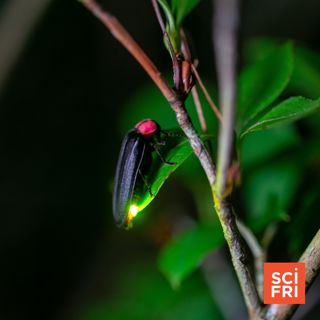
How do you find a ‘lost’ species?

How do you find a ‘lost’ species?

The earth is facing a biodiversity crisis, and there’s a lot of attention on species that are threatened, or at risk of dying out completely. But, there’s another critter category that’s a little more...

14 Aug 18min

What we get wrong about vaccine hesitancy

What we get wrong about vaccine hesitancy

President Trump has signed an executive order calling for a change to the childhood vaccination schedule. Specifically, he wants to separate the MMR vaccine, which protects against measles, mumps, and...

13 Aug 12min

Why this lab studies the speed of bug pee and other curiosities

Why this lab studies the speed of bug pee and other curiosities

In a lab in the Rocky Mountains, a group of scientists is hard at work trying to find answers across biology, physics, and engineering: They’re looking into things like the hydrodynamics of insect pee...

12 Aug 18min
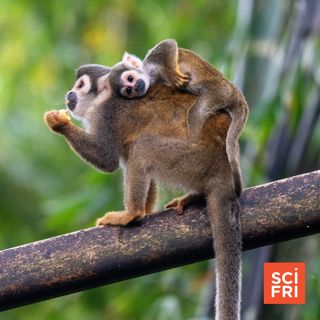
Some primates undergo even more extreme childbirth than humans

Some primates undergo even more extreme childbirth than humans

Human childbirth is often difficult and incredibly painful—just ask anyone who’s been through it. And for a long time, childbirth seemed to be uniquely difficult for humans. But a new study suggests t...

11 Aug 11min

Deb Haaland is a politician, and proud of it

Deb Haaland is a politician, and proud of it

Former Interior Secretary Deb Haaland, a member of the Laguna Pueblo tribe, was the first Native person to hold a cabinet position. Now she’s running to be governor of New Mexico.  Haaland joins Host ...

10 Aug 17min

Populärt inom Vetenskap

dumma-manniskor
p3-dystopia
allt-du-velat-veta
hacka-livet
rss-vetenskapsradion
ufo-sverige
svd-nyhetsartiklar
bildningspodden
rss-vetenskapsradion-2
halsorevolutionen
rss-spraket
medicinvetarna
sexet
barnpsykologerna
vetenskapsradion
det-morka-psyket
paranormalt-med-caroline-giertz
rss-ufobortom-rimligt-tvivel
ufo-sverige-2
rss-kriminologerna