
Covid Court Cases, Sharing Viruses for Research, Hepatitis Spike. April 29, 2022, Part 1
Science Friday29 Apr 2022

Covid Court Cases, Sharing Viruses for Research, Hepatitis Spike. April 29, 2022, Part 1

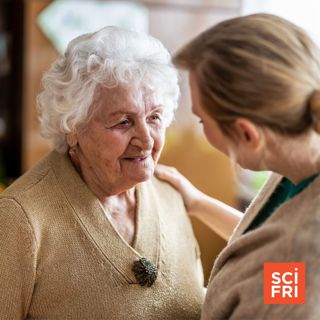
What’s Up With The Spike In Hepatitis Among Young Kids?

This spring, there’s been a strange spike in hepatitis cases among young children. Hepatitis can leave kids with stomach pain, jaundice, and a generally icky feeling. 169 cases have been recorded globally, and one death. A majority of these cases have been found in the United Kingdom, with the others in Spain, Israel, and the U.S.

The sudden rise in cases is unusual, and physicians are trying to unlock the mystery of where this is coming from.

Joining guest host Umair Irfan to talk about this story and other science news of the week, including the holdup over COVID-19 vaccines for kids under five years old, is Science Friday producer Kathleen Davis.

COVID-19 Vaccines Are Some Divorced Parents’ Newest Divide

Heather and Norm have had their share of disagreements. Their separation seven years ago and the ensuing custody battle were contentious. But over the years, the pair has found a way to weather disputes cordially. They’ve made big decisions together and checked in regularly about their two kids, now ages 9 and 11.

But the rhythm of give and take they so carefully cultivated came to an abrupt end last fall, when it came time to decide whether to vaccinate their kids against COVID-19 — Heather was for it; Norm was against. (WHYY News has withheld their last names to protect the privacy of their children.)

In Pennsylvania, decisions about children’s health must be made jointly by parents with shared legal custody, so the dispute went to court. And Heather and Norm weren’t the only ones who couldn’t come to an agreement on their own. In the months since the vaccine was approved for children, family court judges across the commonwealth have seen skyrocketing numbers of similar cases: Divorced parents who can’t agree on what to do.

Read the rest at sciencefriday.com.

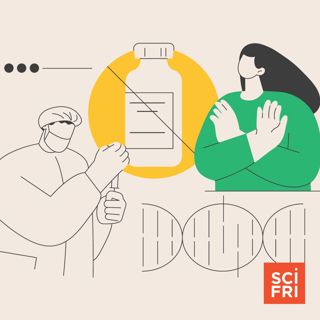
Why Sharing Viruses Is Good… For Science

The COVID-19 pandemic has sparked an unprecedented era of global scientific collaboration. Just a few days after the SARS-CoV-2 virus was isolated, its genomic sequence was posted online and accessible to researchers around the world. Scientists quickly went to work trying to understand this brand new pathogen, and began to counter it with treatments and vaccines.

But genetic sequences have their limits, and scientists also have to work with the real viruses. Sometimes there’s no substitute for a specimen. Sharing pathogens across borders is where things get a lot more complicated. A web of international laws govern some, but not all aspects of how pathogens are shared and stored. Science isn’t the only factor here—global politics shape responses to the tracking and detection of disease.

What happens if countries are not on the friendliest terms with each other, or if they aren’t up to the same safety standards? Could viruses be misused or mishandled, potentially escaping containment? There are some historical examples that could be instructive. And while the COVID-19 pandemic spurred cooperation between scientists, some governments downplayed or misled the world about the state of the pandemic. Does misinformation remain a threat, and if so, how can we prevent it?

Guest host Umair Irfan talks with Amber Hartman Scholz, head of science policy at Leibniz Institute DSMZ German Collection of Microorganisms and Cell Cultures based in Braunschweig, Germany, to unpack the complex system of scientific virus sharing, and the importance of developing a better process.

Transcripts for each segment will be available the week after the show airs on sciencefriday.com.

Subscribe to this podcast. Follow our show on Instagram, TikTok, Facebook, and Bluesky @scifri and sign up for our newsletters. Got a science question that’s keeping you up at night? Call us: 877-472-4374


Hosted by Simplecast, an AdsWizz company. See pcm.adswizz.com for information about our collection and use of personal data for advertising.

Det här avsnittet är hämtat från ett öppet RSS-flöde och publiceras inte av Podme. Det kan innehålla reklam.

Avsnitt(1340)

Can you learn to love the scorpion?

Can you learn to love the scorpion?

If you have arachnophobia, consider this your opportunity to try exposure therapy: A new study suggests that 415 million years ago, in modern-day England and Wales, a scorpion the length of a golden r...

23 Juni 18min

FDA approves a well-known sunscreen ingredient—finally

FDA approves a well-known sunscreen ingredient—finally

The FDA recently approved a sunscreen ingredient called bemotrizinol, or BEMT, that’s been used in Europe and Asia for years. This is the first new sunscreen ingredient approved in the United States i...

22 Juni 12min

Why do sports announcers talk like that?

Why do sports announcers talk like that?

If you watch sports, whether the recent NBA finals or the ongoing World Cup matches, you may have noticed that the athletes aren’t the only ones putting on a show. The announcers seem to be playing a ...

19 Juni 13min

Swords, cannibalism, poison: inside the world of killer microbes

Swords, cannibalism, poison: inside the world of killer microbes

There is a murderous crime spree happening right under—and perhaps inside—our noses. Killer microbes armed with weapons are eviscerating, assassinating, and detonating their fellow microbes. And the n...

18 Juni 21min

When music transports you to a different place

When music transports you to a different place

Do you ever hear a song that transports you to a specific place and time? This auditory wormhole has a name: musical daydreams. Music cognition expert Elizabeth Margulis studies why they happen, and w...

17 Juni 18min

A vast whale graveyard + Zombie sea cucumbers

A vast whale graveyard + Zombie sea cucumbers

Researchers just published details of a massive undersea graveyard of whales deep in the Indian Ocean. Spanning about 1,200 kilometers (745 miles), it contains whale remains dating back more than 5 mi...

16 Juni 18min

Should we bring mountain lions back to the Northeast?

Should we bring mountain lions back to the Northeast?

Big cats used to roam the entire United States. You might know them as mountain lions, pumas, cougars, or catamounts. Though they go by many names, they're actually all the same species.  Their curren...

15 Juni 12min

Blue Origin explosion hits NASA timeline + Artemis III crew

Blue Origin explosion hits NASA timeline + Artemis III crew

When Blue Origin’s New Glenn spacecraft exploded in an enormous fireball during a ground test a couple weeks ago, it sent shockwaves not only through the air, but through NASA’s timeline for the upcom...

12 Juni 12min

Populärt inom Vetenskap

p3-dystopia
dumma-manniskor
doden-hjarnan-kemisten
allt-du-velat-veta
medicinvetarna
svd-nyhetsartiklar
rss-kriminologerna
kapitalet-en-podd-om-ekonomi
sexet
bildningspodden
ufo-sverige
rss-ufobortom-rimligt-tvivel
rss-vetenskapsradion-2
dumforklarat
rss-vetenskapsradion
4health-med-anna-sparre
halsorevolutionen
rss-arkeologi-historia-podden-som-graver-i-vart-kulturlandskap
hacka-livet
rss-ronden