Roe V. Wade Overturned, Animals’ Amazing Sensory Abilities. June 24, 2022, Part 1
Science Friday24 Juni 2022

Roe V. Wade Overturned, Animals’ Amazing Sensory Abilities. June 24, 2022, Part 1

U.S. Supreme Court Overturns Roe V. Wade

The U.S. Supreme Court decided Friday to overturn Roe v Wade. While there have been rumblings that this decision was going to happen, it’s still a shock to many people in the U.S.

In early May, a draft opinion was leaked that had circulated among the court justices, showing a majority of them were in support of the overturn. This will have huge ripple effects throughout the U.S. when it comes to reproductive healthcare.

A study from the University of California predicts a quarter of abortion clinics in the U.S. are likely to shut down under this rule, with the biggest impact in the South and Midwest.

Guest host Maddie Sofia talks with SciFri radio producer Kathleen Davis about what’s next for abortion rights in America and other science news of the week, including evidence of community transmission of polio in London and Canada’s single-use plastic ban.

The Millions Of Ways Animals Sense The World

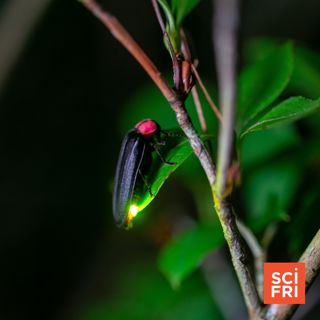
A shark tracks its victims by smell, but uses the unmissable signal of a fish’s electrical field to make its final strike. Fire-chaser beetles can detect the heat of distant forest fires with specialized cells in their heads. Baby tree frogs can detect the seismic signals of a striking snake from within the egg—and seem to hatch earlier in defense. And the prey-hunting visual system of one unassuming-looking Mediterranean fly, known as the killer fly, works faster than any other species we’ve observed.

All of these are examples of an animal’s umwelt, their specialized sensory bubble or window onto the world, as described by German biologist Jakob Johann von Uexküll over one hundred years ago.

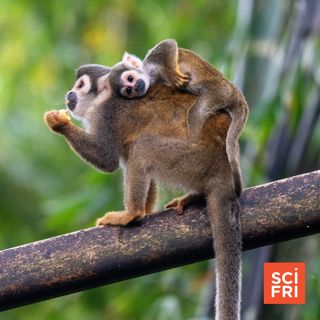
As science writer Ed Yong writes in his newest book, An Immense World: How Animal Senses Reveal The Hidden Realms Around Us, our history of studying animals’ umwelten has been fraught with hubris, misunderstandings, and mistakes. But bit by bit, we’re learning to appreciate the truly spectacular perceptive abilities of the owl, the elephantfish, and the humble jumping spider.

Yong joins guest host Maddie Sofia to share stories of amazing animal sensory abilities and the challenges of both imagining and describing these other realms using human-centric language. Plus, the uniquely human capacity to imagine other animals’ umwelten, and how we can use it to make the world better for them.

Transcripts for each segment will be available the week after the show airs on sciencefriday.com.

Subscribe to this podcast. Follow our show on Instagram, TikTok, Facebook, and Bluesky @scifri and sign up for our newsletters. Got a science question that’s keeping you up at night? Call us: 877-472-4374


Hosted by Simplecast, an AdsWizz company. See pcm.adswizz.com for information about our collection and use of personal data for advertising.

Det här avsnittet är hämtat från ett öppet RSS-flöde och publiceras inte av Podme. Det kan innehålla reklam.

Avsnitt(1340)

Can you learn to love the scorpion?

Can you learn to love the scorpion?

If you have arachnophobia, consider this your opportunity to try exposure therapy: A new study suggests that 415 million years ago, in modern-day England and Wales, a scorpion the length of a golden r...

23 Juni 18min

FDA approves a well-known sunscreen ingredient—finally

FDA approves a well-known sunscreen ingredient—finally

The FDA recently approved a sunscreen ingredient called bemotrizinol, or BEMT, that’s been used in Europe and Asia for years. This is the first new sunscreen ingredient approved in the United States i...

22 Juni 12min

Why do sports announcers talk like that?

Why do sports announcers talk like that?

If you watch sports, whether the recent NBA finals or the ongoing World Cup matches, you may have noticed that the athletes aren’t the only ones putting on a show. The announcers seem to be playing a ...

19 Juni 13min

Swords, cannibalism, poison: inside the world of killer microbes

Swords, cannibalism, poison: inside the world of killer microbes

There is a murderous crime spree happening right under—and perhaps inside—our noses. Killer microbes armed with weapons are eviscerating, assassinating, and detonating their fellow microbes. And the n...

18 Juni 21min

When music transports you to a different place

When music transports you to a different place

Do you ever hear a song that transports you to a specific place and time? This auditory wormhole has a name: musical daydreams. Music cognition expert Elizabeth Margulis studies why they happen, and w...

17 Juni 18min

A vast whale graveyard + Zombie sea cucumbers

A vast whale graveyard + Zombie sea cucumbers

Researchers just published details of a massive undersea graveyard of whales deep in the Indian Ocean. Spanning about 1,200 kilometers (745 miles), it contains whale remains dating back more than 5 mi...

16 Juni 18min

Should we bring mountain lions back to the Northeast?

Should we bring mountain lions back to the Northeast?

Big cats used to roam the entire United States. You might know them as mountain lions, pumas, cougars, or catamounts. Though they go by many names, they're actually all the same species.  Their curren...

15 Juni 12min

Blue Origin explosion hits NASA timeline + Artemis III crew

Blue Origin explosion hits NASA timeline + Artemis III crew

When Blue Origin’s New Glenn spacecraft exploded in an enormous fireball during a ground test a couple weeks ago, it sent shockwaves not only through the air, but through NASA’s timeline for the upcom...

12 Juni 12min

Populärt inom Vetenskap

p3-dystopia
dumma-manniskor
doden-hjarnan-kemisten
allt-du-velat-veta
medicinvetarna
svd-nyhetsartiklar
rss-kriminologerna
kapitalet-en-podd-om-ekonomi
sexet
bildningspodden
ufo-sverige
rss-ufobortom-rimligt-tvivel
rss-vetenskapsradion-2
dumforklarat
rss-vetenskapsradion
4health-med-anna-sparre
halsorevolutionen
rss-arkeologi-historia-podden-som-graver-i-vart-kulturlandskap
hacka-livet
rss-ronden