Antibiotic Resistance, Space Launches and the Environment, Phage Therapy.  May 5, 2023, Part 2
Science Friday5 Maj 2023

Antibiotic Resistance, Space Launches and the Environment, Phage Therapy. May 5, 2023, Part 2

SpaceX Explosion Damages Environment Around Launch Site

Last Thursday, SpaceX’s South Texas facility was awash in noise and fire, as crowds gathered in South Padre Island and Port Isabel to watch Starship’s first orbital launch.

It was the largest and most powerful rocket ever made, standing at around 400 feet tall. Four minutes into the launch, SpaceX detonated the rocket after the SuperHeavy booster failed to separate from the Starship as planned.

The launch destroyed the company’s launch pad, spreading concrete up to three quarters of a mile away. Cameras left by YouTubers were either knocked down or destroyed in the rumble, along with some of the fence surrounding the launch pad’s road-facing property.

To read the rest, visit sciencefriday.com.

The Private Space Race Takes A Toll On Planet Earth

After the SpaceX explosion last month, debris wasn’t the only thing on the minds of Science Friday listeners. The following messages arrived in our inbox after we reported on 3-D printed rockets in March.

It was interesting to hear you discuss 7 space launches in 5 days, and then just moments later the fact that we’re not on track to reduce carbon emissions. My understanding is that rocket launches release huge amounts of carbon and other greenhouse gases. Story idea?—@RevBobIerien, Twitter

Also regarding the 3-D rockets there wasn’t any concern made for space pollution was there? I may have tuned out unhappily before the end. —Juanita H, email

How much carbon do rockets contribute to global warming? —Robert C, email

Very disappointing to hear the report of new “cheaper” 3D-printed rockets are available so that, like fast food pods and big gulps, we can now drop even more cheap **** into the ocean. And, *immediately* following a story about the new report on climate change, what exactly is the carbon footprint resulting from the ability of more people to more cheaply fire rockets into space? —David M, email

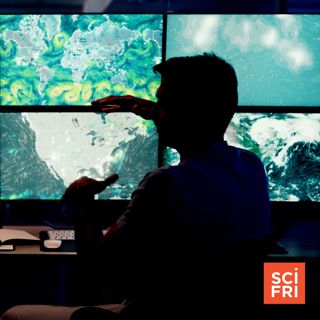
Carbon isn’t the big pollutant that comes from spaceflight, says Dr. Eloise Marais, associate professor in physical geography at University College London. Instead, black carbon or soot particles are generated and released directly into the atmosphere, alongside reactive nitrogen and nitrogen oxides.

Dr. Marais joins Ira to talk about how much of an impact increased rocket launches could have on the atmosphere, and how that compares to the auto industry.

How To Combat The Antibiotic Resistance Crisis

For years scientists have been ringing alarm bells about a global antibiotic resistance crisis. Now hospitals and healthcare facilities face the consequences: In the United States, there are 2.8 million antimicrobial-resistant infections every year, and more than 35,000 people die from these infections.

Bacteria naturally try to outsmart the drugs designed to kill them, which causes treatments to become ineffective over time. While new antibiotics are made to respond to these resistant strains, the bacteria continue to evolve—creating a constant, and costly, cycle. There’s a number of added factors driving the crisis, including antibiotic use in livestock and the general overprescription of antibiotics. About 1 in 3 antibiotic prescriptions in outpatient settings like urgent care or emergency departments are unnecessary.

Scientists are struggling to keep up with the need to replace antibiotics that no longer work. It’s a never ending game of catch up.

Ira discusses some of the possible solutions to this vexing problem and takes listener questions with Dr. Victor Nizet, faculty lead of the Collaborative to Halt Antibiotic-Resistant Microbes at the University of California San Diego and Dr. Eddie Stenehjem, executive vice chair of medicine at the University of Colorado.

Are Phages A New Page In Medicine?

One of the many possible solutions to the global antibiotic resistance crisis is an old idea that’s new again—bacteriophages, or phages for short.

Phages are viruses that exist solely to kill bacteria and are abundant in nature.

While scientists first discovered phages’ ability to treat bacterial infections about a century ago, there’s been little interest in turning them into a treatment for patients with antibiotic resistant infections—until recently.

Ira talks with Dr. Graham Hatfull, professor of biotechnology at the University of Pittsburgh about the latest in phage science.

Transcripts for each segment will be available the week after the show airs on sciencefriday.com.

Subscribe to this podcast. Follow our show on Instagram, TikTok, Facebook, and Bluesky @scifri and sign up for our newsletters. Got a science question that’s keeping you up at night? Call us: 877-472-4374


Hosted by Simplecast, an AdsWizz company. See pcm.adswizz.com for information about our collection and use of personal data for advertising.

Det här avsnittet är hämtat från ett öppet RSS-flöde och publiceras inte av Podme. Det kan innehålla reklam.

Avsnitt(1341)

Under proposed rule, science funding must pass political review

Under proposed rule, science funding must pass political review

The federal Office of Management and Budget (OMB) has proposed rule changes that would bring a major shift in how scientific grants are awarded by U.S. government agencies. Under the current process, ...

24 Juni 12min

Can you learn to love the scorpion?

Can you learn to love the scorpion?

If you have arachnophobia, consider this your opportunity to try exposure therapy: A new study suggests that 415 million years ago, in modern-day England and Wales, a scorpion the length of a golden r...

23 Juni 18min

FDA approves a well-known sunscreen ingredient—finally

FDA approves a well-known sunscreen ingredient—finally

The FDA recently approved a sunscreen ingredient called bemotrizinol, or BEMT, that’s been used in Europe and Asia for years. This is the first new sunscreen ingredient approved in the United States i...

22 Juni 12min

Why do sports announcers talk like that?

Why do sports announcers talk like that?

If you watch sports, whether the recent NBA finals or the ongoing World Cup matches, you may have noticed that the athletes aren’t the only ones putting on a show. The announcers seem to be playing a ...

19 Juni 13min

Swords, cannibalism, poison: inside the world of killer microbes

Swords, cannibalism, poison: inside the world of killer microbes

There is a murderous crime spree happening right under—and perhaps inside—our noses. Killer microbes armed with weapons are eviscerating, assassinating, and detonating their fellow microbes. And the n...

18 Juni 21min

When music transports you to a different place

When music transports you to a different place

Do you ever hear a song that transports you to a specific place and time? This auditory wormhole has a name: musical daydreams. Music cognition expert Elizabeth Margulis studies why they happen, and w...

17 Juni 18min

A vast whale graveyard + Zombie sea cucumbers

A vast whale graveyard + Zombie sea cucumbers

Researchers just published details of a massive undersea graveyard of whales deep in the Indian Ocean. Spanning about 1,200 kilometers (745 miles), it contains whale remains dating back more than 5 mi...

16 Juni 18min

Should we bring mountain lions back to the Northeast?

Should we bring mountain lions back to the Northeast?

Big cats used to roam the entire United States. You might know them as mountain lions, pumas, cougars, or catamounts. Though they go by many names, they're actually all the same species.  Their curren...

15 Juni 12min

Populärt inom Vetenskap

p3-dystopia
dumma-manniskor
allt-du-velat-veta
kapitalet-en-podd-om-ekonomi
medicinvetarna
doden-hjarnan-kemisten
svd-nyhetsartiklar
rss-kriminologerna
bildningspodden
ufo-sverige
sexet
dumforklarat
rss-spraket
rss-vetenskapsradion
rss-arkeologi-historia-podden-som-graver-i-vart-kulturlandskap
4health-med-anna-sparre
rss-ufobortom-rimligt-tvivel
vetenskapsradion
rss-tidslinjen-podcast
hacka-livet