2023 Was Hottest Year On Record | The NASA Satellite Studying Plankton
Science Friday22 Mars 2024

2023 Was Hottest Year On Record | The NASA Satellite Studying Plankton

The World Meteorological Organization’s report confirms last year had the highest temperatures on record and predicts an even hotter 2024. Also, NASA’s new PACE satellite will study how these tiny creatures could affect Earth’s climate, and how aerosols influence air quality.

UN Report Confirms 2023 Was Hottest Year On Record

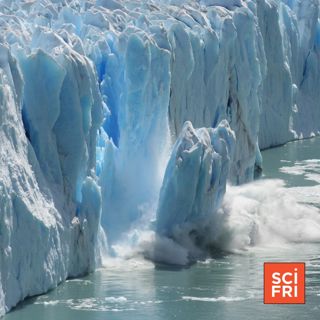
A new report from the United Nations’ World Meteorological Organization shows that last year had the hottest average global temperatures since recording began 174 years ago. Ocean temperatures also reached a 65-year high last year, and 2024 is on track to be even hotter.

Ira talks with Jason Dinh, climate editor at Atmos Magazine about that and other top science news of the week including cannibal birds, fighting Dengue fever with bacteria-infected mosquitos and the evolutionary benefit of whale menopause.

Why This NASA Satellite Is Studying Plankton

Did you know you can see plankton … from space? Earlier this year, NASA launched a satellite to do exactly that. It’s called PACE, which stands for Plankton, Aerosol, Cloud, and ocean Ecosystem, and NASA hopes that the satellite can tell us more about how these tiny creatures interact with Earth’s atmosphere and influence our climate.

Some species of plankton, called phytoplankton, are microscopic plants that absorb carbon dioxide and produce oxygen. PACE has equipment that can identify different species of phytoplankton by the kind of light they give off, giving NASA real-time information about their location and population size, which can also aid fisheries and coastal communities when algal blooms occur.

PACE will also study how aerosols affect air quality on Earth. Additional instruments on the satellite can differentiate between different kinds of aerosols by studying how they reflect light back into space, which will help scientists refine their climate models so that more accurate forecasts can be made.

Ira Flatow talks to Dr. Ivona Cetinic, PACE’s science lead for ocean biogeochemistry, about the satellite, her favorite species of plankton, and how the public can benefit from the data that the mission will provide.

Transcripts for each segment will be available the week after the show airs on sciencefriday.com.

Subscribe to this podcast. Follow our show on Instagram, TikTok, Facebook, and Bluesky @scifri and sign up for our newsletters. Got a science question that’s keeping you up at night? Call us: 877-472-4374


Hosted by Simplecast, an AdsWizz company. See pcm.adswizz.com for information about our collection and use of personal data for advertising.

Det här avsnittet är hämtat från ett öppet RSS-flöde och publiceras inte av Podme. Det kan innehålla reklam.

Avsnitt(1340)

Can you learn to love the scorpion?

Can you learn to love the scorpion?

If you have arachnophobia, consider this your opportunity to try exposure therapy: A new study suggests that 415 million years ago, in modern-day England and Wales, a scorpion the length of a golden r...

23 Juni 18min

FDA approves a well-known sunscreen ingredient—finally

FDA approves a well-known sunscreen ingredient—finally

The FDA recently approved a sunscreen ingredient called bemotrizinol, or BEMT, that’s been used in Europe and Asia for years. This is the first new sunscreen ingredient approved in the United States i...

22 Juni 12min

Why do sports announcers talk like that?

Why do sports announcers talk like that?

If you watch sports, whether the recent NBA finals or the ongoing World Cup matches, you may have noticed that the athletes aren’t the only ones putting on a show. The announcers seem to be playing a ...

19 Juni 13min

Swords, cannibalism, poison: inside the world of killer microbes

Swords, cannibalism, poison: inside the world of killer microbes

There is a murderous crime spree happening right under—and perhaps inside—our noses. Killer microbes armed with weapons are eviscerating, assassinating, and detonating their fellow microbes. And the n...

18 Juni 21min

When music transports you to a different place

When music transports you to a different place

Do you ever hear a song that transports you to a specific place and time? This auditory wormhole has a name: musical daydreams. Music cognition expert Elizabeth Margulis studies why they happen, and w...

17 Juni 18min

A vast whale graveyard + Zombie sea cucumbers

A vast whale graveyard + Zombie sea cucumbers

Researchers just published details of a massive undersea graveyard of whales deep in the Indian Ocean. Spanning about 1,200 kilometers (745 miles), it contains whale remains dating back more than 5 mi...

16 Juni 18min

Should we bring mountain lions back to the Northeast?

Should we bring mountain lions back to the Northeast?

Big cats used to roam the entire United States. You might know them as mountain lions, pumas, cougars, or catamounts. Though they go by many names, they're actually all the same species.  Their curren...

15 Juni 12min

Blue Origin explosion hits NASA timeline + Artemis III crew

Blue Origin explosion hits NASA timeline + Artemis III crew

When Blue Origin’s New Glenn spacecraft exploded in an enormous fireball during a ground test a couple weeks ago, it sent shockwaves not only through the air, but through NASA’s timeline for the upcom...

12 Juni 12min

Populärt inom Vetenskap

p3-dystopia
dumma-manniskor
doden-hjarnan-kemisten
allt-du-velat-veta
medicinvetarna
svd-nyhetsartiklar
rss-kriminologerna
kapitalet-en-podd-om-ekonomi
sexet
bildningspodden
ufo-sverige
rss-ufobortom-rimligt-tvivel
rss-vetenskapsradion-2
dumforklarat
rss-vetenskapsradion
4health-med-anna-sparre
halsorevolutionen
rss-arkeologi-historia-podden-som-graver-i-vart-kulturlandskap
hacka-livet
rss-ronden