A New Era of Gamma-Ray Burst Astronomy

A New Era of Gamma-Ray Burst Astronomy

Shownotes for a Podcast Episode: Unprecedented Energy in Gamma-Ray Bursts

Topic: A New Era of Gamma-Ray Burst Astronomy

Introduction:

  • Gamma-ray bursts (GRBs) are brief, intense flashes of gamma-ray radiation originating from distant galaxies. They are the most powerful explosions known in the universe.
  • These bursts occur in two distinct phases: the prompt emission, a short, bright burst of gamma rays, and the afterglow, a longer-lasting emission spanning various wavelengths.
  • While GRB afterglows are typically observed in wavelengths like radio waves and X-rays, recent observations have revealed an unexpected phenomenon – the presence of very-high-energy (VHE) gamma rays, specifically at teraelectronvolt (TeV) energies.

Unveiling the Unexpected:

  • This episode explores three groundbreaking studies that detail the first-ever observations of TeV emission from GRB afterglows.
  • The three GRBs in focus are GRB 180720B, GRB 190114C, and GRB 190829A. These discoveries were made possible by sophisticated ground-based gamma-ray telescopes like the High Energy Stereoscopic System (H.E.S.S.) and the Major Atmospheric Gamma Imaging Cherenkov (MAGIC) telescopes.
  • These telescopes employ the ingenious method of imaging atmospheric Cherenkov telescopes, which capture the extremely faint, short flashes of Cherenkov radiation produced when VHE gamma rays collide with particles in Earth's atmosphere.

Implications and the Future of GRB Astronomy:

  • These observations have revolutionized our understanding of GRBs.
  • They have unearthed a previously unknown emission component in GRB afterglows, challenging existing models and pushing the boundaries of our knowledge regarding particle acceleration in these extreme environments.
  • As we enter a new age of GRB astronomy, it is essential to continue studying these powerful events. New and more powerful observatories, like the Cherenkov Telescope Array Observatory (CTAO), will be critical in further refining our understanding.

References:

  • "A very-high-energy component deep in the γ-ray burst afterglow" - https://www.nature.com/articles/s41586-019-1743-9
  • "Teraelectronvolt emission from the γ-ray burst GRB 190114C" - https://www.nature.com/articles/s41586-019-1750-x
  • "Revealing x-ray and gamma ray temporal and spectral similarities in the GRB 190829A afterglow" - https://www.science.org/doi/10.1126/science.abe8560

Acknowledgements:

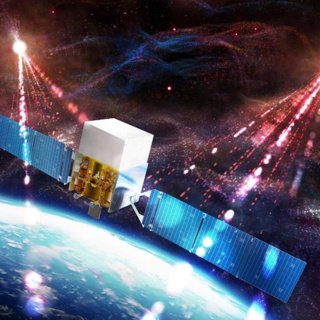
Illustration from Desy-Zeuthen/Science Communication Lab. Podcast produced with Google/NotebookLM


Det här avsnittet är hämtat från ett öppet RSS-flöde och publiceras inte av Podme. Det kan innehålla reklam.

Avsnitt(101)

Record-Breaker: Catching Gamma Rays from the Distant Quasar OP 313

Record-Breaker: Catching Gamma Rays from the Distant Quasar OP 313

In this episode, we dive into a groundbreaking astronomical discovery: the detection of very-high-energy (VHE) gamma rays from the quasar OP 313. Located at a redshift of $z = 0.997$, OP 313 has shatt...

1 Juni 20min

Ripples in Spacetime: Unpacking the GWTC-5.0 Catalog

Ripples in Spacetime: Unpacking the GWTC-5.0 Catalog

In this episode, we dive into the monumental release of the Gravitational-Wave Transient Catalog version 5.0 (GWTC-5.0) and the open data from the second part of the fourth observing run (O4b) by the ...

29 Maj 21min

SN 2017egm : Fermi-LAT's Breakthrough Gamma-Ray Detection

SN 2017egm : Fermi-LAT's Breakthrough Gamma-Ray Detection

In today’s episode, we dive into the mystery of superluminous supernovae (SLSNe)—rare, extreme astronomical events that shine 10 to 100 times brighter than standard core-collapse supernovae. For years...

22 Maj 23min

Supernovae on the RISE: Why Dead Stars Wake Up Decades Later

Supernovae on the RISE: Why Dead Stars Wake Up Decades Later

In this episode, we explore the fascinating phenomenon of core-collapse supernovae that refuse to fade away quietly. Years, or even decades, after their initial explosion, some of these stellar deaths...

20 Maj 17min

The SVOM Satellite: A New Era in Multi-Messenger Astronomy

The SVOM Satellite: A New Era in Multi-Messenger Astronomy

In this episode, we dive into the fascinating world of gamma-ray bursts (GRBs) and high-energy transients through the lens of the SVOM (Space-based Multi-band Variable Object Monitor) mission. Launche...

29 Apr 24min

Chasing the Flash: Hunting Neutron Star Mergers with CTAO

Chasing the Flash: Hunting Neutron Star Mergers with CTAO

In this episode, we dive into the thrilling world of multi-messenger astronomy! Ever since the historic detection of GW170817, scientists have known that binary neutron star (BNS) mergers can produce ...

14 Apr 19min

Tiling the Sky: A New Strategy for Finding Elusive GRBs

Tiling the Sky: A New Strategy for Finding Elusive GRBs

In this episode, we dive into the intense and fast-paced world of **Gamma-ray bursts (GRBs)—the most luminous and rapidly evolving transients in the Universe**. While space-based instruments like the ...

13 Apr 19min

Fast Radio Bursts & Magnetar X-Rays: A Peculiar Discovery

Fast Radio Bursts & Magnetar X-Rays: A Peculiar Discovery

In this episode, we dive into the deep cosmos to explore a recent astronomical breakthrough linking Fast Radio Bursts (FRBs)—enigmatic, millisecond-long cosmic transients—to extreme stellar objects kn...

7 Apr 22min

Populärt inom Vetenskap

p3-dystopia
dumma-manniskor
allt-du-velat-veta
kapitalet-en-podd-om-ekonomi
rss-ufobortom-rimligt-tvivel
svd-nyhetsartiklar
rss-vetenskapsradion
det-morka-psyket
rss-spraket
paranormalt-med-caroline-giertz
sexet
halsorevolutionen
rss-vetenskapsradion-2
rss-odla
rss-broccolipodden-en-podcast-som-inte-handlar-om-broccoli
medicinvetarna
dumforklarat
rss-ronden
rss-italiensk-dagbok
vetenskapsradion