Tiling the Sky for Multi-Messenger Astronomy

Tiling the Sky for Multi-Messenger Astronomy

Description: Tilepy is an open-source platform revolutionizing multi-messenger astrophysics by optimizing the scheduling of follow-up observations for events with large sky localization uncertainties, such as gravitational waves, gamma-ray bursts, and high-energy neutrinos.

Main Points

● What is Tilepy? Tilepy is a Python package designed to efficiently schedule observations by correlating galaxy distributions with 3D localization information and optimizing observation strategies across the electromagnetic spectrum.

● How does it work? Tilepy employs sophisticated algorithms that take into account telescope visibility and observability constraints to create observation plans that prioritize the most probable regions of an event.

● Key features:

○ Automatic generation of optimized observation plans.

○ Versatility for various transient events.

○ Integration with Astro-COLIBRI for user-friendly scheduling via web and smartphone apps.

○ Customization options for individual needs and research objectives.

● Real-world impact: Tilepy is the default scheduling tool for high-energy gamma-ray observatories like H.E.S.S. and CTA/LST-1. It was instrumental in the rapid follow-up of GW170817, allowing H.E.S.S. to be the first ground-based instrument to observe the merger location.

● Accessibility: Tilepy is an open-source project available on GitHub, encouraging community contributions and collaboration.


Pronunciation: "Tile-pie" ;-)


Main Papers:

● M. Seglar-Arroyo et al., “Cross-Observatory Coordination with tilepy: A Novel Tool for Observations of Multi-Messenger Transient Events”, ApJS 274 1 (2024)

● H. Ashkar et al., "The H.E.S.S. gravitational wave rapid follow-up program", JCAP 03 (2021) 045


Additional Resources

● Tilepy GitHub repository: https://github.com/astro-transients/Tilepy

● Tilepy website: https://tilepy.com

● Astro-COLIBRI platform: https://astro-colibri.science


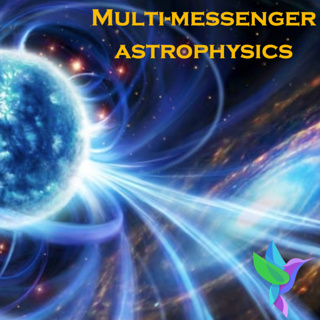
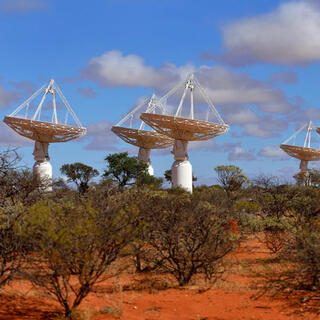
Illustration from tilepy.com. Podcast created with Google/NotebookLM.

Det här avsnittet är hämtat från ett öppet RSS-flöde och publiceras inte av Podme. Det kan innehålla reklam.

Avsnitt(101)

Record-Breaker: Catching Gamma Rays from the Distant Quasar OP 313

Record-Breaker: Catching Gamma Rays from the Distant Quasar OP 313

In this episode, we dive into a groundbreaking astronomical discovery: the detection of very-high-energy (VHE) gamma rays from the quasar OP 313. Located at a redshift of $z = 0.997$, OP 313 has shatt...

1 Juni 20min

Ripples in Spacetime: Unpacking the GWTC-5.0 Catalog

Ripples in Spacetime: Unpacking the GWTC-5.0 Catalog

In this episode, we dive into the monumental release of the Gravitational-Wave Transient Catalog version 5.0 (GWTC-5.0) and the open data from the second part of the fourth observing run (O4b) by the ...

29 Maj 21min

SN 2017egm : Fermi-LAT's Breakthrough Gamma-Ray Detection

SN 2017egm : Fermi-LAT's Breakthrough Gamma-Ray Detection

In today’s episode, we dive into the mystery of superluminous supernovae (SLSNe)—rare, extreme astronomical events that shine 10 to 100 times brighter than standard core-collapse supernovae. For years...

22 Maj 23min

Supernovae on the RISE: Why Dead Stars Wake Up Decades Later

Supernovae on the RISE: Why Dead Stars Wake Up Decades Later

In this episode, we explore the fascinating phenomenon of core-collapse supernovae that refuse to fade away quietly. Years, or even decades, after their initial explosion, some of these stellar deaths...

20 Maj 17min

The SVOM Satellite: A New Era in Multi-Messenger Astronomy

The SVOM Satellite: A New Era in Multi-Messenger Astronomy

In this episode, we dive into the fascinating world of gamma-ray bursts (GRBs) and high-energy transients through the lens of the SVOM (Space-based Multi-band Variable Object Monitor) mission. Launche...

29 Apr 24min

Chasing the Flash: Hunting Neutron Star Mergers with CTAO

Chasing the Flash: Hunting Neutron Star Mergers with CTAO

In this episode, we dive into the thrilling world of multi-messenger astronomy! Ever since the historic detection of GW170817, scientists have known that binary neutron star (BNS) mergers can produce ...

14 Apr 19min

Tiling the Sky: A New Strategy for Finding Elusive GRBs

Tiling the Sky: A New Strategy for Finding Elusive GRBs

In this episode, we dive into the intense and fast-paced world of **Gamma-ray bursts (GRBs)—the most luminous and rapidly evolving transients in the Universe**. While space-based instruments like the ...

13 Apr 19min

Fast Radio Bursts & Magnetar X-Rays: A Peculiar Discovery

Fast Radio Bursts & Magnetar X-Rays: A Peculiar Discovery

In this episode, we dive into the deep cosmos to explore a recent astronomical breakthrough linking Fast Radio Bursts (FRBs)—enigmatic, millisecond-long cosmic transients—to extreme stellar objects kn...

7 Apr 22min

Populärt inom Vetenskap

p3-dystopia
dumma-manniskor
allt-du-velat-veta
kapitalet-en-podd-om-ekonomi
rss-ufobortom-rimligt-tvivel
svd-nyhetsartiklar
rss-vetenskapsradion
det-morka-psyket
rss-spraket
paranormalt-med-caroline-giertz
sexet
halsorevolutionen
rss-vetenskapsradion-2
rss-odla
rss-broccolipodden-en-podcast-som-inte-handlar-om-broccoli
medicinvetarna
dumforklarat
rss-ronden
rss-italiensk-dagbok
vetenskapsradion