The Enigma of G35.6−0.5: Supernova, HII Region, or Hidden Pulsar?

The Enigma of G35.6−0.5: Supernova, HII Region, or Hidden Pulsar?

The discovery of a new ultra-high-energy gamma-ray source, 1LHAASO J1857+0203u, by the Large High Altitude Air Shower Observatory (LHAASO) suggests the presence of a PeVatron, a cosmic accelerator capable of boosting particles to peta-electron volt energies. This source is particularly interesting because it is located in a region with complex multi-wavelength features, including the supernova remnant (SNR) G35.6−0.4 and the HII region G35.6−0.5.


The study, published in "An Enigmatic PeVatron in an Area around HII Region G35.6−0.5" by Cao et al., explores three possible origins for the observed gamma-ray emission:

  • HII region scenario: The gamma rays originate from the HII region G35.6−0.5, possibly accelerated by the stellar winds of massive stars. While no such stars have been directly observed yet, their presence cannot be ruled out, especially if they are embedded within molecular clouds.
  • Supernova remnant scenario: The gamma rays are produced when protons that escaped from the SNR G35.6−0.4 interact with nearby molecular clouds. However, the current analysis suggests that the mass of the observed clouds is insufficient to explain the observed gamma-ray flux.
  • Pulsar wind nebula (PWN) scenario: The gamma rays are emitted by a PWN powered by an as-yet undiscovered pulsar. This scenario is plausible given the potential for mature PWNe to be bright in gamma rays while remaining undetected at other wavelengths.


Further observations across the electromagnetic spectrum are needed to definitively determine the origin of the gamma-ray emission from 1LHAASO J1857+0203u.** Future observations with instruments like the Large-Sized Telescope (LACT), ASTRI, and the Cherenkov Telescope Array (CTA) could help distinguish between these scenarios thanks to their enhanced angular resolution.


Reference:

Cao, Z., Aharonian, F., Axikegu, et al. "An Enigmatic PeVatron in an Area around HII Region G35.6−0.5". Draft version December 3, 2024. *Typeset using LATEX twocolumn style in AASTeX631.*


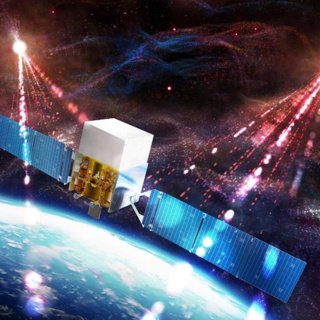
Acknowledements: Podcast prepared with Google/NotebookLM. Illustration credits: LHAASO

Det här avsnittet är hämtat från ett öppet RSS-flöde och publiceras inte av Podme. Det kan innehålla reklam.

Avsnitt(112)

Peering Through the Ice: The Milky Way’s High-Energy Neutrino Signal

Peering Through the Ice: The Milky Way’s High-Energy Neutrino Signal

Peering Through the Ice: The Milky Way’s High-Energy Neutrino Signal Episode Summary: In this episode, we explore a major breakthrough in astrophysics: the IceCube Neutrino Observatory has established...

31 Juli 20min

The Schmidt Observatory System unlocking the Transient Universe

The Schmidt Observatory System unlocking the Transient Universe

In this episode, we dive into the Eric and Wendy Schmidt Observatory System, a groundbreaking initiative designed to pioneer a new paradigm for astronomical research through rapid development, modular...

27 Juli 21min

GUANO, NITRATES, and GLIMPSE: The Pipelines Powering Multi-Messenger Astronomy

GUANO, NITRATES, and GLIMPSE: The Pipelines Powering Multi-Messenger Astronomy

In this episode, we dive into the cutting-edge of time-domain and multi-messenger astrophysics with a deep look at BAT-GLIMPSE, a revolutionary new open-source pipeline developed for the Neil Gehrels ...

20 Juli 20min

The Dynamic Radio Sky: Unveiling Transients with the SKAO

The Dynamic Radio Sky: Unveiling Transients with the SKAO

Welcome to a deep dive into the fast-paced, explosive universe of time-domain astronomy! In this episode, we explore how the upcoming Square Kilometre Array Observatory (SKAO) will revolutionize our u...

13 Juli 19min

X-Raying the Earth: Neutrino Tomography at the South Pole

X-Raying the Earth: Neutrino Tomography at the South Pole

Welcome back to the podcast! Today, we are exploring a groundbreaking new way scientists are looking deep inside our planet. For a century, our understanding of the Earth's interior has relied almost ...

8 Juli 23min

SVOM's First Year: From Gamma-Ray Bursts to Blazars

SVOM's First Year: From Gamma-Ray Bursts to Blazars

In this episode, we dive into the exciting early results from the SVOM (Space-based multi-band astronomical Variable Objects Monitor) mission, which launched in June 2024. Originally designed to hunt ...

6 Juli 20min

SN 2024jlc: Bridging the Gap Between Supernova Classes

SN 2024jlc: Bridging the Gap Between Supernova Classes

In this episode, we dive into the fascinating discovery of SN 2024jlc, one of the closest and least luminous super-luminous supernovae (SLSNe) ever found. We explore how this extraordinary event is ch...

3 Juli 20min

Cosmic Accelerators: Unlocking the Secrets of Microquasar GRS 1915+105

Cosmic Accelerators: Unlocking the Secrets of Microquasar GRS 1915+105

In this episode, we dive into the extreme and fascinating world of microquasars—binary systems where a compact object, like a black hole, feeds off a companion star and launches powerful, relativistic...

26 Juni 20min

Populärt inom Vetenskap

dumma-manniskor
p3-dystopia
allt-du-velat-veta
hacka-livet
bildningspodden
rss-vetenskapsradion
rss-ufobortom-rimligt-tvivel
medicinvetarna
halsorevolutionen
rss-vetenskapsradion-2
svd-nyhetsartiklar
sexet
ufo-sverige
paranormalt-med-caroline-giertz
vetenskapsradion
det-morka-psyket
psykologisk-forskning
rss-kriminologerna
barnpsykologerna
pojkmottagningen