Beyond Mergers: Exploring Magnetars as R-process Factories

Beyond Mergers: Exploring Magnetars as R-process Factories

**Reference:** Patel et al., "Direct evidence for r-process nucleosynthesis in delayed MeV emission from the SGR 1806-20 magnetar giant flare" (2025)


* **Introduction:**

* The origin of heavy elements, specifically those formed through the rapid neutron-capture process (**r-process**), has been a long-standing mystery in astrophysics.

* While neutron star mergers have been considered a primary site, evidence suggests additional sources are needed to explain the observed abundance of these elements.

* **Magnetar Giant Flares as r-process Sites:**

* Recent studies have proposed that magnetar giant flares can eject neutron star crust material at high velocities, creating the conditions necessary for the r-process.

* These flares are the most energetic outbursts from magnetars, releasing vast amounts of energy.

* **The ejected material is shock-heated, leading to r-process nucleosynthesis**.

* **Observational Evidence:**

* The 2004 giant flare from the magnetar SGR 1806-20 exhibited a previously unexplained **delayed MeV gamma-ray emission**.

* This emission, peaking around 10 minutes after the initial flare, is consistent with the radioactive decay of freshly synthesized r-process elements.

* The light curve, fluence, and spectrum of this emission match theoretical predictions for r-process material.

* The observed data suggests that approximately **10^-6 solar masses of r-process elements** were synthesized in this event.

* **The Mechanism:**

* The "α-rich freeze-out" mechanism, facilitated by high entropy and fast expansion rates, allows for the synthesis of heavy elements even when the initial material is not particularly neutron-rich.

* The radioactive decay of these nuclei releases gamma-ray lines, which are Doppler broadened by the high ejecta velocities, resulting in the observed MeV spectrum.

* **Implications:**

* Magnetar giant flares contribute at least **1-10% of the total Galactic r-process abundances**.

* They may be particularly significant in the early universe, contributing to the chemical enrichment of low-metallicity stars.

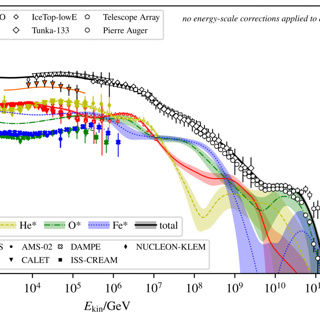
* These flares are also implicated as potential sources of heavy cosmic rays.

* The discovery of this r-process site has implications for understanding Galactic chemical evolution and the origin of heavy elements.

* The synthesized abundance distribution is predicted to be dominated by first-peak nuclei (A~90).

* **Future Observations:**

* Future missions like NASA's COSI nuclear spectrometer can resolve decay line features to provide further insight into r-process nucleosynthesis in magnetar flares.

* Detection of a kilonova-like UV/optical signal (nova brevis) is also predicted, which may be detectable with wide-field telescopes.

* **Conclusion:**

* The study of the delayed MeV emission from SGR 1806-20 has provided direct observational evidence for **r-process nucleosynthesis in magnetar giant flares**.

* This finding challenges current models of heavy element formation and opens new avenues for research.


Acknowledements: Podcast prepared with Google/NotebookLM. Illustration credits: NASA

Det här avsnittet är hämtat från ett öppet RSS-flöde och publiceras inte av Podme. Det kan innehålla reklam.

Avsnitt(112)

Peering Through the Ice: The Milky Way’s High-Energy Neutrino Signal

Peering Through the Ice: The Milky Way’s High-Energy Neutrino Signal

Peering Through the Ice: The Milky Way’s High-Energy Neutrino Signal Episode Summary: In this episode, we explore a major breakthrough in astrophysics: the IceCube Neutrino Observatory has established...

31 Juli 20min

The Schmidt Observatory System unlocking the Transient Universe

The Schmidt Observatory System unlocking the Transient Universe

In this episode, we dive into the Eric and Wendy Schmidt Observatory System, a groundbreaking initiative designed to pioneer a new paradigm for astronomical research through rapid development, modular...

27 Juli 21min

GUANO, NITRATES, and GLIMPSE: The Pipelines Powering Multi-Messenger Astronomy

GUANO, NITRATES, and GLIMPSE: The Pipelines Powering Multi-Messenger Astronomy

In this episode, we dive into the cutting-edge of time-domain and multi-messenger astrophysics with a deep look at BAT-GLIMPSE, a revolutionary new open-source pipeline developed for the Neil Gehrels ...

20 Juli 20min

The Dynamic Radio Sky: Unveiling Transients with the SKAO

The Dynamic Radio Sky: Unveiling Transients with the SKAO

Welcome to a deep dive into the fast-paced, explosive universe of time-domain astronomy! In this episode, we explore how the upcoming Square Kilometre Array Observatory (SKAO) will revolutionize our u...

13 Juli 19min

X-Raying the Earth: Neutrino Tomography at the South Pole

X-Raying the Earth: Neutrino Tomography at the South Pole

Welcome back to the podcast! Today, we are exploring a groundbreaking new way scientists are looking deep inside our planet. For a century, our understanding of the Earth's interior has relied almost ...

8 Juli 23min

SVOM's First Year: From Gamma-Ray Bursts to Blazars

SVOM's First Year: From Gamma-Ray Bursts to Blazars

In this episode, we dive into the exciting early results from the SVOM (Space-based multi-band astronomical Variable Objects Monitor) mission, which launched in June 2024. Originally designed to hunt ...

6 Juli 20min

SN 2024jlc: Bridging the Gap Between Supernova Classes

SN 2024jlc: Bridging the Gap Between Supernova Classes

In this episode, we dive into the fascinating discovery of SN 2024jlc, one of the closest and least luminous super-luminous supernovae (SLSNe) ever found. We explore how this extraordinary event is ch...

3 Juli 20min

Cosmic Accelerators: Unlocking the Secrets of Microquasar GRS 1915+105

Cosmic Accelerators: Unlocking the Secrets of Microquasar GRS 1915+105

In this episode, we dive into the extreme and fascinating world of microquasars—binary systems where a compact object, like a black hole, feeds off a companion star and launches powerful, relativistic...

26 Juni 20min

Populärt inom Vetenskap

dumma-manniskor
p3-dystopia
allt-du-velat-veta
hacka-livet
bildningspodden
rss-vetenskapsradion
rss-ufobortom-rimligt-tvivel
medicinvetarna
halsorevolutionen
rss-vetenskapsradion-2
svd-nyhetsartiklar
sexet
ufo-sverige
paranormalt-med-caroline-giertz
vetenskapsradion
det-morka-psyket
psykologisk-forskning
rss-kriminologerna
barnpsykologerna
pojkmottagningen