Cosmic Messengers: Exploring the Origins of KM3-230213A

Cosmic Messengers: Exploring the Origins of KM3-230213A

**Introduction:**

* A recent ultra-high-energy neutrino event, named KM3-230213A, was detected by the KM3NeT/ARCA detector.

* This event has sparked interest in the scientific community, as its origin is still unclear.

* The neutrino's high energy suggests it may have come from a very powerful cosmic source.

* The event was detected on February 13, 2023.

* The podcast explores two potential origins for this neutrino event: galactic sources and cosmogenic neutrinos.


**Galactic Origin:**

* The study investigates potential galactic sources such as supernova remnants (SNRs), X-ray binaries, and microquasars.

* **No nearby sources from HAWC or LHAASO were found, imposing stringent constraints on potential astrophysical sources**.

* The study also looks at known gamma-ray sources from catalogs such as 4FGL-DR4, 3HWC, and 1LHAASO.

* Researchers explored the possibility of the neutrino originating from blazars, which are active galactic nuclei (AGN) with jets pointed towards Earth.

* **Seventeen blazar candidates were identified within the 99% confidence region of the neutrino event**.

* The study examined multiwavelength data, including radio, X-ray, and gamma-ray observations, to characterize these blazars.

* **A major radio flare from blazar PMN J0606-0724 was found to be coincident with the neutrino event, with a time difference of five days**, which is considered statistically uncommon.

* The chance probability of this coincidence is estimated to be 0.26%, which suggests a possible association, but is not conclusive.

* Other blazars, such as MRC0614-083, also showed flaring activity in the X-ray band around the time of the neutrino detection.

* **It is not possible to conclusively associate the neutrino with a specific blazar due to the size of the neutrino direction uncertainty region, encompassing seventeen blazar candidates**.


**Cosmogenic Origin:**

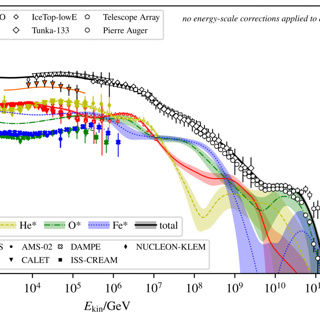
* The study explores the possibility that the neutrino is cosmogenic, produced by the interaction of ultra-high-energy cosmic rays (UHECRs) with the cosmic microwave background (CMB) or the extragalactic background light (EBL).

* Cosmogenic neutrinos are expected from the interactions of cosmic rays with photons.

* The paper examines how the expected cosmogenic neutrino flux can be enhanced, starting from a minimal scenario.

* The study considers the effects of different models for the EBL and the photo-disintegration cross section, and concludes that these uncertainties do not significantly impact the results.

* **The study compares the spectra of neutrinos produced in the nearby and far-away Universe**.


**Conclusion:**

* The origin of KM3-230213A remains an open question.

* While a specific source cannot be pinpointed, the study provides valuable insights into potential galactic and cosmogenic origins of such high-energy neutrino events.

* Further studies and observations are needed to determine the precise origin of this neutrino.


**Reference:**

* The information presented is based on the following three articles:

* "On the Potential Galactic Origin of the Ultra-High-Energy Event KM3-230213A"

* "Characterising Candidate Blazar Counterparts of the Ultra-High-Energy Event KM3-230213A"

* "On the potential cosmogenic origin of the ultra-high-energy event KM3-230213A"


Acknowledements: Podcast prepared with Google/NotebookLM. Illustration credits: KM3NeT

Det här avsnittet är hämtat från ett öppet RSS-flöde och publiceras inte av Podme. Det kan innehålla reklam.

Avsnitt(101)

Record-Breaker: Catching Gamma Rays from the Distant Quasar OP 313

Record-Breaker: Catching Gamma Rays from the Distant Quasar OP 313

In this episode, we dive into a groundbreaking astronomical discovery: the detection of very-high-energy (VHE) gamma rays from the quasar OP 313. Located at a redshift of $z = 0.997$, OP 313 has shatt...

1 Juni 20min

Ripples in Spacetime: Unpacking the GWTC-5.0 Catalog

Ripples in Spacetime: Unpacking the GWTC-5.0 Catalog

In this episode, we dive into the monumental release of the Gravitational-Wave Transient Catalog version 5.0 (GWTC-5.0) and the open data from the second part of the fourth observing run (O4b) by the ...

29 Maj 21min

SN 2017egm : Fermi-LAT's Breakthrough Gamma-Ray Detection

SN 2017egm : Fermi-LAT's Breakthrough Gamma-Ray Detection

In today’s episode, we dive into the mystery of superluminous supernovae (SLSNe)—rare, extreme astronomical events that shine 10 to 100 times brighter than standard core-collapse supernovae. For years...

22 Maj 23min

Supernovae on the RISE: Why Dead Stars Wake Up Decades Later

Supernovae on the RISE: Why Dead Stars Wake Up Decades Later

In this episode, we explore the fascinating phenomenon of core-collapse supernovae that refuse to fade away quietly. Years, or even decades, after their initial explosion, some of these stellar deaths...

20 Maj 17min

The SVOM Satellite: A New Era in Multi-Messenger Astronomy

The SVOM Satellite: A New Era in Multi-Messenger Astronomy

In this episode, we dive into the fascinating world of gamma-ray bursts (GRBs) and high-energy transients through the lens of the SVOM (Space-based Multi-band Variable Object Monitor) mission. Launche...

29 Apr 24min

Chasing the Flash: Hunting Neutron Star Mergers with CTAO

Chasing the Flash: Hunting Neutron Star Mergers with CTAO

In this episode, we dive into the thrilling world of multi-messenger astronomy! Ever since the historic detection of GW170817, scientists have known that binary neutron star (BNS) mergers can produce ...

14 Apr 19min

Tiling the Sky: A New Strategy for Finding Elusive GRBs

Tiling the Sky: A New Strategy for Finding Elusive GRBs

In this episode, we dive into the intense and fast-paced world of **Gamma-ray bursts (GRBs)—the most luminous and rapidly evolving transients in the Universe**. While space-based instruments like the ...

13 Apr 19min

Fast Radio Bursts & Magnetar X-Rays: A Peculiar Discovery

Fast Radio Bursts & Magnetar X-Rays: A Peculiar Discovery

In this episode, we dive into the deep cosmos to explore a recent astronomical breakthrough linking Fast Radio Bursts (FRBs)—enigmatic, millisecond-long cosmic transients—to extreme stellar objects kn...

7 Apr 22min

Populärt inom Vetenskap

p3-dystopia
dumma-manniskor
allt-du-velat-veta
kapitalet-en-podd-om-ekonomi
rss-ufobortom-rimligt-tvivel
svd-nyhetsartiklar
rss-vetenskapsradion
det-morka-psyket
rss-spraket
paranormalt-med-caroline-giertz
sexet
halsorevolutionen
rss-vetenskapsradion-2
rss-odla
rss-broccolipodden-en-podcast-som-inte-handlar-om-broccoli
medicinvetarna
dumforklarat
rss-ronden
rss-italiensk-dagbok
vetenskapsradion