Einstein Telescope + WST: Spectroscopy's Role in the Gravitational Wave Era

Einstein Telescope + WST: Spectroscopy's Role in the Gravitational Wave Era

In this episode, we dive into the exciting future of **multi-messenger astronomy**, specifically focusing on the detection and characterization of binary neutron star (BNS) mergers.


* **The Dawn of Multi-Messenger Astrophysics:** Our understanding of cosmic events was revolutionized by the extraordinary joint detection of gravitational waves (GWs) and light from a BNS merger on August 17, 2017 (GW170817). This single event confirmed theoretical hypotheses about short gamma-ray bursts (SGRBs) originating from BNS mergers and provided insights into kilonovae (KNe) – the thermal radiation powered by radioactive decay of heavy elements.

* **Next-Generation Observatories:** The upcoming third-generation GW observatories, such as the **Einstein Telescope (ET)** and **Cosmic Explorer (CE)**, are poised to dramatically increase detection rates, potentially observing hundreds of thousands of BNS mergers annually, reaching distances beyond redshift (z) ~ 3.

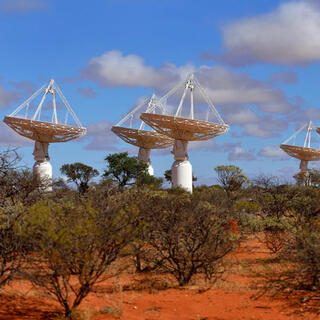
* **The Wide-field Spectroscopic Telescope (WST):** This proposed 12-meter-class spectroscopic facility, expected to operate in the 2040s in the southern hemisphere, will be crucial for exploiting the unique information from joint GW and electromagnetic (EM) detections. WST will employ both **Integral Field Spectroscopy (IFS)** and **Multi-Object Spectroscopy (MOS)**, enabling simultaneous acquisition of multiple spectra over wide fields of view.

* **Detecting Faint Counterparts:**

* WST is designed to detect **Kilonovae (KNe)** up to **z ~ 0.4** and apparent magnitudes as faint as **mAB ~ 25 (with fibres) to ~25.5 (with IFS)**. The optimal time for KN detection observations is **12–24 hours after the merger**.

* **GRB afterglows** can be observed at even higher redshifts, beyond z = 1, particularly for on-axis or slightly off-axis systems (viewing angles Θview ≲ 15°). Timely follow-up, within a few hours of the GRB prompt detection, is critical due to their rapid decay.

* **Observing Strategies and Challenges:**

* The vast majority of next-generation GW events will have **large sky localization regions** and **faint EM counterparts**, making their identification challenging.

* **Galaxy-targeted searches** with WST involve identifying galaxies within the 3D error volume of the GW signal, leveraging high multiplexing capabilities. These searches benefit greatly from complete galaxy catalogues with redshift information up to z ≤ 0.5.

* **Synergy with photometric surveys**, like the Vera Rubin Observatory, allows WST to target transient candidates identified by these wide-field facilities.

* **The "Golden Events"**: BNS mergers detected by ET+CE at z < 0.3 (or ET-alone at z < 0.2) with sky localizations better than 10 deg² are ideal for WST, as it can cover all galaxies in the error volume with limited exposures (e.g., 3 one-hour exposures for 10 deg² or 1 one-hour exposure for 1 deg²).

* **Addressing Offsets and Host Galaxies:** Many EM counterparts are not expected to be at the exact center of their host galaxies. The use of **mini-IFUs or "fibre bundles"** is proposed as an extremely valuable solution to cover regions around host galaxy centers and detect counterparts with larger offsets. Spectral subtraction techniques can also be used to separate the transient's spectrum from the host galaxy's.

* **The Future is Multi-Messenger:** This research underscores the need for **new instruments** that are developed with multi-messenger science as a core design case, enabling rapid data reduction and analysis for timely alerts to the astronomical community.


**Reference:**

Bisero, S., Vergani, S. D., Loffredo, E., et al. (2025). Multi-messenger observations of binary neutron star mergers: synergies between the next generation gravitational wave interferometers and wide-field, high-multiplex spectroscopic facilities. *Astronomy & Astrophysics*.


Acknowledements: Podcast prepared with Google/NotebookLM. Illustration credits: ESO

Det här avsnittet är hämtat från ett öppet RSS-flöde och publiceras inte av Podme. Det kan innehålla reklam.

Avsnitt(101)

Record-Breaker: Catching Gamma Rays from the Distant Quasar OP 313

Record-Breaker: Catching Gamma Rays from the Distant Quasar OP 313

In this episode, we dive into a groundbreaking astronomical discovery: the detection of very-high-energy (VHE) gamma rays from the quasar OP 313. Located at a redshift of $z = 0.997$, OP 313 has shatt...

1 Juni 20min

Ripples in Spacetime: Unpacking the GWTC-5.0 Catalog

Ripples in Spacetime: Unpacking the GWTC-5.0 Catalog

In this episode, we dive into the monumental release of the Gravitational-Wave Transient Catalog version 5.0 (GWTC-5.0) and the open data from the second part of the fourth observing run (O4b) by the ...

29 Maj 21min

SN 2017egm : Fermi-LAT's Breakthrough Gamma-Ray Detection

SN 2017egm : Fermi-LAT's Breakthrough Gamma-Ray Detection

In today’s episode, we dive into the mystery of superluminous supernovae (SLSNe)—rare, extreme astronomical events that shine 10 to 100 times brighter than standard core-collapse supernovae. For years...

22 Maj 23min

Supernovae on the RISE: Why Dead Stars Wake Up Decades Later

Supernovae on the RISE: Why Dead Stars Wake Up Decades Later

In this episode, we explore the fascinating phenomenon of core-collapse supernovae that refuse to fade away quietly. Years, or even decades, after their initial explosion, some of these stellar deaths...

20 Maj 17min

The SVOM Satellite: A New Era in Multi-Messenger Astronomy

The SVOM Satellite: A New Era in Multi-Messenger Astronomy

In this episode, we dive into the fascinating world of gamma-ray bursts (GRBs) and high-energy transients through the lens of the SVOM (Space-based Multi-band Variable Object Monitor) mission. Launche...

29 Apr 24min

Chasing the Flash: Hunting Neutron Star Mergers with CTAO

Chasing the Flash: Hunting Neutron Star Mergers with CTAO

In this episode, we dive into the thrilling world of multi-messenger astronomy! Ever since the historic detection of GW170817, scientists have known that binary neutron star (BNS) mergers can produce ...

14 Apr 19min

Tiling the Sky: A New Strategy for Finding Elusive GRBs

Tiling the Sky: A New Strategy for Finding Elusive GRBs

In this episode, we dive into the intense and fast-paced world of **Gamma-ray bursts (GRBs)—the most luminous and rapidly evolving transients in the Universe**. While space-based instruments like the ...

13 Apr 19min

Fast Radio Bursts & Magnetar X-Rays: A Peculiar Discovery

Fast Radio Bursts & Magnetar X-Rays: A Peculiar Discovery

In this episode, we dive into the deep cosmos to explore a recent astronomical breakthrough linking Fast Radio Bursts (FRBs)—enigmatic, millisecond-long cosmic transients—to extreme stellar objects kn...

7 Apr 22min

Populärt inom Vetenskap

p3-dystopia
dumma-manniskor
allt-du-velat-veta
kapitalet-en-podd-om-ekonomi
rss-vetenskapsradion
rss-ufobortom-rimligt-tvivel
svd-nyhetsartiklar
rss-spraket
paranormalt-med-caroline-giertz
medicinvetarna
rss-vetenskapsradion-2
halsorevolutionen
det-morka-psyket
sexet
rss-odla
dumforklarat
rss-broccolipodden-en-podcast-som-inte-handlar-om-broccoli
vetenskapsradion
hacka-livet
kvalificerat-hemligt-poddradio