
6: What it Means to Put Your Writing at the Center

6: What it Means to Put Your Writing at the Center

As an academic woman, your writing needs to be at the center of everything. On this episode of the podcast, I'm making the case for why it's so important to prioritize your writing, and giving you the steps to take to make it happen.

You know your writing and publishing is important but it doesn't feel urgent; writing always falls to the bottom of your list; you put writing off until you have "enough" time, and end up doing frantic writing binges instead of making steady progress; thinking about your writing gives you a pit in your stomach; you have a pipeline full of unfinished projects.

Sound familiar? Maybe you haven't put writing at the center of your career.

In this episode, I'm showing you what having your writing at the center can be like: you always know when your next writing session is and what project you're working on; you feel happy and invigorated when you think about writing; projects flow smoothly through your pipeline (and out of it); you feel empowered and in control.

That sounds better, right? So let's jump in as I show you why you should prioritize your writing above everything else (yes, I have hard facts for you), and how to go about it.

Why Should You Put Your Writing at the Center of Everything?

1. Writing mindset matters: urgent vs. important. When you prioritize writing, you start to see through the urgency of everyday tasks that try to steal your attention. Your department head may have a fire that needs putting out; that's urgent. But your writing is important; when you focus on it, you are developing yourself as a scholar, connecting to your bigger purpose in the world, and taking care of your career and yourself.

"Taking care of your writing is taking care of yourself." -Cathy Mazak

2. Writing has real payoff. You are allowed to dedicate time to something that equates to a payoff, and writing and publishing more is how you get jobs, keep jobs, get promoted, become a full tenured professor.

There is a persistent disparity between overall pay averages between men and women in academia. Why? Some of the reasons given in this article breaking down the annual faculty compensation survey done by the American Association of University Professors are: fewer women are fully tenured and more are contingent, more women are in lower paying fields of study, and fewer women teach at higher ranking PhD granting institutions. Much of the disparity comes down to the numbers of women who are fully tenured professors.

There is a real link between writing and higher pay. The more you write and publish, the higher up the chain of professorship you can move. Writing pays off.

3. Writing drives alignment. If you work to have everything else in your career support your writing, you feel more focused, pulled in fewer directions, less frazzled. Project and services decisions become easier as they are informed by whether they support prioritization of your writing goals.

4. Writing creates a brand. When your writing is at the center of your career, you are able to drill down more clearly to the message you are putting out into the world. Your publication list builds on itself, developing your "academic brand".

"If you're writing more, you're getting more publications out, and your publications are really how the world sees you." -Cathy Mazak

5. Writing gives you mobility. The more you write and publish, the greater your ability to move between institutions. You may be at a more teaching-centered institution now, but you never know what may come up there, or in your life or career. Putting your writing at the center gives you options.

How Do You Put Your Writing at the Center?

1. Put writing first- literally. Schedule an hour first thing on Monday morning for writing. Get this in before you teach, before you open email, before you start anything else. Start your week off in the writing mindset.

2. Use your mission statement. Create a mission statement for your career, and verbalize how writing is a priority. Treat your academic mission statement like a thesis for your career. Write it down and refer to it when you need a reminder, or to help with decision making.


3. Find support. Don't go it alone. Join my I Should Be Writing facebook group, sign up for a program, or find other like-minded academic women to support you in putting your writing first.

4. Invest time and energy. Putting your writing at the center of your career and keeping it there will not happen by accident. It will require intentional time, focused energy, and continued development. Choosing to make investments in your writing pays off, but only if you follow through.

"It takes time, energy, and sometimes a little money to make real change in your life. And you have permission from me to invest that time and energy!" -Cathy Mazak

If something clicked or shifted for you about prioritizing your writing, come on over to my Facebook group and share it with us.

Connect with me:


This episode was first published at cathymazak.com/episode6

Det här avsnittet är hämtat från ett öppet RSS-flöde och publiceras inte av Podme. Det kan innehålla reklam.

Avsnitt(369)

What Is Your Job?

What Is Your Job?

Why do some academic papers seem to move smoothly toward submission, while others get stuck somewhere between research, writing, and revision? One reason might be that you're doing the wrong job for t...

9 Sep 26min
"It's Not a Quick Fix, It's an Anchor"

"It's Not a Quick Fix, It's an Anchor"

If your looking for a quick fix for your stalled-out publication pipeline, Navigate is NOT for you. But if, like guest Katie Starkweather, you're looking for a fundamental change to how you manage you...

25 Aug 28min

Finding the Positive Energy in Academia With  Jenna Donohue

Finding the Positive Energy in Academia With Jenna Donohue

Navigate helped Jenna find the positive energy in academia! In this episode, you will learn how Navigate changed her relationship with her writing. Enrollment closes August 28. Apply now for Navigate:...

19 Aug 19min

How Navigate Helped Augusta Williams Submit 6 Articles Last Year

How Navigate Helped Augusta Williams Submit 6 Articles Last Year

Augusta Williams joined Navigate to help ease the transition from a federal job back into academia. Navigate not only helped her do that, it also helped her manage her co-authoring with students more ...

13 Aug 22min
Fall Writing Planning Workshop 2026

Fall Writing Planning Workshop 2026

Surprise! Here's the audio from yesterday's Fall Writing Planning Workshop! It was so much fun, I just had to share it with all of you! In this workshop I walk you through my 3x3x3 writing planning me...

11 Aug 1h 19min
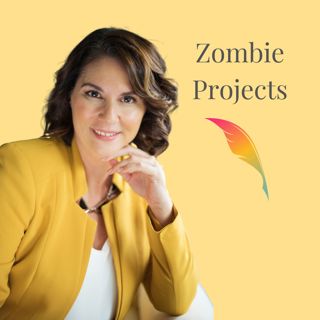
Zombie Projects

Zombie Projects

What do you do with those writing projects that keep hanging around in your publication pipeline, but you never work on them? I call these Zombie Projects, and they are holding you back from submittin...

4 Aug 17min

Transition Friction

Transition Friction

Why do projects get stuck? This summer I developed new curriculum around this question, and on today's podcast I'm sharing a concept from that new curriculum: transition friction. Many stuck writing p...

28 Juli 18min

How Close To "Done" Is Your Paper?

How Close To "Done" Is Your Paper?

I know you want to submit that almost-done article in three days, so hear me out. Before you join me for my Submit Your Almost-done Article in 3 Days LIVE Workshop, you need to PICK which of your ar...

21 Juli 30min

Populärt inom Business & ekonomi

framgangspodden
rss-jossan-nina
varvet
rss-borsens-finest
24fragor
uppgang-och-fall
svd-tech-brief
avanzapodden
badfluence
rss-inga-dumma-fragor-om-pengar
bathina-en-podcast
lastbilspodden
fill-or-kill
tabberaset
rss-dagen-med-di
kapitalet-en-podd-om-ekonomi
borsmorgon
rikatillsammans-om-privatekonomi-rikedom-i-livet
rss-kort-lang-analyspodden-fran-di
rss-hos-psykologen


















