Semantic Models with Microsoft Fabric: How to Escape Power BI Spreadmarts and Create One Source of Truth

Semantic Models with Microsoft Fabric: How to Escape Power BI Spreadmarts and Create One Source of Truth

Most Power BI deployments don’t fail because the visuals are bad—they fail because copied datasets and one‑off DAX tweaks slowly destroy trust in the numbers. In this episode, we start exactly where your description does: with “spreadmart” chaos, metric drift, and ad‑hoc datasets that turn quick wins into long‑term data debt. We unpack why every new “just for this report” dataset quietly becomes a maintenance project and how that culture of copy‑paste logic blocks any serious move toward analytics maturity.

From there, we shift into what actually changes with Microsoft Fabric. You’ll hear how Fabric reframes semantic models as the center of gravity for your data estate instead of disposable byproducts of individual reports. We walk through the move from scattered PBIX files to centralized, reusable semantic models that serve multiple regions, departments, and workloads at once—so “Total Sales” and “Gross Margin” finally mean the same thing everywhere. Real‑world examples show how one well‑designed model can power finance forecasts, marketing performance views, and operational dashboards without duplicating logic.

We then connect architecture to day‑to‑day work. You’ll learn how to structure workspaces, separate core models from thin report layers, and govern who can change measures versus who can just build reports. We talk through naming patterns, ownership, and versioning so that when a definition changes—like lifetime value or margin—it’s updated once, then flows consistently into every dependent report. Instead of arguing over whose Excel export is “right,” teams align on a single semantic backbone.

Finally, we look at how this model‑first approach changes both culture and speed. We discuss how reusable semantic models reduce rework, make impact easier to audit, and free BI teams from endless metric firefighting so they can focus on new questions instead of fixing old ones. By the end, Microsoft Fabric won’t just look like “Power BI plus extras,” but like an ecosystem where a small number of robust semantic models carry most of your analytical weight.

WHAT YOU LEARN
  • Why copy‑pasted Power BI datasets and “just this one change” DAX edits turn into organization‑wide data debt.
  • How Microsoft Fabric recenters your architecture around reusable semantic models instead of standalone reports.
  • How to design and publish central models that serve many teams while keeping metric definitions consistent.
  • How to structure workspaces, permissions, and ownership so model changes flow safely into dependent reports.
  • How a model‑first mindset improves trust, reduces rework, and speeds up new analytics initiatives.
CORE INSIGHT

The core insight of this episode is that the real leap with Microsoft Fabric isn’t a shinier BI tool—it’s treating semantic models as durable products instead of temporary project artifacts. When you define metrics once in a shared model and let every report, region, and department consume that logic, you swap a culture of copy‑paste BI for an architecture where trust, speed, and scale all come from the same source of truth.

WHO THIS IS FOR
  • BI and data leaders stuck in “spreadmart” Power BI environments with too many datasets.
  • Data architects designing Fabric workspaces and wondering how semantic models should sit at the center.
  • Analysts and report builders who want to move from reinventing metrics to reusing trusted definitions.
  • Executives and stakeholders who are tired of dashboards that disagree on basic numbers.
ABOUT THE HOST

Mirko Peters is a Microsoft 365 and cloud consultant and the host of M365.FM, focusing on modern work, security, and data architectures that actually scale. He helps organizations move from fragmented BI setups and one‑off Power BI projects to context‑driven systems on Microsoft 365, Fabric, and Azure where semantic models, governance, and self‑service reporting work together. In M365.FM, Mirko turns longform implementations—like rebuilding analytics on reusable Fabric semantic models—into practical stories and patterns listeners can copy into their own environments.

Become a supporter of this podcast: https://www.spreaker.com/podcast/m365-fm-modern-work-security-and-productivity-with-microsoft-365--6704921/support.

Det här avsnittet är hämtat från ett öppet RSS-flöde och publiceras inte av Podme. Det kan innehålla reklam.

Avsnitt(715)

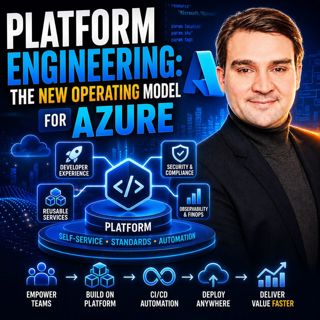
Platform Engineering: The New Operating Model for Azure

Platform Engineering: The New Operating Model for Azure

DevOps changed how software is built, but it didn't eliminate complexity—it simply redistributed it. As organizations adopted cloud platforms, Infrastructure as Code, containers, and CI/CD pipelines, ...

13 Juli 1h 16min
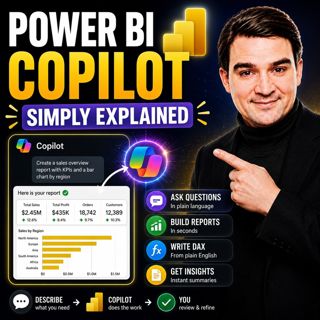
Power BI Copilot - Simply Explained

Power BI Copilot - Simply Explained

Power BI Copilot brings generative AI directly into Microsoft's business intelligence platform, helping users build reports, write DAX formulas, analyze data, and generate insights using natural langu...

13 Juli 11min

Microsoft Security Copilot - Simply Explained

Microsoft Security Copilot - Simply Explained

Security teams face a common challenge: thousands of security alerts, limited staff, and not enough time to investigate every incident. Most alerts turn out to be harmless, but hidden among them can b...

12 Juli 13min
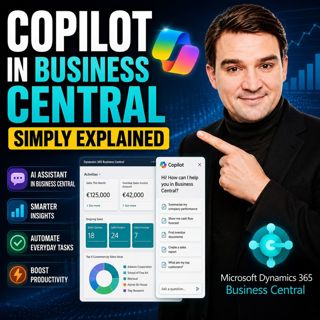
Copilot in Business Central - Simply Explained

Copilot in Business Central - Simply Explained

Microsoft Copilot is becoming a core part of Dynamics 365 Business Central, transforming it from a traditional ERP system into an AI-powered business assistant. Instead of switching between applicatio...

12 Juli 11min
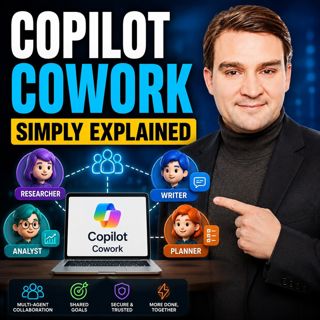
Copilot Cowork - Simply Explained

Copilot Cowork - Simply Explained

Microsoft Copilot changed how we interact with AI by helping us summarize emails, draft documents, and answer questions. But there's still one major problem: you're responsible for connecting everythi...

12 Juli 13min
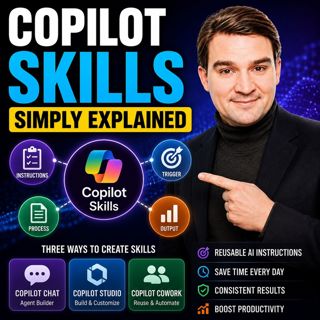
Copilot Skills - Simply Explained

Copilot Skills - Simply Explained

Copilot Skills are one of Microsoft's most important AI building blocks, yet they're also one of the most misunderstood. Depending on which Microsoft product you're using, the same concept appears und...

12 Juli 13min

Microsoft Scout - Simply Explained

Microsoft Scout - Simply Explained

Microsoft has introduced a growing family of AI assistants, and Microsoft Scout represents the next major step in that evolution. While Copilot helps when you ask questions and Cowork executes multi-s...

12 Juli 16min

Compliance as Code: The Architect’s Blueprint for Automated Trust

Compliance as Code: The Architect’s Blueprint for Automated Trust

Compliance has traditionally been treated as documentation. Policies live in PDFs, access reviews sit in spreadsheets, and governance depends on people remembering to follow processes. But cloud envir...

12 Juli 1h 13min
Populärt inom Politik & nyheter

svenska-fall
aftonbladet-krim
tv4-nyheterna-story
p3-krim
flashback-forever
aftonbladet-daily
motiv
rss-sanning-konsekvens
rss-vad-fan-hande
de-fyras-gang
rss-krimstad
spar
rss-krimreportrarna
mannen-utan-spar
rss-flodet
rss-frandfors-horna
kungligt
olyckan-inifran
grans
rss-aftonbladet-krim