

How Personas and Real Use Cases Decide Whether You Need a Copilot Studio Agent at All

How Personas and Real Use Cases Decide Whether You Need a Copilot Studio Agent at All

Copilot Agent or Copilot Hype?

Do you really need your own Copilot Studio Agent—or is that just the AI hype talking? This is the decision almost every business runs into right now. Start too fast with the wrong Copilot, and you waste months. Start too slow, and you fall behind competitors already automating smarter. In this episode, I walk you through how we tested that question inside a real project, and the surprising twist we found when we compared a quick generic solution with a dedicated Copilot Studio build.

We begin with the false promise of a quick fix. The fastest way to “add AI” is often also the fastest way to get stuck: polished demos and ready‑made copilots look efficient, but they rarely match your real workflows, systems or data. What starts as a shortcut often ends in low adoption and “AI toys” nobody trusts for serious work. You’ll hear how generic copilots act like bright generalists—great at surface‑level summaries, weak at deep, domain‑specific answers—because they aren’t grounded in your CRM, pricing, compliance rules or internal language. Once users notice that gap, confidence drops and usage quietly dies, even while dashboards still show a “successful deployment.”

From there, we dig into personas: who the agent is really for. Designing “for everyone” sounds inclusive but produces something so watered down that nobody gets real value. Instead, we show how defining clear personas—like a field engineer who needs instant compliance answers, an IT helpdesk agent under pressure, or a finance analyst with strict data boundaries—completely changes which data sources you connect, how you phrase answers and which flows you build first. Personas turn vague ambition into a compass: if a feature doesn’t help that specific role do real work faster, it doesn’t belong in version one. That discipline keeps your Copilot from becoming a chatty generalist and turns it into a specialist people actually rely on.

Finally, we map out how to choose between “use what exists” and “build with Copilot Studio” without guessing. You’ll learn a simple decision path: start with the real problem, define the personas, list the systems and decisions involved, and then test whether an off‑the‑shelf Copilot can truly handle the job—or whether you need a tailored agent that understands your processes, data and language from the inside. The episode closes with a practical rule: going slower at the start—by focusing on personas and fit—often gets you to meaningful AI adoption faster than chasing the first shiny Copilot you can switch on.

WHAT YOU’LL LEARN
  • Why generic copilots look great in demos but stall in real‑world use.
  • How clear personas turn “AI for everyone” into focused agents that actually help.
  • When to stick with existing Copilots and when a Copilot Studio agent is worth the effort.
  • How to avoid hype‑driven AI projects that launch fast and quietly fade away.
THE CORE INSIGHT

The core insight of this episode is that the real Copilot decision isn’t “agent or no agent”—it’s “generic speed or tailored fit.” Once you design around real people, real tasks and real systems, you stop chasing AI hype and start building agents that become part of everyday work instead of another forgotten experiment.

WHO THIS EPISODE IS FOR
  • Leaders under pressure to “do something with AI” but unsure where to start.
  • Product, IT and business owners deciding between off‑the‑shelf copilots and custom agents.
  • Teams who have already tried one Copilot and now want to know what to do differently next time.
ABOUT THE AUTHOR / HOST

Mirko Peters is a Microsoft 365, Copilot and automation consultant and host of the M365.FM podcast, helping organizations move from AI demos to agents that solve real problems for clearly defined roles. He works with teams to define personas, map workflows and decide where Copilot Studio agents make sense—so AI becomes a practical capability embedded in daily work, not just a checkbox in strategy slides.


Become a supporter of this podcast: https://www.spreaker.com/podcast/m365-fm-modern-work-security-and-productivity-with-microsoft-365--6704921/support.

Det här avsnittet är hämtat från ett öppet RSS-flöde och publiceras inte av Podme. Det kan innehålla reklam.

Avsnitt(743)

How to Become a High: Performing Microsoft Partner

How to Become a High: Performing Microsoft Partner

What separates an average Microsoft partner from a high-performing one? It isn't simply winning more deals or hiring more salespeople. The most successful partners build systems that continuously gene...

15 Juli 17min

The Microsoft Partner Journey Explained

The Microsoft Partner Journey Explained

The Microsoft AI Cloud Partner Program has evolved dramatically, but many partners are still approaching it with an outdated mindset. In this episode of m365.fm, we break down the complete Microsoft P...

15 Juli 14min

How to Build a Winning Microsoft Partner Strategy

How to Build a Winning Microsoft Partner Strategy

What separates Microsoft partners that consistently grow from those that simply maintain their status? In this episode of m365.fm, we break down the four strategic pillars that transform Microsoft par...

15 Juli 17min
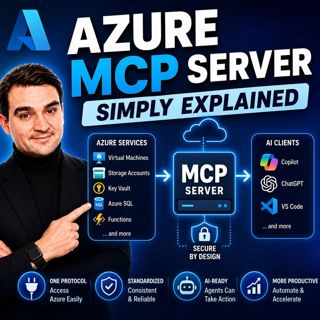
Azure MCP Server - Simply Explained

Azure MCP Server - Simply Explained

Artificial Intelligence is rapidly evolving from simply answering questions to actively performing real work. But for AI agents to become truly useful, they need secure access to cloud resources, data...

15 Juli 17min
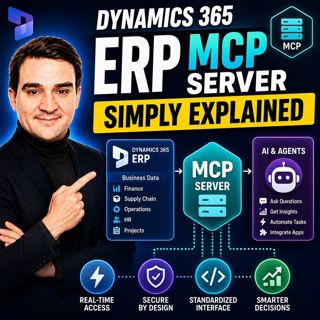
Dynamics 365 ERP MCP Server - Simply Explained

Dynamics 365 ERP MCP Server - Simply Explained

Artificial Intelligence is transforming how businesses interact with enterprise systems, but connecting AI assistants to ERP platforms has traditionally required custom APIs, complex integrations, and...

15 Juli 13min
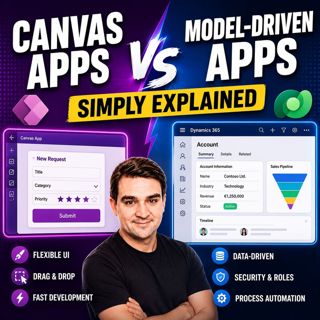
Canvas Apps vs Model-Driven Apps - Simply Explained

Canvas Apps vs Model-Driven Apps - Simply Explained

Microsoft Power Apps offers two primary ways to build business applications: Canvas Apps and Model-Driven Apps. At first glance they may appear similar, but they are designed for very different scenar...

15 Juli 15min

Infrastructure as Code - Simply Explained

Infrastructure as Code - Simply Explained

Managing cloud infrastructure by clicking through the Azure Portal might work for a single virtual machine, but it quickly becomes slow, inconsistent, and difficult to maintain as environments grow. I...

15 Juli 16min
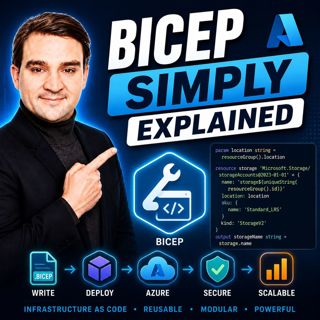
Bicep - Simply Explained

Bicep - Simply Explained

Deploying Azure resources through the Azure Portal is great for learning, but it quickly becomes difficult to repeat, document, and automate. That's where Bicep comes in. In this episode, we explain M...

15 Juli 16min

Populärt inom Politik & nyheter

aftonbladet-krim
svenska-fall
p3-krim
tv4-nyheterna-story
aftonbladet-daily
flashback-forever
rss-vad-fan-hande
motiv
de-fyras-gang
rss-krimreportrarna
rss-krimstad
spar
rss-sanning-konsekvens
rss-frandfors-horna
rss-flodet
mannen-utan-spar
rss-aftonbladet-krim
kungligt
politiken
krimmagasinet