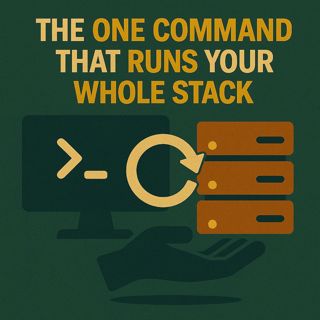

How Aspire Fixes Local Dev Setup, Orchestration and Debugging for Modern Apps

How Aspire Fixes Local Dev Setup, Orchestration and Debugging for Modern Apps

How many hours have you lost just trying to get your local dev environment to behave—before you even touch a line of business logic? Spinning up APIs, configuring databases, syncing services and chasing outdated Docker scripts quietly turns “setup” into a second job for every developer. In this episode, we unpack why local environments have become fragile flat-pack furniture projects, what that hidden time drain costs your team in delivery and morale, and how a single Aspire command aims to orchestrate your frontend, backend and dependencies so the whole stack starts cleanly instead of wobbling on first run.

We start with the onboarding and day‑two reality most teams never quantify. New hires arrive ready to ship, only to spend their first days decoding old YAML, fixing broken scripts and asking teammates for missing environment variables. Even senior developers get trapped in the same loop after a “simple” change: restart a service, rebuild a container, tweak logging, repeat. You’ll recognize how these tiny, constant interruptions don’t show up on any roadmap—but cumulatively steal days of focus every month and make the whole system feel one crash away from chaos.

Then we move to what Aspire changes with a single command. Instead of juggling separate Docker Compose files, ad‑hoc scripts and undocumented startup orders, you run one instruction that brings services online in the right sequence and wires them together. Frontend, backend, databases and workers start as one coordinated environment, using the containers and technologies you already have rather than forcing a complete replatform. We talk through how this approach reduces config drift, makes mixed stacks (for example .NET, Node, Python) more realistic to manage, and gives you a predictable “green path” from idea to running code.

Finally, we look at what happens after the stack is up: debugging and observability. Aspire isn’t just about booting containers; it adds an integrated view of service health, logs and traces (via OpenTelemetry) so you stop guessing which component is broken. Instead of hopping between terminals and log windows, you use one dashboard to see which services are failing, where requests are getting stuck and how dependencies behave under load. The result is a dev loop that’s not only faster to start, but more transparent to troubleshoot—so your energy goes into building features, not fighting the environment.

WHAT YOU’LL LEARN
  • Why local dev setup and config drift quietly drain more time than actual coding.
  • How a single Aspire command can orchestrate your whole stack without forcing a new architecture.
  • How integrated health, logs and traces reduce debugging by replacing guesswork with clear signals.
  • How to think about Aspire as a way to protect developer focus, onboarding speed and delivery rhythm.
THE CORE INSIGHT

The core insight of this episode is that your bottleneck isn’t developer skill—it’s an environment that makes shipping feel like a scavenger hunt every time. Once you treat startup and observability as first‑class problems and use tools like Aspire to tame them, you reclaim the energy and attention that should have been going into real product work all along.

WHO THIS EPISODE IS FOR
  • Developers tired of wrestling local environments before they can write code.
  • Tech leads and architects responsible for onboarding speed and dev productivity.
  • Platform and DevOps engineers looking for ways to simplify multi‑service stacks without rewriting them.
ABOUT THE AUTHOR / HOST

Mirko Peters is a Microsoft 365, Azure and developer productivity consultant and host of the M365.FM podcast, helping teams turn fragile local environments into predictable, observable dev stacks. He works with organizations to cut setup friction, reduce config drift and design workflows where a single command and a clear dashboard replace hours of invisible maintenance work.

Become a supporter of this podcast: https://www.spreaker.com/podcast/m365-fm-modern-work-security-and-productivity-with-microsoft-365--6704921/support.

Det här avsnittet är hämtat från ett öppet RSS-flöde och publiceras inte av Podme. Det kan innehålla reklam.

Avsnitt(766)

Managed Identities - Simply Explained

Managed Identities - Simply Explained

Managing passwords, connection strings, client secrets, and certificates has always been one of the biggest challenges when building secure cloud applications. Every application that connects to Azure...

16 Juli 16min
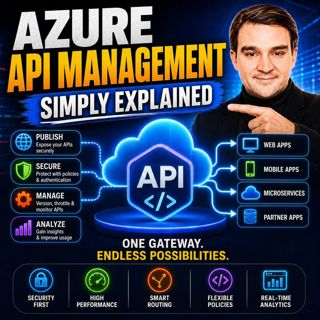
Azure API Management - Simply Explained

Azure API Management - Simply Explained

Azure API Management (APIM) is one of the most important services in Microsoft Azure for organizations building modern cloud applications, microservices, and enterprise integrations. While APIs make i...

16 Juli 14min
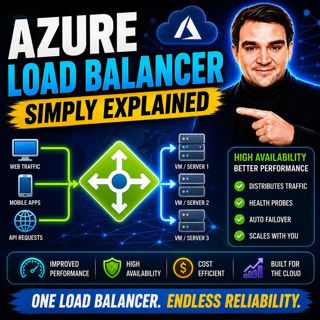
Azure Load Balancer — Simply Explained

Azure Load Balancer — Simply Explained

Every application starts small. A single virtual machine serves your website, processes customer requests, and handles all incoming traffic. At first, everything works perfectly. But as your user base...

16 Juli 15min
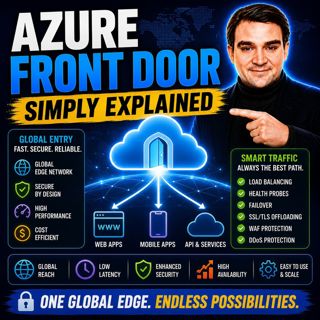
Azure Front Door - Simply Explained

Azure Front Door - Simply Explained

Building a website that performs well for users around the world is far more challenging than simply deploying a web application to Azure. A server hosted in North America may respond quickly for user...

16 Juli 17min
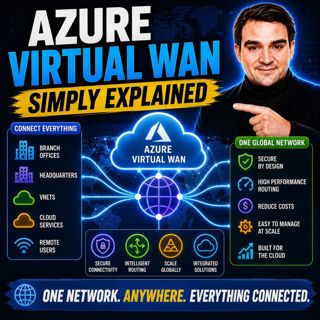
Azure Virtual WAN - Simply Explained

Azure Virtual WAN - Simply Explained

Building a global Azure network manually becomes increasingly difficult as your organization grows. What starts as a simple hub-and-spoke deployment quickly turns into a maze of virtual network peerin...

16 Juli 14min
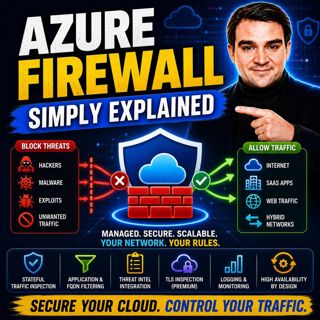
Azure Firewall - Simply Explained

Azure Firewall - Simply Explained

Securing a traditional office network was relatively straightforward—you installed a physical firewall at the edge of your network and inspected everything entering or leaving your building. But cloud...

16 Juli 13min
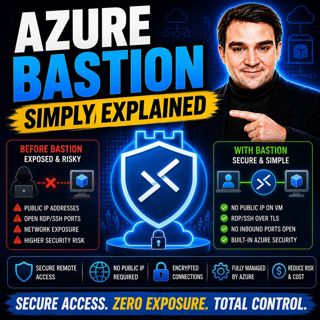
Azure Bastion - Simply Explained

Azure Bastion - Simply Explained

Secure remote access is one of the biggest challenges in cloud infrastructure. For years, administrators connected to Azure virtual machines by assigning public IP addresses and opening RDP or SSH por...

16 Juli 11min
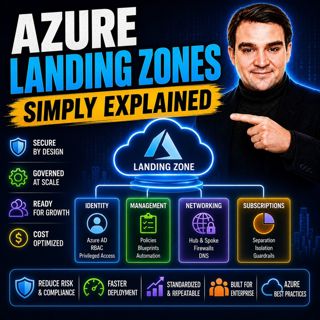
Azure Landing Zones - Simply Explained

Azure Landing Zones - Simply Explained

Building workloads in Azure is easy. Building an Azure environment that remains secure, scalable, compliant, and manageable for years is much harder. Without a solid foundation, organizations quickly ...

16 Juli 16min

Populärt inom Politik & nyheter

aftonbladet-krim
svenska-fall
rss-krimstad
tv4-nyheterna-story
p3-krim
aftonbladet-daily
flashback-forever
rss-sanning-konsekvens
motiv
rss-krimreportrarna
de-fyras-gang
spar
mannen-utan-spar
rss-frandfors-horna
rss-vad-fan-hande
rss-flodet
rss-aftonbladet-krim
krimmagasinet
olyckan-inifran
dagens-eko