
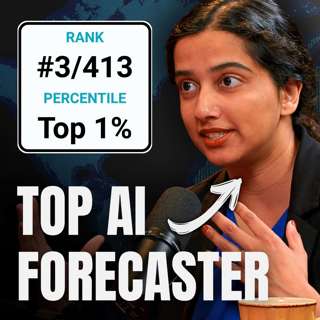
#228 – Eileen Yam on how we're completely out of touch with what the public thinks about AI

#228 – Eileen Yam on how we're completely out of touch with what the public thinks about AI

If you work in AI, you probably think it’s going to boost productivity, create wealth, advance science, and improve your life. If you’re a member of the American public, you probably strongly disagree.

In three major reports released over the last year, the Pew Research Center surveyed over 5,000 US adults and 1,000 AI experts. They found that the general public holds many beliefs about AI that are virtually nonexistent in Silicon Valley, and that the tech industry’s pitch about the likely benefits of their work has thus far failed to convince many people at all. AI is, in fact, a rare topic that mostly unites Americans — regardless of politics, race, age, or gender.

Links to learn more, video, and full transcript: https://80k.info/ey

Today’s guest, Eileen Yam, director of science and society research at Pew, walks us through some of the eye-watering gaps in perception:

  • Jobs: 73% of AI experts see a positive impact on how people do their jobs. Only 23% of the public agrees.
  • Productivity: 74% of experts say AI is very likely to make humans more productive. Just 17% of the public agrees.
  • Personal benefit: 76% of experts expect AI to benefit them personally. Only 24% of the public expects the same (while 43% expect it to harm them).
  • Happiness: 22% of experts think AI is very likely to make humans happier, which is already surprisingly low — but a mere 6% of the public expects the same.

For the experts building these systems, the vision is one of human empowerment and efficiency. But outside the Silicon Valley bubble, the mood is more one of anxiety — not only about Terminator scenarios, but about AI denying their children “curiosity, problem-solving skills, critical thinking skills and creativity,” while they themselves are replaced and devalued:

  • 53% of Americans say AI will worsen people’s ability to think creatively.
  • 50% believe it will hurt our ability to form meaningful relationships.
  • 38% think it will worsen our ability to solve problems.

Open-ended responses to the surveys reveal a poignant fear: that by offloading cognitive work to algorithms we are changing childhood to a point we no longer know what adults will result. As one teacher quoted in the study noted, we risk raising a generation that relies on AI so much it never “grows its own curiosity, problem-solving skills, critical thinking skills and creativity.”

If the people building the future are this out of sync with the people living in it, the impending “techlash” might be more severe than industry anticipates.

In this episode, Eileen and host Rob Wiblin break down the data on where these groups disagree, where they actually align (nobody trusts the government or companies to regulate this), and why the “digital natives” might actually be the most worried of all.

This episode was recorded on September 25, 2025.

Chapters:

  • Cold open (00:00:00)
  • Who’s Eileen Yam? (00:01:30)
  • Is it premature to care what the public says about AI? (00:02:26)
  • The top few feelings the US public has about AI (00:06:34)
  • The public and AI insiders disagree enormously on some things (00:16:25)
  • Fear #1: Erosion of human abilities and connections (00:20:03)
  • Fear #2: Loss of control of AI (00:28:50)
  • Americans don't want AI in their personal lives (00:33:13)
  • AI at work and job loss (00:40:56)
  • Does the public always feel this way about new things? (00:44:52)
  • The public doesn't think AI is overhyped (00:51:49)
  • The AI industry seems on a collision course with the public (00:58:16)
  • Is the survey methodology good? (01:05:26)
  • Where people are positive about AI: saving time, policing, and science (01:12:51)
  • Biggest gaps between experts and the general public, and where they agree (01:18:44)
  • Demographic groups agree to a surprising degree (01:28:58)
  • Eileen’s favourite bits of the survey and what Pew will ask next (01:37:29)

Video and audio editing: Dominic Armstrong, Milo McGuire, Luke Monsour, and Simon Monsour
Music: CORBIT
Coordination, transcripts, and web: Katy Moore

Avsnitt(320)

Every AI Company's Safety Plan is 'Use AI to Make AI Safe'. Is That Crazy? | Ajeya Cotra

Every AI Company's Safety Plan is 'Use AI to Make AI Safe'. Is That Crazy? | Ajeya Cotra

Every major AI company has the same safety plan: when AI gets crazy powerful and really dangerous, they’ll use the AI itself to figure out how to make AI safe and beneficial. It sounds circular, almos...

17 Feb 2h 54min

What the hell happened with AGI timelines in 2025?

What the hell happened with AGI timelines in 2025?

In early 2025, after OpenAI put out the first-ever reasoning models — o1 and o3 — short timelines to transformative artificial general intelligence swept the AI world. But then, in the second half of ...

10 Feb 25min
#179 Classic episode – Randy Nesse on why evolution left us so vulnerable to depression and anxiety

#179 Classic episode – Randy Nesse on why evolution left us so vulnerable to depression and anxiety

Mental health problems like depression and anxiety affect enormous numbers of people and severely interfere with their lives. By contrast, we don’t see similar levels of physical ill health in young p...

3 Feb 2h 51min
#234 – David Duvenaud on why 'aligned AI' would still kill democracy

#234 – David Duvenaud on why 'aligned AI' would still kill democracy

Democracy might be a brief historical blip. That’s the unsettling thesis of a recent paper, which argues AI that can do all the work a human can do inevitably leads to the “gradual disempowerment” of ...

27 Jan 2h 31min
#145 Classic episode – Christopher Brown on why slavery abolition wasn't inevitable

#145 Classic episode – Christopher Brown on why slavery abolition wasn't inevitable

In many ways, humanity seems to have become more humane and inclusive over time. While there’s still a lot of progress to be made, campaigns to give people of different genders, races, sexualities, et...

20 Jan 2h 56min
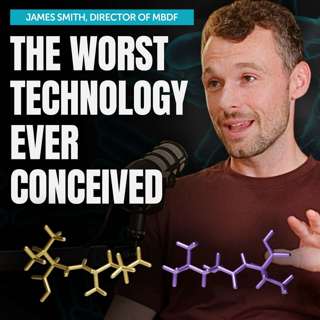
#233 – James Smith on how to prevent a mirror life catastrophe

#233 – James Smith on how to prevent a mirror life catastrophe

When James Smith first heard about mirror bacteria, he was sceptical. But within two weeks, he’d dropped everything to work on it full time, considering it the worst biothreat that he’d seen described...

13 Jan 2h 9min
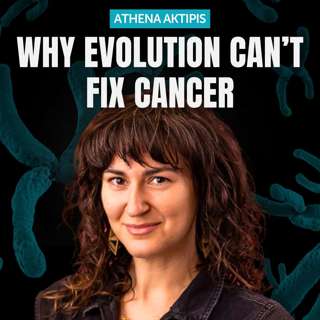
#144 Classic episode – Athena Aktipis on why cancer is a fundamental universal phenomena

#144 Classic episode – Athena Aktipis on why cancer is a fundamental universal phenomena

What’s the opposite of cancer? If you answered “cure,” “antidote,” or “antivenom” — you’ve obviously been reading the antonym section at www.merriam-webster.com/thesaurus/cancer.But today’s guest Athe...

9 Jan 3h 30min
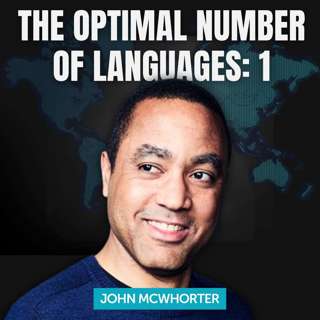
#142 Classic episode – John McWhorter on why the optimal number of languages might be one, and other provocative claims about language

#142 Classic episode – John McWhorter on why the optimal number of languages might be one, and other provocative claims about language

John McWhorter is a linguistics professor at Columbia University specialising in research on creole languages. He's also a content-producing machine, never afraid to give his frank opinion on anything...

6 Jan 1h 35min

Populärt inom Utbildning

rss-bara-en-till-om-missbruk-medberoende-2
historiepodden-se
det-skaver
nu-blir-det-historia
harrisons-dramatiska-historia
rss-viktmedicinpodden
johannes-hansen-podcast
not-fanny-anymore
alska-oss
allt-du-velat-veta
roda-vita-rosen
rss-sjalsligt-avkladd
sektledare
sa-in-i-sjalen
i-vantan-pa-katastrofen
rss-beratta-alltid-det-har
rss-max-tant-med-max-villman
rss-basta-livet
dumforklarat
psykologsnack