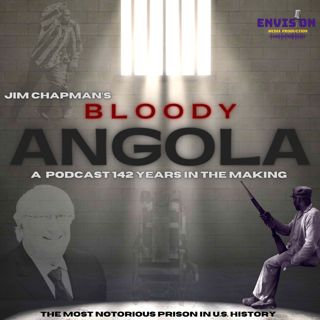
Part 2 | The Richest Man In Bloody Angola: Wilbert Rideau

Part 2 | The Richest Man In Bloody Angola: Wilbert Rideau

In this Part 2 we wraps up this series "The Richest Man in Bloody Angola" .In this episode, we dive into the story of Wilbert Rideau, a man who spent 44 years in prison for a crime he committed in 1961. We explore his journey from a young man involved in a tragic incident to his time in prison, including solitary confinement and his reflections on regret and survival. We discuss his various trials, legal battles, and ultimately his release after being found guilty of manslaughter in his fourth trial. Wilbert's transformation during his time in prison, his accomplishments as a journalist, filmmaker, and author post-release, and the challenges he faced reintegrating into society are all highlighted. We also touch on the perspectives of the victims' families and the complexities of forgiveness and redemption. The episode explores the question of rehabilitation and whether Wilbert Rideau, now a successful author and consultant, has truly changed from the person he was in 1961. Ultimately, we reflect on Wilbert Rideau's journey and the contrasting feelings of justice, forgiveness, and the ongoing impact of his release.
Timestamps:0:01:51 Facing Regrets and Solitary Confinement0:03:37 Hope in Solitude0:06:30 The Hope of Clemency0:09:39 Linda LaBranche's Support0:13:55 Legal Dream Team with Johnny Cochran0:16:47 Judicial Rollercoaster0:21:33 Opening Statements of Fourth Trial0:26:01 Conclusion of Fourth Trial0:28:44 Rideau's Release and Community Divide0:37:00 Concerns and Plans Post-Prison0:39:14 Wilbert Rideau's Biographical Success0:41:58 The Richest Man in Bloody Angola

Advertising Inquiries: https://redcircle.com/brands

Privacy & Opt-Out: https://redcircle.com/privacy

Avsnitt(171)

The Lake House Murder | The Crimes of William Lee Jr. and ACT 104 Part 1

The Lake House Murder | The Crimes of William Lee Jr. and ACT 104 Part 1

In this episode of Bloody Angola: A Podcast by Woody Overton and Jim Chapman, they bring you into the case of the murder of Audra Bland. In 2007 William Lee Jr. was convicted of her murder and sentenced to life in prison at Louisiana State Penitentiary. A new law passed in 2021 made way for a reduction in his sentence, but that was just the start of a winding roller coaster ride that eventually led to the Louisiana State Supreme Court and a landmark decision pushed by Governor Elect and Attorney General Jeff Landry.(part 1 of a 3 part series)#bloodyangolapodcast #Thelakehousemurder #williamleejr #Podcast #Louisianastatepenitentiary #jefflandry #louisianaact104GET FREE BREAKFAST FOR LIFE AT HELLOFRESH!HelloFresh delivers step-by-step recipes and fresh, pre-portioned ingredients right to your door. First, you set your meal plan preferences with options for carnivores, vegetarians, calorie-counters, and more. You'll choose from 30+ delicious weekly recipes carefully put together by the amazing chefs!Click Here to get FREE breakfast FOR LIFE!www.Hellofresh.com/BloodyAngolafreeAdvertising Inquiries: https://redcircle.com/brandsPrivacy & Opt-Out: https://redcircle.com/privacy

16 Nov 202340min

Life Means Life

Life Means Life

In today's podcast episode of Bloody Angola we tell you 3 short stories of Life at Louisiana State Penitentiary at Angola including the story of Warden John Whitley who started his professional life and ended it at Angola, the story of Billy Blake Johnson who lost his life attempting to escape Angola, and the Prison View Golf Course which makes "Life" better for the Correctional Officers at Angola.#bloodyangolapodcast #LifemeansLife #JohnWhitley #Podcast #LouisianastatepenitentiaryGET FREE BREAKFAST FOR LIFE AT HELLOFRESH!HelloFresh delivers step-by-step recipes and fresh, pre-portioned ingredients right to your door. First, you set your meal plan preferences with options for carnivores, vegetarians, calorie-counters, and more. You'll choose from 30+ delicious weekly recipes carefully put together by the amazing chefs!Click Here to get FREE breakfast FOR LIFE!www.Hellofresh.com/BloodyAngolafreeTRANSCRIPTBLOODY ANGOLA PODCAST: LIFE MEANS LIFEJim: Hey, everyone. Welcome back to Bloody Angola, a podcast, 142 years in the making the complete story of America's bloodiest prison. And I'm Jim Chapman. Woody Overton could not join us today. We're working on some big, big stuff. And Woody's on assignment, that's all I can say. But there's going to be some really big stuff coming around the bend for everybody, so look forward to that. And I thought today, it would be fun to tell you some of the stories of Angola that you may not be familiar with, that aren't necessarily stories that can fill up, like, a whole hour of content, but at the same time, need to be told and are really good stories. So I wanted to share those with you, and we're going to jump right into it. The first story I'm going to tell you about is actually about a former warden of Angola by the name of John Whitley. And John Whitley was actually the warden of Angola from 1990 until 1995. Look, John Whitley, the prison warden, was probably as prototypical as you can get to a prison warden when you would think of one. Kind of like the opposite of Burl Cain. Burl Cain was someone that, when you saw him, you wouldn't think he was the warden for the largest maximum-security prison in America. Same thing with John Whitley, but on the total opposite end, he is exactly what you would picture. He was a cowboy character. Actually, wore a cowboy hat and dressed with button up shirt. The picture I'm actually looking at now, he has a vest. It's almost like a leather vest over that button up shirt, and wears glasses, mustache, just looks like someone you would picture as a warden. And had a short but storied history at Angola relative to being a warden. Although he started off at the very bottom, and we're going to tell you all about that. John Whitley attended Southeastern Louisiana University in Hammond, Louisiana, which is actually probably about an hour and 20 minutes from Angola. From where we record, right outside of Baton Rouge, it's actually about a half hour from us. It is I guess the second largest college in Louisiana outside of Louisiana State University. Good college. Whitley attended that college. He was actually born in Hammond, Louisiana as well. So he went to school same place he was born in. Now, after he left college, he ended up graduating in 1968. He enlisted in the United States Army. That's important. That was an important step in his life, because that was kind of in the heyday of Vietnam. People weren't necessarily just enlisting into the army. They were getting drafted. So it shows you John Whitley's courage and his commitment to his country that he would enlist in the United States Army. He actually served during the Vietnam War and was discharged in 1970. Now, shortly after that, he started his career in corrections. So Whitley started that career at Angola in 1970, and he rose pretty much through those ranks quickly. He eventually became a deputy warden, and then he was promoted to warden of another Louisiana prison. So he was deputy warden at Angola. I know you've heard about us talk about Hunt Correctional Center, which is a prison, it's kind of like the baby brother to Angola, just a smaller, not so violent a prison as Angola. They needed a warden, and he actually got promoted to the warden of Hunt Correctional. From there, he left the state, and he ran a private prison in Texas. I know you've heard us talk about that with the private prisons are actually-- they're not ran by state employees. They're ran privately, and the state pays them for that service, and Texas has several of those, and he ran one of those private prisons in Texas. Now, in 1990, Louisiana was like, “Man, what's going on here? This guy is in Texas, and he's got all this experience. He's a Louisiana guy, and we need him at Angola.” This was 1990, and Angola was in just a mess at that point, and they needed someone to restore order there, basically. At the time that they were seeking out John Whitley, they were having frequent, very frequent stabbings, suicides. They were dealing with a lot of escapes. And a US federal judge had actually declared, what's known as, a state of emergency at the prison in response to an ACLU lawsuit against the state specifically for the horrendous conditions at Angola. So it was a situation where they needed someone, not only with some Louisiana ties that really cared, but they also needed someone that had the experience to handle such a prison. John Whitley started there, rose all the way up to deputy warden. That was back since 1970. He was the perfect candidate for that. And so he took that job. Within two years, Whitley had pretty much stemmed all of that violence. He established incentives for good behavior, which is something they did not have in Angola prior to his arrival there as warden. Some of those incentives for good behavior, he'd allow the inmates to have extra visits. He would increase the educational opportunities for the inmates. If you were good, maybe you had the opportunity to learn a trade that you had to have good behavior in order to get to learn, like maybe welding or something. I mean, you don't want someone that's causing a bunch of trouble in Angola getting a halt to a welding machine. So those things, he figured out-- He figured out the important thing-- When you're running a prison, and that is you've got to have incentives for the inmates. If there's no incentive for good behavior, they're not going to be good. That's just the bottom line. So that was something he really stemmed, education wise for them. Also, literacy tutoring, computer and paralegal courses. He started bringing those into the prison not quite at the level that Warden Cain did later on, but the infancy of that is a credit to John Whitley and the things that he did. So he also enabled some trustworthy and deserving inmates to travel outside of the prison as part of some athletic teams and inmate bands that provided entertainment for-- They would entertain churches, they would entertain nursing homes and other charitable organizations throughout the area. John Whitley was kind of the guy who came up with the idea to start offering these things as a deterrent, if you will, against violence. He knew that these programs were the way to start. So he also launched an outreach program to all the criminal justice programs in the state of Louisiana. So he would basically send prison officials and inmates, and they would go into these college classrooms, and they would help, both the students and the faculty better understand the realities of not only managing a prison, but life in prison as an inmate. Those things weren't done, at least with Angola inmates, before John Whitley became warden. Now, one thing that's very important in prison, but is not commonly practiced, I guess you could say, is having an open-door policy with the media. Take it from me, y'all know that I love to research. It's not easy at all to find information about Angola, or probably most of your state prisons, and that is, they keep things that go on inside that prison, and you got to really dig to find information on stuff like that. But he was committed to, what I would call, an open-door policy with the media, and even The Angolite, which-- We've done several episodes about The Angolite and read many, many articles on that. Well, The Angolite, the biggest concern with that magazine as time went on, and I noticed this as I was reading it was, it got a little farther and farther away from what was actually happening. What they were printing was the truth. But where in the 40s and 50s, when The Angolite was produced, they were talking about all these escapes and stabbings and all the things that happened inside that prison. When it got around to the 80s and 90s, it was a lot softer. There were things going on, but they weren't allowing The Angolite publishers or editors, rather, to print that [chuckles] or talk about it. And so didn't necessarily mean it wasn't going on. It's just the editors weren't putting it in there. But he wanted to have a welcoming nature with the media and try to cooperate with them rather.And so one of the things that he allowed The Angolite to do was to produce material for radio and television journalism inside the prison, which-- Believe it or not, they have their own radio station there. They have a lot of film equipment there. They can actually film documentaries and stuff. The prisoners actually learn how to do this, and are as good as-- They got some producers in Angola that are as good or better than I am at doing that. Some of them probably better, and just amazing people out inside that prison that produced these things. But he didn't want them censored. The claim is that John Whitley did not censor the radio shows and stuff that were coming out of Angola, which is very interestin

9 Nov 202353min

To Kill Again

To Kill Again

Woody is stuck in the snow on the way back from Wisconsin, but it did not stop Jim from making sure you got your Bloody Angola fix for this week! He broke a previously unreleased episode from the Patreon vault out of jail! In this episode Bloody Angola Podcast covers several stories of serial killers who were released from prison on parole only to commit more murders.#bloodyangolapodcast #tokillagain #serialkillersGET FREE BREAKFAST FOR LIFE AT HELLOFRESH!HelloFresh delivers step-by-step recipes and fresh, pre-portioned ingredients right to your door. First, you set your meal plan preferences with options for carnivores, vegetarians, calorie-counters, and more. You'll choose from 30+ delicious weekly recipes carefully put together by the amazing chefs!Click Here to get FREE breakfast FOR LIFE!www.Hellofresh.com/BloodyAngolafreeTRANSCRIPTBLOODY ANGOLA PODCAST: TO KILL AGAINJim: Hey, everyone, and welcome back to Bloody Angola, a podcast 142 years in the making the complete story of America's bloodiest prison. And I am Jim Chapman. And as you probably noticed, Woody Overton was not helping me with that intro. And I promise y'all, he's going to be back next week. Super-secret mission. Today, I thought it would be fun to talk a little bit with y'all about paroled, murderers and serial killers. And this is going to be kind of a companion podcast. We're not going to be talking specifically about Angola. There's just so much content out there, y'all, with all the presence, all these historic presence throughout the nation. And so today, I wanted to bring y’all something a little bit different. So first of all, just to discuss a little bit about parole. So parole is when you get released, but you're still in the charge of the prison system. So basically, they're letting you out back into society, but there are certain parameters you have to live up to. A lot of times, these folks that get paroled, they are under, what's called, supervised parole, where they have to report into a parole officer. Many times, you have to wear the little ankle bracelet that is basically like GPS and those sort of things. A lot of times, you can't leave a certain area. They've got to pretty much know where you are at all times, which is a great thing. But a lot of people think, when you get paroled, you're getting released from the system. You're not. Basically, they're saying you can serve out the rest of your sentence in society and you don't have to be, in Angola's case, behind the wire. But if you do anything wrong, you have to serve out the remainder of your sentence. And in some cases, a lot more than that, because then you're breaking another law. And that's a whole another case you just caught in many instances. So that's what parole is. Now, there's a lot of killers that you wouldn't believe were paroled nationally, and I'm going to give you a few of those today. We'll start with Kenneth Allen McDuff. So who is Kenneth Allen McDuff? Well, he was paroled not, so he could necessarily adjust a life, not to reduce recidivism, which is basically re-offense in all criminal justice systems, whether it's the United States or anywhere else. They track recidivism, which is, you get out of jail and then you continue to commit crime and you end up back in jail. Well, the United States has a high rate of recidivism. Many, many an extremely high percentage of prisoners that get released back into society do recommit, and end up back in prison. There's a lot of reasons for that. Sometimes they're just bad people and they're never going to quit doing what they do, and then sometimes they get released and really do try to change their life around. But for whatever reason, they end up recommitting like, maybe they couldn't get a job because they had a felony. So they resort back to the one thing they know. If they were someone that robbed people, they continue to rob because that's the only way they know to make money, and that's not making an excuse. But in some cases, some do try to change. And the way society is set up, in some ways, that's hard to do when you've got felonies on your record and you spend a long time in prison. So I would say the vast majority are just bad people and they just recommit, but not all of them are thrown into that bucket. So Kenneth Allen McDuff, well, he was paroled not because of any of those reasons and not because he no longer posed a threat to public society. He was paroled to reduce overcrowding, y’all. Big problem right now. Let's talk about that for a second. Overcrowding. So I would say the vast majority of the people in prison definitely deserve to be there. Do people go to prison that didn't do anything wrong and get wrongfully accused of a crime? Absolutely. It happens. As a matter of fact, I've seen stats as high as 5% to 6%, even higher than that in some cases. But if you find the average on those percentages, I've seen it's around 6% actually didn't commit the crime, they're in jail for a crime they didn't commit. And so it does happen. That contributes somewhat to overcrowding. A lot of it is the people that are in prison, there's a lot of people that aren't necessarily drug dealers, but they got caught with drugs, they're in prison. In a lot of cases, prison is not going to help rehabilitate a drug addict. And most drug addicts that have turned the corner and gotten on the good side of life, I guess you could say, they will tell you, prison a lot of times will make it worse. They need other types of help. But the prisons are full of drug addicts. And so that is probably the number one cause of overcrowding. Now, from 1966 to 1992, Kenneth McDuff, get this, committed between 9 and 22 murders in Texas. 9 to 22 murders, and they released him free into society on parole. McLennan County Sheriff Parnell McNamara described McDuff as a “cold-blooded psychopathic killer who was more evil than the devil himself. Going as far to say McDuff never should have been released,” and I didn't have to read you that quote to figure that out. 9 to 22 murders, damn right he should have never been released. So he was on death row for actually murdering three teenagers in 1966. This dude was on death row, but his sentence got reduced to life with the possibility of parole in 1972. And that happens in a lot of cases. There's many, many lifers in Angola and in all kinds of prisons throughout the country that actually got their sentences reduced and changed to life in prison. So no different for McDuff. In 1972, his sentence was reduced to life. But get this, he was released in 1989 due to prison overcrowding. Absolutely crazy. Now, in 1990, the parole board actually had a chance to send him back to prison after McDuff was arrested for chasing and threatening black teenagers. That was enough. Remember what I told you? They let him out of prison, but he is still under all those prison parameters. Meaning, if he commits any crime, he has to serve out the remainder of his sentence, which in McDuff's case was life. So he chased down and he made a bunch of threats to these black teenagers. But neither of his actions nor the racial incentive he expressed at his parole hearing returned him to his prison cell. He just didn't go back to prison for it. I guess they figured it was just threatening. He didn't actually do anything. They regretted it because he killed at least three women between his release on parole and his return to prison finally in 1992. And he actually went to prison at that point for abducting and murdering a convenience-store clerk named Melissa Northrup and an accountant named Colleen Reed. He never expressed any remorse for his crimes. And he was finally executed by lethal injection in 1998. So this dude actually got released from prison. Well, first, he got his sentence changed from the death sentence to life in prison, then he gets released, then he kills at least three more people that they know of. He gets convicted of two of those, goes back on death row, and gets executed by lethal injection in 1998. So if you want to learn more about this asshole, you can definitely-- I invite you to go to google and just google Kenneth Allen McDuff. It's a pretty crazy story that one day we're going to bring to you. So I'm going to tell you about another one. His name is Loren Herzog, spelled L-O-R-E-N. So it may be Loren, but we're going with Loren, just because I'm not quite sure exactly how it's pronounced. But he was known as the California Speed Freak Killer. His last victim appeared to have been himself. Now, after committing a number of murders with Wesley Shermantine, who was a friend of his since childhood, he was sentenced to 78 years to life for murdering and raping Cyndi Vanderheiden. In 2004, an appeals court found that his confession may have been coerced, and a new trial was ordered for him. Now, when offered a plea deal, he agreed to plead guilty to manslaughter in exchange for a 14-year sentence, and he was actually paroled in 2010. Can you imagine? That sentence is 78 years to life. And over what was basically a technicality, his sentence gets reduced to manslaughter and he gets out of prison in 2010. So two years later, the parole agent who was monitoring him using GPS technology, just like I told you about at the beginning, those ankle bracelets and such, found that the tracking bracelet had a low battery. When Herzog failed to answer his telephone, the agent notified police and they found Herzog dead inside the trailer he inhabited on a fenced off property outside of the prison. So police basically investigated his death as a possible suicide. So the motive for a suicide was basically thought to have been his knowledge that Shermantine intended to tell police where the bodies of their victims were located. So he wasn't

2 Nov 202336min

River Parishes Serial Killer Part 2 | The Hunt For Daniel Blank

River Parishes Serial Killer Part 2 | The Hunt For Daniel Blank

In this episode of Bloody Angola: A True Crime Podcast by Woody Overton and Jim Chapman we bring you inside the hunt for the River Parishes Serial Killer Daniel Blank who terrorized the Parishes of Ascension, St James, and St John Parish in 2007 & 2008. #DanielBlank #Serialkiller #louisiana #riverparishesserialkiller #bloodyangolapodcast #truecrimeGET 50% OFF PLUS FREE SHIPPING AT HELLOFRESH!HelloFresh delivers step-by-step recipes and fresh, pre-portioned ingredients right to your door. First, you set your meal plan preferences with options for carnivores, vegetarians, calorie-counters, and more. You'll choose from 30+ delicious weekly recipes carefully put together by the amazing chefs!Click Here to Take advantage of 16 FREE MEALS and FREE SHIPPING!www.Hellofresh.com/BloodyAngola50TRANSCRIPTBLOODY ANGOLA PODCAST RIVER PARISHES SERIAL KILLER PART 2 Jim: Hey everyone, and welcome back to Bloody- Woody: -Angola.  Jim: A podcast 142 years in the making.  Woody: The Complete Story of America's Bloodiest Prison.  Jim: And I'm Jim Chapman.  Woody: And I'm Woody Overton.  Jim: We're in Part 2-  Woody: Part 2, baby. Jim: -of the River Parishes. Woody: Serial killer. Jim: Yes. Just real quick, where we left off in Part 1. Of course, Victor Rossi, October 17th of 1996, was murdered. On April 9th of 1997, Lillian Philippe was found murdered. On May 18th of 1997, Barbara Bourgeois was found murdered. On May 9th of 1997, Sam and Luella Arcuri found murdered. May 14th of 1997, Joan Brock found murdered. And July 7th of 1997, the attempted murder of Leonce and Joyce Millet. And on November 14th of 1997, Daniel Blank finally arrested in Onalaska, Texas. So we're going to pick up from that point. They bring him back to Louisiana.  Woody: This is after he confessed, y’all.  Jim: And look, these are small town detectives, and they got a serial killer in the back of that vehicle. And one of the comments that the detective made was when they pulled into the parish, you had droves of people on both sides of the road and give you goosebumps and they're cheering. And these detectives, this meant something to this community, what these guys have done. So, they start, obviously you get back, and now you've got this guy off the street and you're starting to piece things together at this point. Woody: Just because you make an arrest doesn't mean the case is over by a long shot. You're going to continue to work and gain more evidence to get the prosecution ultimately. Jim: And especially one like this, where there was no physical evidence. I don't know if I'd say he was smart enough, but for whatever reason, he didn't leave behind fingerprints, he didn't leave behind DNA, which was amazing considering the brutality of these killings.  Woody: I would imagine he was gloved up. Jim: Yeah.  Woody: He wasn't a dummy. Jim: No.  Woody: Doesn't mean he was formally educated. He was smart.  Jim: That's right. And so, they do, they start investigating it. And guess what they do? Woody: Here we go, y'all. Not only was he arrested, but his girlfriend was arrested. And we'll go to an article, it says Destrehan. Y'all, that's another town in St. John, I believe. The article from the AP Wire says, "Investigators have arrested the woman who lived with Daniel Blank in Texas, saying she drove the accused serial killer to the homes of the people he killed and robbed in Louisiana River parishes. Cindy Bellard, 35, was taken into custody late Monday evening at her sister's home in Destrehan. Bellard, who moved with Blank and their children to Onalaska, Texas, in late July knew his intent, authorities said. Sheriff Jeff Wiley--" and I'm going to interrupt real quick. I've worked a lot of cases with Jeff Wiley. I think he's a state senator or something now like that. But he's retired from sheriffing and he's a great guy. But it says, "Sheriff Jeff Wiley said she was booked into the Ascension Parish jail one count of principal to first degree murder, two counts of principal to attempted first degree murder, and principal to aggravated burglary." "Blank, 35, was booked last week on charges of beaten and stabbing to death six River Parish residents from October 1996 to July 1997. He tried to kill two more people in an attacking Gonzales, authorities said. Authorities said Blank, who robbed to support a gambling addiction, has confessed. It was that gambling habit that eventually cemented the case against Black, Wiley said. In Texas, where Blank was picked up for questioning last Thursday, Polk County Sheriff Billy Ray Nelson Jr, said authorities had been tipped to Blank's lavish spending at Louisiana casinos, including one where Blank was throwing around $100 bills as if he were a wealthy man." "One of the houses where he killed, he stole $100 bills, Nelson said. Nelson said authorities weren't expecting a confession when they searched his auto repair shop and home last Thursday. But about eight hours into interrogations, Blank began giving details of the crimes, launching into half-hour accounts of each attack, Nelson said. In one incident, he told investigators how he had killed a woman in her backyard and then dragged her into her home, Nelson said. In some cases, Blank told authorities he lurked around the victim's homes for hours before killing them. What he said was just so creepy, Nelson said. Wiley said Blank would hang around the victims’ homes in the dark of late night or early morning, hoping the occupants would eventually leave. Unfortunately, the people didn't leave, Wiley said. Leonce and Joyce Millet, both 66, of Gonzales, survived an attack in their home last July. The victims in the other attacks were Victor Rossi, 41, of St. Amant, Barbara Bourgeois, 58, of Paulina, Lillian Philippe, 71, of Gonzales, Sam Arcuri, 76, and Louella Arcuri, 69, of LaPlace, and Joan Brock, 55, of LaPlace." "Wiley said Blank often used weapons he found inside his victims’ homes. Wiley said he didn't know if Bellard would be connected to Blank's alleged crimes in other parishes. Efforts to contact other authorities Monday night were not successful. Wiley said Bellard was questioned when Blank was arrested in Onalaska. Bellard told investigators that she and the children were returning to Louisiana to stay with her sister and brother-in-law in Destrehan. Investigators always had a strong suspicion that Bellard had helped Blank, Wiley said, adding that it was impossible for her to have lived with Blank for several years without knowing of his crimes. In some cases, Blank stole victims' cars to transport stolen safes, which he took to his home in Paulina to break open, Wiley said. He said two of the safes have been recovered, one in St. John and one in Ascension. She's living with a man, spending a significant amount of money with very little income, Wiley said. He's gambling, buying a house, tools, setting up a business. Someone living with him had to wonder where all that money was coming from." Jim: Right. Woody: Great article.  Jim: And I'll tell you, that to them was also a piece of a puzzle because remember, no physical evidence. So, if you're thinking like I'm thinking, and I'm sure Woody's thinking, you can look at this girlfriend two ways. You can look at her as a suspect or you can look at her as a witness. And they had more value in her as a witness. They were concerned. They were concerned because although they had just tons of circumstantial evidence and people do get found guilty strictly on circumstantial in some cases, but it's a roll of the dice. So, what do they do? They go to her, and they say, “Look, we'll go ahead and we'll drop these charges against you. We'll drop them all. But you got to agree to testify against--”  Woody: You got to give up the juice. And certainly, she had to know.  Jim: Absolutely. And so, what does she do? She says, “Hell yeah.”  Woody: Because, y’all, look, principle two, it means you're just as guilty. And she's looking at every charge that he's looking at and give her the out. But I'm sure it was the prosecutors that are like, “Hey--" First of all, they have to agree to drop charges if she testifies. But they needed her to testify.  Jim: That's right. They needed it desperately in this case. So, she agrees. She says, “I will testify.” And they say, “You testify, we'll drop the charges and it'll be all over with.” Whether you agree with that or not, this is a case where I see that they needed that person. So, we're going to fast forward a little bit and we're going to bring you to December 12th of 1998. And this is in the middle of the trial. And I found this interesting because this centers around the lie detector test. And so, I'm going to read you this article. "FBI Agent Testifies Suspect Blank Failed Lie Detector Test. An FBI agent testified in court Wednesday that accused multiple murderer, Daniel Blank, failed a lie detector test on the day he was arrested in Texas. Near the end of a day-long hearing on a motion to suppress the video and audio tape confessions of Blank, Assistant District Attorney Charles "Chuck" Long asked FBI Agent David Sparks of Houston, Texas why he questioned Blank after administering the polygraph test to him in Onalaska, Texas, on November of 1997." Sparks said he wanted to find out why Blank "had problems" with the test. "Did you find out?" Long asked. "No, he didn’t tell me why he failed the test," Sparks replied. Defense Attorney Glenn Cortello immediately objected, arguing the results of polygraph examinations are not admissible in court. Long countered that Cortello and his co-counsel, Andy Van Dyke, contended in their motion to suppress evidence that police officers lied to Blank about the results of the test in order to get him to confess. Therefore, Long said he had the right to show Blank failed the test and there was no reason for detectives to lie to him about the results." "23

26 Okt 202358min

River Parishes Serial Killer | The Hunt For Daniel Blank

River Parishes Serial Killer | The Hunt For Daniel Blank

In this episode of Bloody Angola: A True Crime Podcast by Woody Overton and Jim Chapman we bring you inside the hunt for the River Parishes Serial Killer Daniel Blank who terrorized the Parishes of Ascension, St James, and St John Parish in 2007 & 2008. #DanielBlank #Serialkiller #louisiana #riverparishesserialkiller #bloodyangolapodcast #truecrimeGET 50% OFF PLUS FREE SHIPPING AT HELLOFRESH!HelloFresh delivers step-by-step recipes and fresh, pre-portioned ingredients right to your door. First, you set your meal plan preferences with options for carnivores, vegetarians, calorie-counters, and more. You'll choose from 30+ delicious weekly recipes carefully put together by the amazing chefs!Click Here to Take advantage of 16 FREE MEALS and FREE SHIPPING!www.Hellofresh.com/BloodyAngola50Advertising Inquiries: https://redcircle.com/brandsPrivacy & Opt-Out: https://redcircle.com/privacy

19 Okt 202357min

Bucking Up at the Angola Prison Rodeo

Bucking Up at the Angola Prison Rodeo

In this episode of Bloody Angola: A Podcast by Woody Overton and Jim Chapman we take you inside the Angola Prison Rodeo and supply you with the history and facts behind the oldest prison rodeo in the country.#Angolaprisonrodeo #buckingup #podcast #truecrime #louisianastatepenitentiaryGET 50% OFF PLUS FREE SHIPPING AT HELLOFRESH!HelloFresh delivers step-by-step recipes and fresh, pre-portioned ingredients right to your door. First, you set your meal plan preferences with options for carnivores, vegetarians, calorie-counters, and more. You'll choose from 30+ delicious weekly recipes carefully put together by the amazing chefs!Click Here to Take advantage of 16 FREE MEALS and FREE SHIPPING!www.Hellofresh.com/BloodyAngola50Advertising Inquiries: https://redcircle.com/brandsPrivacy & Opt-Out: https://redcircle.com/privacy

12 Okt 202345min

"DUCK" | The Interview with Donald "Duck" Sharp

"DUCK" | The Interview with Donald "Duck" Sharp

When they needed a confession from the real “Dead Man Walking” …They Called “Duck”.Check out this once in a lifetime in studio interview with Donald “Duck” Sharp who performed the interrogation and gained the confessions from Robert Willie and Joe Vaccaro sending Willie to the death chamber.#deadmanwalking #duck #robertwillie #podcasts #truecrime #bloodyangola #JosephVaccaroGET 50% OFF PLUS FREE SHIPPING AT HELLOFRESH!HelloFresh delivers step-by-step recipes and fresh, pre-portioned ingredients right to your door. First, you set your meal plan preferences with options for carnivores, vegetarians, calorie-counters, and more. You'll choose from 30+ delicious weekly recipes carefully put together by the amazing chefs!Click Here to Take advantage of 16 FREE MEALS and FREE SHIPPING!www.Hellofresh.com/BloodyAngola50Advertising Inquiries: https://redcircle.com/brandsPrivacy & Opt-Out: https://redcircle.com/privacy

5 Okt 20231h 8min

S.W.I.M.

S.W.I.M.

In this episode of Bloody Angola:A Podcast by Woody Overton and Jim Chapman, We drop a classic episode from Woody Overton's Real Life Real Crime original series entitled S.W.I.M. as we prepare for the Season 5 premier of Bloody Angola!#BloodyAngola #Podcast #truecrime #SWIM #RealLifeRealCrimeGET 50% OFF PLUS FREE SHIPPING AT HELLOFRESH!HelloFresh delivers step-by-step recipes and fresh, pre-portioned ingredients right to your door. First, you set your meal plan preferences with options for carnivores, vegetarians, calorie-counters, and more. You'll choose from 30+ delicious weekly recipes carefully put together by the amazing chefs!Click Here to Take advantage of 16 FREE MEALS and FREE SHIPPING!www.Hellofresh.com/BloodyAngola50Advertising Inquiries: https://redcircle.com/brandsPrivacy & Opt-Out: https://redcircle.com/privacy

14 Sep 202347min

Populärt inom Samhälle & Kultur

podme-dokumentar
en-mork-historia
aftonbladet-krim
mardromsgasten
p3-dokumentar
svenska-fall
badfluence
nemo-moter-en-van
creepypodden-med-jack-werner
rattsfallen
killradet
skaringer-nessvold
flashback-forever
kod-katastrof
p3-historia
radiosporten-dokumentar
kaliber
aterforeningen-en-podcast-med-thorsten-och-richard-flinck-av-sigge-eklund
blenda-2
hor-har