Death Sentence!

Death Sentence!

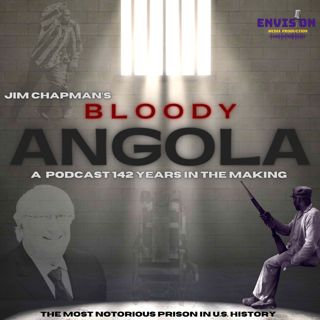
In this episode of Bloody Angola, Woody Overton and Jim Chapman tell you some stories you will have to hear to believe regarding inmate of Louisiana State Penitentiary who were sentenced to DEATH ROW getting exonerated after DNA evidence or other substantiating evidence cleared them of their crime and saved them from getting the needle.#DeathSentence #DNA #InnocenceProject #BloodyAngola #PodcastFULL TRANSCRIPTJim: Hey, everyone. And welcome back to another edition of Bloody-
Woody: -Angola.
Jim: A podcast 142 years in the making.
Woody: The complete story of America's bloodiest prison.
Jim: And I'm Jim Chapman.
Woody: And I'm Woody Overton.
Jim: And we're going back to our roots, Woody Overton.
Woody: Right back inside the wire.
Jim: Back inside the wire. Just when you thought we got out. Just coming back here.
Woody: Yep. [crosstalk] They made me come back in.
Jim: That's right. Look, we talk a lot on this show about the advancement, especially DNA, something you've worked with in the past many times.
Woody: Yeah. This is a huge testament to DNA. When I started, it was really coming in its own. Now it's so much more advanced. I remember putting rushes on murder cases, and it taken six months to get the results back.
Jim: That's crazy. Even back, we talked about Sean Vincent Gillis, and that was really probably one of the first times they were ever able to really rush something to the point where it really helped because you had to get that serial killer off the street.
Woody: Derrick Todd Lee too. Still, even the rush back then took a long time. Not like it is now.
Jim: Right.
Woody: You know what? I'm totally for it. And let me do this real quick. I want to give a shout out to all our patrons. We love and appreciate each and every one of y'all. We love all you listeners, and bloody shooting to the top of the charts. It's because y'all are listening, liking and sharing. Please continue to do so. And we love y'all very much. Back to the DNA, it's just come leaps and bounds that continue to change every day. We always tell you Bloody Angola is going to be different, and this is different. You would think, oh, hard ass like me, lock everybody up, I don't believe in that. I believe if you're innocent you're innocent.
Jim: If you're guilty, lock them up.
Woody: If you're guilty, you- [crosstalk]
Jim: Don't wait [crosstalk]
Woody: [crosstalk] -you'll pay hella jail.
Jim: [laughs] Hella jail, that's right. We did want to preface this episode with some of these guys were exonerated from DNA. Some of them, it was other reasons. And we're going to get into that. The intriguing thing about today's episode is many of these guys that we're going to tell you about were actually serving in death row. They've been sentenced to death.
Woody: Today, we're going to be talking about people or convicts who were exonerated and released from Bloody Angola.
Jim: Yes. We want to kind of start this off. I'm just going to tell you about the Innocence Project. The Innocence Project was founded in 1992 by Barry Scheck, y'all, familiar with him through OJ. It was basically formed to assist incarcerated individuals who could be proven innocent, primarily through DNA testing. Although sometimes they find so many holes in a case, they'll pick up a case where there's so many problems that they take that case on and look for exonerations in those cases. The average prison sentence before they'll take on a case is 14 years before their exoneration or release. And so, it's a process, even with those guys, but we're going to them to it.
Woody: They don't just take anybody, right?
Jim: Yeah.
Woody: One of the ones I can tell you about if-- ready to get started?
Jim: I'm ready.
Woody: Is John Thompson. John Thompson was from Orleans Parish. I'll just read you some of the facts of the case, some of the highlights, and what ultimately ended up happening. Shortly after midnight on December 6th, 1984, Raymond Liuzza was shot several times in the course of an armed robbery just around the corner from his New Orleans, Louisiana apartment. When the cops arrived, they found Liuzza laying on the ground, but he was still conscious. He told them he was robbed and shot by an African American male and then took him to hospital and he died. On December 8th, responded to tip, the police arrested two men in connection with the crime. John Thompson and Kevin Freeman. Photos of the two men were published in the New Orleans Times-Picayune, and soon afterwards, police received a call from a family that had been carjacked several months earlier, claiming that Thompson looked like the person who had robbed them. Thompson was charged with the murder. Meanwhile, Freeman agreed to testify against Thompson in the murder trial, and in return, prosecutors charged him only with being an accessory to the murder. He was convicted and sentenced to five years in prison. We're talking about Freeman, y'all.
The world-famous New Orleans district attorney, Harry Connick, Sr,, not Junior, that's his son, the singer and actor, decided to try Thompson for the carjacking case first, knowing that a conviction could be used against him in the murder trial. Based primarily on the eyewitness testimony of the three carjacking victims, all of whom were minors, Thompson was convicted on April 4, 1985, and sentenced to 49 years in prison. That is for the carjacking. Y'all, always told you that eyewitness testimony is the worst testimony there is, but doesn't mean it's not true.
At his murder trial, held shortly thereafter, the prosecution demonstrated that Thompson had at one time been in possession of both the murder weapon and a ring taken from Liuzza’s finger. Thompson decided not to testify in his own defense because if he did, his felony carjacking charge would have been admissible to the jury. As a result, he was unable to tell the jury that Freeman had sold him the murder weapon and the ring. Freeman, the main witness for the prosecution, claimed that he and Thompson had robbed Liuzza together and that Thompson had shot him. This testimony was contradicted by the statements of eyewitnesses who claimed to have seen only one man running from the scene of the crime. Richard Perkins, who had originally called in the tip implicating Thompson and Freeman, also testified for the prosecution, claiming that he had heard Thompson make incriminating remarks. Thompson was found guilty and sentenced to death on May 8th, 1985.
Fast forward a whole bunch of years, y'all, and events took a dramatic turn in April 1999, 30 days before scheduled execution, an investigator discovered that there was a blood stain from the robber on the clothing of one of the carjacking victims and that this evidence had never been disclosed to the defense. It's Brady, y'all. If they had it, they got to give it up. The prosecutor had ordered testing to determine the blood type of the stain, and in fact, they had rushed the test. But when the blood type was determined-- I guess this was before DNA. Blood type was determined and was different from Thompson's. They concealed it. Defense attorneys then obtained an affidavit Michael Rielhmann, a former district attorney, who said that five years earlier, in 1994, Gerry Deegan, one of Thompson's prosecutors, admitted on his deathbed that the blood evidence was intentionally suppressed and that he left a report about it on the desk of James Williams, the lead prosecutor. Williams denied ever seeing the report. Defense attorneys also learned that Perkins, the witness who testified that Thompson had admitted the murder, had received $15,000 from the Liuzza family as a reward. When this evidence was presented to the trial judge, he granted a stay of execution and dismissed Thompson’s carjacking conviction, but he denied Thompson’s motion for a new trial on the Liuzza murder. In 2001, however, he reduced Thompson’s death sentence to life in prison without parole.
Jim: Wow.
Woody: Pretty crazy, right?
Jim: Very crazy.
Woody: In July of 2002, the Louisiana Fourth Circuit Court of Appeal overturned Thompson’s murder conviction and remanded the case for retrial, ruling that the false robbery conviction obtained by deliberate government misconduct had deprived Thompson of his constitutional right to testify on his own behalf at the murder trial. Y'all, I'm not against that. I mean, give him a new trial, if it was messed up. At the second trial, Thompson was able to explain that he purchased the murder weapon from Freeman, and the defense called several new witnesses who claimed to have seen only one man fleeing the scene of the murder. They said that the man did not look like Thompson, but did resemble Freeman who, in the meantime, had been killed in a shootout with a security guard. On May 8, 2003, a jury acquitted Thompson after deliberating for 35 minutes, and he was released from prison the same day. Y'all, 35 minutes is for conviction? That's outstanding. But for exoneration, I mean, that's unbelievable. It normally takes hours--[crosstalk]
Jim: They were pretty convinced.
Woody: Yeah, they want to make sure. In 2008, Thompson won a $14 million civil suit against the District Attorney’s Office. That judgment was reversed by the US Supreme Court in March 2011 on the grounds that the misconduct in the case was not the result of a deliberate policy or systematic indifference by the New Orleans DA's Office. He got $330,000 in state compensation. But you know what? That's a long time to be on death row, and you didn't do it.
Jim: He's a good example of someone that it wasn't necessarily DNA evidence that exonerated him, but it was the facts of the case.
Woody: I have heard this case before, and actually, I think it's pretty well documented-
Jim: Thank you.
Woody:

Avsnitt(170)

Part 3 | Cold Blooded Killer: Felix Vail

Part 3 | Cold Blooded Killer: Felix Vail

In this episode of Bloody Angola, Jim Chapman completes his the look into the conviction and incarceration of Serial Killer Felix Vail, a figure linked to the oldest cold case in history where the killer was sentenced to prison Jim delves into the trial, the prosecution and the conviction and sentence of Felix to Bloody Angola.#bloodyangola #podcast #prison #felixvail #louisiana #louisianastatepenitentiaryTimestamps03:16 The Search for Bicycle Boy04:39 Discovery in the Attic06:16 Confronting Vail11:28 The Trial Begins13:49 The Prosecution's Case15:39 The Defense's Argument20:26 Witnesses Against Vail22:14 The Forensic Evidence28:16 The Verdict33:07 Sentencing Early release, commercial free episodes plus bonus content and more can be found by joining us on Patreon by Clicking here:

5 Dec 202436min

Part 2 | Cold Blooded Killer: Felix Vail

Part 2 | Cold Blooded Killer: Felix Vail

In this episode of Bloody Angola, Jim continues exploring the dark story of Felix Vail and the events leading to his arrest for the murder of his wife, Mary. Highlighting journalist Jerry Mitchell's role in reopening the cold case,  Jim delves into Vail's history of manipulation and violence.Through testimonies from those affected, Jim reveals the hidden darkness behind his charm and how  a mother’s relentless quest for answers trying to locate her missing daughter played a crucial role. #bloodyangola #podcast #prison #felixvail #louisiana #louisianastatepenitentiary Timestamps05:37 Rose's Relentless Pursuit11:29 A Dangerous Relationship12:23 The Voice of the Victims16:08 Connecting the Dots21:21 The Search for Justice31:39 Witnesses and Their Accounts38:38 Uncovering the Truth42:39 Arrested and ChargedEarly release, commercial free episodes plus bonus content and more can be found by joining us on Patreon by Clicking here:

27 Nov 20241h

Cold Blooded Killer: Felix Vail

Cold Blooded Killer: Felix Vail

In this episode of Bloody Angola, Jim explores the life of Serial Killer Felix Vail, a figure linked to the oldest cold case in history where the killer was sentenced to prison Jim delves into Vail's tumultuous upbringing and unpack details surrounding his wife Mary’s tragic demise, as well as the mysterious disappearances of (2) subsequent partners.#bloodyangola #podcast #prison #felixvail #louisiana #louisianastatepenitentiaryTimestamps02:46 Early Life and Marriage07:52 The Mysterious Disappearance of Mary12:32 Investigation and Arrest 13:56 Life in California15:59 New Relationships and Confessions18:15 The Impact of Bill's Revelation27:18 Marriages and Escalating Violence31:17 Annette Craver: A New Victim39:50 Patterns of Disappearance45:47 Arrest and New Developments Early release, commercial free episodes plus bonus content and more can be found by joining us on Patreon by Clicking here:

21 Nov 202449min

The Brotherhood And The Murder Of Genore Guillory

The Brotherhood And The Murder Of Genore Guillory

In this episode of “Bloody Angola,”  Jim Chapman discusses the tragic case of Genore Guillory, who was murdered in 2000 in Clinton, Louisiana. As the investigation unfolds chilling circumstances surrounding her murder over a conflict involving a goat and a life insurance policy are revealed, setting the stage for the incarceration in Bloody Angola of several suspects involved in her death. #genoreguillory #louisianastatepenitentiary #angola #podcast #prison #crime #criminal #truecrime Timestamps04:26 The Gruesome Discovery09:36 Unraveling Genore’s Life13:24 The Stalking Police Officer19:20 The Shady Donnie Fisher23:33 The Arrest of the Skippers24:53 The Pursuit of John Beiaillo25:47 The Mastermind Johnny Hoyt33:22 Shocking Revelations in Jail36:11 A New District Attorney Early release, commercial free episodes plus bonus content and more can be found by joining us on Patreon by Clicking here:

14 Nov 202441min

The Penitentiary Past: The Birth of Louisiana’s Most Brutal Prison

The Penitentiary Past: The Birth of Louisiana’s Most Brutal Prison

In this episode of "Bloody Angola," Jim Chapman explores the intricate history of the Louisiana State Penitentiary, tracing its history during its time as a Louisiana plantation. Jim discusses the early land grants and key figures like Francis Routh and Isaac Franklin, whose actions laid the groundwork for Angola Prison’s grim legacy.  Jim highlights the transformation of the property, detailing the consequences of harsh management practices post-Civil War and the suffering of inmates under a brutal labor system. As he the penitentiary's development through the 20th century, Jim addresses themes of exploitation, reform efforts, and the ongoing struggles of the brutal prison in its early years.#louisiana #prison #Angola #bloodyangola #podcast #incarceration Chapters04:34 The Origins of Angola Plantation13:06 The Acklan Family Legacy20:10 Civil War Challenges23:58 Samuel James and Prison Management31:42 The State Takes Over38:27 Prison Conditions in the 1930s41:09 Reform and Decline in the 1950sEarly release, commercial free episodes plus bonus content and more can be found by joining us on Patreon by Clicking here:Source Creditshttps://www.crt.state.la.us/Assets/OCD/archaeology/discoverarchaeology/virtual-books/PDFs/Angola_Pop.pdfhttps://en.wikipedia.org/wiki/Adelicia_Acklenhttps://en.wikipedia.org/wiki/Isaac_Franklin

8 Nov 202445min

Nightmare on Cell Block: Halloween Horrors from Inside Prison

Nightmare on Cell Block: Halloween Horrors from Inside Prison

In this episode of Bloody Angola, Jim examines the history of America’s most haunted prisons, with this Halloween special episode.  Jim also provides an update on the podcast's direction. Today he shares some pretty chilling tales from locations like the Missouri State Penitentiary, Wyoming Territorial Prison, and Alcatraz. Each site carries a rich, eerie history filled with ghostly encounters.  Additionally, Jim  recounts unsettling violent crimes that occurred on Halloween and led to the incarceration of the assailants.Timestamps02:22 Changes to Real Life Real Crime Daily 08:45 Future Plans for the THIS Podcast13:48 Halloween Special Episode20:11 America's Most Haunted Prisons37:24 Terrifying Convicts on Halloween46:59 Happy Halloween

31 Okt 202449min

The Neville Brothers, The Injured Pelican and Butlers Park

The Neville Brothers, The Injured Pelican and Butlers Park

In this episode of Bloody Angola, we begin with a story on "Butler's Park," highlighting the Outdoor Visiting Program that enhances inmate well-being and fosters family connections in a serene park setting.We then delve into the heartwarming story of the "Pelican Protector," showcasing the establishment of the John B. Rabalais Waterfowl Refuge and a collaborative rescue of an injured pelican, cared for by the inmates and conclude with the exhilarating account of a concert featuring the Neville Brothers, capturing the uplifting power of music to unite and inspire hope within the prison walls.  These stories are the direct accounts of the writings of Wilbert Rideau in the book “Life sentences”.Timestamps05:20 Outdoor Visiting Program at Angola: Butler’s Park20:26 John B. Rabelais Waterfowl Refuge at LSP at Angola29:00 Concerts at Angola with the Neville Brothers43:40  Reflection on today’s episode

24 Okt 202445min

10/6 Lifers

10/6 Lifers

In this episode of Bloody Angola, we investigate the plight of the "10-6 lifers," who were misled into believing they would serve only 10 years and six months but instead faced decades in prison. Timestamps 04:26 The 10-6 Lifers' Forgotten Story09:42 The Shift in Louisiana's Justice System15:08 A Glimmer of Hope20:18 The First Releases26:13 A New District Attorney29:18 The Path to Freedom33:49 Resentencing Hearings Begin37:55 Life After Angola43:30 Montgomery's Release

17 Okt 202452min

Populärt inom Samhälle & Kultur

podme-dokumentar
en-mork-historia
svenska-fall
p3-dokumentar
mardromsgasten
aftonbladet-krim
badfluence
nemo-moter-en-van
skaringer-nessvold
rattsfallen
creepypodden-med-jack-werner
killradet
p3-historia
flashback-forever
hor-har
radiosporten-dokumentar
vad-blir-det-for-mord
rss-mer-an-bara-morsa
kaliber
aftonbladet-daily