

AI might let a few people control everything — permanently (article by Rose Hadshar)

AI might let a few people control everything — permanently (article by Rose Hadshar)

Power is already concentrated today: over 800 million people live on less than $3 a day, the three richest men in the world are worth over $1 trillion, and almost six billion people live in countries without free and fair elections.

This is a problem in its own right. There is still substantial distribution of power though: global income inequality is falling, over two billion people live in electoral democracies, no country earns more than a quarter of GDP, and no company earns as much as 1%.

But in the future, advanced AI could enable much more extreme power concentration than we’ve seen so far.

Many believe that within the next decade the leading AI projects will be able to run millions of superintelligent AI systems thinking many times faster than humans. These systems could displace human workers, leading to much less economic and political power for the vast majority of people; and unless we take action to prevent it, they may end up being controlled by a tiny number of people, with no effective oversight. Once these systems are deployed across the economy, government, and the military, whatever goals they’re built to have will become the primary force shaping the future. If those goals are chosen by the few, then a small number of people could end up with the power to make all of the important decisions about the future.

This article by Rose Hadshar explores this emerging challenge in detail. You can see all the images and footnotes in the original article on the 80,000 Hours website.

Chapters:

  • Introduction (00:00)
  • Summary (02:15)
  • Section 1: Why might AI-enabled power concentration be a pressing problem? (07:02)
  • Section 2: What are the top arguments against working on this problem? (45:02)
  • Section 3: What can you do to help? (56:36)

Narrated by: Dominic Armstrong
Audio engineering: Dominic Armstrong and Milo McGuire
Music: CORBIT

Jaksot(317)

#225 – Daniel Kokotajlo on what a hyperspeed robot economy might look like

#225 – Daniel Kokotajlo on what a hyperspeed robot economy might look like

When Daniel Kokotajlo talks to security experts at major AI labs, they tell him something chilling: “Of course we’re probably penetrated by the CCP already, and if they really wanted something, they c...

27 Loka 20252h 12min
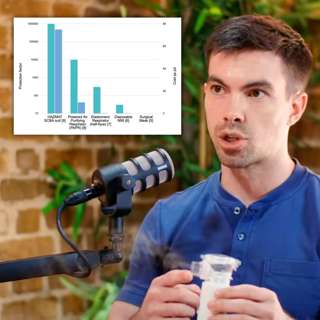
#224 – There's a cheap and low-tech way to save humanity from any engineered disease | Andrew Snyder-Beattie

#224 – There's a cheap and low-tech way to save humanity from any engineered disease | Andrew Snyder-Beattie

Conventional wisdom is that safeguarding humanity from the worst biological risks — microbes optimised to kill as many as possible — is difficult bordering on impossible, making bioweapons humanity’s ...

2 Loka 20252h 31min
Inside the Biden admin’s AI policy approach | Jake Sullivan, Biden’s NSA | via The Cognitive Revolution

Inside the Biden admin’s AI policy approach | Jake Sullivan, Biden’s NSA | via The Cognitive Revolution

Jake Sullivan was the US National Security Advisor from 2021-2025. He joined our friends on The Cognitive Revolution podcast in August to discuss AI as a critical national security issue. We thought i...

26 Syys 20251h 5min
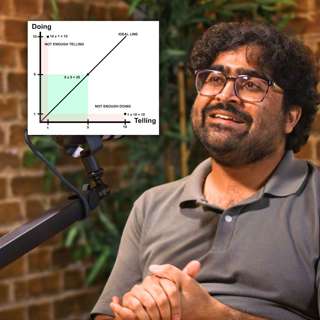
#223 – Neel Nanda on leading a Google DeepMind team at 26 – and advice if you want to work at an AI company (part 2)

#223 – Neel Nanda on leading a Google DeepMind team at 26 – and advice if you want to work at an AI company (part 2)

At 26, Neel Nanda leads an AI safety team at Google DeepMind, has published dozens of influential papers, and mentored 50 junior researchers — seven of whom now work at major AI companies. His secret?...

15 Syys 20251h 46min
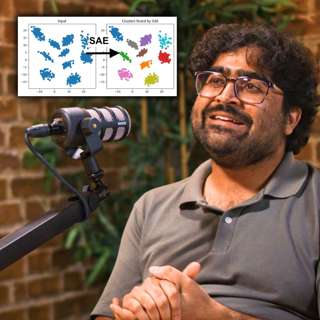
#222 – Can we tell if an AI is loyal by reading its mind? DeepMind's Neel Nanda (part 1)

#222 – Can we tell if an AI is loyal by reading its mind? DeepMind's Neel Nanda (part 1)

We don’t know how AIs think or why they do what they do. Or at least, we don’t know much. That fact is only becoming more troubling as AIs grow more capable and appear on track to wield enormous cultu...

8 Syys 20253h 1min

#221 – Kyle Fish on the most bizarre findings from 5 AI welfare experiments

#221 – Kyle Fish on the most bizarre findings from 5 AI welfare experiments

What happens when you lock two AI systems in a room together and tell them they can discuss anything they want?According to experiments run by Kyle Fish — Anthropic’s first AI welfare researcher — som...

28 Elo 20252h 28min

How not to lose your job to AI (article by Benjamin Todd)

How not to lose your job to AI (article by Benjamin Todd)

About half of people are worried they’ll lose their job to AI. They’re right to be concerned: AI can now complete real-world coding tasks on GitHub, generate photorealistic video, drive a taxi more sa...

31 Heinä 202551min

Rebuilding after apocalypse: What 13 experts say about bouncing back

Rebuilding after apocalypse: What 13 experts say about bouncing back

What happens when civilisation faces its greatest tests?This compilation brings together insights from researchers, defence experts, philosophers, and policymakers on humanity’s ability to survive and...

15 Heinä 20254h 26min

Suosittua kategoriassa Koulutus

rss-murhan-anatomia
psykopodiaa-podcast
voi-hyvin-meditaatiot-2
rss-valo-minussa-2
rss-narsisti
adhd-podi
rss-niinku-asia-on
aamukahvilla
rss-duodecim-lehti
kesken
rahapuhetta
aloita-meditaatio
salainen-paivakirja
rss-elamankoulu
psykologia
rss-uskonto-on-tylsaa
rss-psykalab
rss-selvat-savelet
rss-koira-haudattuna
rss-hereilla