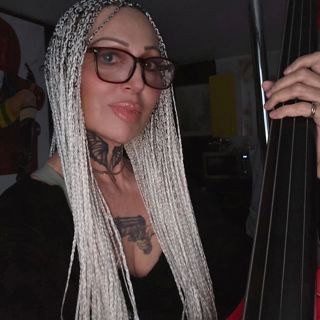
The Bow for Stringed Instruments: Where Sound Actually Begins.  iServalan™ |Continuum Approach

 The Bow for Stringed Instruments: Where Sound Actually Begins. iServalan™ |Continuum Approach

The Bow for Stringed Instruments: Where Sound Actually Begins

When people think about string instruments, they often focus on the left hand.
Finger placement. Accuracy. Notes. But it doesn't take long in our training to realise that it is the bow that holds the secrets of success. The bow can kill music or resurrect it. The bow is where sound actually begins. Without the bow, a string instrument is silent. The left hand chooses pitch, but it does not create sound.
The bow sets the string in motion. It determines whether a note speaks, whispers, resists, or collapses. This is why the bow should not be treated as an accessory. It is the breath of the instrument. Physically, the bow is a flexible system designed to balance grip and release. The hair catches the string, pulls it slightly out of place, and then allows it to snap back. This repeated cycle — known as stick-slip motion — is what produces sustained sound. Everything we describe musically as tone, colour, and expression begins here. Across violin, viola, cello, and double bass, the principles remain the same even when proportions change. The bow has weight, but it does not press. It has direction, but it does not force. It moves through time, not against it. Three elements govern all bow sound:
Contact point — where the bow meets the string.
Closer to the bridge produces a focused, resistant sound. Closer to the fingerboard produces a softer, more diffuse one.
Speed — how fast the bow travels.
Slower speed allows the string to speak fully. Faster speed increases energy and projection. Weight — the natural mass of the arm transferred through the bow.
This is not pressure from the fingers. It is gravity, allowed rather than applied. These three elements are always in relationship. Changing one requires adjustment of the others. When beginners struggle, it is rarely because they lack talent. It is because one element has been isolated from the system. The bow also teaches listening in a way the left hand cannot. Intonation errors can sometimes hide briefly. Poor bow contact cannot. The sound tells the truth immediately. This makes the bow an honest teacher, but not a cruel one. Importantly, the bow responds differently depending on the instrument. A violin bow reacts quickly and rewards lightness. A viola bow requires more time in the string before sound blooms. A cello bow carries greater mass and demands patience. These are not value judgements. They are physical realities. Understanding this removes the idea that one instrument is easier or harder than another. Each simply asks for a different relationship with time and weight. For many players, the bow is also where tension first appears. Gripping, locking the wrist, forcing volume. These habits usually come from anxiety rather than intention. The bow does not need control in the way we often imagine. It needs permission to balance. A useful way to think about bowing is this:
the bow is not pushed across the string.
It is drawn. When the arm hangs freely, when the hand supports rather than dominates, the bow begins to work with the string instead of against it. Sound stabilises. The body calms. Learning becomes less urgent and more precise. This is why foundational bow work often feels slow. It is not because progress has stopped, but because awareness has widened. You are learning to hear cause and effect. Ultimately, the bow teaches one of the most important lessons in music:
sound is not made by effort alone. It is made by contact, movement, and time — working together.

iServalan™
Music, listening, and the Continuum Approach: Exploring sound across genres, eras, and performance cultures — from Baroque to punk, hip-hop to minimalism — without hierarchy or haste.

🎧 Podcast & essays: 🎻 Music School
https://iservalan.gumroad.com/l/concervatoire?
https://iservalan.gumroad.com📚 Books & long-form work by Sarnia de la Maré FRSA:
https://www.amazon.co.uk/stores/author/B0CWGX2DJ6🎨 Professional profile:
https://www.a-n.co.uk/person/sarnia-de-la-mare-frsa-2/

#iServalan #ContinuumApproach #MusicPodcast #RadicalListening #MusicAcrossGenres
#PerformanceCulture #SarniaDeLaMaré

Jaksot(252)

The Pattern Paradox: Why Artists Break What the World Repeats: Continuum Pedagogy

The Pattern Paradox: Why Artists Break What the World Repeats: Continuum Pedagogy

Essays from the Continuum Approach by Sarnia de la MAré FRSAiServalan™Music, listening, and the Continuum Approach: Exploring sound across genres, eras, and performance cultures — from Baroque to punk...

15 Maalis 7min

Free Vocal Linguistics Voice as Language Before Words | Continuum Pedagogy

Free Vocal Linguistics Voice as Language Before Words | Continuum Pedagogy

Free Vocal Linguistics: Voice as Language Before Words In much formal musical training, the voice is introduced in a restricted and highly structured way. It is treated primarily as a vehicle for lyri...

8 Maalis 7min

 How Scales and Sympathetic Strings Teach the Ear to Play | The Continuum Approach to Music

 How Scales and Sympathetic Strings Teach the Ear to Play | The Continuum Approach to Music

How Scales and Sympathetic Strings Teach the Ear to Play. Before we talk about scales, we should talk about listening. Most people are introduced to scales as ladders — up, down, repeat — something to...

7 Maalis 5min

Interlude Lyrics Songs Live Readings in the Public Domain | Continuum Approach

Interlude Lyrics Songs Live Readings in the Public Domain | Continuum Approach

The Continuum Framework™ — A ManifestoThe Continuum Framework™ is a non-linear approach to musical learning that understands sound not as a series of achievements to be climbed, but as a field to be e...

7 Maalis 1min

The Continuum Framework™ — A Manifesto by Sarnia de la Maré FRSA #pedagogy

The Continuum Framework™ — A Manifesto by Sarnia de la Maré FRSA #pedagogy

The Continuum Framework™ — A Manifesto. The Continuum Framework™ is a non-linear approach to musical learning that understands sound not as a series of achievements to be climbed, but as a field to be...

7 Maalis 1min

The Disappearing Teacher From Self Taught to Self Directed  Continuum Music Studio

The Disappearing Teacher From Self Taught to Self Directed Continuum Music Studio

iServalan™Music, listening, and the Continuum Approach: Exploring sound across genres, eras, and performance cultures — from Baroque to punk, hip-hop to minimalism — without hierarchy or haste.🎧 Podc...

28 Helmi 7min

Eye Surgery and the effects on a musician in recovery Continuum Music Studio

Eye Surgery and the effects on a musician in recovery Continuum Music Studio

I have had some time to repair but the struggle is very real.iServalan™Music, listening, and the Continuum Approach: Exploring sound across genres, eras, and performance cultures — from Baroque to pun...

28 Helmi 4min

Continuum Music Framework Book Launch on Amazon by Sarnia de la Mare #iServalan™

Continuum Music Framework Book Launch on Amazon by Sarnia de la Mare #iServalan™

iServalan™Music, listening, and the Continuum Approach: Exploring sound across genres, eras, and performance cultures — from Baroque to punk, hip-hop to minimalism — without hierarchy or haste.🎧 Podc...

8 Tammi 12min

Suosittua kategoriassa Koulutus

rss-murhan-anatomia
voi-hyvin-meditaatiot-2
psykopodiaa-podcast
rss-narsisti
rss-liian-kuuma-peruna
adhd-podi
rss-rahamania
rss-niinku-asia-on
kesken
psykologia
rss-tietoinen-yhteys-podcast-2
rss-valo-minussa-2
leikitaanko-laakaria
puhutaan-koiraa
rss-duodecim-lehti
rahapuhetta
rss-psykalab
rss-hereilla
rss-kohti-tasapainoista-ja-lempeaa-elamaa
rss-rahataito-podcast