Episode #68: Hot Tubs, Suits, and Silicon Souls: When Counterculture Built Computers
Stewart Squared18 Joulu 2025

Episode #68: Hot Tubs, Suits, and Silicon Souls: When Counterculture Built Computers

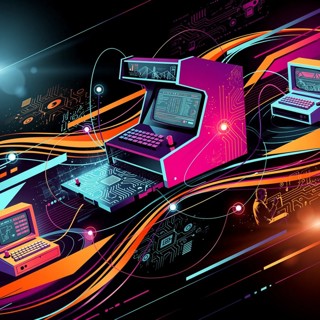
In this episode of Stewart Squared, hosts Stewart Alsop and Stewart Alsop II explore the fascinating connections between 1960s counterculture and the birth of the PC industry, examining how figures like Nolan Bushnell bridged the gap between the Summer of Love and Silicon Valley innovation. The discussion traces the evolution from dedicated gaming computers like Atari's early machines to general-purpose personal computers, while diving into the cultural clash between counterculture creativity and corporate suits that defined the early tech industry. The conversation also covers the technical foundations of personal computing, from memory chips and bitmap displays to the emergence of desktop publishing, before fast-forwarding to current AI developments including Google's recent product releases like Gemini and the competitive dynamics between tech giants in the AI space.


Timestamps

00:00 Opening experiment with Twitter Spaces, revisiting Nolan Bushnell, Atari, and the gap between 1960s counterculture and early personal computing.

05:00 Arrival in Boston vs Silicon Valley, early computer journalism, clashes between East Coast discipline and West Coast counterculture in tech media.

10:00 Debate on general-purpose computers vs game consoles, cartridges, and why generalization matters for AI and AGI.

15:00 Deep dive into counterculture origins: Vietnam War, anti–military-industrial complex, hippies, creativity, and rejection of the corporate suit.

20:00 Atari + Warner Bros clash, chaos vs discipline, creative culture, hot tubs, waste, and why suits struggle managing innovation.

25:00 Intel, Apple, ARM, and chips: memory origins, foundries, TSMC, geopolitics, and why manufacturing strategy matters.

30:00 GPUs, gaming, and why graphics hardware became central to LLMs, NVIDIA’s rise, and unintended technological paths.

35:00 Microsoft vs Apple philosophies: programmers vs individuals, file systems vs databases, and Bill Gates’ unrealized visions.

40:00 Creativity inside big companies, efficiency as innovation, Satya Nadella’s turnaround, and customer-first thinking.

45:00 Government + AI: National Labs, data access, closed-loop science, risks of automation without humans in the loop.

50:00 OpenAI, Google, Anthropic strategy wars, compute, data, lawsuits, and why strategy + resources + conviction decide winners.

55:00 Gemini, Nano Banana, programmer tools, agentic IDEs, Google gaining developer mindshare, and the future AI battleground.


Key Insights

1. The birth of personal computing emerged from the counterculture's rejection of the military-industrial machine. Nolan Bushnell and others created dedicated game computers in the 1970s as part of a broader movement against corporate conformity. The counterculture represented a reaction to the post-WWII system where people were expected to work factory jobs, join unions, and live standardized middle-class lives - young people didn't want to "sign up for that."
2. Creative companies face inevitable tension between innovation and corporate discipline. When Warner Brothers bought Atari for $28 million and fired Nolan Bushnell, it demonstrated how traditional corporate management often kills creativity. Steve Jobs learned this lesson when he was ousted from Apple, went into "the darkness," and returned knowing how to balance creative chaos with business discipline - a rare achievement.
3. The distinction between dedicated and general-purpose computers was crucial for the PC revolution. Early game consoles used cartridges and weren't truly general-purpose computers. The breakthrough came with machines like the Apple II that could run any software, embodying the counterculture's individualistic vision of personal empowerment rather than corporate control.
4. Microsoft and Apple developed fundamentally different organizational philosophies that persist today. Microsoft thinks like programmers and serves IT administrators, while Apple thinks like individuals who want to use computers for personal purposes. This explains why Apple recently fired enterprise salespeople - they don't want to become a corporate-focused company like Microsoft.
5. The GPU revolution happened accidentally through gaming needs, not planned AI development. Graphics processing units were developed to put pixels on screens fast enough for games, but their parallel processing architecture turned out to be perfect for training large language models. This "orthogonal event" made NVIDIA worth trillions and demonstrates how technological breakthroughs often come from unexpected directions.
6. Google appears to be winning the current AI competition through strategic patience and superior resources. While OpenAI seems to be "throwing things against the wall" without clear coordination, Google's Sundar Pichai planned their AI strategy three years ago, marshaled their talent and cash resources, and is now executing systematically with products like their Cursor competitor and better integration of AI tools.
7. The Trump administration's Genesis mission represents a high-stakes bet on automated science. By giving OpenAI, Google, and Anthropic access to confidential data from 17 national laboratories to automate scientific research without humans in the loop, the government is either acknowledging superior AI capabilities we don't know about, or making a dangerous decision that ignores the current need for human verification in AI systems.

Tämä jakso on lisätty Podme-palveluun avoimen RSS-syötteen kautta eikä se ole Podmen omaa tuotantoa. Siksi jakso saattaa sisältää mainontaa.

Jaksot(102)

Episode #102: AI Is Eating the World’s Memory

Episode #102: AI Is Eating the World’s Memory

In this episode of Stewart Squared, Stewart Alsop III and Stewart Alsop II sit into the shifting ground beneath the AI boom, starting with the strange saga of Leopold Aschenbrenner's hedge fund and th...

13 Elo 51min

Episode #101: Apple's AI Is Finally Here. Why Does It Still Feel Broken?

Episode #101: Apple's AI Is Finally Here. Why Does It Still Feel Broken?

In this episode of the Stewart Squared podcast, hosts Stewart Alsop and Stewart Alsop II dig into Apple's rocky iOS 27 rollout and the Apple Intelligence features that still don't quite work, before s...

6 Elo 54min

Episode #100: From Apple's iOS 27 to Anduril's Defense Tech: Where AI's Advantage Really Lies

Episode #100: From Apple's iOS 27 to Anduril's Defense Tech: Where AI's Advantage Really Lies

In this episode of Stewart Squared, Stewart Alsop III sits down with his father and co-host Stewart Alsop II for a wide-ranging conversation that jumps from Apple's iOS 27 preview beta and the long ro...

30 Heinä 1h 4min

Episode #99: Can Money Buy Meta a Comeback in AI?

Episode #99: Can Money Buy Meta a Comeback in AI?

In this episode of the Stewart Squared podcast, host Stewart Alsop and guest Stewart Alsop II dive into Meta's latest AI model releases and their broader issues with user addiction, touching on the Eu...

23 Heinä 37min

Episode #98: What Apple Gets That the Rest of Tech Doesn't: Trust Scales

Episode #98: What Apple Gets That the Rest of Tech Doesn't: Trust Scales

In this episode of the Stewart Squared podcast, host Stewart Alsop sits down with his father, guest Stewart Alsop II, to tackle a wide range of tech topics from AI chip design to cybersecurity vulnera...

16 Heinä 57min

Episode #97: How AI Is Rewriting the Rules of Computing

Episode #97: How AI Is Rewriting the Rules of Computing

Stewart Alsop sits down with his father, Stewart Alsop II, to unpack what chip design even means anymore, starting with OpenAI's Jalapeno chip and the wild claim that it was designed in nine months us...

9 Heinä 1h 3min

Episode #96: From Steve Jobs to AI: The Stories That Never Became Data

Episode #96: From Steve Jobs to AI: The Stories That Never Became Data

In this episode of Stewart Squared, Stewart Alsop III sits down with his father, Stewart Alsop II, for a wide-ranging conversation that moves from a heartfelt tribute to the late Brent Schlender — leg...

2 Heinä 46min

Episode #95: Schrodinger's Bubble: Nobody's Keeping Up, And That's Okay

Episode #95: Schrodinger's Bubble: Nobody's Keeping Up, And That's Okay

In this episode of the Stewart Squared podcast, host Stewart Alsop sits down with his father, guest Stewart Alsop II, to tackle corrections from last week's show before diving into the rapid pace of A...

25 Kesä 59min

Suosittua kategoriassa Liike-elämä ja talous

sijotuskasti
mimmit-sijoittaa
psykopodiaa-podcast
rss-rahapodi
hyva-paha-johtaminen
rss-inderes
rss-ammattipodcast
rss-porssipuhetta
ostan-asuntoja-podcast
pomojen-suusta
rss-karon-grilli
sijoituspodi
rss-sami-miettinen-neuvottelija
rss-laakispodi
rahapuhetta
oppimisen-psykologia
rss-hilden-kaira
rss-pariisilaiset
inderespodi
rss-porssipodi