How to Use the Book Continuum in Music | iServalan | Continuum Approach in Music

How to Use the Book Continuum in Music | iServalan | Continuum Approach in Music

Foreword — How to Use This Book

The Continuum Approach is not a method. It does not replace existing teaching traditions, schools, or technical systems, nor does it ask the learner to abandon repertoire, notation, or discipline. Instead, it operates alongside chosen methods, offering a pedagogical framework through which those methods may be used more humanely, more intelligently, and with greater long-term continuity. Continuum is concerned not with what is taught, but with how learning is allowed to take place. It asks different questions. Not How quickly can this be achieved?
But What conditions allow this to endure? Not What should the student produce?
But What must be present for learning to remain alive? A Pedagogy, Not a Prescription Continuum is a pedagogy rather than a programme. It does not prescribe a fixed sequence of exercises, graded outcomes, or externally defined goals. Teachers and learners may work with any repertoire, tradition, or technical system they choose — classical, popular, experimental, oral, notated, or improvised. What Continuum provides is a lens. A way of observing when learning is unfolding naturally — and when it is collapsing under strain, fear, or premature demand. It is deliberately non-competitive.
It does not rank learners.
It does not assume uniform development, motivation, or capacity. Instead, it recognises that people arrive at music carrying lives. Learners Do Not Arrive as Blank Canvases Students do not begin as neutral surfaces awaiting instruction. They arrive with histories, bodies, anxieties, identities, cultural inheritance, trauma, curiosity, resistance, enthusiasm, and fatigue — often in combinations that are not immediately visible. Some are young and unsettled.
Some are displaced from education.
Some are neurodivergent, sensitive, or wary of authority.
Some are older, returning to music after years of silence, loss, or interruption. Continuum does not attempt to normalise these differences. It accommodates them. The framework assumes unknowns rather than deficits. It avoids assumptions about background, privilege, aptitude, or intent, and rejects the idea that stress, competition, or constant evaluation are necessary conditions for serious learning. Progress is not treated as a race.
Achievement is not used as a measure of worth. Learning is allowed to remain personal without becoming isolated, and communal without becoming coercive. Music as a Unifying Act At its core, Continuum treats music not as a hierarchy to be climbed, but as a shared human activity. Across cultures and histories, music has functioned as a uniting force — a means of regulation, communication, ritual, protest, and solace. The Continuum Approach honours this role by resisting educational structures that fragment learners through comparison, ranking, or premature judgement. It is equally suited to:
  • children encountering sound for the first time
  • young people navigating unstable educational environments
  • adults seeking focus, grounding, or recovery through making music
  • teachers working across mixed ages, abilities, and cultural contexts
The emphasis is not on producing identical outcomes, but on sustaining engagement, listening, and agency. Composition as a Central Act A defining feature of the Continuum Approach is its treatment of composition. Composition is not reserved for advanced stages of learning, nor framed as a specialised skill for the talented few. It is introduced early, in simple and accessible forms, as a natural extension of listening and orientation. To compose, in this context, is not necessarily to notate or formalise. It may mean choosing, arranging, repeating, varying, or noticing. Composition is treated as:
  • a way of thinking
  • a way of listening
  • a way of claiming authorship over sound
By composing early — even in the most modest forms — learners develop agency, curiosity, and a sense of ownership that many traditional methods delay or deny. This early engagement with making decisions about sound supports deeper understanding of repertoire later, rather than competing with it. Continuum does not separate interpretation and creation.
Both arise from attention.

iServalan™
Music, listening, and the Continuum Approach: Exploring sound across genres, eras, and performance cultures — from Baroque to punk, hip-hop to minimalism — without hierarchy or haste.

🎧 Podcast & essays: 🎻 Music School
https://iservalan.gumroad.com/l/concervatoire?
https://iservalan.gumroad.com📚 Books & long-form work by Sarnia de la Maré FRSA:
https://www.amazon.co.uk/stores/author/B0CWGX2DJ6🎨 Professional profile:
https://www.a-n.co.uk/person/sarnia-de-la-mare-frsa-2/

#iServalan #ContinuumApproach #MusicPodcast #RadicalListening #MusicAcrossGenres
#PerformanceCulture #SarniaDeLaMaré

Jaksot(252)

Barefoot Boy Live Poetry Reading Open Mic Lyrics Public Domain | iServalan | Continuum Approach

Barefoot Boy Live Poetry Reading Open Mic Lyrics Public Domain | iServalan | Continuum Approach

Beautiful words to inspire songwriters #iServalan #poetry #continuumapproachiServalan™Music, listening, and the Continuum Approach: Exploring sound across genres, eras, and performance cultures — from...

27 Joulu 20251min

When I Heard at the End of the Day Live Reading Open Mic Lyrics Public Domain | iServalan | Continuum

When I Heard at the End of the Day Live Reading Open Mic Lyrics Public Domain | iServalan | Continuum

You are free to use these lyrics in your compositions.iServalan™Music, listening, and the Continuum Approach: Exploring sound across genres, eras, and performance cultures — from Baroque to punk, hip-...

27 Joulu 20251min
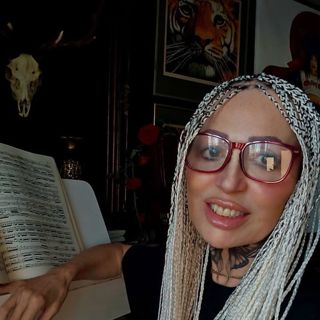
Is the piano the right instrument for me or my kid? | iServalan | Continuum Approach

Is the piano the right instrument for me or my kid? | iServalan | Continuum Approach

We teach strings and piano at the Digital Conservatoire. You can join for £3 a month and access all the lessons and teaching materials.iServalan™Music, listening, and the Continuum Approach: Exploring...

27 Joulu 202514min

Thinking of a new double bass to play in 2026? iServalan chats about the foibles and idiosyncrasies of the beast of the orchestra

Thinking of a new double bass to play in 2026? iServalan chats about the foibles and idiosyncrasies of the beast of the orchestra

iServalan is a composer and founder of the Continuum Approach in music.iServalan™Music, listening, and the Continuum Approach: Exploring sound across genres, eras, and performance cultures — from Baro...

27 Joulu 202514min

Thinking about learning the cello? Listen in to some important considerations with iServalan at Continuum

Thinking about learning the cello? Listen in to some important considerations with iServalan at Continuum

Cellos require a nuanced approach and work best in certain situations. Is the cello your instrument?iServalan™Music, listening, and the Continuum Approach: Exploring sound across genres, eras, and per...

27 Joulu 202513min

So you want to play the viola? Let’s talk | iServalan | Continuum Method

So you want to play the viola? Let’s talk | iServalan | Continuum Method

If you are unsure about which instrument you want to learn, I am exploring strings and piano today.iServalan™Music, listening, and the Continuum Approach: Exploring sound across genres, eras, and perf...

27 Joulu 202514min

You Don't need an Orchestra when You Have a Bedroom Musician | iServalan | Continuum Music

You Don't need an Orchestra when You Have a Bedroom Musician | iServalan | Continuum Music

What Is the Point of an Orchestra?You Don't need an Orchestra when You Have a Bedroom Musician - Discuss | iServalan | Continuum Music  When any Tom, Dick, or Harry can make a “classical” album in the...

26 Joulu 20257min

Carpe Diem Live Reading Open Mic Lyrics Public Domain | iServalan | Continuum Approach

Carpe Diem Live Reading Open Mic Lyrics Public Domain | iServalan | Continuum Approach

https://iservalan.gumroad.com/l/concervatoireiServalan™Music, listening, and the Continuum Approach: Exploring sound across genres, eras, and performance cultures — from Baroque to punk, hip-hop to mi...

26 Joulu 20251min

Suosittua kategoriassa Koulutus

rss-murhan-anatomia
psykopodiaa-podcast
voi-hyvin-meditaatiot-2
psykologia
adhd-podi
rss-rahamania
rss-liian-kuuma-peruna
rss-valo-minussa-2
rss-tietoinen-yhteys-podcast-2
kesken
rss-arkea-ja-aurinkoa-podcast-espanjasta
rahapuhetta
rss-niinku-asia-on
rss-narsisti
dear-ladies
rss-duodecim-lehti
rss-eron-alkemiaa
rss-vapaudu-voimaasi
koodikahvit
leikitaanko-laakaria