

E177: Why Bankers Got Paid and Europe Recovered: The London Debt Agreement Explained
El Podcast9 Tammi

E177: Why Bankers Got Paid and Europe Recovered: The London Debt Agreement Explained

Economic historian Tobias Straumann breaks down how Germany’s debt meltdown in 1931 crashed the global economy—and how a surprisingly generous 1953 debt deal helped spark the German economic miracle by putting growth ahead of punishment.

GUEST BIO: Tobias Straumann (Switzerland) is Professor of Modern & Economic History at the University of Zurich; author of Out of Hitler’s Shadow and 1931: Debt, Crisis, and the Rise of Hitler.

TOPICS DISCUSSED:

  • 1931 as the real inflection point of the Great Depression
  • Treaty of Versailles + reparations politics (why it’s not a straight-line story)
  • Germany’s “double surplus” debt trap (budget + trade surplus) and default dynamics
  • Gold standard breakdown and global contagion
  • London Debt Agreement (1953): what it did and why it mattered
  • WWII reparations vs interwar debts vs private creditors (who got paid)
  • Cold War incentives vs the older “German problem” (balance of power since 1871)
  • 1990 reunification, the 2+4 treaty, and why reparations weren’t reopened
  • Later compensation: Israel/Claims Conference, forced labor, voluntary gestures
  • Poland/Greece reparations claims in modern politics
  • Comparisons: Japan/Italy reparations and postwar strategy
  • Modern debt parallels (domestic vs foreign-currency debt; political will)

MAIN POINTS:

  • 1931 turned a severe recession into a worldwide depression via Germany-centered financial contagion.
  • Versailles mattered, but Allied policy adjustments and domestic politics shaped outcomes more than a simple “Versailles caused WWII” line.
  • Germany’s foreign-currency debt made austerity + transfer demands self-defeating, ending in default and system collapse.
  • The 1953 London Debt Agreement was pivotal: it reduced and restructured interwar debts and made repayment compatible with recovery.
  • West Germany paid little-to-no WWII reparations (effectively deferred), while interwar private creditors recovered significant shares—morally messy but stabilizing.
  • Cold War pressures helped, but Europe’s long-running challenge was integrating a too-strong Germany into a stable order.
  • In 1990, the 2+4 framework avoided reopening WWII reparations to keep reunification politically and economically manageable.
  • Later payments (Israel, Holocaust victims, forced laborers) partially addressed moral claims outside classic state-to-state reparations.

TOP 3 QUOTES:

  • “We think that the year 1931 was the turning point… it turned into a worldwide depression.”
  • “It’s probably the biggest and most important debt settlement of the 20th century.”
  • “It’s morally hard to swallow… but it had the advantage of stabilizing Western Europe economically and politically.”

🎙 The Pod is hosted by Jesse Wright
💬 For guest suggestions, questions, or media inquiries, reach out at https://elpodcast.media/
📬 Never miss an episode – subscribe and follow wherever you get your podcasts.
⭐️ If you enjoyed this episode, please rate and review the show. It helps others find us.

Thanks for listening!

Jaksot(186)

E114: The California Fires: An Expert's Insight w/ Dr. Mark Schwartz

E114: The California Fires: An Expert's Insight w/ Dr. Mark Schwartz

In this episode, environmental scientist Dr. Mark Schwartz joins us to unpack the devastating California wildfires, which have already destroyed over 12,000 structures and displaced more than 100,000 ...

23 Tammi 202555min

E113: How AI Will Shape Our Future & How to Stay Ahead - w/ Pedro Uria-Recio

E113: How AI Will Shape Our Future & How to Stay Ahead - w/ Pedro Uria-Recio

Pedro Uria-Recio joins us to explore the transformative power of AI—its impact on jobs, education, geopolitics, and society at large. From job automation and universal basic income to AI’s role in med...

1 Tammi 20251h 9min

E112: Economic Implications of Shrinking Population & Aging Societies - w/ Dustin Whitney

E112: Economic Implications of Shrinking Population & Aging Societies - w/ Dustin Whitney

Dustin Whitney joins us to explore the economic, social, and policy implications of population decline. We discuss aging societies, the myth of overpopulation, and what a shrinking GDP means for busin...

20 Joulu 20241h 51min

E111: Why We’re Fighting Cancer All Wrong – Insights from Dr. Thomas Seyfried

E111: Why We’re Fighting Cancer All Wrong – Insights from Dr. Thomas Seyfried

In this eye-opening episode, Dr. Thomas Seyfried dismantles the genetic theory of cancer and reveals how targeting cancer’s metabolic roots—glucose and glutamine dependence—could revolutionize treatme...

15 Joulu 20241h 3min

E110: Population Collapse: What It Means for Humanity - w/ Dr. Mads Larsen

E110: Population Collapse: What It Means for Humanity - w/ Dr. Mads Larsen

In this episode, researcher Mads Larsen warns that modern societies may be on a path to self-eradication unless we find a way to reconcile female freedom with reproduction.Guest Info: Mads Larsen, res...

6 Joulu 20241h 15min

E109: From Hurricanes to Wildfires: The Future of Homeowners Insurance - w/ Martin Grace

E109: From Hurricanes to Wildfires: The Future of Homeowners Insurance - w/ Martin Grace

Professor Martin Grace explains how natural disasters, inflation, bad policy, and population shifts are breaking the U.S. homeowners insurance market — and what that means for your future coverage.👤 ...

30 Marras 20241h 6min
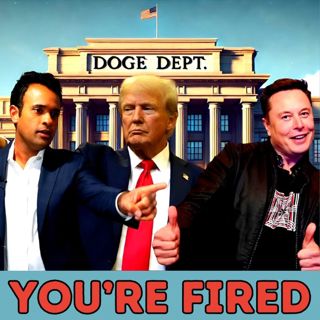
E108: Elon Musk vs DC Swamp: Cutting $2 Trillion in Federal Bloat

E108: Elon Musk vs DC Swamp: Cutting $2 Trillion in Federal Bloat

Tax reform architect Scott Hodge breaks down the bold plan to cut trillions in federal spending, streamline bureaucracy, and tackle America’s unsustainable budget—one obsolete agency at a time.👤 Gues...

22 Marras 20241h 21min

E107: Real Estate Trends: Commissions, Disasters, Airbnb & Interest Rates: w/ Jeff Ostrowski

E107: Real Estate Trends: Commissions, Disasters, Airbnb & Interest Rates: w/ Jeff Ostrowski

Bankrate senior writer Jeff Ostrowski returns to discuss the evolving real estate commission rules, post-disaster housing markets, Airbnb regulations, mortgage rates, commercial real estate shifts, an...

17 Marras 202448min

Suosittua kategoriassa Liike-elämä ja talous

sijotuskasti
mimmit-sijoittaa
psykopodiaa-podcast
rss-rahapodi
rss-rahamania
pomojen-suusta
ostan-asuntoja-podcast
juristipodi
rss-myyntikoulu
rss-seuraava-potilas
rss-lahtijat
rss-draivi
leadcast
sijoitusovi-podcast
asuntoasiaa-paivakirjat
rss-startup-ministerio
rss-sami-miettinen-neuvottelija
rahapuhetta
rss-h-asselmoilanen
rss-turha-edes-yrittaa