
E178: Social Media Isn’t Toxic: Here’s What the Data Says - Dr. Jeff Hall
El Podcast13 Tammi

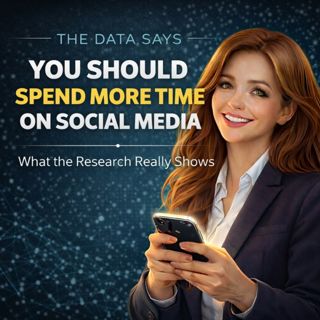
E178: Social Media Isn’t Toxic: Here’s What the Data Says - Dr. Jeff Hall

Social media isn’t “crack for your brain” for most people—Jeffrey Hall argues the best evidence shows tiny average effects on wellbeing, lots of measurement mess, and a bigger story about relationships, leisure, and moral panic.

Guest bio (short)

Dr. Jeffrey Hall is Professor and Chair of Communication Studies at the University of Kansas and Director of the Relationships and Technology Labs, researching social media, communication, and how relationships shape wellbeing.

Topics discussed (in order)
  • Why “social media is toxic” became the default story (and why it may be a moral panic)
  • What the research actually finds: effects near zero for most users
  • The 0.4% figure and why context (baseline mental health, home life, SES) matters more
  • The measurement problem: “screen time” vs “social media time” vs “everything a phone replaces”
  • Media displacement: social media time often replaces TV time more than it replaces relationships
  • Myth: social media addiction is widespread—why self-diagnosis ≠ clinical addiction
  • Teen mental health: social media as a minor factor compared to home, school, money, support
  • “Potatoes and glasses” comparison: putting effect sizes in perspective
  • Content quality debates (TikTok vs Jerry Springer) and why taste ≠ wellbeing outcomes
  • Social bandwidth: why people decompress differently based on work and social demands
  • Real risks (fraud, cyberbullying, nonconsensual content) without treating them as the whole story
  • Tech leaders restricting kids’ tech: privilege, parenting, and “perfectly curated” childhoods
  • Has teaching changed? Jeff’s take: pandemic disruption mattered more than phones
  • Practical takeaway: prioritize relationships; be forgiving about media; align leisure with values
Main points
  • Most studies find tiny average links between social media use and wellbeing; context explains far more.
  • “Screen time” is a blunt instrument because phones replaced many older activities (TV, music, news, books, calls).
  • “Addiction” is often used casually; clinically, we lack strong standards/tools to diagnose “smartphone addiction” the way we do substance use.
  • Social time may be declining for some, but heavy media use often concentrates among people with fewer social anchors (work, family, community).
  • Digital detox results vary—benefits tend to show up when people replace media with chosen, value-aligned activities.
  • Relationships remain the most reliable wellbeing lever: face-to-face is great, calls are strong, texts can help—staying connected matters.
Top 3 quotes (from the conversation)
  • “Social media has become almost like a vortex that pours in every other conversation that we're having right now.”
  • “Study after study basically says the effect is close to zero or approximate zero.”
  • “It is really, really good evidence that relationships are good for you… prioritize relationships in your life.”
Subscribe➡️Review➡️share

If you liked this episode, subscribe for more conversations that cut through moral panics with data. Leave a review (it helps new listeners find the show), and share this episode with one friend who’s convinced social media is “destroying society”—especially if you want a calmer, more evidence-based take.

🎙 The Pod is hosted by Jesse Wright
💬 For guest suggestions, questions, or media inquiries, reach out at https://elpodcast.media/
📬 Never miss an episode – subscribe and follow wherever you get your podcasts.
⭐️ If you enjoyed this episode, please rate and review the show. It helps others find us.

Thanks for listening!

Jaksot(186)

E177: Why Bankers Got Paid and Europe Recovered: The London Debt Agreement Explained

E177: Why Bankers Got Paid and Europe Recovered: The London Debt Agreement Explained

Economic historian Tobias Straumann breaks down how Germany’s debt meltdown in 1931 crashed the global economy—and how a surprisingly generous 1953 debt deal helped spark the German economic miracle b...

9 Tammi 54min
E176: College Student IQ Has Collapsed: Researcher Breaks Down His New Meta-Analysis - Dr. Bob Uttl

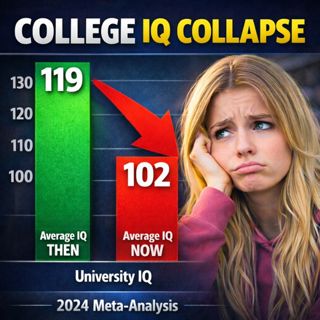
E176: College Student IQ Has Collapsed: Researcher Breaks Down His New Meta-Analysis - Dr. Bob Uttl

A cognitive psychologist explains why college student IQ now averages about 102, why that shift is mathematically inevitable as enrollment expands, and how outdated testing norms and student-evals can...

6 Tammi 1h 15min

E175: Roads Are Bankrupt: New Car Fees Are Coming - Jeff Davis

E175: Roads Are Bankrupt: New Car Fees Are Coming - Jeff Davis

Jeff Davis breaks down why the Highway Trust Fund has been insolvent since 2008 and what fixes (and tradeoffs) are realistic as EVs grow.GUEST BIOJeff Davis is a Senior Fellow at the Eno Center for Tr...

30 Joulu 20251h
E174: Acquired Broke Every Podcast Rule: Harvard Business School Professor Explains Why

E174: Acquired Broke Every Podcast Rule: Harvard Business School Professor Explains Why

Harvard’s Shane Greenstein explains why Acquired wins by treating each episode like an audiobook—high-signal, audience-first, and built for durable value.GUEST BIO: Dr. Shane M. Greenstein is a Profes...

23 Joulu 20251h 4min
E173: Broke. Woke. Stroke. A tenured prof explains why college is failing

E173: Broke. Woke. Stroke. A tenured prof explains why college is failing

Tenured sociology professor Mark Horowitz explains why falling preparedness, grade inflation, and perverse incentives are eroding college standards—and why “broke, woke, stroke” helps describe the pat...

17 Joulu 20251h 7min
E172: MMT Is Going Mainstream - Right as the AI Bubble Is About to Pop: Explained by Dr. Maggiori

E172: MMT Is Going Mainstream - Right as the AI Bubble Is About to Pop: Explained by Dr. Maggiori

A wide-ranging conversation with economist and AI consultant Dr. Emmanuel Maggiori on why Modern Monetary Theory overpromises a “free lunch,” what really causes inflation, how Bitcoin and AI are misun...

9 Joulu 20251h 44min

E171: How the Internet Got Tamed: James Corbett on Media & Power

E171: How the Internet Got Tamed: James Corbett on Media & Power

Independent journalist James Corbett joins Jesse to trace how media, tech, and elite power have reshaped the information landscape—from Time’s 2006 “You” to today’s post-truth, AI-saturated world.GUES...

6 Joulu 202558min

Suosittua kategoriassa Liike-elämä ja talous

sijotuskasti
mimmit-sijoittaa
psykopodiaa-podcast
rss-rahapodi
pomojen-suusta
rss-rahamania
ostan-asuntoja-podcast
juristipodi
rss-myyntikoulu
rss-seuraava-potilas
rss-draivi
sijoitusovi-podcast
rss-lahtijat
rss-startup-ministerio
herrasmieshakkerit
rahapuhetta
bakkari-tarinoita-tapahtumien-takahuoneista
lakicast
rss-h-asselmoilanen
rss-turha-edes-yrittaa