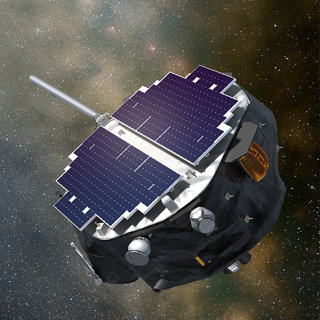
IMAP and the shape of the heliosphere

IMAP and the shape of the heliosphere

Our Solar System is wrapped in a vast, invisible bubble created by the Sun, a protective region that shields Earth and the planets from much of the radiation that fills our galaxy. But until recently, scientists have only had rough sketches of what this boundary looks like and how it behaves.

In this episode of Planetary Radio, host Sarah Al-Ahmed is joined by David McComas, professor of astrophysical sciences at Princeton University and principal investigator of NASA’s Interstellar Mapping and Acceleration Probe (IMAP) and Interstellar Boundary Explorer (IBEX) missions, along with Matina Gkioulidou, a heliophysicist at Johns Hopkins Applied Physics Laboratory, former IMAP-Ultra instrument lead, and current IMAP project scientist and co-investigator.

Now stationed at the Sun–Earth L1 Lagrange point, IMAP uses 10 instruments to study the heliosphere — the region where the solar wind collides with material from interstellar space. The mission does this by tracking energetic neutral atoms, particles that travel in straight lines from distant regions of the heliosphere, allowing scientists to map areas of space that spacecraft can’t directly sample.

McComas and Gkioulidou explain how IMAP builds on the legacy of Interstellar Boundary Explorer, what makes this mission different, and why understanding the Sun’s influence across space matters not just for fundamental science, but for space-weather forecasting and protecting technology and astronauts closer to home.

Discover more at: https://www.planetary.org/planetary-radio/2026-imap

See omnystudio.com/listener for privacy information.

Tämä jakso on lisätty Podme-palveluun avoimen RSS-syötteen kautta eikä se ole Podmen omaa tuotantoa. Siksi jakso saattaa sisältää mainontaa.

Jaksot(1356)

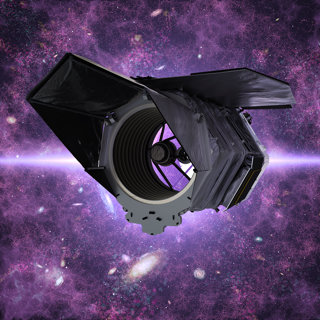
The Nancy Grace Roman Space Telescope is ready to launch

The Nancy Grace Roman Space Telescope is ready to launch

After decades of development, the Nancy Grace Roman Space Telescope is preparing to launch. Once in orbit, Roman will conduct the widest surveys of the universe ever attempted, probing the nature of d...

26 Elo 56min
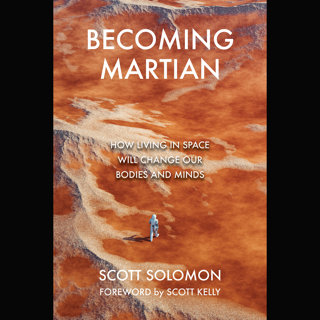
Book Club Edition: Becoming Martian by Scott Solomon

Book Club Edition: Becoming Martian by Scott Solomon

Will we change or terraform Mars to better suit humans? Or are we more likely to change ourselves to better fit the red planet? How far can evolution take us in these new and exotic environments? Thes...

21 Elo 1h 17min
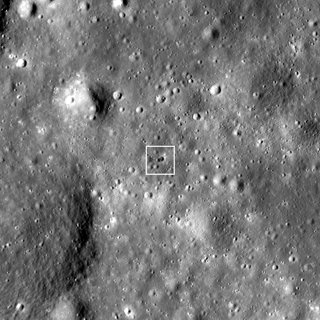
The SpaceX Falcon 9 that crashed into the Moon

The SpaceX Falcon 9 that crashed into the Moon

A SpaceX Falcon 9 upper stage slammed into the moon on August 5 after spending over a year and a half drifting through the Earth-Moon system. Jared Head, museum facilitator at Columbia Memorial Space ...

19 Elo 1h 3min
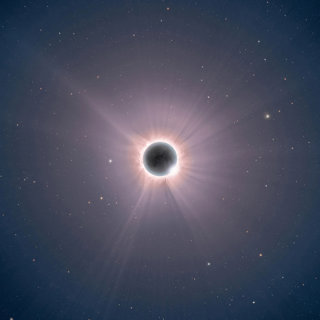
Total solar eclipse 2026: Astrophotography and birdsong

Total solar eclipse 2026: Astrophotography and birdsong

On August 12th, 2026, the Moon’s shadow will sweep across Iceland, Greenland, and Spain, bringing the first total solar eclipse visible from Europe since 1999. And because this eclipse happens near su...

12 Elo 57min

Space Policy Edition: “Science: A New Golden Age” - Reimagining U.S. science policy

Space Policy Edition: “Science: A New Golden Age” - Reimagining U.S. science policy

The White House's Office of Science and Technology Policy recently released "Science: A New Golden Age", a sweeping report that calls for a fundamental reimagining of how the United States funds and c...

7 Elo 1h 10min
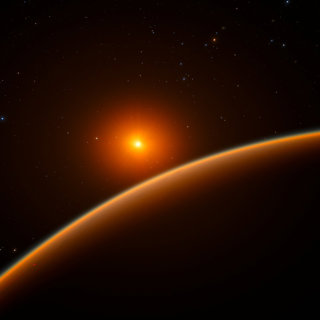
LHS 1140b: The first atmosphere detected on a rocky habitable-zone exoplanet

LHS 1140b: The first atmosphere detected on a rocky habitable-zone exoplanet

For the first time, scientists have confirmed an atmosphere on a rocky exoplanet in the habitable zone of another star. Sarah Al-Ahmed is joined by Collin Cherubim, NASA Hubble Fellow at the Universit...

5 Elo 57min
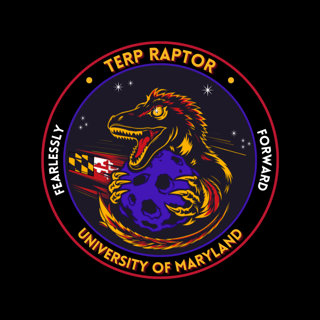
TERP RAPTOR: A student-built mission to asteroid Apophis

TERP RAPTOR: A student-built mission to asteroid Apophis

On Friday, April 13, 2029, asteroid Apophis will pass closer to Earth than our geostationary satellites. While NASA, ESA, and JAXA are all sending missions, a team of students at the University of Mar...

29 Heinä 1h 1min
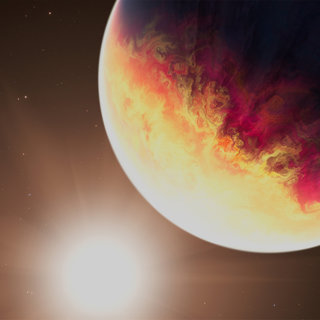
Hot Jupiters: The ‘Roasted Planet’ and the wrong-way hotspot

Hot Jupiters: The ‘Roasted Planet’ and the wrong-way hotspot

Two hot Jupiters presented at the 248th American Astronomical Society meeting push our understanding of exoplanet atmospheres to the extreme. Research Scientist Tiffany Kataria from NASA's Jet Propuls...

22 Heinä 1h 2min

Suosittua kategoriassa Tiede

rss-poliisin-mieli
tiedekulma-podcast
utelias-mieli
rss-mita-tulisi-tietaa
docemilia
rss-luontopodi-samuel-glassar-tutkii-luonnon-ihmeita
hippokrateen-vastaanotolla
rss-totuuden-liepeilla
rss-duokkari-ekstra
rss-hereilla
filocast-filosofian-perusteet
rss-tiedetta-vai-tarinaa
rss-ylistys-elaimille
rss-kasvikutsut
sotataidon-ytimessa
rss-duodecim-lehti
rss-tervetta-skeptisyytta