IMAP and the shape of the heliosphere

IMAP and the shape of the heliosphere

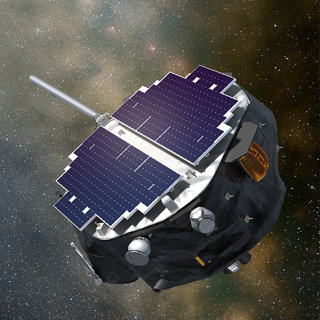
Our Solar System is wrapped in a vast, invisible bubble created by the Sun, a protective region that shields Earth and the planets from much of the radiation that fills our galaxy. But until recently, scientists have only had rough sketches of what this boundary looks like and how it behaves.

In this episode of Planetary Radio, host Sarah Al-Ahmed is joined by David McComas, professor of astrophysical sciences at Princeton University and principal investigator of NASA’s Interstellar Mapping and Acceleration Probe (IMAP) and Interstellar Boundary Explorer (IBEX) missions, along with Matina Gkioulidou, a heliophysicist at Johns Hopkins Applied Physics Laboratory, former IMAP-Ultra instrument lead, and current IMAP project scientist and co-investigator.

Now stationed at the Sun–Earth L1 Lagrange point, IMAP uses 10 instruments to study the heliosphere — the region where the solar wind collides with material from interstellar space. The mission does this by tracking energetic neutral atoms, particles that travel in straight lines from distant regions of the heliosphere, allowing scientists to map areas of space that spacecraft can’t directly sample.

McComas and Gkioulidou explain how IMAP builds on the legacy of Interstellar Boundary Explorer, what makes this mission different, and why understanding the Sun’s influence across space matters not just for fundamental science, but for space-weather forecasting and protecting technology and astronauts closer to home.

Discover more at: https://www.planetary.org/planetary-radio/2026-imap

See omnystudio.com/listener for privacy information.

Jaksot(1329)

Epic Spaceman: Making cosmic scale human

Epic Spaceman: Making cosmic scale human

When his filmmaking career stalled during the pandemic, Toby Lockerbie turned to the one place that had never stopped inspiring him: the Universe. With no background in visual effects, he taught himse...

19 Marras 202559min

The Planetary Society goes to TwitchCon 2025

The Planetary Society goes to TwitchCon 2025

The Planetary Society heads to TwitchCon 2025 to explore how scientists and educators use livestreaming to share the excitement of discovery. We begin with Moohoodles, one of Twitch’s pioneering space...

12 Marras 20251h 1min

Space Policy Edition: Should a (potential) biosignature revive Mars Sample Return?

Space Policy Edition: Should a (potential) biosignature revive Mars Sample Return?

In 1996, a controversial claim of fossilized life in a Martian meteorite ignited a golden age of Mars exploration. Nearly 30 years later, a potential biosignature detected by the Perseverance rover at...

7 Marras 20251h 21min

Do Aliens Speak Physics?

Do Aliens Speak Physics?

If we ever meet intelligent extraterrestrials, will we even be able to talk about physics? Physicist Daniel Whiteson of UC Irvine and cartoonist Andy Warner join Sarah Al-Ahmed to explore one of scien...

5 Marras 202559min
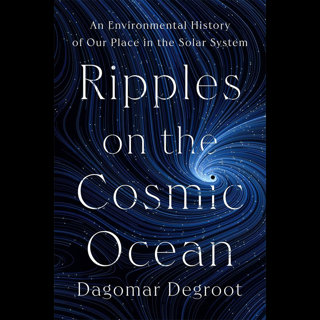
Ripples on the Cosmic Ocean

Ripples on the Cosmic Ocean

What happens in space doesn’t stay in space. Historian Dagomar Degroot joins Planetary Radio host Sarah Al-Ahmed to explore how shifting solar cycles, volcanic eruptions on Venus, Martian dust storms,...

29 Loka 20251h 9min
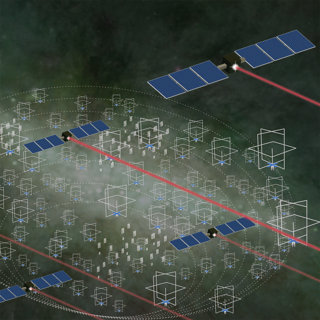
2025 NASA’s Innovative Advanced Concepts Symposium: Part 2 — Hopping robots and the search for exoplanet magnetospheres

2025 NASA’s Innovative Advanced Concepts Symposium: Part 2 — Hopping robots and the search for exoplanet magnetospheres

In this second installment of Planetary Radio’s coverage from the 2025 NASA Innovative Advanced Concepts Symposium in Philadelphia, Pennsylvania, host Sarah Al-Ahmed highlights more of the technologie...

22 Loka 20251h 1min
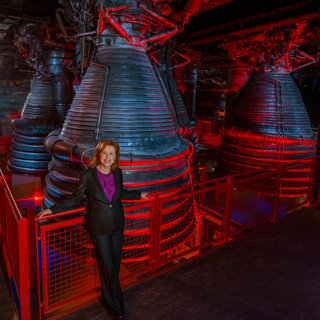
Book Club Edition: Space Craze by Margaret Weitekamp

Book Club Edition: Space Craze by Margaret Weitekamp

The American fascination with spaceflight and what we might find out there began long before any human left Earth. It’s Dr. Margaret Weitekamp’s job to collect, document, and preserve the cultural art...

17 Loka 202555min
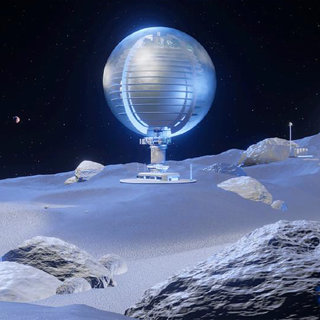
2025 NASA’s Innovative Advanced Concepts Symposium: Part 1 — Lunar glass and starshades

2025 NASA’s Innovative Advanced Concepts Symposium: Part 1 — Lunar glass and starshades

Each year, NASA’s Innovative Advanced Concepts program (NIAC) funds visionary ideas that could shape the future of space exploration. In this first of two episodes from the 2025 NIAC Symposium in Phil...

15 Loka 202553min

Suosittua kategoriassa Tiede

rss-poliisin-mieli
tiedekulma-podcast
rss-mita-tulisi-tietaa
rss-tiedetta-vai-tarinaa
rss-duodecim-lehti
utelias-mieli
rss-lihavuudesta-podcast
hippokrateen-vastaanotolla
radio-antro
filocast-filosofian-perusteet
rss-sosiopodi
university-of-eastern-finland
rss-kasvatuspsykologiaa-kaikille
rss-astetta-parempi-elama-podcast
rss-ylistys-elaimille
rss-tervetta-skeptisyytta
rss-kasvikutsut