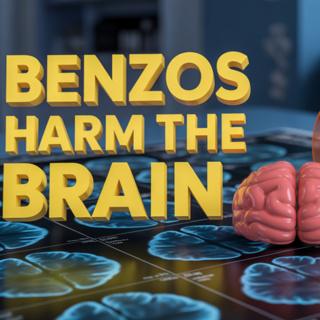
They never told us benzos do this to your brain

They never told us benzos do this to your brain

These drugs calm your brain—but what if they’re silently increasing your stroke risk?

For decades, benzodiazepines like Valium and Xanax were seen as safe, even neuroprotective.

Doctors believed that by calming overexcited brain cells, these medications might actually help during a stroke. That assumption shaped years of prescribing habits.

But the science has changed—and the new data is disturbing.

In this episode, you’ll uncover emerging research that links benzodiazepines and Z-drugs to increased stroke risk, dangerous falls, pneumonia, and even higher death rates after stroke.

Even more concerning? These risks don’t just affect the elderly—they show up in younger adults, too.

⚠️ What you’ll learn in this video:

Why the original “brain-protective” theory behind benzodiazepines may be wrong

The shocking stroke risk seen in long-term benzo users

Why dose and duration matter more than most doctors realise

What happens when benzodiazepines are given after a stroke

Why falls, fractures, and pneumonia skyrocket in hospitalized patients

What to do without stopping suddenly or putting yourself at risk

This isn’t fear-mongering. Benzodiazepines have legitimate medical uses. But they are not the harmless medications we once believed, especially when it comes to stroke and recovery.

If you—or someone you care for—uses anxiety medications, sleep aids, or sedatives, this is information you can’t afford to ignore.

Tämä jakso on lisätty Podme-palveluun avoimen RSS-syötteen kautta eikä se ole Podmen omaa tuotantoa. Siksi jakso saattaa sisältää mainontaa.

Jaksot(246)

Meth Withdrawal — Why It Takes 6 Months to Feel Normal Again

Meth Withdrawal — Why It Takes 6 Months to Feel Normal Again

Why does meth withdrawal take 6 months when alcohol withdrawal takes days?It's all about dopamine depletion and neuroplasticity 🧠Dr. Ferghal breaks down:• The 3-phase withdrawal timeline• What happen...

27 Touko 6min
Childhood Obesity: Why 30% of Kids We Help Have Food Trauma Issues

Childhood Obesity: Why 30% of Kids We Help Have Food Trauma Issues

30% of kids with excess weight that we help have trauma-based eating patterns. That's not willpower failure — that's biology. When children experience domestic violence, financial stress, or emotional...

20 Touko 16min
Binge Drinking: The Hidden Truth About Weekend Warriors

Binge Drinking: The Hidden Truth About Weekend Warriors

MYTH: You need to hit 'rock bottom' to recover from addiction. But here's what addiction specialist Dr. Ferghal Armstrong's guest Tom reveals: his worst moment wasn't losing everything – it was waking...

13 Touko 21min
Attachment Issues Cause Addiction - 4 Types That Lead to Drugs

Attachment Issues Cause Addiction - 4 Types That Lead to Drugs

Think trauma only happens from big events like car crashes? Wrong. Dr. Ferghal here with a myth-bust that'll change how you see childhood forever.The biggest trauma isn't what you think — it's relatio...

6 Touko 24min

Benzodiazepine Withdrawal Waves Explained | Ashton Protocol

Benzodiazepine Withdrawal Waves Explained | Ashton Protocol

Most people are told that benzodiazepine withdrawal should improve in a straight line. That myth keeps many people trapped in shame, fear, and confusion when symptoms come back in waves. But brain rec...

23 Huhti 7min

Quit Smoking: 30% Better Recovery from Drug Addiction

Quit Smoking: 30% Better Recovery from Drug Addiction

Dopamine pathways and addiction recovery: Why smoking during addiction treatment reduces your chances of lasting sobriety by 30%🚬 THE MYTH WE'VE ALL BELIEVEDFor decades, addiction treatment centres h...

15 Huhti 3min

3 Evidence-Based Recovery Models That Actually Work

3 Evidence-Based Recovery Models That Actually Work

Recovery paths aren't one-size-fits-all. Dr. Fergal Armstrong explains why neuroplasticity supports multiple evidence-based approaches to addiction recovery.**THE MYTH: One "Right" Way to Recover**Soc...

8 Huhti 7min

The Neuroscience of Cravings and Brain Recovery

The Neuroscience of Cravings and Brain Recovery

Addiction neuroscience explains why cravings feel urgent, physical, and overpowering—and why that does not mean recovery is impossible.Many people still believe cravings happen because of weak willpow...

3 Huhti 5min

Suosittua kategoriassa Terveys ja hyvinvointi

unicast
tiedenaiset-podcast
psykopodiaa-podcast
vakeva-elama-viisaampi-mieli-vahvempi-keho
rss-pitaisko-erota
voi-hyvin-meditaatiot-2
puhu-muru
rss-uplevel-by-sonja-hannus
meditaatiot-suomeksi
katilon-kahvitunti
rss-kuumilla-aalloilla
rss-narsisti
yes-girl
paritellen
aamukahvilla
junnut-pelissa
fitnessvastaanotto
rss-soberisti-podcast
rss-nautinto
rss-vapaudu-voimaasi