Understanding IoT as a Service: The Platform Revolutionizing Internet of Things - Part One

Understanding IoT as a Service: The Platform Revolutionizing Internet of Things - Part One

What is IoT as a Service (IoTaaS) and how does it enable managing millions of connected devices?

In this episode of Technically U, we break down the cloud platforms revolutionizing how companies connect, manage, and extract value from Internet of Things devices.

🌐 What You'll Learn:

What IoT as a Service (IoTaaS) actually is and how it works

Core components: device connectivity, data ingestion, device management

Major platforms: AWS IoT Core, Azure IoT Hub, IBM Watson IoT

How IoTaaS differs from building your own IoT infrastructure

Real-world use cases:

Industrial IoT, smart cities, agriculture, healthcare

Complete data flow from device to application

Device provisioning, management, and OTA firmware updates

Security features: authentication, encryption, anomaly detection

Edge computing integration for low-latency processing

Pricing models and cost considerations

Best practices for successful IoT deployments

💡 Perfect for:

IoT developers, product managers, system architects, business owners exploring connected device solutions, and anyone interested in smart cities, industrial automation, or IoT applications.

🔑 Key Takeaways:

What is IoTaaS?

✓ Cloud platform for complete IoT infrastructure

✓ Manages device connectivity, data ingestion, device management

✓ Abstracts complexity of building IoT systems from scratch

✓ Scales from 10 to 10 million devices seamlessly

Core Components:

Device Connectivity - MQTT, CoAP, HTTP, LoRaWAN protocols

Device Registry - Track all devices, status, metadata

Data Ingestion - Handle millions of messages per second

Device Management - Provisioning, monitoring, OTA updates

Data Processing - Real-time stream processing and analytics

Security - Authentication, encryption, access controlIntegration - APIs, webhooks, business system connections

Major Platforms:

AWS IoT Core - Comprehensive, deep

AWS integration

Azure IoT Hub - Strong

Microsoft ecosystem integration

Google Cloud IoT - Analytics and ML capabilities (note: Core deprecated)

IBM Watson IoT - Enterprise and industrial focus

Specialized platforms - Particle, Losant, ThingWorx, Cumulocity

Benefits:

✅ Faster time to market (weeks vs months)

✅ Built-in scalability to millions of devices

✅ Reduced operational complexity

✅ Expert security included

✅ Device management at scale

✅ Predictable variable costs (OpEx vs CapEx)

✅ Rich integration ecosystems

Challenges:

⚠️ Vendor lock-in concerns

⚠️ Costs at massive scale can be high

⚠️ Internet connectivity required

⚠️ Data sovereignty and compliance

⚠️ Platform feature limitations

⚠️ Shared security responsibility


#IoTaaS #InternetOfThings #IoTPlatform #AWS #Azure #SmartDevices #IndustrialIoT #SmartCity #CloudComputing #EdgeComputing #MQTT #DeviceManagement #ConnectedDevices #IoTSecurity #TechnicallyU

Tämä jakso on lisätty Podme-palveluun avoimen RSS-syötteen kautta eikä se ole Podmen omaa tuotantoa. Siksi jakso saattaa sisältää mainontaa.

Jaksot(270)

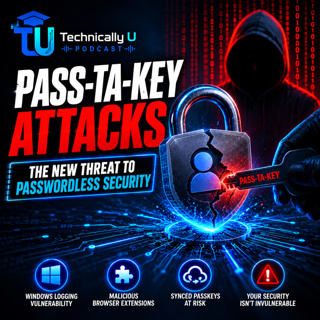
Pass-ta-Key Attacks: Is Passwordless Security Still Safe?

Pass-ta-Key Attacks: Is Passwordless Security Still Safe?

Apple, Google, Microsoft, and the security industry have spent years telling us that passkeys are the future of authentication.No passwords.Less phishing.No reusable credentials for attackers to steal...

12 Syys 23min
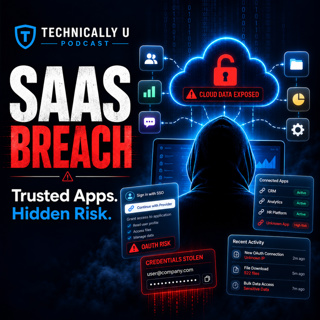
SaaS Bloodbath: Why Your Trusted Apps Are Now the Attack Surface

SaaS Bloodbath: Why Your Trusted Apps Are Now the Attack Surface

Your company may not get hacked through the firewall. It may get breached through the SaaS app everyone trusts.In this episode of Technically U, we break down the growing SaaS security crisis and why ...

5 Syys 36min
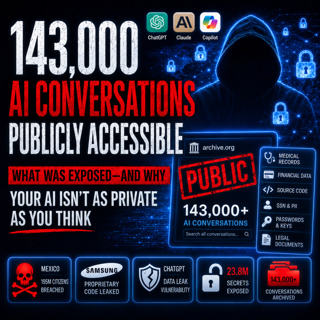
The AI Data Disaster: What ChatGPT, Claude, and Gemini Really Do With Your Secrets

The AI Data Disaster: What ChatGPT, Claude, and Gemini Really Do With Your Secrets

143,000 ChatGPT, Claude, and Copilot conversations are publicly accessible right now. Here's what was exposed—and why your AI isn't as private as you think.🚨 THE HEADLINE:143,000 user conversations w...

29 Elo 21min
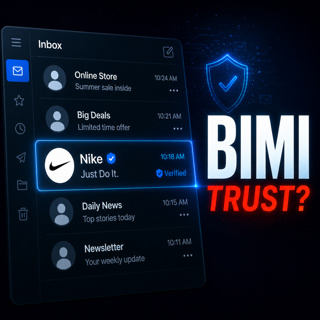
The BIMI Paradox: Why 90% of Companies Are Losing Thousands.

The BIMI Paradox: Why 90% of Companies Are Losing Thousands.

The BIMI Paradox: Why 90% of Companies Are Losing Thousands—And Why Your Logo Might Be Illegal in Inboxes (2026 Reality Check).BIMI (Brand Indicators for Message Identification): 90% of companies have...

29 Elo 26min
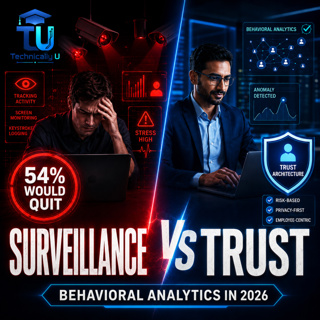
Beyond Surveillance: How Behavioral Analytics Became a Trust Problem

Beyond Surveillance: How Behavioral Analytics Became a Trust Problem

Behavioral Analytics in 2026: How Companies Are Moving From Surveillance to Trust ArchitectureThe paradox nobody talks about: 76% of companies see efficiency gains from monitoring. But 60% of employee...

20 Elo 17min

The Confidence Gap: Why Executives Think AI Agents Are Secure (And Why They're Wrong)

The Confidence Gap: Why Executives Think AI Agents Are Secure (And Why They're Wrong)

The Confidence Gap: AI Agents and the Security Crisis Nobody Is Talking AboutEighty-two percent of executives feel confident that their existing AI agent policies are enough to keep their organization...

8 Elo 18min
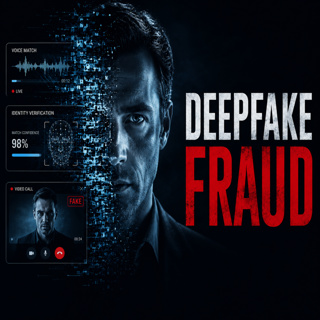
Seeing Is No Longer Believing: How Deepfake Fraud Targets Businesses and Families

Seeing Is No Longer Believing: How Deepfake Fraud Targets Businesses and Families

What if the voice on the phone sounds exactly like your boss, your bank, or someone in your family — but it isn’t them?In this episode of Technically U, we break down Deepfake Fraud and why it has bec...

31 Heinä 23min

The AI Criminal Playbook: How Cybercrime Changed Forever in 2026

The AI Criminal Playbook: How Cybercrime Changed Forever in 2026

The next generation of cybercrime may not come from a hacker typing code in a dark room.It may come from someone using AI to generate phishing emails, clone voices, create fake identities, manipulate ...

24 Heinä 16min