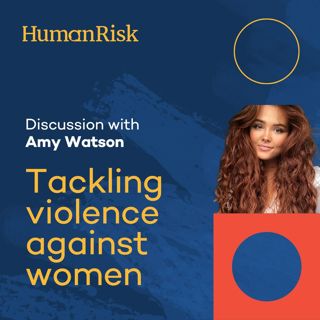

Amy Watson on Violence Against Women & Girls

Amy Watson on Violence Against Women & Girls

What if we stopped telling women how to stay safe, and started asking why violence against them keeps happening in the first place? On this episode, I’m joined for a second time, by Amy Watson, the founder of social enterprise HASSL. She’s trying to tackle violence against women and girls at its root. Not with another awareness campaign or safety app. But by building a global movement designed to shift responsibility away from women, and onto society.

Overview
When Amy first joined the podcast a year ago, we discussed the scale and reality of violence against women. A year on, she returns to talk about what it actually takes to tackle it.
In just twelve months, her social enterprise HASSL has grown into a global prevention movement: more than half a million followers, thousands of volunteers across over 120 countries, and campaigns reaching millions of people organically.

But this isn’t just a story about social media growth. It’s about culture change. In an extended and wide-ranging disucssion, we explore why laws alone don’t solve systemic problems, why “stay safe” advice can unintentionally reinforce the wrong narrative, and what happens when you apply entrepreneurial thinking to one of society’s most entrenched issues.

This is a conversation about scale, backlash, risk and moral ambition, and about what it means to build something that refuses to compromise.

Guest Bio - Amy Watson
Amy is the founder of HASSL, a global social enterprise tackling harassment at the root.

HASSL focuses on prevention — shifting responsibility for violence away from women as individuals and onto the cultural and systemic factors that enable harm. Combining research, education and partnerships, it aims to create scalable, long-term change rather than short-term fixes.

In just over a year, HASSL has grown into a global movement with hundreds of thousands of followers and volunteers across more than 120 countries.

Amy’s work sits at the intersection of social justice and entrepreneurship, applying business thinking to one of society’s most entrenched problems.

AI-Generated Timestamped Summary
00:00 – Intro: From Problem to Action

Christian frames this follow-up as a shift from discussing violence against women to exploring what it takes to tackle it in practice.

02:00 – What HASSL Stands For
Amy explains HASSL’s prevention-first approach: shifting responsibility away from women and onto culture, systems and male behaviour.

05:00 – Scaling a Social Enterprise
Rapid global growth, research-driven strategy, sustainable funding streams and a structured five-stage plan.

08:30 – Education & Engaging Men
Launch of free education resources, bystander tools and conversation frameworks designed to invite men into the solution.

16:00 – Entrepreneurship, Risk & Moral Ambition
Applying startup thinking to social change; sacrificing financial ambition for impact; long-term vision over quick wins.

35:00 – Values, Independence & Leadership
Why Amy avoids outside investment, refuses to compromise on inclusivity, and builds operational resilience into the organisation.

58:30 – Backlash & Online Abuse T
rolling, hate messages and the deliberate disruption of a webinar — and what that reveals about cultural normalisation.

01:05:00 – Using Criticism as Leverage
Turning recurring myths (“false accusations”, “what about men?”) into educational opportunities and narrative shifts.

01:21:00 – Barriers to Reporting Why speaking out rarely benefits women; the structural and social costs involved.

01:37:00 – Building a Movement How listeners can engage — and why lasting change requires persistence, scale and collective responsibility.

Links
Amy’s previous appearance on the show - https://www.humanriskpodcast.com/amy-watson-on-violence-against-women/

HASSL - hassl.uk

Moral Ambition by Rutger Bregman - https://www.moralambition.org/book

Tämä jakso on lisätty Podme-palveluun avoimen RSS-syötteen kautta eikä se ole Podmen omaa tuotantoa. Siksi jakso saattaa sisältää mainontaa.

Jaksot(368)

Charlie Hurst, Tom Noble and Will Sudlow on Flat White or F*ck Off

Charlie Hurst, Tom Noble and Will Sudlow on Flat White or F*ck Off

What happens when someone runs with a business idea they've heard as a thought experiment on a podcast? Can a business have an expletive in its name? And is it possible to run a business that sells a ...

22 Helmi 1h 15min
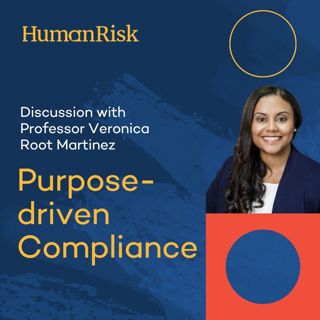
Professor Veronica Root Martinez on Purpose-Driven Compliance

Professor Veronica Root Martinez on Purpose-Driven Compliance

Who determines what 'good' Compliance actually looks like?  The obvious answer is regulators (and in some jurisdictions) prosecutors. But what if it were the regulated Firms themselves?  That's the id...

7 Helmi 1h 2min
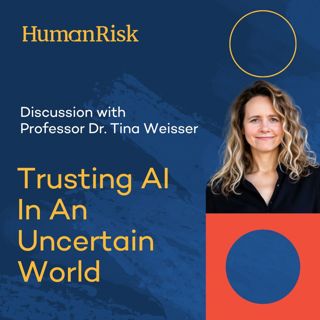
Professor Tina Weisser on Trusting AI In An Uncertain World

Professor Tina Weisser on Trusting AI In An Uncertain World

As Artificial Intelligence (AI) gets smarter and tkaes over more tasks, what happens to human dynamics like trust, transparency, leadership and empathy. How can humans and machines wowrk togehter effe...

27 Tammi 1h 9min
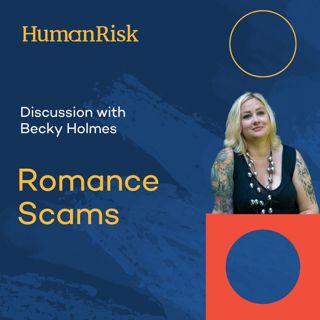
Becky Holmes on Romance Scams

Becky Holmes on Romance Scams

What lies behind Romance Fraud? Romance fraud is one of the fastest-growing forms of fraud worldwide, and one of the most emotionally devastating. It’s also one of the most misunderstood.On this epis...

21 Tammi 1h 8min
Amy Kean on Grief

Amy Kean on Grief

Why do we struggle to talk about grief? Why that matters and what we can do about it, is the subject of this episode.SummaryGrief is something almost all of us will experience, and yet something we st...

12 Tammi 1h 4min
Dr Guy Champniss on Business, BeSci and AI

Dr Guy Champniss on Business, BeSci and AI

Are we losing our ability to think critically as we rely more on AI?Episode SummaryMy guest is social psychologist Dr Guy Champniss to explore the role of behavioural science in business and the emerg...

7 Joulu 20251h 1min
Professor Yuval Feldman on Can The Public Be Trusted?

Professor Yuval Feldman on Can The Public Be Trusted?

Why do governments rely on coercion and punishment when voluntary cooperation often produces better, more sustainable outcomes?Episode SummaryOn this episode, I’m joined once again by Professor Yuval ...

23 Marras 20251h 5min

Suosittua kategoriassa Tiede

rss-poliisin-mieli
tiedekulma-podcast
rss-mita-tulisi-tietaa
docemilia
filocast-filosofian-perusteet
menologeja-tutkimusmatka-vaihdevuosiin
rss-duodecim-lehti
rss-tiedetta-vai-tarinaa
sotataidon-ytimessa
rss-lapsuuden-rakentajat-podcast
rss-lihavuudesta-podcast
utelias-mieli
radio-antro
rss-bios-podcast
rss-metsantuntijat-podcast
rss-luontopodi-samuel-glassar-tutkii-luonnon-ihmeita
rss-sosiopodi