
The Eavesdropper Economy: How Surveillance Built AI (E186)
El Podcast18 Helmi

The Eavesdropper Economy: How Surveillance Built AI (E186)

A lively tour from Cold War “The Thing” to today’s surveillance capitalism—showing how audio capture, too much data, and automation pressures helped turn listening into AI.

Guest bios:
  • Dr. Toby Heys — Professor at the School of Digital Arts (SODA), Manchester Metropolitan University; co-founder of the AUDINT sonic research unit; co-author of Listening In
  • Dr. David Jackson — Senior Lecturer in Digital Visualisation at SODA, Manchester Metropolitan University; researches AI’s cultural impact; founded the Storytellers + Machines conference (2023); co-author of Listening In.
  • Marsha Courneya — Canadian writer/editor; teaches Digital Dramaturgy at the International Film School of Cologne; doctoral researcher in Digital Culture and Communication at Birkbeck, University of London; co-author of Listening In.
Topics discussed:
  • “The Thing” (1945): passive bugging, resonance, why it went undetected
  • Cold War escalation: normalization of listening, Five Eyes, PRISM/Snowden
  • Stasi data glut: informants, dossiers, “collecting as mania,” behavior change
  • Language under surveillance: cryptolects, slang, coded speech, hip-hop as evasion
  • Surveillance capitalism: smart homes, smart toys, wearables, “data promiscuity”
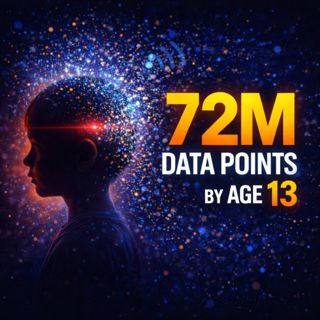
  • Kids + data: baby monitors/crib cams, school biometrics, “data twins” before birth
  • AI training + intimate life: accidental recordings, human review, terms-of-service reality
  • Future tensions: convenience vs autonomy, regulation lag, ownership erosion (“enshittification”)
Main points:
  • Audio surveillance scales into an “automation problem.” Once you can record everything, the bottleneck becomes listening fast enough, pushing intelligence services toward automated analysis.
  • Surveillance changes behavior—even when nobody is actively listening. The possibility of being overheard bends speech, jokes, and self-presentation (Stasi dynamics → modern smart devices).
  • “Too much data” doesn’t make it harmless. The danger isn’t only what’s heard today, but the creation of a searchable “permanent record” that can be reinterpreted later.
  • The home becomes the most valuable capture zone. People drop the public mask at home; that intimacy makes in-home audio uniquely revealing and therefore lucrative/powerful.
  • Children are captured early—often via “safety” and parental anxiety. Baby tech, smart toys, school systems, and medical records create a data trail before kids can consent or understand it.
  • Snowden shocked—but didn’t trigger lasting mass refusal. The episode argues leaks often lead to resignation/memeification (“the intel officer listening”) rather than sustained backlash.
  • AI + ownership is the next front. Beyond privacy, the guests worry about erosion of ownership (you can’t fully “own” digital goods or refuse totalizing platforms as easily).
Top 3 quotes:
  • Toby:There was nothing to detect.
  • Marsha:It ruptures language completely.
  • David:data isn’t secure and safe.

🎙 The Pod is hosted by Jesse Wright
💬 For guest suggestions, questions, or media inquiries, reach out at https://elpodcast.media/
📬 Never miss an episode – subscribe and follow wherever you get your podcasts.
⭐️ If you enjoyed this episode, please rate and review the show. It helps others find us.

Thanks for listening!

Jaksot(186)

E154: Don’t Buy That House: The HOA Nightmare Exposed - Shelly Marshall

E154: Don’t Buy That House: The HOA Nightmare Exposed - Shelly Marshall

Homeowner-advocate Shelly Marshall explains why many HOAs function like private governments—often stripping owners’ rights—and how to protect yourself (or avoid them entirely).Guest bioShelly Marshall...

30 Elo 202559min
E153: AI Showdown: Experts Clash - Transformative Tech or Total Hype?

E153: AI Showdown: Experts Clash - Transformative Tech or Total Hype?

A spirited debate between Chadwick Turner and Emmanuel Maggiori on whether AI is a transformative technology or overhyped disruption, exploring its impact on jobs, society, and the economy.👥 Guest Bi...

27 Elo 20251h 33min
E152: Are We Living in an AI Bubble? Tech Insider Reveals All

E152: Are We Living in an AI Bubble? Tech Insider Reveals All

Pulitzer Prize–winning journalist Gary Rivlin discusses his book AI Valley, exploring Silicon Valley’s AI hype cycle, the dominance of tech giants, and the venture capital forces shaping the industry....

23 Elo 20251h 28min
E151: How AI Is Killing the Gen Z Workforce - Melise Panetta

E151: How AI Is Killing the Gen Z Workforce - Melise Panetta

Marketing lecturer & former Fortune 100 exec Melise Panetta discusses how AI is reshaping entry-level jobs, Gen Z’s career prospects, and the future of skills and education.GUEST BIO: Melise Panetta, ...

20 Elo 20251h 5min
E150: Why AI Isn’t the Future We Were Sold – Dr. Jeff Funk Explains

E150: Why AI Isn’t the Future We Were Sold – Dr. Jeff Funk Explains

A deep dive with Dr. Jeffrey Funk on AI hype, startup bubbles, Gen Z’s job struggles, and the broken higher education system.Guest BioDr. Jeffrey Funk is a retired technology economist and former univ...

16 Elo 20251h 11min
E149: Mass Incarceration Is a Myth — The Shocking Truth EXPOSED

E149: Mass Incarceration Is a Myth — The Shocking Truth EXPOSED

An in-depth discussion with legal scholar Jeffrey Seaman debunking popular myths about mass incarceration, examining crime clearance rates, sentencing trends, and exploring justice-focused reforms.Gue...

13 Elo 202553min

E148: From Student-Athlete to Influencer-Athlete: The Future of College Sports

E148: From Student-Athlete to Influencer-Athlete: The Future of College Sports

Graham Hillard, editor at the James G. Martin Center for Academic Renewal, discusses the rapid professionalization of college sports under NIL, the legal chaos reshaping athletics, and the uncertain f...

9 Elo 20251h 18min

E147: Let Colleges Fail! 84-Year-Old Professor Exposes the Truth

E147: Let Colleges Fail! 84-Year-Old Professor Exposes the Truth

Economist Richard Vedder argues that U.S. colleges are bloated, inefficient, and increasingly out of touch with students and the job market. He explains why creative destruction is necessary—and inevi...

6 Elo 202557min

Suosittua kategoriassa Liike-elämä ja talous

sijotuskasti
mimmit-sijoittaa
psykopodiaa-podcast
rss-rahapodi
pomojen-suusta
rss-rahamania
ostan-asuntoja-podcast
juristipodi
rss-myyntikoulu
rss-seuraava-potilas
rss-draivi
sijoitusovi-podcast
rss-lahtijat
rss-startup-ministerio
herrasmieshakkerit
rahapuhetta
bakkari-tarinoita-tapahtumien-takahuoneista
lakicast
rss-h-asselmoilanen
rss-turha-edes-yrittaa