
The Eavesdropper Economy: How Surveillance Built AI (E186)
El Podcast18 Helmi

The Eavesdropper Economy: How Surveillance Built AI (E186)

A lively tour from Cold War “The Thing” to today’s surveillance capitalism—showing how audio capture, too much data, and automation pressures helped turn listening into AI.

Guest bios:
  • Dr. Toby Heys — Professor at the School of Digital Arts (SODA), Manchester Metropolitan University; co-founder of the AUDINT sonic research unit; co-author of Listening In
  • Dr. David Jackson — Senior Lecturer in Digital Visualisation at SODA, Manchester Metropolitan University; researches AI’s cultural impact; founded the Storytellers + Machines conference (2023); co-author of Listening In.
  • Marsha Courneya — Canadian writer/editor; teaches Digital Dramaturgy at the International Film School of Cologne; doctoral researcher in Digital Culture and Communication at Birkbeck, University of London; co-author of Listening In.
Topics discussed:
  • “The Thing” (1945): passive bugging, resonance, why it went undetected
  • Cold War escalation: normalization of listening, Five Eyes, PRISM/Snowden
  • Stasi data glut: informants, dossiers, “collecting as mania,” behavior change
  • Language under surveillance: cryptolects, slang, coded speech, hip-hop as evasion
  • Surveillance capitalism: smart homes, smart toys, wearables, “data promiscuity”
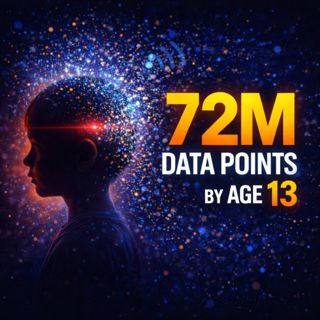
  • Kids + data: baby monitors/crib cams, school biometrics, “data twins” before birth
  • AI training + intimate life: accidental recordings, human review, terms-of-service reality
  • Future tensions: convenience vs autonomy, regulation lag, ownership erosion (“enshittification”)
Main points:
  • Audio surveillance scales into an “automation problem.” Once you can record everything, the bottleneck becomes listening fast enough, pushing intelligence services toward automated analysis.
  • Surveillance changes behavior—even when nobody is actively listening. The possibility of being overheard bends speech, jokes, and self-presentation (Stasi dynamics → modern smart devices).
  • “Too much data” doesn’t make it harmless. The danger isn’t only what’s heard today, but the creation of a searchable “permanent record” that can be reinterpreted later.
  • The home becomes the most valuable capture zone. People drop the public mask at home; that intimacy makes in-home audio uniquely revealing and therefore lucrative/powerful.
  • Children are captured early—often via “safety” and parental anxiety. Baby tech, smart toys, school systems, and medical records create a data trail before kids can consent or understand it.
  • Snowden shocked—but didn’t trigger lasting mass refusal. The episode argues leaks often lead to resignation/memeification (“the intel officer listening”) rather than sustained backlash.
  • AI + ownership is the next front. Beyond privacy, the guests worry about erosion of ownership (you can’t fully “own” digital goods or refuse totalizing platforms as easily).
Top 3 quotes:
  • Toby:There was nothing to detect.
  • Marsha:It ruptures language completely.
  • David:data isn’t secure and safe.

🎙 The Pod is hosted by Jesse Wright
💬 For guest suggestions, questions, or media inquiries, reach out at https://elpodcast.media/
📬 Never miss an episode – subscribe and follow wherever you get your podcasts.
⭐️ If you enjoyed this episode, please rate and review the show. It helps others find us.

Thanks for listening!

Jaksot(186)

E162: He Built a Billion-View Empire: Now He Warns Social Media Rewires Your Brain - Richard Ryan

E162: He Built a Billion-View Empire: Now He Warns Social Media Rewires Your Brain - Richard Ryan

How a tech insider who helped build billion-view machines explains the attention economy’s playbook—and how to guard your mind (and data) against it.Guest bio:Richard Ryan is a software developer, med...

22 Loka 20251h 12min

E161: From Rome to Right Now: What History Gets Wrong About Collapse - Dr. Luke Kemp

E161: From Rome to Right Now: What History Gets Wrong About Collapse - Dr. Luke Kemp

Dr. Luke Kemp, an Existential Risk Researcher at the University of Cambridge shows how today’s plutocracy and tech-fueled surveillance imperil society—and what we can do to build resilience.Guest bio:...

15 Loka 20251h 17min
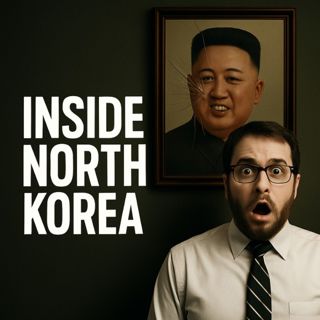
E160: How North Korea’s Dictatorship Endures: Historian Fyodor Tertitskiy Explains

E160: How North Korea’s Dictatorship Endures: Historian Fyodor Tertitskiy Explains

A deep dive with historian Dr. Fyodor Tertitskiy on how North Korea’s dynasty survives—through isolation, terror, and nukes—and why collapse or unification is far from inevitable.Guest bio:Fyodor Tert...

11 Loka 202558min

E159: Laziness Is a Myth: How Hustle Culture Hijacked Your Life

E159: Laziness Is a Myth: How Hustle Culture Hijacked Your Life

Dr. Devon Price unpacks “the laziness lie,” how AI and “bullshit jobs” distort work and higher ed, and why centering human needs—not output—leads to saner lives.Guest bio: Devon Price, PhD, is a Clini...

4 Loka 202559min
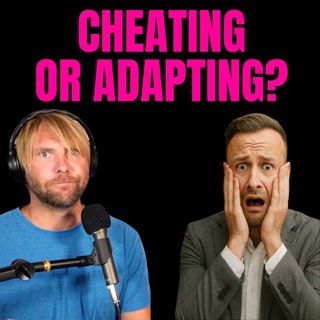
E158: Post-Plagiarism University: Replacing Humans with AI—Belonging Dips, GPAs Slide, Integrity Erodes

E158: Post-Plagiarism University: Replacing Humans with AI—Belonging Dips, GPAs Slide, Integrity Erodes

Dr. Joseph Crawford unpacks how AI is reshaping higher education - eroding student belonging, redefining assessment in a post-plagiarism era, and raising the stakes for soft skills.Guest bioDr. Joseph...

27 Syys 20251h 19min
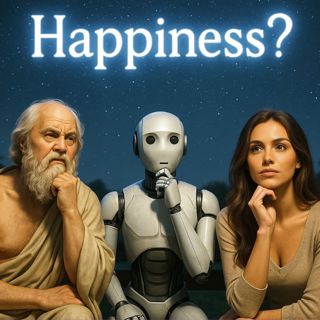
E157: Have We Got Happiness Wrong? Eric Weiner on Bliss in Age of AI

E157: Have We Got Happiness Wrong? Eric Weiner on Bliss in Age of AI

Author Eric Weiner argues that happiness depends less on wealth or location than on relationships, meaning, trust, and realistic expectations—while tech and social media often push the other way.Guest...

24 Syys 202554min

E156: Former CIA Analyst Exposes the Weaponization of Loneliness

E156: Former CIA Analyst Exposes the Weaponization of Loneliness

A conversation with Stella Morabito on how the weaponization of loneliness—from Soviet propaganda to modern social media—threatens free speech, family, and community.👤 Guest BioStella Morabito – Writ...

10 Syys 202540min

E155: Special Ops Tactics for Breakthrough Creativity - Dr. Angus Fletcher Explains

E155: Special Ops Tactics for Breakthrough Creativity - Dr. Angus Fletcher Explains

Neuroscientist explains why school crushes creativity—and how to fix it—teaching “primal intelligence” and special-operations tactics you can use at work, at home, and in the classroom to think and in...

3 Syys 202559min

Suosittua kategoriassa Liike-elämä ja talous

sijotuskasti
mimmit-sijoittaa
psykopodiaa-podcast
rss-rahapodi
pomojen-suusta
rss-rahamania
ostan-asuntoja-podcast
juristipodi
rss-myyntikoulu
rss-seuraava-potilas
rss-draivi
sijoitusovi-podcast
rss-lahtijat
rss-startup-ministerio
herrasmieshakkerit
rahapuhetta
bakkari-tarinoita-tapahtumien-takahuoneista
lakicast
rss-h-asselmoilanen
rss-turha-edes-yrittaa