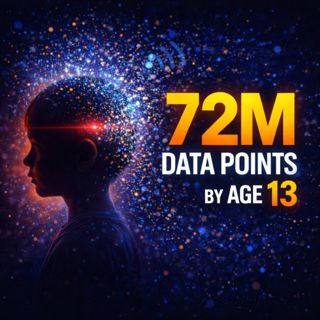

The Eavesdropper Economy: How Surveillance Built AI (E186)
El Podcast18 Helmi

The Eavesdropper Economy: How Surveillance Built AI (E186)

A lively tour from Cold War “The Thing” to today’s surveillance capitalism—showing how audio capture, too much data, and automation pressures helped turn listening into AI.

Guest bios:
  • Dr. Toby Heys — Professor at the School of Digital Arts (SODA), Manchester Metropolitan University; co-founder of the AUDINT sonic research unit; co-author of Listening In
  • Dr. David Jackson — Senior Lecturer in Digital Visualisation at SODA, Manchester Metropolitan University; researches AI’s cultural impact; founded the Storytellers + Machines conference (2023); co-author of Listening In.
  • Marsha Courneya — Canadian writer/editor; teaches Digital Dramaturgy at the International Film School of Cologne; doctoral researcher in Digital Culture and Communication at Birkbeck, University of London; co-author of Listening In.
Topics discussed:
  • “The Thing” (1945): passive bugging, resonance, why it went undetected
  • Cold War escalation: normalization of listening, Five Eyes, PRISM/Snowden
  • Stasi data glut: informants, dossiers, “collecting as mania,” behavior change
  • Language under surveillance: cryptolects, slang, coded speech, hip-hop as evasion
  • Surveillance capitalism: smart homes, smart toys, wearables, “data promiscuity”
  • Kids + data: baby monitors/crib cams, school biometrics, “data twins” before birth
  • AI training + intimate life: accidental recordings, human review, terms-of-service reality
  • Future tensions: convenience vs autonomy, regulation lag, ownership erosion (“enshittification”)
Main points:
  • Audio surveillance scales into an “automation problem.” Once you can record everything, the bottleneck becomes listening fast enough, pushing intelligence services toward automated analysis.
  • Surveillance changes behavior—even when nobody is actively listening. The possibility of being overheard bends speech, jokes, and self-presentation (Stasi dynamics → modern smart devices).
  • “Too much data” doesn’t make it harmless. The danger isn’t only what’s heard today, but the creation of a searchable “permanent record” that can be reinterpreted later.
  • The home becomes the most valuable capture zone. People drop the public mask at home; that intimacy makes in-home audio uniquely revealing and therefore lucrative/powerful.
  • Children are captured early—often via “safety” and parental anxiety. Baby tech, smart toys, school systems, and medical records create a data trail before kids can consent or understand it.
  • Snowden shocked—but didn’t trigger lasting mass refusal. The episode argues leaks often lead to resignation/memeification (“the intel officer listening”) rather than sustained backlash.
  • AI + ownership is the next front. Beyond privacy, the guests worry about erosion of ownership (you can’t fully “own” digital goods or refuse totalizing platforms as easily).
Top 3 quotes:
  • Toby:There was nothing to detect.
  • Marsha:It ruptures language completely.
  • David:data isn’t secure and safe.

🎙 The Pod is hosted by Jesse Wright
💬 For guest suggestions, questions, or media inquiries, reach out at https://elpodcast.media/
📬 Never miss an episode – subscribe and follow wherever you get your podcasts.
⭐️ If you enjoyed this episode, please rate and review the show. It helps others find us.

Thanks for listening!

Jaksot(186)

E170: Boomers Didn’t Steal Your Future. This Did - Dr. Jennie Bristow

E170: Boomers Didn’t Steal Your Future. This Did - Dr. Jennie Bristow

Sociologist Dr. Jennie Bristow joins Jesse to dismantle “generation wars” rhetoric—especially Boomer-blaming—and re-center the real story: stalled economies, broken higher ed, housing dysfunction, and...

3 Joulu 20251h 10min

E169: Why Diets Fail: The Hidden Forces Controlling What You Eat - Julia Belluz

E169: Why Diets Fail: The Hidden Forces Controlling What You Eat - Julia Belluz

Investigative health journalist Julia Belluz breaks down what really drives obesity and chronic disease—metabolism myths, ultra-processed food, bad incentives, and why our entire food environment is q...

27 Marras 202544min

E168: AI - Biggest Bubble in Human History? Tech Economist Says YES

E168: AI - Biggest Bubble in Human History? Tech Economist Says YES

Tech economist Dr. Jeffrey Funk argues that today’s AI boom is the biggest bubble in history—far larger than dot-com or housing—because colossal infrastructure spending is chasing tiny, unprofitable r...

20 Marras 20251h 39min

E167: Nuclear Rockets, AI Agents & Science Hype | RealClear Science’s Ross Pomeroy

E167: Nuclear Rockets, AI Agents & Science Hype | RealClear Science’s Ross Pomeroy

Steven Ross Pomeroy, Chief Editor of RealClearScience, joins the podcast to discuss NASA’s abandoned nuclear propulsion programs, the future of AI and white-collar work, the rise of “scienceploitation...

13 Marras 202539min

E166: Is the Internet Too Big to Moderate? — John Wihbey

E166: Is the Internet Too Big to Moderate? — John Wihbey

A wide-ranging conversation with Northeastern’s John Wihbey on how algorithms, laws, and business models shape speech online—and what smarter, lighter regulation could look like.Guest bio: John Wihbey...

6 Marras 20251h 33min

E165: STUDY Shows NFL Favors the Chiefs — Lead Researcher Explains

E165: STUDY Shows NFL Favors the Chiefs — Lead Researcher Explains

Finance professor Spencer Barnes explains research showing postseason officiating systematically favors the Mahomes-era Chiefs—consistent with subconscious, financially driven “regulatory capture,” no...

1 Marras 20251h 2min
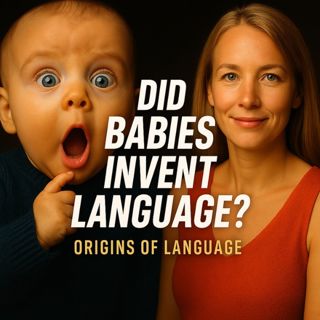
E164: The Real Reason You Can Speak: Explained by Evolutionary Biologist - Dr. Madeleine Beekman

E164: The Real Reason You Can Speak: Explained by Evolutionary Biologist - Dr. Madeleine Beekman

How human babies, big brains, and social life likely forced Homo sapiens to invent precise speech ~150–200k years ago—and what that means for learning, tech, and today’s kids.Guest Bio:Madeleine Beekm...

29 Loka 20251h 10min
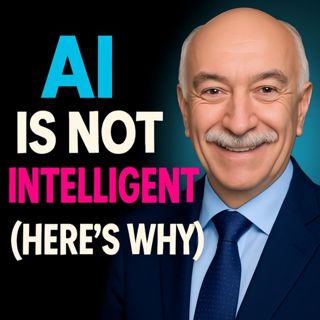
E163: Why AI Still Loses to Humans: Renowned Psychologist Explains - Dr. Gerd Gigerenzer

E163: Why AI Still Loses to Humans: Renowned Psychologist Explains - Dr. Gerd Gigerenzer

A candid conversation with psychologist Gerd Gigerenzer on why human judgment outperforms AI, the “stable world” limits of machine intelligence, and how surveillance capitalism reshapes society.Guest ...

25 Loka 20251h 3min

Suosittua kategoriassa Liike-elämä ja talous

sijotuskasti
mimmit-sijoittaa
psykopodiaa-podcast
rss-rahapodi
pomojen-suusta
rss-rahamania
ostan-asuntoja-podcast
juristipodi
rss-myyntikoulu
rss-seuraava-potilas
rss-draivi
sijoitusovi-podcast
rss-lahtijat
rss-startup-ministerio
herrasmieshakkerit
rahapuhetta
bakkari-tarinoita-tapahtumien-takahuoneista
lakicast
rss-h-asselmoilanen
rss-turha-edes-yrittaa