March Madness Series: Do You Know Your Alcohol Playbook?

March Madness Series: Do You Know Your Alcohol Playbook?

In this March kickoff episode, Molly introduces a month-long basketball theme inspired by her childhood love of the game and the five life lessons she previously shared with her community. Drawing from her experience playing basketball she explores how the structure and strategy of the game mirror the patterned nature of drinking habits.

The central message: before you can change your drinking, you have to understand your playbook.

Molly explains how drinking often feels spontaneous and emotional, but when slowed down, reveals predictable thought patterns. Using personal examples from her own decades-long 6 p.m. “unwind play,” along with a client story about belonging and connection, she illustrates how automatic behaviors are not inevitable—they are practiced.

The episode also dives into the neuroscience behind habit formation through the Behavior Map–Results Cycle (Thought → Feeling → Action → Result) and how Alcohol Core Beliefs reinforce repeated patterns. For listeners who grew up with alcohol in the home, Molly discusses how early modeling can shape unconscious associations without conscious awareness.

The episode concludes with a guided “game film” exercise to help listeners identify the thoughts that precede their drinking urges and begin building awareness—the first and most essential skill for change.

This is where agency begins.

  • Why basketball isn’t random—and neither is your drinking
  • How “automatic” behaviors differ from “inevitable” ones
  • Molly’s personal 6 p.m. unwind pattern and how she rewired it
  • The Behavior Map–Results Cycle and the neuroscience of habit loops
  • A client example illustrating how belonging—not wine—was driving behavior
  • The unique impact of growing up with an alcoholic parent on your internal playbook
  • A guided reflection exercise to identify the thought that begins your drinking pattern
  • Why awareness—not willpower—is the first step toward lasting change

Key Concepts

  • Drinking follows a predictable playbook
  • Automatic means practiced
  • Thought creates feeling, feeling drives action
  • You cannot change what you do not examine
  • Shame is not a useful tool for change
  • Awareness is the first skill

Low risk drinking guidelines from the NIAAA:

Healthy men under 65:

No more than 4 drinks in one day and no more than 14 drinks per week.

Healthy women (all ages) and healthy men 65 and older:
No more than 3 drinks in one day and no more than 7 drinks per week.

One drink is defined as 12 ounces of beer, 5 ounces of wine, or 1.5 ounces of 80-proof liquor. So remember that a mixed drink or full glass of wine are probably more than one drink.

Abstinence from alcohol
Abstinence from alcohol is the best choice for people who take medication(s) that interact with alcohol, have health conditions that could be exacerbated by alcohol (e.g. liver disease), are pregnant or may become pregnant or have had a problem with alcohol or another substance in the past.

Benefits of “low-risk” drinking
Following these guidelines reduces the risk of health problems such as cancer, liver disease, reduced immunity, ulcers, sleep problems, complications of existing conditions, and more. It also reduces the risk of depression, social problems, and difficulties at school or work.

★ Support this podcast ★

Tämä jakso on lisätty Podme-palveluun avoimen RSS-syötteen kautta eikä se ole Podmen omaa tuotantoa. Siksi jakso saattaa sisältää mainontaa.

Jaksot(413)

More Sober October: Make it An Experiment, Not an Exam

More Sober October: Make it An Experiment, Not an Exam

What if the goal of More Sober October isn’t a perfect calendar—but learning something about your relationship with alcohol?In this episode, Molly shares how to approach October as an experiment inste...

28 Syys 23min
Think Thursday: Alzheimer’s Prevention and What the Latest Research Tells Us

Think Thursday: Alzheimer’s Prevention and What the Latest Research Tells Us

World Alzheimer’s Day is a good reminder that the story around Alzheimer’s disease is changing.In this Think Thursday episode, Molly looks at what we know now about earlier diagnosis, blood-based biom...

24 Syys 18min
How Much Alcohol is Safe? Rethinking Drinking Guidelines

How Much Alcohol is Safe? Rethinking Drinking Guidelines

What does “drink less” actually mean?In this episode of the Alcohol Minimalist podcast, Molly explores the changing alcohol guidelines and why there isn’t one simple number that guarantees a “safe” le...

21 Syys 20min
Think Thursday: Why Familiar Feels True-When Thoughts Become Beliefs

Think Thursday: Why Familiar Feels True-When Thoughts Become Beliefs

What happens when a thought gets repeated so often that it stops feeling like a thought and starts feeling like a fact?In this Think Thursday episode, Molly explores the illusory truth effect, process...

17 Syys 15min
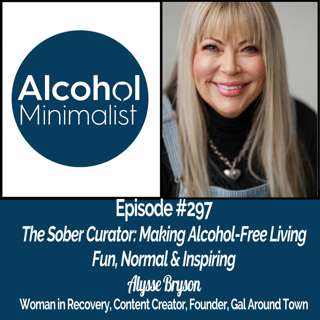
The Sober Curator: Making Alcohol-Free Living Fun, Normal & Inspiring with Alysse Bryson

The Sober Curator: Making Alcohol-Free Living Fun, Normal & Inspiring with Alysse Bryson

What does it look like to build a fun, fulfilling life with less alcohol—or none at all?In this episode of the Alcohol Minimalist Podcast, Molly talks with Elise Bryson, CEO and curator of The Sober C...

14 Syys 45min
Revisiting Think Thursday: Neurodivergence and The Brain's Energy Economy

Revisiting Think Thursday: Neurodivergence and The Brain's Energy Economy

In this revisited Think Thursday episode, Molly explores ADHD through the lens of the brain’s energy economy—how neurodivergent brains may use mental fuel differently, and why that matters for motivat...

10 Syys 13min
Summer's Greatest Hits: Alcohol & ADHD

Summer's Greatest Hits: Alcohol & ADHD

This week on the Alcohol Minimalist Podcast, we’re revisiting the most-downloaded episode from the Alcohol & series: Alcohol & ADHD.ADHD is a personal topic for me, and it also comes up often with coa...

7 Syys 35min
Think Thursday: Hearing Health is Brain Health

Think Thursday: Hearing Health is Brain Health

We tend to think of hearing as something that happens in our ears, but hearing is really a partnership between the ears and the brain. And growing research suggests that when hearing begins to decline...

3 Syys 12min
Suosittua kategoriassa Koulutus

rss-murhan-anatomia
aamukahvilla
psykopodiaa-podcast
adhd-podi
rss-hereilla
voi-hyvin-meditaatiot-2
psykologia
rss-niinku-asia-on
rss-arkea-ja-aurinkoa-podcast-espanjasta
kesken
koulu-podcast-2
rss-liian-kuuma-peruna
ihminen-tavattavissa-tommy-hellsten-instituutti
rss-vapaudu-voimaasi
aloita-meditaatio
rss-suomen-aa-podcast
rss-luonnollinen-synnytys-podcast
ilona-rauhala
rss-valo-minussa-2
rss-narsisti