High Availability (HA) Networking: Business Case and Real World Implementation
Technically U21 Maalis

High Availability (HA) Networking: Business Case and Real World Implementation

PART 3 EPISODE

Key Takeaways:

HA costs ~double infrastructure budget initially + 50-100% ongoing increase

Small business: $40K-$80K initial, $10K-$15K annual

Medium enterprise: $250K-$500K initial, $60K-$120K annual

Large enterprise: $2M-$10M+ initial, $400K-$2M+ annual

ROI positive when downtime costs exceed $10K/hour

Phased implementation recommended (start with perimeter)

Testing quarterly minimum (untested HA doesn't work)

Cost Components:Initial:

Hardware (2x), installation, trainingOngoing:

Support contracts, licensing, connectivity, power, staff time

Hidden costs: Increased complexity, troubleshooting time, vendor lock-in

ROI Calculation Formula:

Revenue per hour (annual revenue ÷ working hours)

Employee productivity loss (employees × hourly cost × % affected)

Customer service impact (support calls × handling cost)

Reputation damage (lost customers × lifetime value)

SLA penalties (contractual penalties for downtime)

Industry-specific (patient care, production stoppage, trading losses)

Total downtime cost/hour × hours avoided = annual savings

Compare to annual HA cost = ROIArchitecture

Examples:

Small Business ($50K-$80K):

Dual firewalls (active-passive)

Stacked switches (2-4 devices)

Dual internet (fiber + cable/DSL)

Dual core switches with HSRP

Uptime: 99.9-99.99% ( less than 1 hour/year down)

Medium Enterprise ($250K-$500K):

Dual next-gen firewalls (active-active)

Dual core routers with VRRP/BGP

Stacked distribution switches (4-8 per building)

Dual WAN with SD-WANRedundant access layer with LACP

Uptime: 99.99-99.999% (5-50 min/year down)

Large Enterprise ($2M-$10M+):

Clustered firewalls (4+ devices)

Dual datacenter locations (geographic redundancy)

Spine-leaf architecture (full mesh)

Multiple Tier-1 ISPs with BGP

Redundant power (A+B feeds), cooling, fiber

Uptime: 99.999-99.9999% (5 min-30 sec/year down)

Decision Framework:

HA Makes Sense When:

✓ Downtime costs greater than $10K/hour

✓ Contractual SLAs require high uptime

✓ Regulatory compliance mandates

✓ Customer-facing services (downtime = customer loss)

✓ 24/7 operations, no maintenance windows

HA Might Make Sense When:

⚠ Downtime costs $5K-$10K/hour

⚠ Competitive pressure for uptime

⚠ Frequent outages with current setup

⚠ Anticipating growth into HA-requiring conditions

HA Probably Overkill When:

✗ Downtime costs less than $3K/hour

✗ Acceptable maintenance windows exist.

✗ Very small organization (less than 25 users)

✗ Effective backup processes in place

✗ Budget genuinely prohibits it

Phased Implementation:

Phase 1: Dual firewalls + dual internet ($25K-$60K, 1-2 months)

Phase 2: Core redundancy - switches/routers ($15K-$50K, 1-2 months)

Phase 3: Access layer redundancy ($10K-$40K, 2-3 months)

Phase 4: Geographic redundancy if needed ($100K-$500K+, 3-6 months)

Vendor Selection Criteria:

Support quality (24/7 response time SLAs)

HA feature maturity (years of development)

Scaling capability (future growth)

Single-vendor vs best-of-breed strategy

Community knowledge base and documentation

Critical Success Factors:

Proper design (eliminate ALL single points of failure)

Regular testing (quarterly minimum)

Staff training (HA-specific knowledge)

Continuous monitoring (both devices, not just primary)

Documentation (procedures, topology, configs)

Configuration management (prevent drift)

Capacity planning (each device handles peak alone)

Common Business Justifications:

E-commerce:

Lost sales during downtime

Cart abandonment

SEO impact from downtime

Customer lifetime value loss

SaaS/Cloud Services:

SLA penalty payments

Customer churn

Reputation damage

Competitive disadvantage

Healthcare:

Patient care interruption

Regulatory penalties (HIPAA)

Liability riskLife safety concerns

Manufacturing:

Production line stoppage

Raw material waste

Missed delivery commitments

Overtime costs for catch-up

Financial Services:

Trading losses

Compliance violations

Transaction processing failures

Reputation in regulated industry

Retail:POS system downtime

Tämä jakso on lisätty Podme-palveluun avoimen RSS-syötteen kautta eikä se ole Podmen omaa tuotantoa. Siksi jakso saattaa sisältää mainontaa.

Jaksot(270)

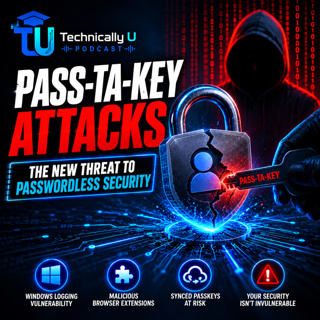
Pass-ta-Key Attacks: Is Passwordless Security Still Safe?

Pass-ta-Key Attacks: Is Passwordless Security Still Safe?

Apple, Google, Microsoft, and the security industry have spent years telling us that passkeys are the future of authentication.No passwords.Less phishing.No reusable credentials for attackers to steal...

12 Syys 23min
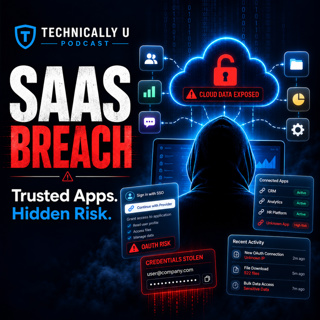
SaaS Bloodbath: Why Your Trusted Apps Are Now the Attack Surface

SaaS Bloodbath: Why Your Trusted Apps Are Now the Attack Surface

Your company may not get hacked through the firewall. It may get breached through the SaaS app everyone trusts.In this episode of Technically U, we break down the growing SaaS security crisis and why ...

5 Syys 36min
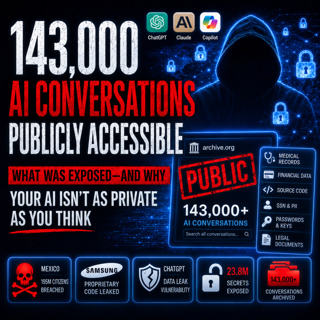
The AI Data Disaster: What ChatGPT, Claude, and Gemini Really Do With Your Secrets

The AI Data Disaster: What ChatGPT, Claude, and Gemini Really Do With Your Secrets

143,000 ChatGPT, Claude, and Copilot conversations are publicly accessible right now. Here's what was exposed—and why your AI isn't as private as you think.🚨 THE HEADLINE:143,000 user conversations w...

29 Elo 21min
The BIMI Paradox: Why 90% of Companies Are Losing Thousands.

The BIMI Paradox: Why 90% of Companies Are Losing Thousands.

The BIMI Paradox: Why 90% of Companies Are Losing Thousands—And Why Your Logo Might Be Illegal in Inboxes (2026 Reality Check).BIMI (Brand Indicators for Message Identification): 90% of companies have...

29 Elo 26min
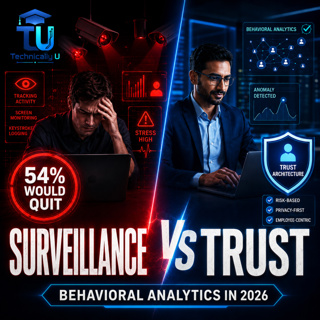
Beyond Surveillance: How Behavioral Analytics Became a Trust Problem

Beyond Surveillance: How Behavioral Analytics Became a Trust Problem

Behavioral Analytics in 2026: How Companies Are Moving From Surveillance to Trust ArchitectureThe paradox nobody talks about: 76% of companies see efficiency gains from monitoring. But 60% of employee...

20 Elo 17min

The Confidence Gap: Why Executives Think AI Agents Are Secure (And Why They're Wrong)

The Confidence Gap: Why Executives Think AI Agents Are Secure (And Why They're Wrong)

The Confidence Gap: AI Agents and the Security Crisis Nobody Is Talking AboutEighty-two percent of executives feel confident that their existing AI agent policies are enough to keep their organization...

8 Elo 18min

Seeing Is No Longer Believing: How Deepfake Fraud Targets Businesses and Families

Seeing Is No Longer Believing: How Deepfake Fraud Targets Businesses and Families

What if the voice on the phone sounds exactly like your boss, your bank, or someone in your family — but it isn’t them?In this episode of Technically U, we break down Deepfake Fraud and why it has bec...

31 Heinä 23min

The AI Criminal Playbook: How Cybercrime Changed Forever in 2026

The AI Criminal Playbook: How Cybercrime Changed Forever in 2026

The next generation of cybercrime may not come from a hacker typing code in a dark room.It may come from someone using AI to generate phishing emails, clone voices, create fake identities, manipulate ...

24 Heinä 16min