March Madness Series:  Play Until the Clock Says 0:00

March Madness Series: Play Until the Clock Says 0:00

In this final installment of the March Madness series, Molly brings the conversation full circle by focusing on the long game.

After exploring your playbook, your scoreboard, and how to rebound when you drift, this episode answers the most important question: how do you keep going?

Using the powerful metaphor of the game clock, Molly reminds listeners that change is always possible as long as there is time left. In the context of your life, that means right now.

This episode weaves together neuroscience and lived experience, explaining how real change happens through repetition, not intensity. Molly breaks down neuroplasticity, extinction bursts, and dopamine recalibration to show why change can feel harder before it gets easier—and why that’s not failure, but progress.

Most importantly, she reinforces the identity at the core of this work: Mostly Alcohol-Free means consistently returning, not being perfect.

You haven’t missed your chance.

You’re still in the game.

In This Episode

  • Why change is always possible while there is still time
  • The difference between intensity and consistency in behavior change
  • The neuroscience principle: “neurons that fire together wire together”
  • What an extinction burst is and why urges can feel stronger at first
  • How dopamine adapts to repeated alcohol use
  • Why alcohol-free life can feel “flat” before it feels better
  • The importance of staying in the process long enough for recalibration
  • What it means to live a Mostly Alcohol-Free lifestyle
  • Why drifting doesn’t mean you’re out of the game

Key Takeaways

  • The game isn’t over until the clock hits 0:00.
  • Change happens through repetition, not short bursts of effort.
  • Increased urges can be a sign of progress, not failure.
  • Your brain is always adapting—direction matters.
  • Mostly Alcohol-Free means returning, not perfection.
  • You are not behind, late, or disqualified.

Reflection

  • Where have you been telling yourself it’s “too late”?
  • What would it look like to stay in the game right now?
  • Are you measuring progress by perfection or by consistency?

Work With Molly

To learn more about working with Molly, visit:
www.mollywatts.com

Or email directly: molly@mollywatts.com


Low risk drinking guidelines from the NIAAA:

Healthy men under 65:

No more than 4 drinks in one day and no more than 14 drinks per week.

Healthy women (all ages) and healthy men 65 and older:
No more than 3 drinks in one day and no more than 7 drinks per week.

One drink is defined as 12 ounces of beer, 5 ounces of wine, or 1.5 ounces of 80-proof liquor. So remember that a mixed drink or full glass of wine are probably more than one drink.

Abstinence from alcohol
Abstinence from alcohol is the best choice for people who take medication(s) that interact with alcohol, have health conditions that could be exacerbated by alcohol (e.g. liver disease), are pregnant or may become pregnant or have had a problem with alcohol or another substance in the past.

Benefits of “low-risk” drinking
Following these guidelines reduces the risk of health problems such as cancer, liver disease, reduced immunity, ulcers, sleep problems, complications of existing conditions, and more. It also reduces the risk of depression, social problems, and difficulties at school or work.

★ Support this podcast ★

Tämä jakso on lisätty Podme-palveluun avoimen RSS-syötteen kautta eikä se ole Podmen omaa tuotantoa. Siksi jakso saattaa sisältää mainontaa.

Jaksot(413)

More Sober October: Make it An Experiment, Not an Exam

More Sober October: Make it An Experiment, Not an Exam

What if the goal of More Sober October isn’t a perfect calendar—but learning something about your relationship with alcohol?In this episode, Molly shares how to approach October as an experiment inste...

28 Syys 23min
Think Thursday: Alzheimer’s Prevention and What the Latest Research Tells Us

Think Thursday: Alzheimer’s Prevention and What the Latest Research Tells Us

World Alzheimer’s Day is a good reminder that the story around Alzheimer’s disease is changing.In this Think Thursday episode, Molly looks at what we know now about earlier diagnosis, blood-based biom...

24 Syys 18min
How Much Alcohol is Safe? Rethinking Drinking Guidelines

How Much Alcohol is Safe? Rethinking Drinking Guidelines

What does “drink less” actually mean?In this episode of the Alcohol Minimalist podcast, Molly explores the changing alcohol guidelines and why there isn’t one simple number that guarantees a “safe” le...

21 Syys 20min
Think Thursday: Why Familiar Feels True-When Thoughts Become Beliefs

Think Thursday: Why Familiar Feels True-When Thoughts Become Beliefs

What happens when a thought gets repeated so often that it stops feeling like a thought and starts feeling like a fact?In this Think Thursday episode, Molly explores the illusory truth effect, process...

17 Syys 15min
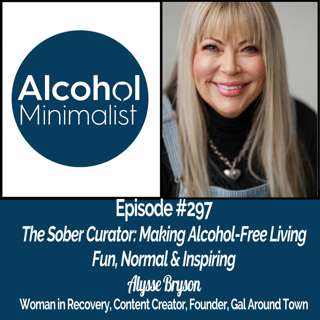
The Sober Curator: Making Alcohol-Free Living Fun, Normal & Inspiring with Alysse Bryson

The Sober Curator: Making Alcohol-Free Living Fun, Normal & Inspiring with Alysse Bryson

What does it look like to build a fun, fulfilling life with less alcohol—or none at all?In this episode of the Alcohol Minimalist Podcast, Molly talks with Elise Bryson, CEO and curator of The Sober C...

14 Syys 45min
Revisiting Think Thursday: Neurodivergence and The Brain's Energy Economy

Revisiting Think Thursday: Neurodivergence and The Brain's Energy Economy

In this revisited Think Thursday episode, Molly explores ADHD through the lens of the brain’s energy economy—how neurodivergent brains may use mental fuel differently, and why that matters for motivat...

10 Syys 13min
Summer's Greatest Hits: Alcohol & ADHD

Summer's Greatest Hits: Alcohol & ADHD

This week on the Alcohol Minimalist Podcast, we’re revisiting the most-downloaded episode from the Alcohol & series: Alcohol & ADHD.ADHD is a personal topic for me, and it also comes up often with coa...

7 Syys 35min
Think Thursday: Hearing Health is Brain Health

Think Thursday: Hearing Health is Brain Health

We tend to think of hearing as something that happens in our ears, but hearing is really a partnership between the ears and the brain. And growing research suggests that when hearing begins to decline...

3 Syys 12min

Suosittua kategoriassa Koulutus

rss-murhan-anatomia
aamukahvilla
psykopodiaa-podcast
adhd-podi
rss-hereilla
voi-hyvin-meditaatiot-2
psykologia
rss-niinku-asia-on
rss-arkea-ja-aurinkoa-podcast-espanjasta
kesken
koulu-podcast-2
rss-liian-kuuma-peruna
ihminen-tavattavissa-tommy-hellsten-instituutti
rss-vapaudu-voimaasi
aloita-meditaatio
rss-suomen-aa-podcast
rss-luonnollinen-synnytys-podcast
ilona-rauhala
rss-valo-minussa-2
rss-narsisti