
The muscle we forgot: SMRs, hyperscalers, and why this nuclear renaissance might actually be different

The muscle we forgot: SMRs, hyperscalers, and why this nuclear renaissance might actually be different

Why nuclear has never been project financed and how that might finally be about to change.

Every nuclear plant ever built has ultimately been backstopped by taxpayers or ratepayers. Not because the technology doesn't work, but because nobody has ever cracked the construction cost and schedule problem well enough to convince a bank to finance it without government support. Bridget van Dorsten is joined by Jake Jurewicz, Co-founder and CEO of Blue Energy, to explore why that has been so hard and what a credible path to fixing it might actually look like.

Jake walks through the root cause of nuclear's cost overrun problem and it is not the reactor. The reactor equipment itself represents around 7% of total project costs. The real problem is what Jake calls nuclear construction overhead: the cost of mobilizing, training, and retaining the 10,000 or so skilled workers needed to build these plants in the field, the way we have been building them for 70 years, essentially the same way you would build a castle.

The episode then turns to what Blue Energy is doing differently. By intentionally selecting sites accessible by barge and contracting existing oil and gas fabrication yards and shipyards to build large pre-assembled modules offsite, Blue Energy aims to bring fixed-price contracts into nuclear for the first time, the same contracting structure that made offshore wind and LNG bankable. Jake explains why that single shift changes everything for project financing.

Bridget and Jake also work through the demand side of the equation: why hyperscalers are becoming the crucial beachhead market for new nuclear, what binding PPAs from investment-grade counterparties actually signal versus announcements, and why the restarts and uprates, while valuable, only go so far.

The conversation also covers Blue Energy's first announced project at the Port of Victoria in Texas, a 1.5 gigawatt nuclear-powered AI data centre co-located with a gas-to-nuclear conversion, designed to accelerate commercial operation and reduce cost of capital even without government loan support. Jake explains the mechanics of why firing the balance of plant with gas first before switching to nuclear steam is not a compromise but a genuine financing innovation.

Finally, Jake offers a view of what signals actually matter when separating the nuclear renaissance from the noise: binding PPAs, large balance sheets standing behind fixed-price contracts, and projects moving through the Nuclear Regulatory Commission rather than staying at the prototype stage.

See Privacy Policy at https://art19.com/privacy and California Privacy Notice at https://art19.com/privacy#do-not-sell-my-info.

Jaksot(342)

Leaked Study Puts Energy Dept. in an Awkward Position

Leaked Study Puts Energy Dept. in an Awkward Position

In April, Energy Secretary Rick Perry requested an analysis on whether renewable energy poses a threat to baseload power plants and the broader health of the grid. Last week, an early draft of that hi...

20 Heinä 201750min
Mark Jacobson Responds to Skeptics of 100% Renewable Energy

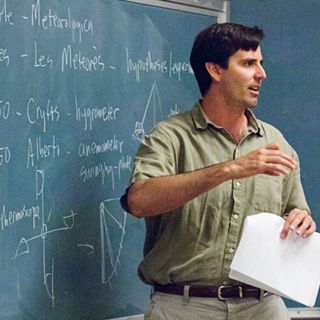
Mark Jacobson Responds to Skeptics of 100% Renewable Energy

Not long ago, energy nerds were pondering the feasibility of 20 percent renewables on the electric grid. We're long past that. Today, the conversation is centered around 100 percent renewables economy...

12 Heinä 20171h 18min

A Guide to Blockchain and Energy

A Guide to Blockchain and Energy

Over the last 18 months, blockchain has evolved from an obscure concept in cryptocurrency circles into a mainstream corporate tool for "disrupting” entire industries. If you don’t have a blockchain st...

30 Kesä 201729min
The Changing Market Rules for Energy Storage

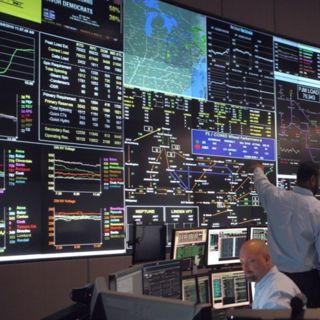
The Changing Market Rules for Energy Storage

What happens when the most important market signal for energy storage gets stripped away virtually overnight? That’s what happened earlier this year when the regional transmission operator PJM put in ...

21 Kesä 201725min

Inside the Minds of Top Utility Executives

Inside the Minds of Top Utility Executives

Utility executives poured into Boston from across the country this week for the Edison Electric Institute’s annual conference. They talked about everything from crazy national politics to rate design ...

16 Kesä 20171h

Journey to the Center of the Solar Industry

Journey to the Center of the Solar Industry

There are two stories playing out in solar today. One of them is decidedly negative. The other is extraordinarily positive. And they're both unfolding at the exact same time. In this week's podcast, w...

7 Kesä 201737min
Suniva Trade Case: A Doomsday Scenario for US Solar?

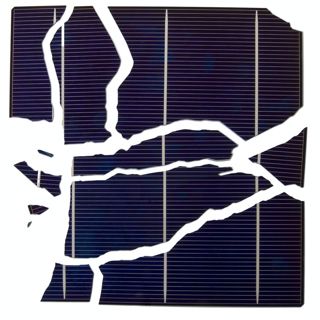
Suniva Trade Case: A Doomsday Scenario for US Solar?

Here we go again. America's solar industry is in the midst of yet another trade dispute. In late May, the U.S. government officially accepted Suniva's request to review the impact of imported cells an...

1 Kesä 201734min

Sunrun CEO Lynn Jurich Imagines the Future of Solar

Sunrun CEO Lynn Jurich Imagines the Future of Solar

Sunrun is now the largest standalone solar company in the U.S. And as a public company, it faces increased scrutiny of its solar services model from investors who are skeptical about residential solar...

25 Touko 201743min

Suosittua kategoriassa Liike-elämä ja talous

sijotuskasti
psykopodiaa-podcast
mimmit-sijoittaa
rss-rahapodi
ostan-asuntoja-podcast
rss-rahamania
rss-sisalto-kuntoon
sijoituspodi
rahapuhetta
rss-karon-grilli
herrasmieshakkerit
rss-bisnesta-bebeja
rss-draivi
leadcast
rss-lahtijat
rss-laakispodi
rss-seuraava-potilas
rss-paasipodi
rss-yrittajan-mindset
asuntoasiaa-paivakirjat