Overtraining Syndrome: Causes, Diagnosis, and What's Actually Going On

Overtraining Syndrome: Causes, Diagnosis, and What's Actually Going On

In 2022, researchers conducted the most rigorous systematic review ever performed on overtraining syndrome — looking specifically for controlled studies that documented a human transitioning from a healthy training state to an overtrained state. Zero studies met those criteria.

The word "overtrained" appears in coaching certifications, wearable device dashboards, and clinical sports medicine guidelines — and in each context it means something different. That definitional chaos has consequences: it delays real diagnoses, produces nocebo effects with measurable physiological outcomes, and leads athletes to reduce training they didn't need to reduce.


In this episode, Drs. Jordan Feigenbaum and Austin Baraki work through the full evidence base on overtraining syndrome — the taxonomy, the attempted studies, the six competing mechanistic theories, the biomarker failures, and what's actually happening when a lifter can't make progress.

Timestamps:


  • 0:00 Cold open — the zero-studies finding
  • 1:21 Why "overtrained" does four different jobs simultaneously
  • 16:10 The FOR / NFOR / OTS taxonomy
  • 19:43 The supercompensation model — borrowed from endurance, never validated for resistance training
  • 32:28 Austin's clinical differential for fatigue and declining performance
  • 36:17 RT evidence — what happens when researchers try to induce OTS through lifting
  • 43:19 Austin — what actually drives the complaints he sees in practice
  • 47:30 Six theories for what causes overtraining syndrome
  • 1:01:09 The biomarker problem — why the T:C ratio and cortisol don't work
  • 1:05:09 What your wearable is actually measuring (and what it isn't)
  • 1:09:28 Austin — testosterone levels in trained athletes and when to act
  • 1:13:40 Heart rate variability — limitations for strength training
  • 1:15:36 Session RPE — the monitoring tool that actually works
  • 1:17:31 How common is overtraining syndrome, really?
  • 1:23:04 Three failure modes — what's actually happening when lifters say they feel overtrained
  • 1:32:14 Austin — what a proper medical workup looks like
  • 1:34:22 Outro


What we cover:


  • The definition problem — why a single word is doing four incompatible jobs simultaneously, and why that matters clinically and practically.
  • The taxonomy — functional overreaching, nonfunctional overreaching, and overtraining syndrome as points on a continuous variable that can only be identified after the fact, not at presentation.
  • The supercompensation model — where it came from, why it fails to describe how resistance training adaptation actually works, and how applying it too literally produces both overloading and underloading errors at the same time.
  • Austin's clinical differential — what a physician actually works through when a patient presents with fatigue and declining performance, and where overtraining syndrome actually sits on that list.
  • What resistance training research shows — including 140 maximal singles, 90 working sets per week, and daily 1-rep max attempts. No study has cleanly induced overtraining syndrome through resistance training. The hormonal data went in the opposite direction from what the endurance overtraining model predicts.
  • Six mechanistic theories — glycogen depletion, serotonin/BCAA, autonomic imbalance, central governor, HPA axis dysregulation, and Armstrong's complex systems framework. Each one is partially supported and each falls short.
  • The biomarker problem — resting cortisol is normal in 75%+ of OTS cases, the testosterone to cortisol ratio has never been validated against clinical outcomes as an individual diagnostic, and HRV recovery in strength training lags physical recovery by up to 30 hours.
  • Austin on wearables — including a clinical pattern he's seeing with GLP-1 receptor agonists: wearable scores indicating deterioration when the clinical picture is actually fine.
  • Session RPE as the real tool — why session RPE trending upward at stable training load is a more reliable signal of load-recovery mismatch than any biomarker currently used.
  • Prevalence and confounders — the 60% figure, why it almost certainly captures all three FOR/NFOR/OTS categories plus REDS, depression, and illness, and why the residual true training-load-induced OTS in an otherwise healthy athlete may be vanishingly rare.
  • Three failure modes — the three things Jordan actually sees in practice when lifters present saying they feel overtrained, and how to distinguish between them using session RPE.
  • The medical workup — Austin's practical walkthrough of what to assess when programming and lifestyle changes don't move the needle, including iron deficiency (ferritin testing caveats, lab reference range problems), sleep apnea, post-viral syndromes, and hormone panels done correctly.


Next Steps:


For evidence-based resistance training programs: barbellmedicine.com/training-programs


For individualized training consultation: barbellmedicine.com/coaching


Explore our full library of articles on health and performance: barbellmedicine.com/resources


To consult with Drs. Baraki or Feigenbaum email us at support@barbellmedicine.com


For ad free listening and exclusive discounts, become a Barbell Medicine Plus subscriber at https://barbellmedicine.supercast.com/


Resources

Taxonomy / Definitions

Meeusen et al. (2013)

European College of Sport Science / ACSM consensus statement on FOR, NFOR, and OTS taxonomy. Defines OTS as a diagnosis of exclusion.

https://pubmed.ncbi.nlm.nih.gov/23247672/


Meeusen et al. (2006)

"Often only after a period of complete rest" — the retrospective nature of distinguishing NFOR from OTS.

https://pubmed.ncbi.nlm.nih.gov/23016079/


Nocebo Effects in Sport

2024 Systematic Review

Nocebo effects in sport were approximately twice the magnitude of placebo effects on performance across 20 studies.

https://pubmed.ncbi.nlm.nih.gov/38999724/


Stress-Recovery-Adaptation Model

Original general adaptation syndrome / stress physiology work in Nature. Foundational source the SRA model was derived from — not a sports science paper.

https://www.nature.com/articles/138032a0


Multi-system adaptation timescales; critique of single-wave supercompensation model.

https://pubmed.ncbi.nlm.nih.gov/3057313/


Multi-system adaptation timescales; further critique of the SRA "window of opportunity" model.

https://pubmed.ncbi.nlm.nih.gov/15044685/


Lack of empirical support for the supercompensation "window of opportunity" in real training scenarios.

https://pubmed.ncbi.nlm.nih.gov/29189930/


Resistance Training and OTS

Grandou et al. (2020)

Systematic review: 22 studies on resistance training overtraining. 10 showed zero performance decline under deliberate overload. No reliable biomarker established for RT overtraining; sustained performance drop is the only consistent signal.

https://pubmed.ncbi.nlm.nih.gov/31313309/


Coleman et al. (2024)

9-week supervised high-volume RT protocol (~90 sets/week). No OTS criteria met. Ceiling for resistance training-induced OTS is considerably higher than commonly implied.

https://pmc.ncbi.nlm.nih.gov/articles/PMC10809978/


Zourdos et al. (2016)

Case series: 3 competitive strength athletes performed daily 1RM squat for 30 consecutive days. All three improved.

https://pubmed.ncbi.nlm.nih.gov/26816276/


Daily 1RM Bench Press Study

7 athletes attempted a true 1RM bench press every day for 38 days. All improved despite day-to-day fluctuation.

https://www.thefreelibrary.com/Efficacy+of+Daily+One-Repetition+Maximum+Bench+Press+Training+in...-a0828317501


3 weeks of daily loading; volume arm hypertrophied. Daily frequency did not produce overtraining; volume drives hypertrophy, not frequency alone.

https://pubmed.ncbi.nlm.nih.gov/27875635/


Fry et al. (1994) — Overreaching Protocol

Original resistance overreaching induction: 10×1 at 100% 1RM daily for 14 days. 1RM dropped ~12 kg. Hormonal response was opposite to endurance OTS profile (cortisol decreased, testosterone slightly increased).

https://pubmed.ncbi.nlm.nih.gov/7808252/


Fry et al. (1994) — Endurance Biomarkers

Endurance OTS biomarkers (T:C ratio) do not apply to high-intensity resistance training overreaching.

https://pubmed.ncbi.nlm.nih.gov/9843563/


Fry et al. (2006)

Same overreaching protocol with muscle biopsies. Beta-2 adrenergic receptor density in vastus lateralis decreased 37%. Orthopedic ceiling hypothesis: structural limits intervene before neuroendocrine axis fully desensitizes.

https://pubmed.ncbi.nlm.nih.gov/16888042/


Raastad et al. (2001)

Daily submaximal leg training for 2 weeks; 1RM increased 6%. Intensity (not frequency) is the necessary ingredient for overreaching in resistance training.

https://pubmed.ncbi.nlm.nih.gov/11394254/


Margonis et al. (2007)

12-week progressive RT peaking at ~14 tonnes/week. Significant 1RM decrements not restored after 6-week taper — the only resistance training study to approach true OTS criteria.

https://pubmed.ncbi.nlm.nih.gov/17697935/


HPA Axis / Biomarkers


Cadegiani & Kater (2017) — EROS Study

Resting cortisol is normal in ≥75% of OTS studies. Reduced pituitary ACTH output (not adrenal failure) is the upstream dysregulation in OTS. "Adrenal fatigue" is mechanistically backwards.

https://pmc.ncbi.nlm.nih.gov/articles/PMC5722782/


EROS Study — Extended Findings

Further EROS study data on HPA axis dysregulation patterns in OTS.

https://pmc.ncbi.nlm.nih.gov/articles/PMC6590962/


Testosterone: acute 30% drops occur routinely after a marathon and normalize within days. Never validated as an individual OTS diagnostic.

https://pubmed.ncbi.nlm.nih.gov/3744643/


Saw et al. (2016)

56-study systematic review of athlete monitoring tools. Subjective measures (mood, perceived fatigue, sleep quality) tracked training load changes with greater sensitivity than objective markers including hormones, resting HR, and HRV.

https://pmc.ncbi.nlm.nih.gov/articles/PMC4789708/


Meeusen et al. (2004/2010) — Two-Bout Exercise Protocol

Two maximal incremental tests 4 hours apart with serial blood draws. OTS athletes show blunted ACTH/prolactin response to second bout; NFOR athletes show exaggerated response. Most validated objective test available; not a field tool.

https://pubmed.ncbi.nlm.nih.gov/18703548/


HRV as a Monitoring Tool

HRV for OTS detection: weak data, foundational work done in cyclists and triathletes only.

https://pubmed.ncbi.nlm.nih.gov/23852425/


Strength recovery occurred ~30 hours after heavy loading; HRV had not normalized at 60 hours. Using HRV as a daily training prescription tool in strength athletes is an untested assumption.

https://pubmed.ncbi.nlm.nih.gov/21273908/


Session RPE and Monitoring

Foster et al. (1998)

Session RPE method: training load quantified as RPE × session duration. Key monitoring metric throughout the episode.

https://pubmed.ncbi.nlm.nih.gov/9662690/


Soreness, mood, and motivation relative to training load as monitoring signals.

https://pubmed.ncbi.nlm.nih.gov/38321325/


Prevalence

Morgan et al. (1987)

The commonly cited 60% OTS prevalence figure. Retrospective self-report using the term "staleness," conducted before the current taxonomy existed. Almost certainly captures all three tiers of the FOR/NFOR/OTS continuum.

https://pubmed.ncbi.nlm.nih.gov/3676635/


Confounders: PED Use

Anonymous Survey Data (2011)

29% of Track and Field World Championship athletes admitted PED use; 45% at Pan-Arab Games.

https://core.ac.uk/download/pdf/109992897.pdf


Lippi et al. (2015)

WADA detects PED use in only 1–2% of samples; USADA detection rate <1%. Elite athlete PED use is substantially underreported in the OTS literature.

https://www.nature.com/articles/517529a


Confounders: Psychiatric Conditions


Armstrong & VanHeest (2002)

Overlap between OTS and major depression. Depression can produce every OTS symptom; any OTS workup without a formal depression screen is incomplete.

https://pubmed.ncbi.nlm.nih.gov/11839081/


Confounders: Energy Availability


Cadegiani et al. (2021)

86% of OTS studies showed co-occurrence of reduced energy availability with OTS-like presentation.

https://pubmed.ncbi.nlm.nih.gov/34181189/


Autoregulation and RPE — Part I

Barbell Medicine blog post on autoregulation and RPE-based programming.

https://www.barbellmedicine.com/blog/autoregulation-and-rpe-part-i/


Training Plateau Action Plan

Barbell Medicine practical guide for diagnosing and addressing training plateaus.

https://www.barbellmedicine.com/training-plateau-action-plan/


Injury / Rehab Coaching Questionnaire

https://www.barbellmedicine.com/coaching-questionnaire-injury-rehab/


Advertising Inquiries: https://redcircle.com/brands

Privacy & Opt-Out: https://redcircle.com/privacy

Jaksot(425)

Episode #385- Why Grip Strength Predicts Death (And Why You Shouldn't Train It)

Episode #385- Why Grip Strength Predicts Death (And Why You Shouldn't Train It)

Can a simple one-second squeeze predict your risk of cardiovascular disease, cognitive decline, and all-cause mortality? Dr. Jordan Feigenbaum and Dr. Austin Baraki explore why grip strength has becom...

30 Tammi 53min
Episode 384: The Paralyzed Personal Trainer (Mystery Case)

Episode 384: The Paralyzed Personal Trainer (Mystery Case)

Dr. Feigenbaum and Dr. Baraki walk through the clinical workup of a 24 year old male presented with persistent weakness in his foot following weight loss of 22 pounds in two weeks. What could've possi...

23 Tammi 1h 3min
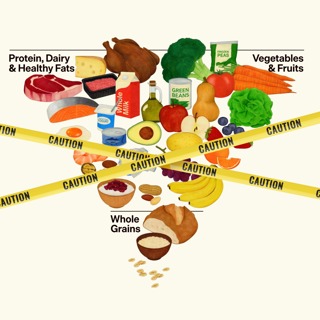
Episode #383: Scientific Populism vs. Consensus - The 2026 Food Pyramid

Episode #383: Scientific Populism vs. Consensus - The 2026 Food Pyramid

In this episode, Dr. Jordan Feigenbaum and Dr. Austin Baraki dissect the federal government’s 2026 Food Pyramid Reset and its radical shift in nutrition policy. They explore the history of industry lo...

16 Tammi 1h 16min
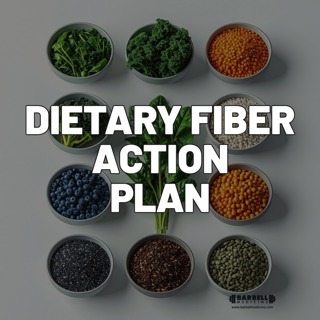
Trailer: The Fiber Action Plan is Here

Trailer: The Fiber Action Plan is Here

Fiber is the most underutilized tool in human nutrition. While the internet is currently buzzing about the new food pyramid and debating processed foods versus beef tallow, most people are missing the...

13 Tammi 2min
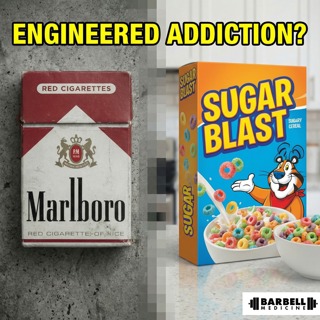
Episode 382: The Trial of Big Food

Episode 382: The Trial of Big Food

For decades, the health and fitness industry has blamed rising obesity rates on a lack of individual willpower and "poor choices." However, a landmark lawsuit in San Francisco argues that the modern f...

8 Tammi 1h 2min

Episode #381: How a Supplement Sent a Soldier to the Hospital- A Medical Mystery

Episode #381: How a Supplement Sent a Soldier to the Hospital- A Medical Mystery

A 23-year-old soldier presents with hypertensive urgency and acute kidney injury. He thought he was doing everything right for his health—so what caused his system to fail? Dr. Feigenbaum and Dr. Bara...

1 Tammi 57min
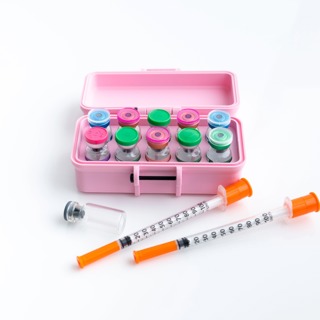
Episode #380: The Peptide Market Audit: Injury Healing or Biohacking Hype?

Episode #380: The Peptide Market Audit: Injury Healing or Biohacking Hype?

Biohackers and longevity clinics claim peptides are a side-effect-free sniper rifle for fat loss and injury recovery, but the reality is often buried in failed clinical trials and regulatory bans. Man...

26 Joulu 20251h 21min
Ozempic & Alcohol, The Trap Bar Myth, and A Medical Mystery | Barbell Medicine AMA Teaser

Ozempic & Alcohol, The Trap Bar Myth, and A Medical Mystery | Barbell Medicine AMA Teaser

Experiencing a pins-and-needles sensation on a run or fearing the straight bar deadlift shouldn't be your fitness journey's bingo card. Many trainees abandon effective habits due to false narratives r...

23 Joulu 202530min

Suosittua kategoriassa Terveys ja hyvinvointi

unicast
voi-hyvin-meditaatiot-2
rss-hanna-tikander
rss-pitaisko-erota
psykopodiaa-podcast
rss-narsisti
tiedenaiset-podcast
terapiassa
puhu-muru
junnut-pelissa
vakeva-elama-viisaampi-mieli-vahvempi-keho
meditaatiot-suomeksi
rss-kuumilla-aalloilla
rss-pt-paahtio
selviytyjat-tarinoita-elamasta
rss-kyykkya-ja-kuoharia
paaasia-podcast
fitnessvastaanotto
katilon-kahvitunti
rss-duodecim-lehti