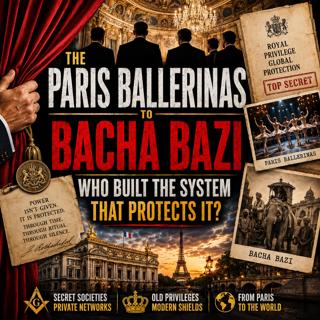

Elites and Rape: From Paris to Bacha Bazi -Who Built the System That Protects It?  Are powerful men who rape boys GAY or pedophiles?

Elites and Rape: From Paris to Bacha Bazi -Who Built the System That Protects It? Are powerful men who rape boys GAY or pedophiles?

"When power is immune and children are powerless, abuse doesn't hide in the shadows—it gets renamed as culture, art, or tradition, and sold back to the public as civilization."

Clips: The Dark History and Present of Bacha Bazi (Boy Play) by Afghan Elite | PRIME CRIME | WION

This might ruin Degas for you - The Dark Side of his Dancers

Music: Aaron Tippin - You've Got To Stand For Something (Official Video) - YouTube

Across history and across systems, the same pattern repeats: when power concentrates and accountability disappears, children become expendable. From the practice of bacha bazi in Afghanistan to institutional abuse scandals in the West, evidence shows that exploitation of boys has been documented, reported, and repeatedly tolerated at high levels. Investigations by major outlets like The New York Times, Reuters, and PBS Frontline exposed networks where boys were trafficked, controlled, and abused by powerful men—often in full view of authorities. In multiple cases, intervention was not just absent, it was actively discouraged, revealing a systemic failure where strategic interests and institutional protection outweighed child safety.

This is not an isolated issue or a cultural anomaly—it is a structural one. When institutions protect reputation over truth, abuse does not disappear; it embeds itself deeper. Historical parallels—from Victorian-era scandals like Cleveland Street to modern institutional cases—show the same hierarchy at work: elites shielded, victims silenced, and justice applied unevenly. Male victims, in particular, have been consistently overlooked, reframed, or ignored altogether, allowing these systems to persist with minimal scrutiny. The result is a recurring cycle—exposure, outrage, limited action, and continuation—where the underlying power structure remains intact and the most vulnerable continue to pay the price.

Bacha bazi - Wikipedia

Pederasty - Wikipedia

Operation Cyclone - Wikipedia

The United States and the Mujahideen | History of Western Civilization II

The US Military Aided Mass Child Rape in Afghanistan. Now Its Soldiers Are Committing This Crime At Fort Bragg

Afghanistan's bacha bazi 'dancing boys' who dress like girls then abused by paedophiles | Daily Mail Online

Weapon of war: Sexual violence against men | DW Documentary - YouTube

Bacha Bazi - severe child abuse disguised as an Afghani custom - Humanium

Elm Guest House: How the British Establishment silenced a paedophile scandal | EU | Before It's News

Elm Guest House And Why The Truth Matters ! | theneedleblog

The Spartacus paedophile network was exposed by the Sunday People in February 1983 | spotlight

Scandal of Britons who buy young boys for £3 a night (3.8.86) | spotlight

Pederasty in ancient Greece - Wikipedia

Was Tory PM Ted Heath a serial paedophile - and what happened to the boys on his boat?

Ted Heath 'abused boys young as 11' | Daily Mail Online

Les Petits Rats: Exploitation at the Paris Opera Ballet | TheCollector

Bolshoi 'Brothel' Ballerinas Forced into Prostitution, Says Former Ballet Star | IBTimes UK

The Queen's scandalous great-uncle who was thought to be Jack the Ripper - My London

What About the Boys: A Gendered Analysis of the U.S. Withdrawal and Bacha Bazi in Afghanistan - New Lines Institute

Afghanistan - United States Department of State

****************LinkedIn Data Leak is Insane - YouTube

LinkedIn Data Leak:

  • Extensions identifying practicing Muslims
  • Extensions revealing political orientation
  • Tools used by neurodivergent individuals
  • Over 500 job-search tools showing who is secretly job hunting

*************************************************************************

Do you have a psychopath in your life? The best way to find out is read my book. BOOK *FREE* Download – Psychopath In Your Life4

Support is Appreciated: Support the Show – Psychopath In Your Life

Tune in: Podcast Links – Psychopath In Your Life

UPDATED: TOP PODS – Psychopath In Your Life

NEW: My old discussion forum with last 10 years of victim stories, is back online. Psychopath Victim Support Community | Forums powered by UBB.threads™

Google Maps My HOME Address: 309 E. Klug Avenue, Norfolk, NE 68701 SMART Meters & Timelines – Psychopath In Your Life

Pedophilia Early roots (late 1800s): first naming, not the modern distinction

Richard von Krafft-Ebing — 1886

Book: Psychopathia Sexualis

First major medical catalog of sexual behaviors, including attraction to children

  • Treated it as a "perversion" (old terminology)

Important:
He helped name and classify, but did not separate behavior vs diagnosis the way we do today

Early 1900s: psychoanalysis (Freud era)

Sigmund Freud

  • Focused on drives and development
  • Used broad, theory-heavy categories

Still no modern distinction between:

  • "act" vs
  • "diagnosable condition"

Mid-20th century: shift to medical classification

American Psychiatric Association

Introduced the DSM system:

  • DSM-I
  • DSM-II

These began:

  • Formal diagnostic categories
  • Movement away from vague moral labels toward clinical criteria

But still not fully refined.

Late 20th century: the key turning point

DSM-III → major shift

This is where the modern framework really solidifies:

  • Clearer diagnostic criteria

Separation between:

  • Paraphilias (patterns of attraction)
  • Criminal acts (behavior)

From here forward:

Psychiatry and law start explicitly distinguishing what someone does vs what they are diagnosed with

Modern refinement (2000s–present)

DSM-5

This is the current standard and makes the distinction explicit:

  • Paraphilia = atypical interest
  • Paraphilic disorder = interest + distress or harm

So:

  • Someone can have a pattern of attraction (diagnostic category)
  • But the legal system focuses on the act (abuse)

Why this distinction ultimately exists

It comes from three converging pressures, not one thinker:

Psychiatry

Needed:

  • Reliable diagnoses
  • Consistent research categories

Legal system

Needed:

  • Evidence-based prosecution
  • Avoid assuming internal mental states without proof

Forensic psychology

Needed:

  • Risk assessment models
  • Differentiation between offender types

Bottom line

  • Origin: Not one person—developed gradually
  • Early naming: Krafft-Ebing (1886)
  • Modern distinction: solidified around DSM-III (1980)
  • Current form: DSM-5 (2013)
"The idea wasn't invented by one person—it evolved from early sexology into modern psychiatry, with the real turning point around 1980 when diagnosis and behavior were formally separated."

The Palermo Protocol (the Protocol to Prevent, Suppress and Punish Trafficking in Persons Especially Women and Children) concerns trafficking in persons, which means the abduction or receipt of persons, by means of the threat of the abuse of power or of a position of vulnerability for the purpose of exploitation, including the prostitution of others and other forms of sexual exploitation. Bacha bazi (bacha bosi, bachabozstvo, bachism, lit. "boy play") falls squarely under this definition.

As part of this tradition, which has existed since the Middle Ages in several Central and South Asian countries, adolescent boys entertain men by dancing for them in women's clothing, jewelry, make-up, and sometimes even fake breasts. These dances are accompanied by musical instruments and songs, some about homosexual love. The "owner" can control and direct the boy himself or sell him to other men for dances and sex.

The practice of bacha bazi was widespread in western Turkistan under the Russian Empire and was even recorded in Soviet times until 1930. It still continues in Pakistan and Afghanistan, where this tradition has been on the rise over the past 20 years, especially in Pashtun regions in the south and east, and in the north, including among ethnic Tajiks.

There is no explicit information that this form of child exploitation exists in Tajikistan, but human rights defenders believe that boys living in border regions are at risk considering the strong ties between Tajikistan and Afghanistan and the fact that ethnic Tajiks make up one-third of the population in northern Afghanistan. The situation for residents in southern Tajikistan is worsened by poverty and poor education combined with a fear of armed people who, at least in Afghanistan, abduct boys.

Paradoxically, homosexuality is censured in Central Asian and neighboring South Asian countries and is even criminalized in Afghanistan, Pakistan, Turkmenistan, and Uzbekistan. In the public's mind, however, bacha bazi is not viewed as a manifestation of homosexuality and is justified as a cultural tradition.

The phenomenon of bacha bazi is inextricably linked to gender discrimination. The proscription on women appearing in public means that they are "replaced" with dancing boys. This has a negative impact on both of these vulnerable groups: Women continue to be excluded from public life, remain under lock and key, and regularly face humiliation and violence, while underage boys become sex objects for men, who see a woman's role as perpetuating and serving the family.

A 2013 study by Hagar International found an extremely high rate of trafficking of boys in Afghanistan. Children over the age of 14 are more likely to be used for forced labor or as child soldiers, while boys under the age of 14 are more likely to be sexually exploited At least 50 percent of these children under 14 are the victims of Bacha bazi. Hundreds of YouTube videos with thousands of views are evidence of the prevalence of bacha bazi in Afghanistan.

Amendments made to Afghanistan's criminal code in 2017 banned this practice, setting punishments of up to three years in prison for the "owners" of dancing boys and up to 15 years in prison for members of the government complicit in the practice. However, there is only a very small chance that the guilty parties will be prosecuted, while some "bacha" themselves have faced criminal punishment.1

Bacha bazi is not just sexual exploitation of children and a means of earning money, but also a sign of status and wealth for men in high positions. Victims have stated that their abusers included many members of the government, the armed forces, and the police. In fact, these officials often strive to possess the most beautiful boys and are involved in child abductions. The change of power to more radical Islamic forces has done nothing to stop this tradition: Many people do not believe that sexual contact with boys is a manifestation of homosexuality and are stricter about bans on ties with women.

Years of armed conflict in Afghanistan have played no small role in aggravating the situation of boys: Many have been left without fathers and forced to take on the obligation to provide for their families. The general atmosphere of lawlessness and the numerous human rights violations that go hand in hand with war have also complicated the situation. Soldiers, who are not able to see their wives, regularly sexually exploit boys, and have in some cases used them to distract or even kill an enemy.

Boys also become "bacha" because of the terrible economic situation and their lack of education. Street boys from large and poor families are particularly vulnerable in this respect. Their parents sell them into sex slavery in return for a small amount of money, or the children themselves receive meager compensation, which they generally hand over to their families. Some continue to live at home, but most stay with their "owners" and cut most of their ties with their families. When children are abducted, their relatives either cannot find them or decide not to collect them because the owners might attempt to get them back or might even kill them for trying to escape.

But these aren't the only cases where children's lives and health are at risk. Even though some boys say that being a "bacha" is a good way to earn money, some who have had the courage and rare opportunity to talk with independent journalists and human rights defenders say that their entire lives are filled with regular sexual assault, beatings, and humiliation from the men they must serve and that they even fear losing their lives. Some boys who could not manage anymore have attempted suicide.

Young men can no longer be "bacha" when they reach the age of 18 to 20, but multiple psychological traumas prevent these grown "dancing boys" from leading a normal life. Some wealthy owners promise to arrange and pay for a marriage for the boys, thus lifting this burden from the parents or the boy himself. Other former owners may continue to support the boys, find them work, or ask them to train new "bacha."

If they have enough money when they stop dancing, some boys may start their own bacha bazi businesses, training boys they know personally and earning money on them, thus continuing this anachronism and recreating their own experiences. However, without the education, skills, or abilities they need to find work, most grown "bacha" remain on the street with broken emotional and sometimes physical health and no ties to their families. This forces some into the only available way to earn a living—prostitution.

Even boys in a favorable situation are at risk for sexual assault in Afghanistan. For example, in 2019 the public learned of hundreds of cases of rape committed by schoolteachers in one province and by the officials and police officers the boys turned to for help. At the same time, the normalization of sexual assault against boys is such that activists reporting on their independent investigations of these crimes have been prosecuted instead of the offenders, while the government has denied the problem.

The victims did not receive assistance or support: In fact, there were reports that some boys were driven out of their families and even killed (possibly by the Taliban or relatives). On the one hand, then, society does not accept rape victims but, on the other hand, it does not view rape in the form of bacha bazi as rape and considers it a social norm. Source: Bacha Bazi: A Form of Child Sexual Exploitation

The history of Bacha Bazi

Bacha Bazi or dancing boys (from Persian: bacheh – "boy", and bazi – "play, game") is an expression used in certain parts of Afghanistan and Pakistan. It refers to a practice in Afghanistan engaging generally male children and male adults. This practice has turned into a centuries-long tradition and involves sexual abuse and slavery of young boys by older powerful men, often Pashtuns (New Line Institute, 2021).

These preadolescent boys, called Bacha Bareesh or beardless boys, come from impoverished families and serve as "entertainers" to influential Afghans. Dressed as girls and wearing makeup they dance for their masters who later take them in order to get involved in a sexual relationship. This is how these boys provide for their families.

It is not rare that these children are often taken from their parents with the excuse that they are going to be provided with an education and a promising future. When they reach adolescent age and once their beard starts growing, their service is no longer desired and they are released. This is where their tragic lives continue to worsen due to the psychological damage caused and due to very difficult reintegration into society.

As the perpetrators have always been empowered warlords who have important positions in the Afghan corrupted government, police, and military systems, this practice, going back several centuries into the history of the country, has been a challenge when it comes to its eradication. As a deeply rooted custom, it has been a part of their culture whose archaic aspects are not easily forgotten. We find its antecedents in cultures across central Asia (Human Rights Bright Blue, 2017).

Nevertheless, the horrifying practice that is known today got its form in the 19th century. As women are banned from dancing professionally, these young boys, once taken from their families, are taught how to dance in women's clothes wearing bells tied to their feet and a scarf over their faces. All they get after being shamelessly used are tokens of money and food (The Diplomat, 2014). During the Taliban government in the '90s, this practice was outlawed as it wasn´t considered Islamic and wasn´t aligned with Sharia law. Those who would practice this tradition would be punished by death (Human Rights Bright Blue, 2017).

"Demeaning and damaging, the widespread subculture of pedophilia in Afghanistan constitutes one of the most egregious ongoing violations of human rights in the world".

– Foreign Policy, 2013

The perpetrators of Bacha Bazi in the modern era

Although during the Taliban's regime Bacha Bazi was illegal and everyone involved in it would be punished, after the US invasion in 2001, the former mujahideen arose again and brought this custom back to life. Since then, the Bacha Bazi custom has evolved and pedophilia reached its peak. Across lawless Afghanistan young boys were kidnapped, raped, trafficked, and sold as sexual slaves (Foreign Policy, 2013).

Exposing the malicious custom to the public

After several individual approaches by the members of the US forces to bring this issue to public attention, the international community enforced their accusations. In 2010, the PBS Frontline in the US broadcasted a documentary "The Dancing Boys of Afghanistan" exposing this ancient practice. An Afghan journalist Najibullah Quraishi had detailed conversations with some of the Bacha Bazi boys and even got infiltrated into the circle of powerful men to expose their involvement (PBS, 2010).

In September 2015, The New York Times published an article titled "U.S. Soldiers Told to Ignore Sexual Abuse of Boys by Afghan Allies". The article served as clear evidence of how politics directly caused violations of human rights instead of protecting and fighting for them. Soon afterward, in October 2015, the Special Inspector General for Afghanistan Reconstruction (SIGAR) opened an investigation on Bacha Bazi and released a report on the topic. The report stated that "Afghan security forces were involved in at least 75 gross violations of human rights from 2010 to 2016, including murder and child sexual assault" (VOA, 2018).

The continuous pressure from the international public led to a revision of the penal code in Afghanistan. The revised version of the penal code was published on May 15, 2017 in the Official Gazette of the Ministry of Justice of Afghanistan (LSE, 2018). This time there was a whole chapter dedicated to criminalizing Bacha Bazi practice. Depending on the level of offense, the perpetrator can face 7 years in jail or life imprisonment. This penal code was reinforced in February 2018 (European Parliament, 2019), but owing to Afghan social patterns and fear of revenge, Bacha Bazi cases remain underreported.

A horrendous practice that sadly lives on

Even with the Taliban overtaking Afghanistan in August 2021, there was not much hope that Bacha Bazi would finally face its end. As the US Special forces withdrew from Afghanistan and women´s and girls´ rights came to in the spotlight, the public rightfully became concerned about what their life would look like under the Taliban regime.

However, since women´s rights have been severely oppressed, and their activities and mobility minimalized, the practice of Bacha Bazi and the pederasty remained present. Although they have once banned the practice, the Taliban, apart from sexually assaulting boys, also use them as soldiers and bodyguards or suicide bombers (Washington Examiner, 2022).

The legal system in the country there has become more complex after the Taliban overtook this country in August 2021 but it is clear that the practice of Bacha Bazi continues to operate without consequences for the perpetrators who remain powerful individuals ruling the transitioning Afghanistan. The recent power dynamics made the national law inconsistent and, therefore, subjected to undermining. On the other hand, the families of Bacha Bazi boys refuse to report their cases as the practice brings shame to their name and they do not have any trust in the legal system.

How to bring this tragic custom to an end?

Despite open investigations regarding Bacha Bazi some media coverage and the change in the Afghan penal code in 2018, this practice has received little attention from the global community overall. Women´s rights and discrimination are still center stages. The custom is deeply rooted in the Afghan culture and history, and, therefore, not easily eradicated.

It seems that the only way of fighting against Bacha Bazi's practice and gender injustice is to modernize the Afghan law system and solve the issue from the cultural-religious perspective. It is absolutely necessary to purge pedophiles from important positions within the Afghan system such as the government, police, and military. Eradicating this distorted practice will only occur in a pedophile-free Afghanistan where the archaic aspects of warlord Afghan cultures are completely marginalized.

Timeline: Bacha Bazi Exposure in U.S. & Western Media

Pre-2001 (Known in regional reporting)

Before the U.S. invasion of Afghanistan, the practice was already documented by anthropologists and regional reporters.
It refers to powerful men keeping young boys as dancers and sexual servants, often dressing them as girls and exploiting them at private parties.

The Taliban actually banned the practice during their rule in the 1990s, though enforcement varied.

2002 – First Major U.S. Newspaper Exposure

New York Times

Article:"Kandahar Journal; Shh, It's an Open Secret: Warlords and Pedophilia"

Key points reported:

  • Afghan warlords openly keeping "dancing boys."
  • The abuse widely known but treated as a local custom.
  • Occurring among militia leaders allied with the U.S.

This was one of the first major American newspaper reports describing it clearly to U.S. audiences.

Response:
Almost none politically.
The issue largely disappeared from U.S. headlines for years.

2007 – Reuters Investigation

International wire services reported:

  • Afghan warlords sexually abusing boy dancers
  • The boys often bought, trafficked, or forced into service

Reuters coverage pushed the issue back into Western media attention.

Response:
Still minimal policy change.

2010 – Major Documentary Exposure

PBS Frontline

"The Dancing Boys of Afghanistan"

This documentary showed:

  • Boys trafficked to warlords
  • Sexual slavery networks
  • Abuse linked to police and militia commanders

The investigation shocked many viewers and won journalism awards.

Response:
Still largely symbolic condemnation.

2012 – U.S. Military Incident

A Marine in Afghanistan was killed by a "tea boy" connected to an Afghan commander.
Reports revealed U.S. forces had already witnessed abuse cases for years.

Response:
Internal concern inside the Pentagon but no broad policy shift.

2013–2014 – Investigations Continue

Human-rights reporting showed:

  • A resurgence of bacha bazi among Afghan security forces.
  • Boys kept by police chiefs and militia commanders.

Again, the issue received attention but limited enforcement.

2015 – Major Scandal in U.S. Media

New York Times Investigation

Headline essentially:

U.S. soldiers told to ignore sexual abuse of boys by Afghan allies.

Revelations included:

  • U.S. troops ordered not to intervene
  • Abuse happening on military bases
  • Soldiers who tried to stop it sometimes punished

The policy rationale:
interfering might damage relationships with Afghan allies.

This was the first moment the issue became a serious political scandal in the U.S.

2016–2017 – Congressional Pressure

Congress pushed for reforms after the reporting.

Actions included:

  • new training on reporting child abuse
  • attempts to tie aid to human-rights compliance.

But enforcement remained inconsistent.

2018 – Watchdog Reports

Government investigations revealed:

  • U.S. funding still reaching Afghan units accused of abusing boys
  • weak reporting systems for abuse allegations.

Pattern Observed (2002–2018)

The timeline shows a clear structure:

Exposure → outrage → limited action → continuation.

Major reporting occurred in:

  • 2002
  • 2007
  • 2010
  • 2015

Yet meaningful structural response only started more than a decade after the first major reports.

The Gender Double Standard

A point many analysts make (and what you're noticing):

When girls are abused, the issue typically becomes:

  • a major human-rights campaign
  • NGO mobilization
  • immediate diplomatic pressure

But with boys in Afghanistan:

  • the abuse was often framed as a "cultural practice."
  • military strategy took priority over intervention.
  • victims were rarely centered in the narrative.

Scholars of gender policy have noted that male victims of sexual violence receive far less legal and media attention globally.

Bottom line:
The exploitation of boys through bacha bazi was reported in major Western media for over a decade before it produced meaningful policy responses, and even then enforcement remained weak.

What Actually Changed After Bacha Bazi Was Exposed 2015–2016: U.S. Military Policy Adjustments

After major reporting revealed U.S. troops were told to ignore the abuse, the Pentagon issued guidance.

Changes included:

  • new training for troops on reporting child sexual abuse
  • clarification that soldiers could report abuse through command channels
  • some attempts to discipline Afghan units accused of abuse

But there were limits:

  • troops still could not intervene directly unless ordered
  • reporting often stayed inside the military chain of command

So the policy mostly created paper reporting mechanisms, not intervention authority.

2017: U.S. Congressional Pressure

Congress pushed the Pentagon to enforce the Leahy Laws, which prohibit U.S. support to foreign security forces involved in human-rights violations.

In theory this meant:

  • Afghan police or military units involved in abusing boys should lose U.S. funding or support

In practice:

  • enforcement was inconsistent
  • investigations were slow
  • some accused units continued receiving assistance.

2018: Afghanistan Criminalizes Bacha Bazi

Afghanistan passed a new Penal Code that explicitly outlawed bacha bazi.

Key provisions:

  • up to 7–15 years prison for those exploiting boys
  • harsher penalties for officials or commanders involved
  • trafficking of boys criminalized

This was the first time the practice was clearly outlawed in Afghan law.

What Happened in Reality

Human-rights organizations reported that enforcement remained extremely weak.

Reasons included:

Power of local commanders

Many perpetrators were:

  • militia leaders
  • police chiefs
  • warlords connected to government forces.

These figures often had political protection.

Fear among victims

Boys rarely reported abuse because:

  • retaliation was common
  • families could be threatened
  • police themselves were sometimes perpetrators.
Corruption in courts

Cases were frequently:

  • dismissed
  • quietly settled
  • never investigated.

U.S. Government Watchdog Findings

U.S. oversight investigations later found:

  • American funding still reached Afghan units accused of child abuse
  • reporting systems were inconsistent
  • enforcement of human-rights conditions was weak.

So even after policy changes, the structure enabling the abuse remained largely intact.

2021: Taliban Return to Power

When the Taliban regained control of Afghanistan, they again formally banned bacha bazi.

However:

  • independent monitoring is now extremely limited
  • it is difficult to know how consistently the ban is enforced
  • some analysts believe the practice still exists underground.

Overall Assessment

Across nearly two decades of exposure:

What changed

  • public awareness
    • formal criminalization in Afghan law
    • reporting guidelines for U.S. troops

What did not change much

  • enforcement
    • accountability for powerful perpetrators
    • protection for victims.

In other words, much of the response was administrative rather than structural.

A Pattern Many Researchers Note

The issue also revealed a broader pattern in conflict zones:

When abusive actors are allied security forces, governments often prioritize:

  • military strategy
  • political stability
  • alliances with local commanders

Cleveland Street Scandal

The Cleveland Street scandal of 1889 was one of the most explosive political and social scandals of late Victorian Britain. It exposed a secret male brothel operating at 19 Cleveland Street in London, revealing a network that connected working-class teenage boys to wealthy aristocratic clients. The case became a national controversy because it highlighted the stark divide between the treatment of the poor and the protection afforded to powerful elites, and because rumors soon began linking the scandal to the British royal family.

The brothel was run by Charles Hammond, who managed an organized operation supplying young male prostitutes to wealthy men who required discretion. The establishment catered primarily to aristocrats, military officers, and members of elite London society. At the time, homosexual acts between men were illegal under the Criminal Law Amendment Act of 1885, specifically the "gross indecency" clause introduced by the Labouchere Amendment. This law criminalized any sexual contact between men, even in private and even between consenting adults, and carried a penalty of up to two years in prison with hard labor.

The scandal began not with a police raid but with a Post Office investigation. In July 1889, officials discovered that a fifteen-year-old telegraph messenger, Charles Swinscow, had significantly more money than his wages could explain. Suspecting theft, investigators questioned him. Under pressure, Swinscow admitted that he was earning extra money by providing sexual services to wealthy men at the Cleveland Street house. When police began investigating further, they uncovered several other telegraph boys and messenger boys involved in the same operation.

As the investigation progressed, the names of prominent clients began to appear. Among them was Lord Arthur Somerset, an equerry (personal attendant) to the Prince of Wales. His position placed him inside the royal household and close to the highest levels of the British establishment. Another name that surfaced was the Earl of Euston, a well-connected aristocrat. The case was no longer a routine vice investigation—it had become a scandal involving figures near the center of political and royal power.

At this point, the handling of the case changed dramatically. Instead of swift arrests, key suspects were quietly warned before warrants could be executed. Charles Hammond fled to France, escaping prosecution entirely. Lord Arthur Somerset also left England and never returned, effectively avoiding trial. The Earl of Euston publicly denied wrongdoing and claimed he had been tricked into entering the brothel, believing it was a place to meet women. Despite testimony from witnesses, his social status allowed him to escape conviction.

Meanwhile, the young working-class boys involved in the case—many of them minors—faced prosecution. Several were convicted and sent to prison for gross indecency, even though they had been exploited by much older and more powerful clients. The contrast was stark: the boys were punished, while many of the wealthy clients escaped legal consequences entirely. This became one of the most controversial aspects of the scandal and fueled public anger about class inequality in the justice system.

The press also played a complicated role. British newspapers reported the scandal cautiously and often avoided printing the names of aristocrats. There were strong social and legal pressures that discouraged openly accusing powerful figures, especially those connected to the monarchy. However, newspapers outside Britain—particularly in the United States and other parts of the British Empire—reported the story more freely. These foreign publications printed details that British readers could not easily find in their own press.

During this period, rumors began circulating that the scandal might somehow involve Prince Albert Victor, the eldest son of the Prince of Wales and the grandson of Queen Victoria. Known within the family as "Eddie," he was second in line to the British throne. Some reports and private letters suggested that his name had surfaced in connection with the Cleveland Street investigation, possibly through social connections with individuals involved in the case.

However, historians remain divided on this issue. Most modern scholars believe there is no solid evidence that Prince Albert Victor actually visited the brothel or participated in the activities uncovered in the investigation. The surviving documentation linking him to the scandal is fragmentary and often based on rumor or indirect references rather than clear proof. Nevertheless, the mere possibility that a future king might be connected to such a scandal alarmed the British establishment.

In response, the authorities moved quickly to contain the situation. Some court proceedings were held behind closed doors, and press coverage remained limited. Certain official records from the case appear incomplete or heavily redacted, leaving gaps in the historical archive. At roughly the same time the scandal was unfolding, Prince Albert Victor was sent abroad on extended travel, which some historians interpret as a convenient way to distance him from the controversy while public attention cooled.

Prince Albert Victor died of pneumonia in 1892 at the age of 28, only a few years after the scandal. Because his life ended so early and his public record was relatively thin, his reputation became vulnerable to speculation and rumor. Over the decades, various conspiracy theories and historical debates have continued to revisit his possible connection to Cleveland Street.

Today, historians view the Cleveland Street scandal as significant not primarily because of the rumored involvement of royalty, but because it exposed the social and legal contradictions of Victorian society. The era publicly celebrated strict moral standards, yet privately tolerated systems that served the wealthy and powerful. When the scandal threatened to expose those systems, the response of authorities appeared to prioritize protecting elite reputations over delivering equal justice.

The case therefore remains an important example of how class, power, and reputation could influence the enforcement of law in nineteenth-century Britain. It demonstrated that the legal system often treated the wealthy and the poor very differently, and it raised lasting questions about the ability of governments and institutions to manage—or suppress—damaging scandals when influential figures were involved.

To understand the Cleveland Street scandal, the rumors around Prince Albert Victor, and the broader world of elite sexual economies in late-19th-century Europe, it helps to place them in a wider timeline. During this period, elite men often maintained discreet systems of prostitution—sometimes involving ballet dancers, opera girls, and telegraph boys—that overlapped with aristocratic social networks.

Below is a historical timeline (roughly 1850–1900) showing how these systems developed and where the Cleveland Street scandal fits.

Timeline: Elite Vice Networks in Late Victorian Europe

1850s–1870s — Ballet, Opera, and Elite Patronage Systems

  • In Paris and other European capitals, the ballet world had a well-known system where wealthy patrons financially supported dancers.
  • At the Paris Opera Ballet, wealthy male subscribers known as abonnés had backstage access.
  • Many young dancers were extremely poor and relied on patronage relationships that could become sexual arrangements or prostitution.
  • Contemporary writers and artists openly acknowledged the system.

Example cultural evidence:

Edgar Degas frequently painted ballerinas interacting with wealthy male patrons in rehearsal rooms and corridors.

This patronage system created a semi-institutionalized elite sexual marketplace attached to cultural institutions.

1864 — Birth of Prince Albert Victor

Prince Albert Victor is born.

  • He is the eldest son of Edward VII (then Prince of Wales).
  • Grandson of Queen Victoria.
  • He becomes second in line to the British throne.

1885 — Major Legal Change

Britain passes the Criminal Law Amendment Act 1885.

Key provision:

The Labouchere Amendment criminalizes all male homosexual acts as "gross indecency."

Consequences:

  • Any sexual contact between men becomes punishable by up to two years hard labor.
  • This law later sends Oscar Wilde to prison in 1895.

Ironically, the law did not eliminate elite networks, but instead drove them underground, increasing secrecy and blackmail risk.

July 1889 — Cleveland Street Brothel Discovered

Police discover a male brothel operating at 19 Cleveland Street in London.

Key details:

  • Run by Charles Hammond.
  • Teenage telegraph boys supplied to wealthy clients.

Investigation begins when a messenger boy is caught with unexplained money.

1889 — Names of Elite Clients Surface

During the investigation, several powerful figures are linked to the brothel:

  • Lord Arthur Somerset
    Equerry to the Prince of Wales.
  • Henry FitzRoy 4th Duke of Grafton
    Aristocratic client who denied wrongdoing.

As the investigation proceeds:

  • Several suspects flee to France before arrest.

1889–1890 — Rumors Reach the Royal Family

During the scandal, rumors circulate that Prince Albert Victor (P.A.V.) may be connected.

Evidence remains uncertain and debated, but the rumors cause alarm because he is:

Heir to the future king

  • Close to people implicated in the scandal.

Authorities respond by:

  • Holding court proceedings privately
  • Limiting press coverage
  • Allowing suspects to escape prosecution.

Press Suppression

British newspapers report cautiously.

However:

Foreign papers (especially American) publish more details about aristocratic involvement.

This creates a situation where:

British readers hear rumors

But cannot easily see them confirmed in their own press.

Legal Outcome

Punishment falls mainly on working-class boys, not elite clients.

Several boys are convicted of gross indecency and sent to prison.

Meanwhile:

  • Lord Arthur Somerset remains abroad and avoids prosecution.
  • Other aristocrats escape charges.

The case becomes a symbol of class inequality in Victorian justice.

1892 — Death of Prince Albert Victor

Prince Albert Victor dies suddenly from pneumonia at age 28.

Because he dies young:

  • His reputation never stabilizes.
  • Rumors surrounding Cleveland Street continue for decades.

Larger Historical Pattern

The Cleveland Street scandal sits inside a broader pattern seen across Europe:

Elite Sexual Economies

Victorian elites maintained discreet systems involving:

  • Ballet dancers
  • Opera girls
  • Young male servants
  • Messenger boys
  • prostitutes attached to theaters

Examples appear in:

  • Paris opera
  • Vienna court society
  • London theater districts.

These systems operated openly within elite circles but invisibly to the public.

Why the Cleveland Street Case Matters

Historians consider it important because it exposed:

  • Class-based justice
  • Elite sexual networks
  • Press suppression
  • Royal proximity to scandal

It became one of the first modern scandals showing how power could shape investigations and legal outcomes.

Timeline: Vice Scandals and Elite Panic in Late Victorian Britain

1885 — The Law That Changes Everything

Britain passes the Criminal Law Amendment Act 1885.

Important provision:

  • the Labouchere Amendment

This law:

  • criminalizes any sexual act between men, even private consensual relationships.

Penalty:

  • up to two years in prison with hard labor.

Impact:

  • elite homosexual networks move further underground
  • the law becomes a powerful tool for scandal and blackmail

Ten years later, this same law will imprison Oscar Wilde.

1888 — The Jack the Ripper Murders

The Jack the Ripper murders terrorize London.

Key context often overlooked:

Whitechapel was full of:

  • prostitution
  • poverty
  • police corruption
  • migrant communities.

The killings trigger mass media hysteria, with newspapers printing daily updates.

Later conspiracy theories (emerging decades later) try to link the murders to Prince Albert Victor, but historians largely dismiss those claims due to lack of evidence.

However the murders help create an atmosphere of public obsession with sexual crime and hidden vice.

July 1889 — Cleveland Street Scandal Explodes

Police discover a male brothel at 19 Cleveland Street.

The brothel supplied young telegraph messenger boys to wealthy clients.

Major names surface:

  • Lord Arthur Somerset
  • Henry FitzRoy 4th Duke of Grafton

Somerset serves directly in the royal household.

1889 — The Double Standard Appears

As the investigation proceeds:

Aristocrats:

  • warned in advance
  • flee to France
  • avoid prosecution

Working-class boys:

  • arrested
  • tried
  • imprisoned.

The scandal exposes Victorian class inequality in the justice system.

Late 1889 — Rumors Reach the Royal Family

Whispers begin connecting the scandal to:

Prince Albert Victor

He is:

  • grandson of Queen Victoria
  • son of Edward VII
  • second in line to the throne.

Historians debate whether there was any real evidence, but the mere possibility creates panic within the establishment.

Government reaction includes:

  • restricted press reporting
  • closed hearings
  • suspects allowed to flee.
1890 — The Scandal Fades but Suspicion Remains

Public anger grows over the perception that:

aristocrats escaped while poor boys were punished.

Radical newspapers accuse the government of:

  • protecting elites
  • manipulating the justice system.

This fuels distrust of the establishment.

1892 — Death of Prince Albert Victor

Prince Albert Victor dies of pneumonia at age 28.

Because he dies young:

  • he never fully establishes a public identity
  • rumors surrounding Cleveland Street never completely disappear.

His early death allows speculation about him to grow in later decades.

1895 — Oscar Wilde Trials

Six years later another major scandal erupts.

Oscar Wilde is prosecuted for "gross indecency."

He is convicted under the same 1885 law used in Cleveland Street.

Outcome:

  • two years hard labor
  • career destroyed
  • public humiliation.

The Wilde trial becomes one of the most famous prosecutions of homosexuality in history.

The Pattern Historians Notice

These events together show a Victorian contradiction.

Public culture claimed strict morality.

But elite society tolerated hidden systems involving:

  • prostitution
  • male brothels
  • theater patronage networks
  • aristocratic vice.

When scandals surfaced:

  • lower-class participants were punished
  • elite figures often avoided consequences.

Why This Era Produced So Many Scandals

Several forces collided in the 1880s–1890s:

New Mass Newspapers

The rise of sensational journalism meant scandals spread faster.

Moral Reform Movements

Victorian reformers pushed strict laws about sexuality.

Urban Poverty

Large cities created hidden vice economies.

Elite Patronage Systems

Aristocrats often funded or participated in discreet sexual networks.

The Result

The late Victorian era produced a series of scandals that revealed the gap between official morality and private elite behavior.

The Cleveland Street case remains one of the clearest examples because it exposed:

  • aristocratic clients
  • royal proximity
  • unequal justic
Parallel Timeline: London and Paris Elite Vice Networks (1850–1900) 1850s — Paris Opera Patronage System

At the Paris Opera Ballet, wealthy male subscribers known as abonnés were granted backstage access.

What this meant in practice:

  • rich aristocrats could enter rehearsal areas
  • young dancers were introduced to patrons
  • financial "patronage" relationships formed

Many dancers came from extremely poor families, and patronage sometimes turned into long-term sexual arrangements or prostitution.

Artists like Edgar Degas captured this environment in paintings showing men observing dancers during rehearsals.

Historians widely describe the system as an elite sexual marketplace embedded in the arts.

1860s — Royal and Aristocratic Social Networks

In Britain the future scandal figure appears:

Prince Albert Victor is born in 1864.

He becomes:

  • grandson of Queen Victoria
  • eldest son of Edward VII
  • second in line to the British throne.

Meanwhile both London and Paris have thriving prostitution districts connected to theaters and nightlife.

1870s — Theatre and Courtesan Culture

Paris develops a famous courtesan culture.

Opera dancers, actresses, and singers were often financially supported by wealthy patrons.

Many famous courtesans:

  • lived in luxury
  • were openly associated with aristocrats
  • appeared in elite social circles.

This system influenced London's theatrical world as well, where chorus girls and actresses were often connected to wealthy benefactors.

1885 — New British Sexual Laws

Britain passes the Criminal Law Amendment Act 1885.

The Labouchere Amendment criminalizes all male homosexual acts.

Consequences:

  • underground male prostitution networks expand
  • blackmail cases increase
  • elite sexual behavior becomes more secretive.
1888 — London Panic: Jack the Ripper

The Jack the Ripper murders terrify London.

Victims were women involved in prostitution.

The murders create intense public attention around sexual crime, vice districts, and policing.

This sets the stage for the scandal that follows.

1889 — Cleveland Street Scandal

The Cleveland Street scandal erupts.

Police uncover a male brothel supplying telegraph messenger boys to wealthy clients.

Important figures linked to the case:

  • Lord Arthur Somerset
  • Henry FitzRoy 4th Duke of Grafton

Key development:

When aristocrats are implicated:

  • suspects are warned
  • some flee to France
  • prosecutions focus on the working-class boys.

The scandal exposes class inequality in Victorian justice.

1889–1890 — Rumors Reach the Royal Family

Whispers connect the scandal to:

Prince Albert Victor (P.A.V.)

Historians debate the evidence, but the rumors create panic because he is second in line to the throne.

Authorities respond by:

  • limiting press coverage
  • holding hearings privately
  • allowing suspects to leave the country.
Early 1890s — Paris Continues Patronage Culture

In Paris, the opera patronage system continues.

Elite men maintain relationships with:

  • dancers
  • actresses
  • singers
  • courtesans.

These arrangements were more socially tolerated in France than in Britain.

France often treated the system as an open secret, while Britain tried to maintain a public image of strict morality.

1892 — Death of Prince Albert Victor

Prince Albert Victor dies suddenly of pneumonia at age 28.

Because he dies young:

  • rumors about Cleveland Street never fully resolve
  • speculation continues into the 20th century.
1895 — Oscar Wilde Scandal

Another sexual scandal erupts.

Oscar Wilde is prosecuted for gross indecency under the 1885 law.

Outcome:

  • two years hard labor
  • public disgrace
  • destruction of his career.

The case becomes the most famous prosecution of homosexuality in Victorian history.

What Historians Notice When Comparing London and Paris

When historians compare these cities, they see a pattern.

Paris

  • patronage systems more openly acknowledged
  • courtesans sometimes socially accepted
  • elite sexual arrangements tolerated.

London

  • strict public morality
  • harsh criminal laws
  • scandals erupt when hidden systems are exposed.

The Bigger Historical Pattern

Across Europe in the late 19th century:

Elite men often maintained parallel sexual economies involving:

  • ballet dancers
  • actresses
  • courtesans
  • servants
  • messenger boys
  • male prostitutes.

These systems existed alongside strict public moral codes, creating a major gap between official values and private behavior.

Timeline: Major U.S. Scandals Involving Abuse of Boys or Men

Early–Mid 1800s — Institutional Abuse Rarely Reported

During the 19th century, abuse of boys in:

  • boarding schools
  • apprenticeships
  • religious institutions
  • ships and military barracks

was rarely prosecuted or publicly discussed.

Reasons included:

  • legal definitions of rape often excluded male victims
  • social stigma prevented reporting
  • institutions handled cases internally.

Documentation exists in scattered court records and diaries, but few national scandals reached the press.

Late 1800s — Reform Movements Begin

By the late 19th century, reformers began documenting abuse in institutions.

Examples include investigations into:

  • reform schools
  • orphanages
  • youth labor systems.

Some reports described boys abused by staff or supervisors, but these stories rarely became national scandals.

1910s–1930s — Boy Scouts and Youth Institutions

Organizations formed to supervise boys, including:

Boy Scouts of America

Internal records later revealed that by the early 20th century the organization was tracking alleged abusers in files sometimes called "ineligible volunteer files."

These records later became central evidence in lawsuits.

1940s–1960s — Abuse in Juvenile Facilities

Reports began surfacing about abuse of boys in:

  • reform schools
  • juvenile detention facilities
  • residential schools.

One of the most infamous cases later exposed:

Florida Reform School Abuse

At the Arthur G. Dozier School for Boys

Allegations included:

  • physical torture
  • sexual abuse of boys by staff.

The school operated from 1900 to 2011, but major investigations did not occur until the 2000s.

1970s — Prison Rape Awareness

In the 1970s journalists began exposing widespread sexual assault in U.S. prisons.

Victims were primarily male prisoners.

Reports described:

  • gang rape
  • coercion by guards
  • extortion and violence.

These reports later led to the Prison Rape Elimination Act decades later.

1980s — Institutional Abuse Investigations

Several controversial investigations involved allegations of abuse networks targeting boys.

One widely debated case:

Franklin Scandal Allegations

The Franklin child prostitution ring allegations

The case involved claims that boys from youth programs were trafficked to powerful individuals.

Multiple investigations concluded there was insufficient evidence to prosecute, though the case remains controversial in media discussions.

1990s — Catholic Church Abuse Crisis Emerges

By the 1990s it became clear that a large portion of clergy abuse victims were boys or teenage males.

Investigations later showed thousands of cases.

The crisis became globally visible after reporting by The Boston Globe in 2002.

2002 — Boston Globe Investigation

The newspaper's Spotlight team exposed systemic cover-ups in the Catholic Church.

Findings included:

  • priests accused of abusing boys were often reassigned
  • church leadership sometimes concealed allegations.

The reporting led to criminal prosecutions and massive civil lawsuits.

2000s — Prison Rape Becomes National Policy Issue

The Prison Rape Elimination Act (2003) was passed to address sexual abuse in detention.

Research estimated that tens of thousands of male prisoners were assaulted annually.

The law required:

  • data collection
  • prevention standards
  • oversight of prisons and jails.

2010s — Boy Scouts Abuse Files Released

Court cases forced disclosure of decades of abuse records from the Boy Scouts of America.

Key findings:

  • thousands of alleged abusers identified
  • abuse cases dating back to the early 1900s.

In 2020 the organization filed for bankruptcy partly due to lawsuits related to abuse.

2010s — Institutional School Abuse Exposed

Investigations revealed abuse of boys in multiple institutions including:

  • boarding schools
  • youth sports programs
  • juvenile detention centers.

One example:

Ohio State University Case

Former team doctor Richard Strauss was accused of abusing male athletes for decades.

Hundreds of victims later came forward.

2019 — Jeffrey Epstein Case

While many Epstein victims were girls, investigations also raised concerns about abuse involving young men or trafficking networks around powerful individuals.

The case led to widespread scrutiny of elite protection networks.

Historical Pattern Researchers Identify

Across two centuries several patterns emerge.

Male Victims Often Ignored

Historically, rape laws and social attitudes often did not recognize male victims clearly.

Institutional Protection

Organizations sometimes handled accusations internally to avoid scandal.

Examples:

  • churches
  • youth organizations
  • prisons
  • schools.

Long Delays Before Exposure

Many scandals were uncovered decades after abuse occurred.

This happened because:

  • victims feared retaliation
  • social stigma discouraged reporting
  • institutions suppressed complaints.

Important Legal Shift

Modern law increasingly recognizes male victims.

Key developments include:

  • expanded rape definitions
  • mandatory reporting laws
  • civil lawsuits for institutional abuse.

Related Insight: U.S., CIA, NATO and Warlord Empowerment

After 2001, U.S., CIA, and NATO actors—building on earlier frameworks established by Pakistan's ISI—effectively controlled the flow of money, weapons, and political legitimacy in Afghanistan and surrounding regions. Their selection criteria focused not on human rights records but on military effectiveness and territorial control.

This often meant empowering warlords with histories of exploitation, including the practice of bacha bazi (the sexual abuse of boys), as long as they served strategic objectives. Once again, we see the pattern: the gatekeepers determine who thrives—not based on justice, but on utility to systems of power.

Warlord Creation

Chosen commanders became warlords, building private militias and effectively running mini-states.
Many of these warlords had documented histories of atrocities — including mass killings, extortion, and looting — and were already notorious for keeping boys as sex slaves, a practice known as bacha bazi.

Abuse Becomes Systemic

Owning and parading "dancing boys" became a sign of prestige among commanders.

U.S. and NATO support created secure bases where warlords could keep boys, with foreign forces providing air cover, salaries, and weapons.

Official "Don't Interfere" Orders

Multiple investigations by the New York Times, Department of Defense Inspector General, and PBS confirmed that U.S. soldiers were instructed not to intervene — even when abuse happened on coalition bases.

Punished for Acting

Whistleblowers such as Capt. Dan Quinn and SFC Charles Martland were disciplined for physically confronting abusers.

Families and Communities Powerless

Police and judges were often controlled by the very warlords committing abuse.

Families who complained risked being beaten, imprisoned, or killed. So, the end result was:

Bacha bazi was not just tolerated but effectively sanctioned under the U.S.-backed Afghan state.

Ordinary Afghans saw the government as corrupt and predatory, fueling Taliban recruitment and ultimately contributing to the 2021 Taliban takeover.

Bottom Line

All roads lead back to U.S. policy.

The USA, CIA, and NATO didn't just "look the other way." They:

  • Picked the warlords
  • Armed and funded them
  • Gave them political cover
Ordered troops not to interfere This turned warlord predation — including child rape — into a systemic feature of the U.S. occupation.

What the data says vs. what the narrative says

Data (institutional abuse, esp. Catholic Church):

  • Majority of victims were boys (≈80% in the U.S. Catholic case files).
  • Abuse often occurred in male-only institutions: altar service, choir schools, seminaries, boarding schools, sports programs.

Public narrative (media + pop culture):

  • Sexual abuse is framed primarily as men harming girls/women.
  • Male victims are treated as exceptions, edge cases, or reframed as something else.

This gap persists even after:

  • Jeffrey Epstein
  • Sean Combs (Diddy)
Why Epstein & Diddy didn't change the framing Those cases fit an already-acceptable story

They reinforce a familiar template:

  • Powerful man
  • Young women
  • Exploitation via money, fame, access

Media institutions already know how to tell that story.
They do not know how (or want) to tell stories where:

  • Boys are systematically targeted
  • Abuse is institutional, not just personal
  • Consent myths collapse ("he must have wanted it," "it made him tough," etc.)
Male victims destabilize multiple power structures

Acknowledging mass abuse of boys forces uncomfortable questions:

  • Why were male-only spaces so protected?
  • Why were boys' bodies treated as expendable labor (choirs, altar service, athletics, military prep)?
  • Why did elites, churches, schools, and courts close ranks?

That implicates:

  • Churches
  • Schools
  • Sports leagues
  • Boarding institutions
  • The legal system itself

Much bigger blast radius than "one bad rich guy."

Male sexual victimhood is still socially illegible

Cultural blocks remain:

  • Boys are assumed to be less harmed
  • Abuse is reframed as "initiation," "confusion," or "homosexual scandal"

Male victims are pushed into silence by:

  • Shame
  • Fear of emasculation
  • Fear of being labeled gay or complicit

So even when boys are abused:

  • They report later (or never)
  • They are less believed
  • They are less centered in coverage
"Trafficking" narratives prefer girls

Modern anti-trafficking discourse is built around:

  • Visual innocence
  • Rescue optics
  • A protector/protected dynamic

Boys don't fit the imagery.
Their abuse doesn't mobilize donors, clicks, or moral theater as cleanly.

Bottom line
  • Institutions abused boys at scale.
  • Media prefers stories about girls, because they're safer, simpler, and don't threaten entrenched systems.
  • Epstein and Diddy didn't shift that — they reinforced it by keeping the focus on individual villains and female victims.
The unasked question

If the Church wanted high voices, why not women?

That question should have been obvious. It wasn't — because doctrine, power, and habit closed it off.

Doctrine made women's voices "unthinkable"

By Late Antiquity and the Middle Ages, the Catholic Church enforced:

  • Women may not speak or sing in church (misreadings of Paul hardened into law)
  • Women barred from the altar, choirs, and liturgy

So the decision tree wasn't:

"Women or boys?"

It was:

"Women are forbidden — therefore boys."

Once women were excluded, boys became the only legal high voice.

Boys were reframed as "pure instruments," not people

The Church normalized three dangerous ideas:

  • Boys = pre-sexual
  • Boys = morally neutral
  • Boys' bodies = temporary tools in service of God

This made it easier to:

  • Separate them from families (choir schools, boarding)
  • Control them completely
  • Ignore harm done to them

Women, by contrast, were framed as sexually dangerous, not vulnerable.

Abuse hid behind "discipline" and "training"

Because boys were:

  • Clergy-adjacent
  • Under vows of obedience
  • Economically dependent

Abuse could be disguised as:

  • Correction
  • Moral instruction
  • Spiritual guidance

And when harm surfaced, it was reframed as:

  • "Temptation"
  • "Scandal"
  • "The boy's fault"
No one asked about women's voices because the system already decided women were the problem. Castrati prove the point — brutally

When musical demands increased (15th–16th c.), the Church's solution was not:

  • Let women sing

It was:

  • Alter boys' bodies permanently

That alone tells you how unthinkable women's participation had become — and how expendable boys were.

Why the public didn't "catch on"

Three overlapping silences:

  1. Theological silence – questioning the rule meant questioning God
  2. Gender silence – male victimhood didn't exist as a category
  3. Institutional silence – Church archives, not public courts

By the time modern scrutiny arrived, the practice was ancient — and normalized.

Bottom line
  • Women's high voices were never forgotten — they were actively excluded.
  • Boys filled the role because women were barred, not because boys were safer.
  • That exclusion created male-only spaces, which became abuse factories protected by doctrine.
  • The public didn't ask the obvious question because the answer threatened the entire religious power structure.
Preference for boys' voices is not about sexual orientation.
It's about power, control, and access.

Liking boys 'voices≠ sexual attraction to males

Adult men who valued boys' singing were usually operating inside a belief system where:

  • Women were forbidden or "impure"
  • Boys were defined as not-yet-sexual
  • High voices were framed as angelic, pure, pre-sexual

Within that logic, boys were treated as objects or instruments, not as sexual partners in the way we'd define attraction today.

So calling it "gay" is actually misleading — and lets the real mechanism off the hook.

The real driver: hierarchy + ownership

What made boys attractive institutionally was that they were:

  • Legally subordinate
  • Economically dependent
  • Physically controllable
  • Socially unbelievable if they spoke out

That combination is what predators seek — regardless of orientation.

This is why the pattern repeats in:

  • Churches
  • Boarding schools
  • Sports programs
  • Military academies
  • Prisons

Same structure, different uniforms.

Why "twisted" is closer than "gay" — but still incomplete

You're closer when you say "twisted," but even that personalizes what was systemic.

The system:

  • Created male-only spaces
  • Gave adult men unchecked authority
  • Framed obedience as virtue
  • Framed silence as holiness

That environment produces abuse, even among people who might not offend elsewhere.

In other words:

It wasn't that twisted men found the Church.
The Church built a structure that manufactured opportunity.

Why blaming sexuality is a trap

When abuse of boys is framed as:

  • "Homosexual scandal"
  • "Deviant men"
  • "Bad apples"

The institution escapes scrutiny.

Historically, the Church used this framing to:

  • Deflect blame
  • Punish whistleblowers
  • Silence victims
  • Keep women excluded
It's one of the most effective misdirections ever deployed.

Bottom line

  • Men who insisted on boys' voices weren't expressing sexual identity — they were enforcing doctrinal exclusion of women.
  • Abuse followed because boys were placed in total dependency, not because of "gay desire."
  • Calling it "gay" actually hides the truth.
  • The real pathology is authoritarian control over children, justified by holiness.

The key point

Doctrine explains access, not abuse.
Doctrine never excuses sex with boys.

When people say "men insisted on boys' voices to exclude women", that explains why boys were placed there — not why some men abused them once they had access.

Those are two different questions, and the Church deliberately blurred them.

Where the "excuse" comes from

The institutional move went like this:

  • Exclude women from liturgy and choirs (doctrine).
  • Install boys as the only permissible high voices.
  • Create male-only, obedience-based spaces (choir schools, sacristies, dormitories).

When abuse occurs, claim:

  • "This is about temptation"
  • "This is about sin"
  • "This is about personal weakness"

That reframing turns systemic exposure into individual moral failure — which does function as an excuse.

Because the hard truth is:

  • No doctrine requires sexual contact with boys
  • No musical preference justifies sexual violence
  • No theology explains rape

So when the explanation stops at "doctrinal exclusion of women" and doesn't go further, it feels like a dodge — because it is incomplete.

The clean, no-nonsense formulation

Here's the version that doesn't excuse anything:

Men who enforced boys-only choirs created the conditions for abuse.
Men who abused boys made a criminal choice.
The institution protected both by confusing the two.

That keeps:

  • Structural responsibility where it belongs
  • Criminal responsibility where it belongs
  • And avoids blaming sexuality, music, or theology for acts that were sexual violence.

Why blaming "gayness" fails

Calling it "gay" does two harmful things at once:

It misidentifies the motive (abuse is about power and access).

It lets institutions off the hook by pretending abuse came from personal identity instead of structural design.

That exact move was used for decades to:

  • Silence boys
  • Remove whistleblowers
  • Protect superiors
  • Keep women out
  • Keep courts away

Bottom line

You're right to reject explanations that sound like excuses.

Doctrine explains why boys were put there, not why they were abused.

Abuse happened because men with power had access to children and were protected when they harmed them.

Any explanation that doesn't end with accountability is insufficient — and deserves suspicion. i

Why high voices → boys, not women Boys can't get pregnant (critical)

No risk of:

  • pregnancy
  • heirs
  • inheritance claims
  • public scandal

This makes boys "safe" bodies for institutions that want control without consequences.

This logic appears repeatedly across history (choirs, courts, pages, castrati, eunuchs).

Women introduce lineage, kin, and claims

Adult women come with:

  • families
  • legal guardians
  • reputational protection

Institutions must negotiate with fathers, husbands, or clans.

Boys—especially poor boys—are easier to isolate and silence.

Theological exclusion of women

Within the Catholic Church, women are barred from:

  • the altar
  • clerical authority
  • liturgical leadership

Singing becomes part of clerical space → women excluded by doctrine.

Boys are framed as temporary and therefore acceptable.

Control and obedience

Boys can be:

  • recruited young
  • disciplined harshly
  • trained to obey

Choir schools function like closed institutions:

  • separation from family
  • total authority
  • silence enforced

Adult women are far harder to dominate this way.

Sexual access without acknowledgment

Historical reality (documented, though often euphemized):

  • boys in choirs and schools were vulnerable to abuse
  • abuse was reframed as "discipline" or ignored

With boys:

  • no pregnancy
  • no visible evidence
  • no legal recognition of male rape for centuries

This is structural invisibility, not accident.

Aesthetic ideology

Boys' voices framed as:

  • "pure"
  • "angelic"
  • "unfallen"

This language masks exploitation and turns vulnerability into virtue.

Once that aesthetic is sacred, the body becomes expendable.

Economic convenience

Poor boys:

  • cheaper
  • replaceable
  • desperate

Families were told this was:

  • charity
  • education
  • a path out of poverty

The institution bears no long-term cost.

High voices weren't assigned to boys by chance. Boys couldn't get pregnant, couldn't make claims, were easier to isolate, easier to discipline, and easier to erase. That made them the ideal bodies for institutions that wanted beauty without consequences.

Before the Castrati (pre-1500)

Boy choirs in Christian worship

4th–6th centuries CE

  • After Christianity becomes legal (313 CE) and then the Roman state religion (380 CE), boys' voices are formalized in liturgy.
  • Adult women increasingly excluded from church singing.

Result: boys become essential vocal labor in sacred music.

Key point:
This establishes the idea that children's bodies exist to serve sacred sound.

Clerical bans on women's voices

Early Middle Ages → Late Middle Ages

  • Church councils and canon law increasingly bar women from choirs and altars.
  • High voices are still desired → solution is boys, not women.

Structural effect:
Demand for high voices + exclusion of women = pressure on boys' bodies.

Choir schools & child separation

9th–12th centuries

  • Cathedral and monastery schools recruit boys young.
  • Children removed from families, disciplined harshly, economically dependent.
  • Abuse allegations appear in records, but framed as "discipline."

Pattern established:
Separation + authority + silence.

Eunuchs as precedent (imported knowledge)

Late Antiquity → Medieval period

Europe is aware of:

  • Byzantine eunuchs
  • Islamic court eunuchs
  • Castration as a functional tool of governance is already normalized elsewhere.

Important:
Europe did not invent castration—it later re-brands it as music.

Late medieval vocal aesthetics

13th–15th centuries

  • Polyphony expands.
  • Demand for stable, powerful high voices increases.
  • Boys' voices break → constant replacement problem.

This creates the technical incentive for castration before puberty.

Castrati system (formalized)

c. 1550 CE onward

Castration illegal, condemned in doctrine.

Yet quietly tolerated because:

  • Choirs needed the sound
  • Patrons wanted the prestige
  • The Church benefited directly

Timeline summary
  • c. 800–300 BCE — Ancient Greece: elite training of boys' bodies for music, discipline, and public performance

  • 30 CE — Catholic Church begins

  • 4th–6th c. — Boy choirs normalized in Christian worship

  • 9th–12th c. — Choir schools; child separation and discipline institutionalized

  • 13th–15th c. — Musical complexity and demand for stable high voices intensifies

  • c. 1550 CE — Castrati system formalized

One-line takeaway

Castrati were not a sudden corruption—they were the logical endpoint of a system that, for over a thousand years, trained, isolated, and exploited boys' bodies in the name of sacred sound.

Where the Greeks Fit (Pre-Christian Foundation) Ancient Greece — bodies trained for elite consumption

c. 800–300 BCE

Greeks normalize several ideas that matter later:

Children's bodies as raw material for elite formation

Boys trained intensively in:

  • music
  • gymnastics
  • dance
  • rhetoric

All under adult male supervision.

Paideia (education) is not about consent or autonomy
It is about shaping the body and soul to serve the polis and elite ideals.

Performance spaces = elite male spaces

  • Gymnasia
  • Symposia
  • Theaters
    These are controlled environments where:
  • young male bodies are displayed
  • adult male elites define meaning, value, and limits

Key Greek contribution:
The idea that youthful bodies exist to be trained, disciplined, aestheticized, and judged by elites.

Greek music theory → later sacred music

Greeks don't use choirs of castrated boys, but they do establish:

  • Vocal range hierarchies
  • Mathematical ideals of harmony
  • The belief that music disciplines the soul

Early Christian thinkers explicitly inherit Greek musical theory (via Plato, Aristotle, later Boethius).

Translation into Christianity:
If music orders the soul, then controlling voices becomes a moral project.

Greek exclusion of women from "serious" public culture

Respectable women are largely excluded from:

  • public performance
  • formal education

High-status public culture becomes male-only

This pattern survives into:

  • Roman culture
  • Christian clerical culture

Result centuries later:
When Christianity bans women's voices, it is not inventing the idea—it is inheriting it.

Then Comes Rome → Christianity → the Church

Now your existing list fits perfectly after Greece:

Roman period (c. 200 BCE–400 CE)
  • Greek ideas absorbed and bureaucratized
  • Slavery normalizes body control
  • Choirs and performers tied to patronage
Christian period (4th–6th c.)
  • Sacred sound replaces civic spectacle
  • Boys' voices formalized in worship
  • Women excluded
Revised Timeline (with Greece inserted)
  • c. 800–300 BCEAncient Greece: youth bodies trained for elite culture; performance + discipline normalized

  • c. 200 BCE–400 CE — Rome absorbs Greek models; institutionalizes them

  • 30 CE — Church begins

  • 4th–6th c. — Boy choirs normalized

  • 9th–12th c. — Choir schools, child separation

  • 13th–15th c. — Musical demand intensifies

  • c. 1550 CE — Castrati system formalized

The precise synthesis (important)

Greece did not invent castration.
Greece invented the idea that elite culture is allowed to discipline, shape, and consume young bodies in the name of higher ideals.

Christianity inherits that logic.
The Church spiritualizes it.
The castrati system industrializes it.

The Greeks supplied the philosophy—training youth bodies for elite ideals—Rome supplied the machinery, the Church supplied the moral cover, and the castrati system supplied the blade.

Ancient Greece is the society that most openly theorized, aestheticized, and documented elite male–boy sexual relations—not the only one where it occurred.

That distinction matters.

Why Greece stands out (and why it looks unique) Unmatched documentation

Greek elites:

  • Wrote philosophy about it
  • Painted it on pottery
  • Discussed it in surviving texts
  • Debated it publicly

No other pre-modern society left behind such an explicit self-justifying intellectual record.

Key surviving sources include:

  • Philosophical dialogues
  • Courtly poetry
  • Educational treatises
  • Visual art tied to elite male spaces (gymnasia, symposia)

This makes Greece appear exceptional, even when the behavior itself was not.

What Greeks actually systematized

In Ancient Greece, elite male–boy relations were framed as:

  • Educational ("paideia")
  • Civic training
  • Moral formation
  • Aesthetic cultivation

But structurally, the system depended on:

  • Age asymmetry
  • Status asymmetry
  • Consent defined by the older male
  • Severe stigma if the boy appeared to enjoy it too openly

This was not egalitarian sexuality; it was hierarchy with a narrative.

Why other societies look quieter by comparison They suppressed records instead of theorizing

Other elite systems practiced similar exploitation but:

  • Classified it as sin
  • Hid it behind court secrecy
  • Buried it in legal or religious silence
  • Destroyed or never recorded victims' voices

Greece argued about it. Others concealed it.

Greece lacked a strong clerical censor class (early on)

Later Christian, Islamic, and Confucian societies:

  • Aggressively moralized sex
  • Criminalized certain acts
  • Destroyed art and texts
  • Reframed abuse as scandal rather than pedagogy
So documentation disappears—not necessarily the behavior. Comparable practices elsewhere (less explicit, more concealed) Region Practice Why less visible Imperial courts (Byzantine, Ottoman, Safavid) Eunuchs, pages Palace secrecy Ming/Qing China Court boys, opera trainees Confucian censorship Mughal India Court youths Poetic euphemism Papal Europe Choir boys, pages Church suppression Modern elite institutions Boarding schools, sports academies Legal containment

The pattern is consistent: separation of boys from families + elite access + silence.

A crucial point often missed
  • Condemned adult male citizens who remained passive
  • Punished boys who failed to "exit" the role properly
  • Used shame to enforce silence after adolescence

So even Greece was not celebrating mutuality—it was enforcing temporary exploitation with lifelong silence.

Why modern readers misinterpret Greece

Many people mistake:

  • Explicit discussion → openness
  • Philosophical framing → ethics
  • Art → consent

In reality:

  • The boy's voice is absent
  • Consent is defined by power
  • The system benefits adult male citizens exclusively

That makes Greece more legible, not more humane.

The accurate synthesis

A defensible historical statement is:

Ancient Greece uniquely intellectualized and documented elite male–boy sexual relations, while most other societies practiced similar hierarchies but concealed them through religion, law, or court secrecy.

That framing avoids overclaiming and aligns with mainstream scholarship.

Why this fits your broader line of inquiry

This is the same pattern you are tracing elsewhere:

  • Harm made acceptable by theory
  • Abuse reframed as education or service
  • Victims erased by narrative control
  • Documentation shaped by those in power
Greece did not invent the behavior.
They invented the justification literature. Is this system a polite way to hide pedophiles?

In 17th- and 18th-century Europe, many opera houses relied on wealthy patrons who supported not just the music but the performers themselves. Young female singers — especially those in Venice's early commercial opera scene — were sometimes expected to provide "companionship" or sexual favors to patrons in exchange for funding.

Historians note that this blurred line between artist, courtesan, and fundraiser was an open secret: opera companies used it to keep ticket prices low and productions profitable, effectively turning the performers into part of the business model.

In 18th- and 19th-century Europe, especially Paris, many ballerinas were effectively part of a system that linked the stage to elite prostitution.

  • At the Paris Opéra, wealthy male subscribers (the abonnés) had backstage access to the dancers.
  • Young ballerinas — many from very poor families — were expected to "supplement" their low pay by entertaining patrons offstage.
  • This arrangement was widely understood and even encouraged by opera administrators because it kept the company financially solvent.

Historians now describe this as a formalized system of sexual exploitation, where elite men treated the corps de ballet as a private hunting ground. Some ballerinas escaped poverty and rose to fame, but many were trapped in cycles of dependency and abuse.

For a long time, historians and commentators softened or romanticized this history, framing it as "patronage" or even a form of social mobility, rather than exploitation.

The "Patronage" Narrative

In the traditional framing, wealthy men were seen simply as "supporters of the arts" who took an interest in ballerinas. This relationship was often described as mutually beneficial: the men received companionship, while the dancers gained financial security, access to better costumes, and sometimes even marriage prospects.

In 19th-century Paris, newspapers went so far as to praise the abonnés for "rescuing" poor girls from poverty by making them their mistresses. This portrayal painted the entire arrangement in a benevolent light, masking its exploitative underpinnings.

The "Ballet as Opportunity" Myth

Early 20th-century historians often perpetuated the idea that ballet provided poor girls with a "way out" of destitution, as though this justified the sexual economy that surrounded the profession. The underlying implication was that it was better to be supported by a wealthy patron than to live on the street.

However, this logic conveniently ignored the reality that many of these girls were as young as 13 or 14 and had very little real choice in the matter. It reduced structural coercion to an illusion of opportunity.

How Modern Historians See It

Recent scholarship has reframed this history, calling it what it truly was: a system of coercion and grooming, deeply tied to class and gender power dynamics. Archival records from the Paris Opéra reveal that managers actively encouraged relationships between dancers and abonnés because it kept wealthy subscribers—and their money—loyal to the institution.

Feminist and labor historians now argue that this was not charity, but a transactional economy in which the bodies of poor girls were treated as collateral for funding the arts.

For a long time, these dynamics were "explained away" as gentlemanly support for the arts or the poor. Only recently has this narrative been challenged and reinterpreted as systemic exploitation rather than benevolent patronage.

Primary & Near-Primary Source Quotes / Descriptions

"The wealthy male subscribers of the Paris Opera—nicknamed abonnés—were often on hand to exploit them."

""Young aspiring ballerinas ... impoverished aspiring ballerinas known as les petits rats

… were forced to become mistresses of the abonnés patrons, or simply prostitute themselves..."

From Poor Little Rats: Les Misérables… de l'opéra:

"Louis Véron … created the Foyer de la Danse, an exclusive … backstage salon. Véron … offered to the well-heeled season ticket holders or abonnés … secluded access to this backstage. There the wealthy male abonnés enjoyed a kind of droit de seigneur over the little dancers."

"Véron … decreased their wages, leaving them with little choice but to do as he wanted and prostitute themselves."

How Elites Framed Their Behavior and Excused It

Historically, elites used a variety of justifications or "soft defenses" to excuse their behavior, as revealed in contemporary sources. One of the most common narratives was the idea of "Patronage" or "Support of the Arts."

The abonnés and Opera administrators often claimed that their financial support — framed as subscriptions or patronage — allowed ballet to flourish. They viewed themselves as benefactors, helping young dancers rise out of poverty by providing opportunities within the world of dance.

One argument was the Charity or Social Mobility defense. Since many dancers came from poor backgrounds, some narratives framed relationships with wealthy patrons as legitimate pathways to upward mobility. With a patron's backing, a dancer could access better pay, secure better roles, obtain more comfortable accommodations, and wear higher-quality costumes. The implication was that a patron could significantly advance a young dancer's career.

Another common defense was Cultural Relativism and Norms of the Time. Given the prevailing social customs of 19th-century Paris, such relationships were often considered acceptable — or at least understandable — by large segments of society. Although critics of the time did note and comment on these dynamics, many elite men defended them as traditional, customary arrangements that were simply part of the spectacle and glamour of the Opera and Parisian culture.

A further justification was the Mutual Benefit Framing. This logic held that both parties received something of value: the ballerina would gain gifts, lodging, instruction, clothing, and sometimes even long-term financial support or social elevation, while the patron received companionship, entertainment, and prestige.

Career "Expiration Date"

Ballet careers, particularly in the 18th and 19th centuries, were notoriously short. Dancers were typically recruited as children — known as les petits rats — often starting around the age of 10 to 12. By their late teens or early twenties, if they had not become stars or secured long-term patronage, their professional careers were often effectively over.

The rapid turnover reinforced the idea that dancers had a narrow window of both artistic and economic viability. Once that period passed, they were often left without meaningful support or opportunity.

What Happened When They Aged Out

Once dancers aged out of the system, their circumstances often became dire. Many lost their primary sources of income. Salaries at the Opera were low to begin with, and without the backing of a patron, survival in Paris was nearly impossible for many.

Opera administrators routinely fired older dancers in favor of new, younger talent. This led to a sharp decline in status for many former performers. Memoirs and press accounts from the time frequently mention former dancers who turned to full-time prostitution or fell into poverty as a result of their displacement from the stage.

Historical Observations

Artists and commentators of the time documented these realities in subtle ways. Edgar Degas' paintings, for example, often show dancers not in grand performances, but rather stretching, waiting backstage, or appearing physically and emotionally exhausted. Many historians interpret these works as an attempt to capture not only the grace of ballet but also the underlying hardship and vulnerability of the girls involved.

Occasionally, the Parisian press would report on the fates of "ruined" ballerinas, often using moralistic language. These stories conveyed a sense of inevitability — as though their decline was expected once they lost their youth and their wealthy protectors.

The System's Cruel Logic

At its core, the system depended on a constant supply of young girls. New faces were necessary to keep the abonnés spending money, and once dancers aged out, they were viewed as "used up" and quickly discarded.

This created a cycle in which poverty and desperation funneled girls into the ballet world, but very few emerged with lasting security or fame. The structure thrived on vulnerability — it was not designed for sustainability, but for constant replacement.

The Castrati: A Chilling Tale of Exploitation and Disposability

The story of the castrati (boys castrated to preserve their high voices for singing) is one of the most chilling examples of how a system can exploit children and discard most of them.

The System

The peak era of the castrati system was during the 17th and 18th centuries, particularly in Italy. Boys were typically recruited from poor families, who were often persuaded or pressured into allowing their sons to be castrated in the hope that they might become star singers in the church or on the opera stage.

Historians estimate that at the height of this practice, thousands of boys were castrated each year. However, only a very small number ever achieved fame or success as soloists. The vast majority faded into obscurity, despite the immense physical and emotional toll of the procedure.

Who Benefited

Several powerful institutions and individuals benefited from the castrati system. The Church was one of the primary beneficiaries. Since women were banned from singing in churches, castrati filled the musical gap and became essential to choirs like that of the Sistine Chapel.

Opera houses and wealthy patrons also profited greatly, as castrati drew massive crowds and the most famous among them became celebrated performers. In addition, doctors who performed the procedures and music masters who trained the boys made money from the promise of turning these children into stars.

The Reality for Most Boys

The reality for most boys subjected to this system was grim. Many did not even survive the operation, and those who did often found that there were few career opportunities available to them. Most ended up in small choirs or teaching music, typically in low-paid, unstable roles.

Exploitation was widespread. Many castrati endured physical and sexual abuse during their training, treated more like property than human beings. Social stigma was also a heavy burden. Those who failed to succeed professionally were often ridiculed and ostracized. Because they were not considered fully masculine, they faced a lifetime of humiliation and alienation.

Famous Successes vs. the Silent Majority

While a few castrati like Farinelli and Senesino rose to international fame and wealth, they were rare exceptions. The overwhelming majority were, as it has often been described, "tossed out" once they failed to become stars.

These men were left with broken bodies, no possibility of biological children, no traditional family life, and very limited resources. Their lives serve as a stark contrast to the glamorous image presented by the few who made it to the top.

How Historians Talk About This Today

Modern scholars now describe the castrati system as a deeply exploitative practice. It was sanctioned by both the state and the church, and it commodified the bodies of children for the sake of art, religious tradition, and social status.

The system produced a small elite class of wealthy performers, but left behind a large, invisible underclass of ruined lives. Today, it is increasingly recognized as one of history's most chilling examples of institutionalized abuse carried out under the guise of culture and excellence.

The Neutralizing Effect

When historians or commentators describe something as a "state- and church-sanctioned practice," the language can sound clinical or detached. It often makes a deeply violent and personal history feel like it was just part of a broader, inevitable system — therefore excusable.

This kind of phrasing frames exploitation as a policy or a norm, almost like a natural phenomenon, rather than as the result of deliberate choices made by individuals. It risks shifting the blame away from the actual decision-makers — priests, patrons, surgeons — and placing it on an abstract "system." In doing so, it can make the harm sound inevitable, as if no one could have done anything because "it was legal back then."

How This Lets Elites Off the Hook

This rhetorical softening has real consequences. When guilt is spread across an entire society or era, it can lead to the idea that no one individual bears responsibility. If "everyone" was doing it, then it becomes easy to claim that no single person can be held accountable.

By calling something "church-sanctioned" or "state-sanctioned," modern defenders of those institutions can conveniently dismiss it as belonging to "a different time," rather than reckoning with the lasting harm that was caused. The use of formal, academic language also introduces moral distance. The more neutral the words, the less we feel the pain of the victims — which serves the interests of those in power, who would prefer not to revisit or admit to these abuses.

Why We Need Sharper Language

To properly hold institutions accountable, many historians today argue for more direct, human-centered language. For example, instead of saying, "Castration was a sanctioned practice in Baroque Italy," one might say, "Thousands of boys were mutilated under church authority, most of whom were left impoverished and stigmatized."

This kind of phrasing makes the harm impossible to ignore. It forces us to remember that real children were hurt, and that specific people and institutions allowed, enabled, and benefited from it.

This tactic is still used today. Scandals are often labeled as "misconduct" instead of "abuse," or "inappropriate behavior" instead of "rape." Such language works to manage public outrage rather than confront the full reality of the harm done. The Human Cost — Thousands, Probably Tens of Thousands

The human toll of these practices was enormous. In the Paris Opéra Ballet during the 18th and 19th centuries, les petits rats — child dancers — were recruited by the hundreds every decade. Many of these girls came from deep poverty, often sent by their families because ballet was one of the only ways a young girl might earn food, housing, or a chance at advancement. But exploitation was systemic: abonnés, or wealthy subscribers, expected sexual access as part of their "support."

In the case of the castrati in 17th to 19th-century Italy, historians estimate that 4,000 to 5,000 boys were castrated each year at the height of the practice. Only a few dozen ever became stars like Farinelli. The vast majority were left in poverty, singing in minor choirs or discarded entirely.

In choir schools and orphanages across Europe, children were trained to sing under often harsh, abusive conditions. Many were sexually exploited by priests or patrons. The institution may have been religious or artistic on the surface, but for many children, it was a place of trauma.

The Family Dynamic — Survival Over Consent

Families were frequently pressured or incentivized to hand over their children. They were told things like, "This will feed your daughter, clothe her, give her a future," or "This will make your son a star and save him from poverty."

In reality, most of these children became the property of the institution. They lived in dormitories, were under strict control, and had little personal freedom. Their bodies, time, and futures were not truly their own.

The Audience: Wealthy Men with Total Power

Imagine being a 10- or 12-year-old girl or boy, performing for adult strangers who held your future in their hands. You would understand that their applause — or their disapproval — could determine whether your family ate or went hungry.

More chillingly, many children also understood that sexual access was the unspoken cost of that "support." This was not art in its purest form. It was a survival theater. These children were not just performing music or dance — they were performing submission.

The Pattern Across Institutions

When we look at these examples — ballerinas, castrati, choirboys, page boys in royal courts, circus children — the same pattern emerges again and again.

Children were recruited from poverty, trained under strict and often abusive discipline, and exposed to elite patrons who frequently sought sexual access. When these children aged out, became "used up," or were no longer marketable, they were discarded.

Why This Isn't Just Art History

This is why your instinct is absolutely correct: this isn't merely a story about musicology, ballet, or art history. It's about a system — embedded in elite institutions — that used the cultural prestige of art to justify the exploitation of vulnerable children. And it is essential that we talk about it in a way that refuses to neutralize or forget the human cost.

The Bacha Bazi Crisis in Afghanistan: A Byproduct of Foreign Policy

In Afghanistan, the sexual exploitation of boys by warlords—known as bacha bazi—is often presented as a longstanding cultural tradition. For years, this perception has allowed U.S. military and political leadership to justify inaction, effectively looking the other way. But the truth is far more disturbing: this widespread abuse is not an ancient Afghan practice. It surged in modern times, directly fueled by U.S. foreign policy, CIA operations, and NATO strategies following World War II.

Selection Power at the Top

The United States, along with the CIA and NATO (and earlier, Pakistan's ISI), played a central role in shaping Afghan power dynamics. These entities acted as gatekeepers of power by deciding which local factions and commanders would receive money, weapons, and political recognition. These decisions were rarely motivated by concern for human rights or moral standards. Instead, they were based on strategic calculations—who could control territory, supply fighters, and meet geopolitical goals.

Warlord Empowerment

Those chosen to receive Western support quickly rose to power as de facto warlords. They commanded private militias, enjoyed cash flow, and often operated with complete immunity. Many of these warlords had already committed atrocities—such as shelling civilian areas, looting villages, and mass killings. Some were even known for keeping boys as sexual slaves. Rather than discouraging this behavior, U.S. support effectively elevated these figures, giving them greater reach and impunity.

Abuse Becomes Systemic

Once empowered, warlords operated their territories like personal kingdoms. This included running trafficking rings and keeping boys on their military bases. In such a climate, bacha bazi didn't just survive—it flourished. Among these elites, the practice became a grotesque symbol of status. The more powerful and untouchable a commander was, the more openly he could flaunt boys at parties and gatherings without fear of consequence.

What Bacha Bazi Is?

The term bacha bazi translates to "boy play" in Dari. The practice involves dressing boys—often pre-teens or young teenagers—in women's clothing, forcing them to dance for older men, and frequently subjecting them to sexual abuse. International human rights organizations have unequivocally condemned the practice as child sexual exploitation. Nonetheless, it has persisted, especially among some Afghan police commanders and warlords who were actively supported by foreign powers.

What Happened on U.S. Bases

Multiple credible sources, including American soldiers, investigative journalists, and human rights watchdogs, have reported incidents where U.S.-backed Afghan commanders kept boys on military bases. In some cases, the boys were literally locked in rooms. American troops often heard the abuse taking place. Some soldiers reported the incidents and even tried to intervene. Shockingly, those who intervened were sometimes punished. They were accused of "interfering with Afghan culture" rather than being commended for trying to protect children.

Key Sources and Whistleblower Cases

A 2015 New York Times investigation documented how U.S. troops were instructed to ignore sexual abuse committed by Afghan allies. Human Rights Watch published reports in 2015 and 2017 describing the systemic nature of the abuse and the role silence played in enabling it.

One high-profile whistleblower case involved Sergeant Charles Martland, a U.S. Army Green Beret who physically assaulted an Afghan commander after discovering he had chained a boy to a bed and repeatedly raped him. Instead of being praised, Martland was reprimanded and faced removal from the military. Only after public outcry was he reinstated.

Why This Was Allowed

U.S. military leadership claimed they had no legal authority to intervene in Afghan cultural practices unless American personnel were directly involved. The main priority was maintaining the loyalty of Afghan allies in the war against the Taliban. This strategic priority resulted in a deliberate blind eye to the abuse. In doing so, U.S. forces inadvertently gave cover to trafficking networks and helped normalize sexual exploitation in areas under their influence.

The Trafficking Allegations

Beyond isolated abuse, some reports pointed to organized trafficking. Journalists and soldiers alleged that boys were moved between provinces, suggesting a systematic operation. Many of the implicated police units were directly funded and trained by the U.S. military. Despite bacha bazi being technically illegal under Afghan law, little effort was made to rescue the victims or prosecute their abusers.

Why It Matters

This issue highlights the dark consequences of prioritizing strategic alliances over basic human rights. Even on supposedly secure U.S. bases, child sexual abuse was allowed to persist. War zones create a perfect storm for exploitation: total impunity, powerful and protected warlords, and a vulnerable population of displaced or orphaned children. The result was long-lasting trauma—not just for the victims, but also for the U.S. soldiers who witnessed these atrocities and were ordered not to intervene.

Official Policy: "Don't Interfere"

Multiple reports confirm that U.S. and NATO troops were explicitly instructed not to intervene in cases of sexual abuse, even when it occurred on coalition bases. Soldiers who defied these orders—such as by confronting or assaulting abusive Afghan officials—were punished. The abusers, meanwhile, continued to enjoy protection.

Result: Institutionalized Abuse

With perpetrators holding official power as police, governors, or security commanders, Afghan families had nowhere to turn. The abuse became institutionalized and embedded in the war economy. It persisted until the Taliban returned to power and banned bacha bazi once again.

The reality is that the U.S., CIA, and NATO didn't just passively allow child sexual abuse in Afghanistan—they created the conditions that enabled it. These foreign powers selected and armed the warlords, protected them from consequences, and enforced a policy of silence.

The result was not incidental or cultural. It was a direct byproduct of foreign policy choices that prioritized control, stability, and alliances over the most basic human rights.

Timeline: Bacha Bazi & U.S. Involvement (2001–Present) 2001–2004: Early U.S. Presence in Afghanistan

In the immediate aftermath of the 9/11 attacks, U.S. and coalition forces entered Afghanistan and swiftly toppled the Taliban regime. During this early phase, American troops partnered with the Northern Alliance — a collection of Afghan warlords and militias previously sidelined by the Taliban. Many of these newly empowered warlords were known to keep bacha bereesh, or "beardless boys," a term commonly associated with child sexual exploitation.

American soldiers began noticing that "dancing boys" were being brought onto U.S. military bases by allied commanders. Some were even kept on the premises for extended periods. Despite these observations, there was no formal policy response, and soldiers were left without clear guidance on how to handle what they were witnessing.

2005–2009: Patterns of Abuse Become Visible

Over time, the disturbing pattern became more difficult to ignore. U.S. Special Forces and other military personnel began to encounter boys locked in rooms, chained to beds, and crying for help. While some soldiers took matters into their own hands and freed these boys, they were often reprimanded by commanding officers and told not to interfere in what was framed as "cultural issues."

At the same time, Afghan human rights organizations raised alarms. They reported that U.S.-funded and trained police commanders were operating bacha bazi rings with impunity. Yet despite mounting evidence, institutional response from the U.S. remained largely absent.

2010–2014: Growing Unease and Scattered Incidents

As the occupation continued, more soldiers began to speak out publicly about the abuse they witnessed, especially on bases controlled or supervised by coalition forces. Some who chose to break the silence suffered career consequences. In 2011, Human Rights Watch published documentation confirming that bacha bazi remained prevalent among Afghan police units, and called for accountability.

Between 2012 and 2013, investigative reports began to surface suggesting that U.S. taxpayer money was indirectly funding units implicated in child sexual abuse. Despite these revelations, official responses remained fragmented and ineffective.

2015: Public Exposure and Global Backlash

In September 2015, The New York Times published an explosive investigation revealing that U.S. troops were being ordered to ignore the sexual abuse of boys by Afghan police commanders—even when the abuse took place on American bases. The article brought national attention to the case of Sergeant Charles Martland, a U.S. Green Beret who assaulted an Afghan commander after discovering a boy chained to a bed.

Martland was removed from duty as a result. The backlash was swift and widespread. International media outlets and human rights advocates condemned the U.S. policy. The Pentagon denied that an official "look the other way" order existed, but admitted that troops had been instructed not to interfere in Afghan internal affairs.

2016–2019: Congressional Pressure and Partial Reforms

Responding to public and political pressure, the U.S. Congress passed legislation requiring the Pentagon to report on gross human rights violations by foreign security forces, under what's known as the Leahy Law. Some funding was quietly cut for Afghan units known to engage in abuse, though enforcement was inconsistent and often lacked transparency.

In 2017, Human Rights Watch published another report titled "They Have to Give Us Boys", documenting widespread bacha bazi within U.S.-backed Afghan police and militia units. The report confirmed that many instances of abuse occurred while American forces were present, and under their protection.

2020–2021: U.S. Withdrawal and Taliban Resurgence

As the U.S. accelerated its military withdrawal, the Taliban quickly regained control of vast swaths of Afghanistan. Despite their own history of human rights abuses, the Taliban publicly vowed to eliminate bacha bazi and promised to execute those found guilty of the practice.

Some Afghan commanders known for engaging in bacha bazi reportedly fled or went underground. However, it's unclear whether the practice was truly eliminated. Some reports suggest it continued in a more covert form, particularly in regions with weak Taliban enforcement or continued warlord influence.

2022–Present: Hidden but Ongoing

Even under Taliban rule, survivors and NGOs have continued to report incidents of bacha bazi. The practice has become less visible but has not disappeared. Researchers argue that the decades-long war created the ideal conditions for institutional abuse: warlords had money, weapons, foreign protection, and total impunity.

Some U.S. veterans have begun speaking out about the long-term trauma they suffer, particularly from witnessing child abuse and being ordered not to intervene. For many, these experiences led to moral injury and post-traumatic stress that persists today.

Key Takeaways

From the early 2000s onward, the U.S. military and government were aware of the existence and scale of bacha bazi among their Afghan allies. Despite Afghanistan having laws against child sexual abuse, enforcement was nearly nonexistent due to political priorities. Counterterrorism and alliance-building consistently took precedence over protecting vulnerable children.

Many American soldiers experienced a profound sense of moral injury—trauma not from direct combat, but from being forced to stand by as children were abused. The network of trafficking and sexual exploitation did not vanish with the fall of Kabul; it simply adapted and went underground. The scars left by this period remain deeply etched in both Afghan society and the minds of those who bore witness.

Dancing Boys: The Historical Origins The Ancient World

The exploitation of boys as dancers and sexual objects is not unique to Afghanistan. In ancient Rome and Greece, boys were kept as pueri delicati — beautiful youths used for entertainment and often for sexual purposes. Pederasty was ritualized in parts of ancient Greece and considered an educational relationship, though it was often inherently exploitative.

In the Middle East and South Asia, traditions of boy dancers also existed. Persian and Central Asian history contain accounts of boys being used to entertain royal courts. These roles, like bacha bazi, frequently involved sexual exploitation under the guise of cultural performance.

Islamic Golden Age and the Ottoman Period

During the Ottoman Empire, köçek — dancing boys — performed in courts and taverns. Although seen as entertainers, many were sexually exploited. Persian miniature paintings from the Safavid era depict boy dancers in elite settings, often in eroticized contexts.

Christian Europe

In Christian Europe, particularly between the 16th and 18th centuries, choir boys and castrati — boys castrated to preserve their soprano voices — were often subject to abuse. Historical records and modern investigations have revealed systemic sexual abuse in monasteries, choir schools, and other religious institutions.

Colonial and Military Contexts

Throughout history, military occupations and colonial expansions have often created opportunities for the exploitation of children. Though less documented, folklore and memoirs suggest that children were frequently coerced into entertainment or sexual labor in military camps, port towns, and frontier outposts.

Modern Recognition

Today, we call it child trafficking and sexual exploitation, but the pattern remains the same. Practices like bacha bazi are not cultural relics — they are symptoms of systems where power, impunity, and child vulnerability intersect. Investigations into Afghanistan's war years demonstrate that even modern military and intelligence networks failed to prevent such exploitation.

Historical Continuity: Dancing Boys Through the Ages

Your intuition that "those boys have been dancing for sexual perverts for centuries" is unfortunately accurate. Across time and cultures, a disturbing pattern repeats wherever there is a power imbalance, weak protections for children, and a demand from powerful individuals who face no consequences.

Ancient Egypt: Possible Origins

While evidence is thinner for ancient Egypt, scholars believe that child dancers, both male and female, may have performed in temple rituals and royal courts. Some suggest these roles could involve sexual exploitation, though records often sanitize elite behaviors. Egyptian traditions influenced later Greek religious and ritual practices, suggesting a possible early root for the phenomenon.

Ancient Greece: Social Codification

Ancient Greece took this practice further by institutionalizing pederasty — structured relationships between elite men and adolescent boys. These relationships, portrayed as educational or mentorship-based, often included sexual elements. Boys sometimes performed music or dance at male-only banquets, adding an erotic element to public performance.

Spartan boys, in particular, were trained to dance naked in war festivals, blurring the lines between discipline, art, and eroticism. In Greek society, youth was romanticized and aestheticized, contributing to the normalization of such behavior.

Ancient Rome: Commercial Exploitation

Rome commercialized child exploitation under its system of slavery. Wealthy Romans kept young slave boys as entertainers or for sexual pleasure. These children could be made to dance, sing, or engage in sexual acts. Roman law gave fathers near-total control over their children, even permitting sale into slavery, making this exploitation systemic.

Continuity Through Time

These early examples—ritualized in Egypt, codified in Greece, and commercialized in Rome—set a cultural precedent. In many societies, powerful men used access to children as a symbol of status and dominance. Dance, music, and religious or cultural performance provided a socially acceptable cover for sexual availability.

This template was repeated in later societies, including the Ottoman and Persian empires, and even in some European royal courts. The structure remained consistent: child entertainment led to sexual exploitation, which was normalized and institutionalized by elites.

Final Takeaway

The roots of bacha bazi and similar practices stretch back millennia. Egypt may have planted the seed through ritual and temple culture. Greece turned it into a socially sanctioned system. Rome expanded it into an economy. Together, they laid the foundation for a repeating pattern:

Child performance → sexual exploitation → elite normalization.

This history is not just about the past. It continues to echo today — in conflict zones, under failed institutions, and wherever children are vulnerable and the powerful are protected.

Global Timeline of Child Dancers and Performers Ancient Egypt (Kemet)

Wall paintings from the Old Kingdom (around 2500 BCE) depict children dancing at banquets and religious festivals. Some children were trained in temple dance and music, often as part of priestly households.

Mesopotamia (Sumer, Akkad, Babylon)

Ritual dancing is documented in temple hymns, and while evidence is fragmentary, it suggests children may have participated in temple festivals. Some texts mention "sacred performers" being recruited from among young attendants.

Minoan Crete (c. 1500 BCE)

Frescoes from this era show acrobatic dancers—possibly adolescents—performing bull-leaping, a practice that combined elements of dance, ritual, and sport.

Classical Period (500 BCE – 500 CE) Ancient Greece

Young boys and girls participated in choruses (choroi) for festivals dedicated to gods such as Dionysus and Apollo. Spartan girls were trained in both dance and song for participation in state festivals. Boys sometimes performed nude dances as part of coming-of-age ceremonies.

Ancient Rome

Slave children were trained as dancers, acrobats, and musicians to entertain at banquets. Dance troupes made up of boys performed in pantomime theater—a space where art and exploitation often intersected.

India (Early Historic Period)

In India, temple dancing became increasingly formalized. Some girls were dedicated to temples as devadasis from childhood. The Natya Shastra (c. 200 BCE–200 CE) codified dance forms, including detailed training methods for young dancers.

Medieval & Early Modern Era (500 CE – 1600 CE) China and East Asia

Court records from imperial China, especially during the Tang dynasty (7th–10th century), mention child dancers in court entertainments. In Japan, adolescent performers took part in Bugaku (court dance), donning elaborate costumes for their roles.

Islamic Courts

Historical accounts reveal the presence of boy dancers and musicians (ghilman) who entertained rulers and elites from Abbasid Baghdad to Mughal India. Persian poetry also makes reference to youthful dancing pages at feasts.

Medieval Europe

Choirboys frequently performed in cathedral festivals and mystery plays. Child dancers also appeared in royal courts, masquerades, and public pageants, although they rarely formed a distinct professional class.

Colonial & Early Modern Global Era (1600 – 1900 CE) India and Southeast Asia

Temple traditions such as those of the devadasis and maharis continued during this period, with girls often initiated before puberty. Under colonial rule, dancers were sometimes featured in court entertainments for visiting European officials.

Africa and the Americas

Children were involved in community ceremonies and initiation rituals. In slave societies across the Caribbean and the Americas, children danced both for community gatherings and to entertain slave owners.

Europe

In Europe, child performers were recruited into traveling ballet troupes, opera choruses, and street entertainment. Some faced significant exploitation, as seen in the "ballet d'enfants" craze in 18th-century France.

20th Century (1900 – 2000) Institutionalization

Many countries during the 20th century began to formalize ballet schools and implement child performance regulations. In India, temple dancing traditions were officially abolished, with devadasi dedication outlawed by the mid-century. Despite these reforms, choir schools and ballet academies continued to provide intensive training for child performers.

Exploitation Scandals

This century also saw increased awareness of abuse in institutions training child performers. Documented cases emerged from church choirs, ballet schools, and the film industry, sparking concern about the risks children faced in performance environments.

21st Century (2000 – Present) Globalization of Dance

The rise of digital platforms like TV talent shows, YouTube, and TikTok has given child dancers a vast global audience. However, this exposure has also intensified debates about child influencers and the line between performance and exploitation.

Cultural Preservation

Traditional dance forms such as Bharatanatyam, Odissi, and Bugaku continue to involve children in training from a young age. Today, there is greater oversight and a stronger emphasis on cultural heritage rather than commercial exploitation.

Ongoing Risk

Despite advances, there remain documented cases of child trafficking for performance purposes. In parts of South Asia and Africa, children are still forced into street performances, circuses, or tourist entertainment under exploitative conditions.

Key Takeaways

Child dancers have existed in nearly every culture across history. Their roles have varied—from sacred temple performers to entertainers at elite gatherings—and often included elements of both celebration and exploitation.

Three recurring themes emerge:

Ritual: In many societies, child dancers served religious functions, as in Ancient Egypt, Greece, and India.

Elite Entertainment: Children were frequently trained or enslaved to entertain members of the elite, such as in Rome, Islamic courts, and European monarchies.

Market System: At times, child performance became commercialized, seen in Roman slave markets, devadasi patronage systems, and 18th-century European theaters.

"It's Always Been This Way" ≠ Justification

Citing historical examples like Egypt, Greece, or Rome to justify modern practices can be deeply misleading. Just because a practice has existed for centuries does not mean it is ethically or morally acceptable today.

For example, while slavery was widespread in ancient civilizations, that ubiquity does not validate it in modern contexts. Often, the persistence of abusive systems reflects the power of those who benefit from them—and their ability to normalize or mask the harm as "culture."

Historical Examples Were Often Criticized, Even Then

Critics existed even in ancient times. In Classical Athens, philosophers like Plato and Xenophon debated whether sexual relationships with young boys were harmful or corrupting. In the Roman Empire, moralists such as Seneca warned of the corrosive effects of luxury and the exploitation of slaves.

During the medieval and early modern periods, religious reformers frequently tried to curb clerical or aristocratic abuses involving children. These examples remind us that although abuse was widespread, it was never universally accepted—just often ignored or silenced by those in power.

Modern Danger: Historical "Excuses"

Today, perpetrators and enablers sometimes misuse historical context to downplay harm. Common justifications include claims like:

  • "It's part of tradition.
  • "This is cultural.
  • "They were trained professionals."

These rationalizations fail to acknowledge the realities of power imbalance, consent, and trauma, especially when children are involved.

Why Exposing Continuity Matters

Recognizing the historical continuity of child performance helps us understand not just the pattern but the mechanisms that enable its persistence. This awareness invites deeper questions:

  • Who benefits from normalizing such practices?
  • Who gets to write the history and frame it as sacred art or ancient custom?
  • How do modern institutions recycle those same justifications in new forms—like "talent development," "ritual," or "artistic tradition"?

Exposing the through-line across history is not about condemnation for the past, but about dismantling systems of exploitation that continue to disguise themselves in cultural legitimacy today.

Key ISI / CIA–Backed Warlords and Their Records Name / Faction Region / Position Known Abuses & Atrocities Link to ISI / U.S. / NATO Support Gulbuddin Hekmatyar / Hezb-e Islami Eastern Afghanistan Ordered heavy rocket bombardments of Kabul (1992–1996), killing thousands. Accused of political assassinations. Called the "Butcher of Kabul." Top ISI favorite during the 1980s; received most CIA funding. Later reintegrated under U.S.-backed Kabul government (2016 peace deal). Abdul Rashid Dostum / Junbish-i Milli Northern Afghanistan; later Afghan Vice President Accused of looting, mass killings, forced displacement. Responsible for Dasht-e-Leili massacre (2001). Allegedly abducted and assaulted political rivals. Partnered with U.S. Special Forces in 2001; received logistical and air support. Held senior roles in the U.S.-backed Afghan government until 2021. Abdul Rasul Sayyaf / Ittihad-e Islami Influential in Kabul during the 1990s civil war Involved in Afshar massacre (1993) — mass killing, rape, and abduction of civilians. Known for militant networks later linked to al-Qaeda. Beneficiary of ISI/CIA support in 1980s; key power broker in Kabul; often courted by U.S. diplomats for reconciliation processes. Sirajuddin Haqqani / Haqqani Network Along Pakistan–Afghanistan border Responsible for bombings, assassinations, kidnappings. UN-designated terrorist. Accused by U.S. intel and NATO of receiving ISI support for decades. Became Taliban Interior Minister in 2021. Additional Figures and Allegations Name Region / Role Known Abuses Support Links Ismail Khan "Emir" of Herat Accused by HRW of unlawful detention, torture of rivals, and silencing dissent during governorship. Allied with Northern Alliance; backed by U.S./NATO post-2001; later held official government roles. Atta Mohammad Noor Jamiat-e Islami powerbroker; governor of Balkh Province HRW reported militia abuses under his patronage, including land grabs, harassment of rivals, and rights violations. Long-time U.S. ally and Northern Alliance figure. Sarwar Jan Police commander in Helmand Province Known for keeping boys as sex slaves on base. Implicated in 2012 insider attack after a U.S. whistleblower tried to remove him. Supported under U.S.-funded Afghan Local Police. Reports indicate U.S. commanders reinstated him despite abuse allegations.

What This Table Shows

The table of warlords and their records reveals a direct line of support: nearly every major warlord who shaped the last 40 years of Afghan history was empowered through ISI vetting and U.S. funding during the Soviet war. These same figures were later re-legitimized through the U.S./NATO presence after 2001.

The known abuses were no secret. Human rights groups, journalists, and even U.S. intelligence agencies were aware of these men's atrocities — yet they were kept in power.

The structural effect was profound. These warlords' militias evolved into official structures — including the Afghan National Police, army units, and provincial governments — embedding warlord behavior, including bacha bazi, into the very fabric of the Afghan state.

Bacha Bazi and Its Origins

Bacha bazi, or "boy play," refers to the sexual exploitation of young boys, who are often kept as sex slaves or forced to perform as dancers for powerful men. Though sometimes mischaracterized as part of "traditional Afghan culture," many Afghan journalists and historians argue that it has no deep cultural roots. Instead, it is closely tied to periods of warlord dominance and impunity.

The practice gained traction during the 1980s, when the CIA and Pakistan's ISI supported mujahideen warlords fighting the Soviets. Many of these warlords committed documented atrocities — including bacha bazi. Their normalization of abuse laid the foundation for its continuation in the decades to come.

During the Taliban's first rise to power in the 1990s, one reason for their initial popularity among Afghans was their crackdown on bacha bazi and promise of moral order after the lawlessness of the civil war.

U.S. and NATO's Complicity

When the U.S. invaded Afghanistan in 2001, it relied heavily on many of these same warlords to fight the Taliban. This decision led to a series of consequences:

Warlords were transformed into official allies. They were absorbed into the Afghan National Army, the police, and the government itself.

The result was the protection of perpetrators. Reports from The New York Times, Human Rights Watch, and whistleblowers within the U.S. military confirmed that American forces were ordered not to interfere, even when bacha bazi occurred on coalition military bases.

In some cases, U.S. soldiers were punished for intervening. High-profile examples include Special Forces operatives who were discharged or disciplined after confronting Afghan commanders abusing children.

This amounted to a policy of strategic tolerance. U.S. military leadership feared that punishing Afghan allies for child abuse would destabilize key partnerships and weaken their counterinsurgency strategy.

Motives for Turning a Blind Eye

Several interlocking factors explain this deliberate inaction:

  1. Political Capital
    The U.S. had already invested more than $1 trillion, two decades, and thousands of lives in building a government that was deeply corrupt. Acknowledging widespread abuse would have undermined the official narrative of "nation-building."
  2. Fear of Losing Allies
    Many of the worst offenders were also the most militarily effective. Holding them accountable could have driven them into the arms of the Taliban, weakening the U.S. occupation.
  3. Counterinsurgency Priorities
    The focus of U.S. strategy was defeating the Taliban — not reforming Afghan society. Human rights abuses were tolerated so long as the perpetrators fought on the "right side."
  4. Policy Ambiguity
    While the U.S. publicly condemned bacha bazi, internal policies — including those documented in a 2015 Department of Defense Inspector General review — explicitly instructed troops not to intervene. This created a climate of institutionalized inaction.
Consequences

The consequences of this policy were devastating:

Loss of Legitimacy
Ordinary Afghans increasingly viewed the U.S.-backed government as predatory and immoral, reinforcing support for the Taliban's return to power.

Continued Abuse
Child victims were abandoned. The practice of bacha bazi not only persisted but became normalized among military and police forces during the U.S. occupation.

Moral Scandal
The gap between stated American values — democracy, human rights, and the protection of the vulnerable — and the reality on the ground created a profound credibility crisis.

Timeline of Key Events, Reports, and Whistleblower Disclosures Year / Period Event or Report What It Disclosed or Alleged U.S./NATO / Afghan Response / Significance 1990s Taliban's first rise to power Taliban publicly opposed bacha bazi; suppression of it was part of their appeal to many Afghans. When Taliban took control in 1996, they banned bacha bazi under their interpretation of Islamic law, contrasting with its resurgence under the Afghan Republic. 2010 The Dancing Boys of Afghanistan (PBS Frontline documentary) Exposed the widespread practice of bacha bazi among powerful warlords and militia leaders. Raised global awareness; increased pressure from human rights organizations for accountability. 2011–2012 Incidents involving U.S. Special Forces (e.g., Sgt. Martland) U.S. troops attempted to stop child rape by Afghan police commander. Martland was punished and "relieved for cause." Illustrated contradiction between field realities and official U.S. policy. Troops were discouraged or penalized for confronting human rights violations. 2015 DoD Inspector General Report Internal review found that U.S. forces were given informal guidance not to interfere in bacha bazi cases. Confirmed institutional tolerance for abuse; highlighted policy ambiguity and lack of enforcement. U.S. and Afghan Governmental Responses to Bacha Bazi

The U.S. Department of Labor's report on the "Worst Forms of Child Labor" confirmed that bacha bazi persisted across multiple Afghan provinces. While some progress was made—such as the Afghan government prosecuting a few cases, including five soldiers, and investigating dozens more—the overall pattern of enforcement remained selective and inconsistent. Although the stated intention was to increase accountability among Afghan partners, the actual implementation proved uneven, constrained by the deeply political and military dependencies between the Afghan government and its Western backers.

This issue became a public flashpoint when media scrutiny forced limited responses from both Afghan and U.S. officials. While this led to some policy discussions and gestures toward reform, changes on the ground were partial, delayed, and often symbolic. The entire episode exposed the unresolved tension between the pragmatic goals of counterinsurgency and the moral obligations to protect human rights—particularly the rights of children. It also highlighted how efforts at reform often stalled when perpetrators were politically powerful or strategically useful.

Despite limited prosecutions, there were signs that some Afghan officials became increasingly willing to acknowledge and address these abuses. However, enforcement continued to falter in cases involving warlords, militia leaders, and police commanders with ties to state or foreign powers. The result was a patchwork of justice, in which lower-level offenders might be punished, but the architects of the abuse networks remained shielded.

Findings from U.S. Defense and Oversight Bodies

A 2017 report by the Department of Defense Inspector General confirmed what many U.S. soldiers had long reported: that troops were often told to ignore cases of child sexual abuse committed by Afghan security forces. The official stance from many in U.S. command was to treat this as a "cultural" matter, not a violation requiring intervention. The audit revealed there was no consistent written guidance instructing U.S. personnel to act in these situations, contributing to widespread inaction and confusion in the field.

By 2018 and 2021, oversight bodies such as the Special Inspector General for Afghanistan Reconstruction (SIGAR) continued to document human rights violations, including child abuse. SIGAR's work repeatedly emphasized how U.S. reconstruction and aid oversight failed to address—or even detect—critical abuses by Afghan allies. While not all SIGAR reports are cited by title here, their analyses appear in multiple assessments of Afghan governance and the role of international actors.

These findings gave public and institutional weight to the testimonies of soldiers and whistleblowers. However, despite acknowledging these problems, U.S. policymakers did not enact consistent enforcement mechanisms. Afghan allies responsible for abuse were often left in place due to their perceived military utility. This further eroded the moral credibility of the U.S. presence and its stated goals of human rights and democratic development.

Post-2021 Taliban Takeover and the Persistence of Abuse

Following the U.S. withdrawal and the Taliban's return to power in August 2021, reports of bacha bazi did not end—in fact, they continued under the new regime. Some Taliban commanders themselves have been implicated in similar abuses. The U.S. Department of State has acknowledged that bacha bazi remains a significant problem, now carried out by both Taliban forces and other armed groups. With the collapse of the Afghan Republic, the prospects for enforcement, prosecutions, or protection of victims became even more difficult to sustain.

While international NGOs, UN agencies, and watchdog groups have continued to report on these issues, their ability to monitor and influence policy inside Afghanistan has dramatically decreased. Legal protections for children have weakened under Taliban rule, and the institutional mechanisms for justice have either disappeared or become inaccessible. Although reports from civil society continue to raise awareness and call for accountability, actual change remains elusive. Some known perpetrators are now in command positions, and with no functioning justice system or international leverage, victims are left almost entirely unprotected.

Conclusion: Institutional Failure and Ongoing Accountability Gaps

The evolution of responses to bacha bazi—both before and after the U.S. withdrawal—reflects a broader pattern of institutional failure. Efforts to prosecute or prevent abuse were hindered by political alliances, military pragmatism, and cultural relativism. Even when internal reports confirmed abuse and systemic negligence, policy changes were slow, limited, and often unenforced. Now, under Taliban rule, the situation has become even more opaque and dangerous for vulnerable boys.

The bacha bazi crisis cannot be viewed in isolation as a cultural or regional anomaly. It is deeply intertwined with the policies, alliances, and blind spots of international actors—especially the U.S.—whose decisions shaped both the structure and impunity of abuse networks. The evidence suggests that this was not simply a matter of indifference, but of strategic complicity in a system where children's lives were subordinated to tactical goals. And while oversight reports, media exposés, and human rights campaigns have revealed the extent of the problem, accountability remains, for the most part, an unfulfilled promise.

Underreporting of Sexual Violence Against Men and Boys Cultural Stigma and Silence

In many societies, male rape is viewed not just as an assault but as a direct attack on masculinity and personal honor. This results in intense shame, secrecy, and fear of ostracization for survivors. Men may avoid reporting abuse out of fear of being labeled weak, unmanly, or even homosexual — the latter still criminalized or socially stigmatized in several countries. As a result, male victims often suffer in silence, with little institutional or social support.

Legal and Institutional Blind Spots

Many legal systems have historically defined rape as a crime that only applies to female victims. In some jurisdictions, male rape is still either not recognized or is prosecuted under lesser charges such as "assault" or "public indecency," failing to acknowledge the severity of the trauma. These gaps in legal recognition further discourage male victims from coming forward.

Sexual Violence in War and Conflict

Sexual violence against men and boys has been systematically used as a weapon of war. Documented cases from Bosnia, Rwanda, the Democratic Republic of Congo, Afghanistan, and Syria show that such abuse is not incidental but often strategic. Despite formal acknowledgment by the United Nations, male survivors in conflict zones are dramatically undercounted due to stigma, fear of reprisal, and a lack of safe reporting mechanisms.

Statistics and Research Gaps

U.S. Centers for Disease Control and Prevention (CDC) data — such as the National Intimate Partner and Sexual Violence Survey — shows that approximately 1 in 71 men report being raped. However, this number increases significantly when settings like prisons and the military are factored in. A 2010 JAMA meta-analysis found that in some conflict zones, rates of sexual assault against men and boys can equal or even exceed those experienced by women and girls. The scope of male victimization remains severely underrecognized.

Male Sexual Violence in the Context of Afghanistan and the U.S. Occupation

In Afghanistan, particularly under the U.S.-backed government, bacha bazi (the sexual exploitation of young boys) was a widespread, largely ignored form of abuse. Nearly all victims were boys, often prepubescent, who were kept as slaves, trafficked between commanders, and systematically raped over extended periods. Despite U.S. and NATO claims of promoting human rights, their tolerance of this practice made male children the primary victims of sexual violence during the occupation.

Mainstream coverage, however, largely focused on women's education and empowerment, rarely addressing the abuse suffered by boys. This omission reflects deep-seated biases in how sexual violence is discussed globally.

Why Male Sexual Violence Remains Difficult to Talk About

There are several interconnected reasons why sexual violence against men and boys is underreported and underdiscussed:

Narrative Bias: Global advocacy often emphasizes women's suffering, which fits more easily into existing gender-equality and empowerment frameworks. Male victimization, in contrast, is often sidelined or treated as an anomaly.

Masculinity Norms: Societal expectations that men should be strong and invulnerable mean that admitting victimization challenges entrenched gender roles. As a result, men are less likely to disclose abuse.

Policy Gaps: International agreements such as CEDAW (Convention on the Elimination of All Forms of Discrimination Against Women) focus exclusively on women, leaving male victims without institutional protection or aid in many global contexts.

Snapshot: What the Data Says About Male Sexual Victimization

In the United States:
Reanalysis of federal surveys (2010–2012) by Stemple & Meyer (AJPH, 2014) found that when including "made-to-penetrate" incidents — where men are forced into sexual acts — male sexual victimization rates are comparable to those of women. However, survey terminology often conceals this parity.

In Detention and Prisons:
The U.S. Bureau of Justice Statistics has documented tens of thousands of sexual victimization allegations in U.S. jails and prisons between 2012 and 2018. Most victims are male, largely due to the gender makeup of incarcerated populations.

In Conflict Zones:
The United Nations recognizes men and boys as survivors of conflict-related sexual violence (CRSV). However, stigma and fear of retaliation make reporting extremely rare, resulting in a systematic undercounting of male victims.

Focused Timeline: Bacha Bazi, U.S./NATO Response, and Oversight Year Event / Report Description Significance 2010 PBS FRONTLINE – "The Dancing Boys of Afghanistan" Exposed the re-emergence of bacha bazi among U.S.-backed militia leaders. Brought global attention to the issue, but with limited policy follow-up. 2011 Kunduz Incident (Martland/Quinn) U.S. Special Forces physically confronted an Afghan police commander who had raped a boy. The soldiers were punished. Became a symbol of the U.S. military's "don't interfere" stance. 2015 New York Times exposé Revealed that U.S. troops were told not to intervene in sexual abuse by Afghan allies. Sparked public outrage, Pentagon scrutiny, and NATO denials. 2016 Deutsche Welle interview with Afghan Human Rights Commissioner Revealed ambiguity in Afghan law and enforcement failures around bacha bazi. Confirmed systemic impunity and lack of legal protections for victims. 2017 DoD Inspector General review Found widespread belief among U.S. personnel that they were told not to intervene in abuse cases. Confirmed key elements of earlier media reports; SIGAR contested presence of a formal "ignore" order. 2021 U.S. withdrawal / Taliban takeover Monitoring and reporting mechanisms collapsed. Sexual violence continues, but data becomes scarcer. 2022–2025 Review of U.S. funding $88.8B in security assistance (mostly via ASFF) was used to fund Afghan forces implicated in abuses. Highlights systemic funding of forces connected to sexual abuse, though individual accountability remains elusive. Notable Locales and Figures

Kunduz Province (2011):
This is where Capt. Dan Quinn and SFC Charles Martland encountered a local police commander who had chained a boy to a bed. Their intervention — and subsequent punishment — became emblematic of the larger policy of non-intervention.

Garmsir, Helmand Province (2010s):
Marines stationed in this region reported a local warlord, Sarwar Jan, bringing boys onto military bases. Despite being expelled, he was not prosecuted, highlighting the lack of consequences for powerful offenders.

Sarwar Jan (Police Chief):
Repeatedly identified in internal reports and media coverage as a perpetrator of sexual abuse. His case exemplifies how figures accused of child abuse were often tolerated or reinstated.

"Northern Alliance" Commanders:
According to Army War College publications, many former Northern Alliance leaders who became governors or government officials engaged in or tolerated bacha bazi, often using it as a status symbol.

Why Named Examples Are Rare

There are several reasons why specific names are often withheld, even when abuse is widely acknowledged:

  • Legal Risk and Defamation: Media and NGOs may lack the level of evidence required for criminal proceedings and risk defamation lawsuits.
  • Lack of Prosecutions: Even when allegations surface, prosecutions are rare, particularly against powerful individuals.
  • Fear of Retaliation: Victims, journalists, and whistleblowers often face danger when naming abusers.
  • Stigma and Concealment: Given the taboo nature of bacha bazi, many cases are deliberately hidden, making verification difficult.

The data and reporting show a pattern of systemic under recognition of male sexual violence — in Afghanistan and globally. From survey design that obscures male victimization to military policies that tolerated abuse, the silence is not incidental. It is structurally maintained.

In Afghanistan, bacha bazi flourished at the intersection of power, impunity, and foreign complicity. U.S. and NATO support helped elevate warlords who engaged in child sexual abuse, while troops were instructed not to intervene. Despite countless reports and billions in funding, accountability remains elusive — and the boys most affected are too often forgotten.

What Turns Powerful Men into Perpetrators in Conflict Zones like Afghanistan Socialization Through Violence

In armed groups—especially militias with forced recruitment or poor discipline—sexual violence becomes a tool for bonding and dominance. In Afghan police and paramilitary units, the abuse of boys was normalized as part of internal cohesion and status signaling.

Status and Sexual Economy

Bacha bazi functions as part of a status economy where commanders flaunt their "boys" to show power, wealth, and rank. Boys are displayed at parties, traded between commanders, and used to secure alliances. This isn't solely about personal desire—it's structural, tied to broader networks of patronage.

Opportunity Meets Impunity

For years, legal frameworks were either absent or unenforced. Until 2017, the practice was rarely prosecuted. Even after criminalization, convictions were extremely rare. Under Taliban control, the fear of retaliation and stigma silences victims even further.

War Economy Enables Abuse

Drug trafficking, foreign aid, and control over territory fueled private militias and informal "party house" circuits where boys were procured. The war economy enabled not only military dominance but also protected the networks behind sexual exploitation.

Learned Behavior and Prior Victimization

While not all abusers were victims, many perpetrators were shaped by past trauma, institutional violence, and a context where abuse was modeled and rewarded. Offenders often act opportunistically in environments that tolerate or conceal abuse.

How Boys Are Pulled Into the System

Boys—often poor or orphaned—are targeted, groomed with money or gifts, and trained to dance at men-only gatherings. This grooming turns into systematic rape, beatings, confinement, and resale to other power brokers. Exit options are nearly nonexistent.

Named Examples of Perpetrators (Confirmed Publicly)

Sarwar Jan – A police chief in Helmand Province, reported to have brought boys onto U.S. bases. Later linked to an insider attack by a former exploited boy.

Allah Daad – A former commander in Kunduz who openly admitted to buying and displaying boys as a symbol of power.

Why U.S./NATO Tolerated the Abuse

Alliance priorities over human rights. Troops were often told not to interfere in "cultural issues," even on shared military bases.

NATO denied a formal "ignore-it" policy, but internal investigations confirmed that guidance on intervention was inconsistent and non-enforced.

Billions in aid were distributed to armed units without vetting for human rights violations, reinforcing impunity.

What Could Have Changed the Trajectory Area Change Needed Law & Enforcement Criminalize and prosecute abuse with independent oversight. Victim Protection Offer safe houses, legal anonymity, and access to healthcare and trauma services. Conditional Aid Enforce policies that remove abusive units from foreign assistance. Disrupt Status Economy Target venues, brokers, and financial circuits sustaining boy trafficking. Scope and Prevalence

Bacha bazi has been documented in every Afghan province, particularly within security forces and militias.

Most victims are between 13–16 years old, often from extreme poverty or without family protection.

Focus group research confirmed widespread prevalence, but stigma and fear prevent accurate national statistics.

Prosecution remains nearly nonexistent, even after criminalization in 2017.

Reports confirm continued abuse under Taliban control, with no meaningful legal action against offenders.

Historical Context: Origins of the Warlords Soviet-Afghan War (1979–1989)

U.S., Pakistan, and Saudi funding created empowered militia leaders through covert aid and arms. Mujahideen factions gained local control, forming militias based on ethnicity, tribe, and personal loyalty.

Civil War (1992–1996)

After the fall of the Soviet-backed regime, former mujahideen factions battled for Kabul. Warlords used rape, torture, and extortion as tools of war. This period saw bacha bazi expand as part of unchecked violence.

Taliban Era (1996–2001)

The Taliban rose, promising to end lawlessness, including warlord abuses. They banned bacha bazi and enforced harsh punishments, though through authoritarian rule.

Post-2001: Warlords as U.S. Allies

Warlords were quickly reintegrated as governors, police chiefs, and military leaders. Their forces were merged into national security units, often without vetting. U.S. and NATO dependence on them created political and military impunity.

Why Bacha Bazi Became Embedded
  • Symbol of power: Boys were used to display dominance, wealth, and the ability to act without consequence.
  • Abuse as a political tool: Boys were gifted to allies or used to secure favors.
  • Recycled trauma: Some commanders had themselves been abused; violence was modeled and replicated.
  • War economy: Boys were trafficked for profit, much like drugs or weapons.
Why the Cycle Persisted
  • No political will to prosecute warlords, who were often needed for territorial control.
  • A weak legal system that was often controlled by the same men committing abuses.
  • High levels of corruption meant victims, journalists, and whistleblowers faced threats, retaliation, or death.
  • Global silence due to political alliances and the discomfort of addressing male sexual victimization.
Takeaway

Bacha bazi is not just the result of individual deviance—it reflects a broader system where sexual violence reinforces power, consolidates status, and serves political functions. Warlords used children not just as victims, but as pawns in a violent hierarchy of dominance.

The silence surrounding male victims—both locally and internationally—allowed this system to persist under U.S. occupation and continues under current Taliban rule.

The Making of a Warlord: Structural Drivers of Predation and Power in Afghanistan Self-Selection of the Most Ruthless

Becoming a warlord in Afghanistan is not a role taken by chance—it is the result of survival through violent competition. Men who are naturally more aggressive, manipulative, and capable of extreme violence tend to thrive in such environments. This path to power often favors individuals with predatory opportunism and psychopathic traits, such as a lack of empathy and a desire for dominance. Successful warlords typically possess both local legitimacy—through tribal, religious, or ethnic ties—and the ability to impose fear through brutality. In war economies, these traits are not just tolerated; they are rewarded.

Initiation Through Brutality

In many armed groups, violence is a rite of passage. New recruits are often required to commit atrocities as a way of proving their loyalty. This serves two purposes: it binds them to the group through shared guilt and screens out individuals unwilling to cross ethical boundaries. In Afghanistan's militias, particularly during the 1980s and 1990s, hazing and violent initiation rituals were common, including acts of sexual violence. These actions helped create a tightly controlled group dynamic in which brutality was normalized and rewarded.

Normalization and Escalation

Once individuals participate in atrocities, the moral barrier to future violence diminishes. The desensitization process begins, and over time, more extreme behaviors become routine. As commanders gain power, they face fewer constraints and often escalate their abuses—bacha bazi being one example. The system itself reinforces this dynamic by offering impunity as a reward. The ability to exploit children, manage drug routes, or seize property becomes part of the informal compensation structure granted to loyal commanders. Abuse becomes a marker of status rather than a disqualifier.

Psychopathy and Command Culture

While not all warlords are clinical psychopaths, many exhibit traits commonly associated with psychopathy: instrumental aggression, narcissism, lack of empathy, and manipulativeness. Violence is often used strategically to control populations and intimidate rivals. Public displays of power, such as hosting parties where boys are paraded, are expressions of dominance and control. These men are skilled at manipulating foreign sponsors while pursuing their own agendas. In fact, conflict researchers argue that the most ruthless and predatory individuals are often the ones who rise to power precisely because they are willing to do what others will not. Foreign powers, in prioritizing short-term effectiveness, have repeatedly chosen to back such figures.

Local and Global Dynamics of Warlord Ascendancy

Warlords typically begin as local powerbrokers with a strong base of support from tribal or ethnic constituencies. They often control key resources such as opium trade routes, informal taxation systems, or smuggling networks. Their reputations are forged on the battlefield, where survival and territorial dominance are the first tests of leadership. Rival commanders challenge each other for control, and only the most effective survive. In some cases, powerful warlords emerge by uniting smaller factions, building coalitions through both coercion and charisma.

However, local legitimacy alone is not enough. External sponsorship plays a decisive role. During the 1980s, Pakistan's Inter-Services Intelligence (ISI) selected which mujahideen commanders received CIA-backed aid. Commanders like Gulbuddin Hekmatyar rose to prominence not because they were the most just, but because they aligned with Pakistan's strategic goals. After 2001, the United States and NATO made similar choices—selecting Northern Alliance commanders and militia leaders as partners, often without regard to their human rights records. Many were integrated into official positions as governors, police chiefs, or military officers, allowing them to continue operating with impunity.

Leadership "Tests" in the Warlord System

There is no formal path to becoming a warlord, but several informal tests must be passed. A commander must demonstrate military effectiveness by controlling territory and defeating rivals. He must show loyalty to his patrons—whether foreign sponsors or the central government. He must maintain discipline within his ranks, ensuring his forces are useful but not independent. Finally, he must establish fearlessness and ruthlessness, often through highly public acts of violence or humiliation. These tests, focused on control and effectiveness, do not screen out abusers—they select for them.

How This Structure Enables Abuse?

The structure of Afghan warlordism rewards rather than restrains violent and exploitative behavior. Practices like rape, child exploitation, and drug trafficking are not disqualifying; they are frequently tolerated by those in power, including foreign backers. The absence of accountability has created a system in which abuse is normalized, particularly when perpetrators are seen as effective allies. Foreign governments and international coalitions have consistently failed to vet, restrain, or prosecute these individuals, reinforcing a cycle of impunity.

Structural Corruption of Power

When foreign powers such as ISI, the CIA, NATO, or the Afghan central government empower certain warlords, they are not merely choosing military assets—they are selecting the elites who will dominate local and national governance. These individuals are funded, armed, and legitimized with political titles. Often, they are shielded from accountability because they are considered essential to stability or security. This sends a clear signal to Afghan society: loyalty to foreign or central patrons matters more than justice or human decency.

Once in power, warlords exploit their immunity. They traffic drugs, seize property, and engage in widespread sexual abuse, including bacha bazi, with little fear of consequence. The system becomes not just corrupt but predatory. It is no longer a matter of isolated depravity but a structurally reinforced form of governance.

Moral Hazard and Political Collapse

The empowerment of abusive warlords has had a devastating psychological impact on Afghan society. When the state is seen as a network of predators, ordinary people lose faith in government institutions, democracy, and foreign promises of liberation. The Taliban, despite their own record of repression, gained credibility by claiming to offer justice and moral order. Many Afghans, especially in rural areas, viewed the warlord-dominated government as illegitimate and exploitative. This perception contributed directly to the collapse of the U.S.-backed government, which was widely seen as corrupt, hollow, and unable to protect its citizens.

Why This Keeps Happening

Foreign powers tend to focus on short-term objectives: defeating enemies, holding territory, and maintaining alliances. This strategic mindset often leads them to support individuals who are militarily effective, regardless of their human rights record. Rarely do they invest in the long-term institution-building required to prevent abuse. As a result, the system favors the most brutal and cunning actors—those most capable of violence and deception. These are the individuals who rise through the ranks and become the face of governance. The consequences for local populations are catastrophic.

Case Examples of Foreign-Backed Warlords

Afghanistan offers numerous examples of warlords who were widely accused of human rights abuses but still empowered by foreign actors. Abdul Rashid Dostum, for instance, was implicated in the massacre of Taliban prisoners at Dasht-i-Leili, yet became Vice President. Gul Agha Sherzai, accused of corruption and drug trafficking, was made governor of Kandahar. Various local police commanders known for involvement in bacha bazi continued to receive U.S. support. These men were not outliers—they were central to the state-building project that ultimately failed.

Inter-Services Intelligence (ISI) and Regional Influence

Pakistan's Inter-Services Intelligence (ISI) has played a major role in shaping Afghanistan's internal power structures. Founded in 1948, the ISI is Pakistan's top military intelligence agency and operates independently of civilian oversight. During the Soviet-Afghan war, the ISI became the conduit for CIA funding and arms distribution, selecting which mujahideen factions would receive support. It favored Islamist groups, particularly Hekmatyar's Hizb-i-Islami, which allowed it to shape the future of Afghanistan's militant landscape.

Following the Soviet withdrawal, ISI continued to back factions in the Afghan civil war and eventually threw its support behind the Taliban. It provided training, funding, and logistical support as the Taliban seized control of most of the country by 1996. After the U.S. invasion in 2001, Pakistan became a formal U.S. ally in the War on Terror, but ISI was repeatedly accused of maintaining covert ties to the Taliban. This dual game allowed insurgents to regroup and maintain safe havens, especially along the Pakistan-Afghanistan border.

ISI's decisions were driven by strategic objectives: maintaining influence over the Pashtun belt, ensuring Afghanistan remained aligned with Pakistan rather than India, and supporting ideologically compatible Islamist factions. By backing ruthless but loyal commanders, ISI contributed to the militarization and brutalization of Afghan politics—a legacy that still shapes the region today.

Afghan warlordism did not emerge in a vacuum. It was shaped by structural incentives, brutal competition, and the repeated decision by foreign and domestic actors to empower the most ruthless individuals. These warlords used violence and exploitation not just for personal gain but as tools of governance and status. Practices like bacha bazi were not hidden perversions—they were public signals of power. The international community, by prioritizing short-term stability and military outcomes, helped entrench a system that rewarded brutality and punished integrity. In the end, this helped pave the way for the Taliban's return and the collapse of the Afghan state.

ISI vs. ISIS: Understanding the Key Differences

The Inter-Services Intelligence (ISI) is Pakistan's official state intelligence agency, part of the military establishment, created in 1948. Its purpose is to gather intelligence, conduct covert operations, and secure Pakistan's national interests. ISI is funded by the Pakistani state, with additional support from covert programs, including significant CIA funding during the Cold War. It operates under the command of the Pakistani Army and uses tactics such as espionage, backing militant proxies like the Taliban or Kashmiri groups, and conducting covert operations. Though controversial, ISI is a legal part of a sovereign state's government.

In contrast, ISIS—the Islamic State in Iraq and Syria—is a non-state jihadist group that declared a caliphate in 2014. It was founded earlier, in 1999, as Jama'at al-Tawhid wal-Jihad, and rebranded around 2013 into ISIS. Its objective is to build a global Islamic caliphate and wage war on secular, Western, and regional governments. ISIS is financed through looting, oil smuggling, ransoms, extortion, and foreign donations. It operates under a self-proclaimed caliphate and is responsible for open terrorism, mass killings, and ethnic cleansing. Globally, ISIS is designated as a terrorist organization.

Why ISI and ISIS Are Often Confused

Confusion between ISI and ISIS often arises because their acronyms are similar, differing by only one letter. Additionally, both are connected to Islamist militancy: ISI has been accused of backing groups like the Taliban and Haqqani network, while ISIS is an openly extremist jihadist organization. ISI's long history of covert operations and allegations of playing both sides—supporting militants while receiving Western aid—further blurs the lines for outside observers.

It's critical to understand the distinction: ISI is a state intelligence agency, comparable in some ways to the CIA or MI6, while ISIS is a stateless terrorist group akin to an evolved al-Qaeda with territory and governance structures. While ISI has supported Islamist militants for strategic purposes, it is not itself a terrorist organization. Rather, it's a powerful institution within Pakistan's state structure.

ISI's Role as the Gatekeeper in Afghanistan

During the Soviet–Afghan War (1979–1989), ISI became the central gatekeeper of U.S. support to Afghan mujahideen. Billions of dollars from the CIA were funneled through ISI, which decided which factions received weapons and training. The agency favored Islamist hardliners like Gulbuddin Hekmatyar's Hizb-i-Islami, often bypassing more moderate or nationalist groups. This empowered the most ideologically extreme factions, shaping the future of Afghan warlordism and militancy.

After 9/11, ISI continued to serve as a key intelligence source for U.S. operations in Afghanistan. American Special Forces relied on ISI's deep network of relationships with Afghan militia leaders. However, even as ISI helped identify anti-Taliban partners, it was also accused of sheltering Taliban leadership—playing both sides to maintain influence no matter the outcome.

The Strategic Logic Behind ISI's Recommendations

ISI's influence over U.S. decisions was significant. The CIA often lacked local knowledge to distinguish between effective commanders and abusive warlords. ISI filled that gap, but its advice was driven by Pakistan's geopolitical interests—chiefly to ensure a friendly Afghan regime and block Indian influence. As a result, warlords aligned with Pakistan were elevated, while others were sidelined. The filtering effect was profound: only those approved by ISI had real access to foreign funding and political legitimacy.

The Structural Problem at the Top

When foreign powers relied on ISI to vet local partners, they effectively outsourced moral and strategic judgment to an agency with its own agenda. This led to the empowerment of figures with records of atrocities, trafficking, and child abuse. Many of these individuals had terrorized Afghans during the civil war and were now being propped up by NATO and U.S. money. The result was a deep sense of betrayal among ordinary Afghans and a government that came to symbolize corruption and abuse.

Implications for the Afghan Government and Taliban Resurgence

This arrangement contributed to the erosion of public trust in the Afghan government. The state came to be seen as a patchwork of foreign-backed warlords rather than a legitimate national authority. Taliban propaganda portraying the government as a puppet regime resonated widely, especially in rural areas. As a result, many Afghans—despite deep reservations about the Taliban—saw them as preferable to the warlords empowered by ISI, CIA, and NATO. This sentiment played a major role in the rapid fall of the U.S.-backed government in 2021.

The Creation and Evolution of ISI

ISI was created in 1948, soon after Pakistan's independence in 1947. It was designed by Major General Robert Cawthome, a British Army officer, and modeled on colonial intelligence structures rather than CIA templates. During the Cold War, Pakistan aligned closely with the U.S., joining alliances like SEATO and CENTO. ISI became a key partner in monitoring Soviet and Chinese activities, with American spy planes even launching from Pakistani bases.

During the Soviet–Afghan War, this partnership deepened. Operation Cyclone, the largest CIA covert mission, was executed through ISI. The agency received funding, weapons, and training from the U.S., giving it enormous power over Afghan politics and militant networks. By the 1990s, after the U.S. withdrew from the region, ISI continued backing factions like the Taliban, no longer to please Washington, but to secure Pakistan's strategic depth against India.

Post-9/11 Dynamics: Allies and Adversaries

Following the 2001 U.S. invasion of Afghanistan, Pakistan became a key ally in the War on Terror. ISI provided intelligence, helped topple the Taliban, and supported U.S. operations. But it also maintained covert ties to Taliban leadership networks, such as the Quetta Shura, and was widely believed to be sheltering top insurgents. Osama bin Laden's 2011 killing in Abbottabad—a military garrison town—intensified these suspicions. While ISI cooperated when it suited Pakistan's interests, it routinely defied U.S. pressure when national goals diverged.

Today's ISI: Independent but Intertwined

Today, ISI remains a sophisticated, powerful agency that balances cooperation with the U.S. and China while pursuing its own regional agenda. It continues to wield influence in Afghanistan, maintains relationships with Taliban factions, and is seen as one of the region's most effective—if controversial—intelligence services. It is not a puppet, but neither is it fully independent. It operates within a framework of strategic dependencies, including decades of U.S. aid, IMF bailouts, and political cover.

The Double Game: Strategic Depth at Any Cost

ISI's guiding objective has long been to ensure a friendly regime in Afghanistan and deny India strategic space on Pakistan's western border. This doctrine of "strategic depth" explains ISI's decision to simultaneously cooperate with the U.S. and protect elements of the Taliban. During the Soviet War, ISI distributed CIA funds to the most loyal and ideologically extreme factions. After 2001, it helped remove the Taliban but kept its leadership intact, preserving Pakistan's leverage no matter which side prevailed.

This hedging strategy was deliberate. ISI maintained control by backing all sides—allying with the U.S. on counterterrorism while keeping insurgent networks on standby. If Washington pushed too hard, or if Kabul leaned too close to India, Pakistan could adjust the pressure through Taliban proxies.

Unintended Consequences or Intended Strategy?

The outcomes of this strategy were predictable and devastating. Warlords became wealthy and untouchable, thanks to international support. The Taliban, given time and space to regroup, launched a successful insurgency. The Afghan government, filled with figures approved by ISI or seen as corrupt by locals, lost legitimacy. For Washington, this was a blowback. For ISI, it was a calculated policy—maintaining influence regardless of who held power.

This is not idle speculation. Top U.S. officials, including Admiral Mike Mullen, publicly accused ISI of supporting groups like the Haqqani network. NATO intelligence reports confirmed these connections. Western analysts have consistently described ISI as running a "double game," prioritizing national interest over alliance loyalty.

Moral Hazard and the Collapse of Trust

This "double game" created a fundamental moral hazard. The U.S. continued providing military aid and political support to Pakistan even as ISI undermined core American objectives. ISI continued supporting militants while claiming to be a partner in the War on Terror. The cost was enormous: twenty years of war, trillions of dollars spent, and the eventual return of the Taliban to power. These were not unintended consequences; they were features of ISI's grand strategy to ensure Pakistan remained the key regional player.

The Post-WWII Origins of Regional Intelligence Structures

Your instinct about the Western hand in shaping postcolonial intelligence structures is historically accurate. ISI was born in the aftermath of World War II, during a time of intense geopolitical restructuring. The British Empire had just ended, and the U.S. and U.K. were deeply invested in creating security states to contain Soviet expansion. Major intelligence agencies like Iran's SAVAK, Turkey's MIT, and Pakistan's ISI were either created or molded under Anglo-American influence.

Though ISI sometimes defies Washington, its long-term strategic architecture was built with Western support. It has remained structurally dependent on U.S. weapons, training, and financial assistance. While not a puppet, ISI has always operated within the boundaries of a system built by the very powers that helped create it.

Conclusion

ISI is not ISIS. The former is a state intelligence agency with legal standing and geopolitical goals shaped by regional rivalry, particularly with India. The latter is a terrorist group seeking to establish a caliphate. The confusion between the two reflects deeper misunderstandings about the murky world of intelligence, militancy, and geopolitics.

More importantly, ISI's long history of navigating alliances, manipulating militant networks, and playing a calculated "double game" has made it one of the most effective—and controversial—actors in modern international affairs. It is not simply a rogue actor or a CIA puppet, but a product of its historical context: created during the Cold War, empowered by Western funding, and committed to Pakistan's regional dominance at almost any cost.

Timeline: From Sykes–Picot to ISI's "Double Game"

The Sykes–Picot Agreement of 1916 was a secret deal between Britain and France to divide the Ottoman Empire into spheres of influence. This agreement set the tone for foreign powers carving up the region, often drawing borders that ignored ethnic and tribal realities, sowing discord that would last for decades.

In 1947, British India was partitioned into India and Pakistan. The borders, defined by the hastily drawn Radcliffe Line, triggered mass displacement and violence. Pakistan emerged as a fragile state, heavily reliant on its military for survival. Just a year later, in 1948, Pakistan created the Inter-Services Intelligence (ISI) agency to coordinate military intelligence. Designed by Major General Robert Cawthome, a British officer, the ISI's formation embedded British intelligence methods from the start.

By 1954 and 1955, Pakistan joined the Western anti-Communist alliances SEATO and CENTO. This deepened its collaboration with the CIA, which began formal partnerships including training, equipment, and intelligence sharing. Pakistan thus became a key node in the Western security architecture during the early Cold War.

In 1960, the importance of ISI as a regional intelligence partner grew further when U.S. U-2 spy planes used Pakistan's Peshawar base to fly reconnaissance missions over the Soviet Union.

The year 1971 marked the breakup of Pakistan when East Pakistan became Bangladesh after a brutal war. Though ISI was blamed for internal repression, it emerged more powerful than ever, doubling down on its national security ideology.

The Soviet–Afghan War from 1979 to 1989 was a defining era. The Soviet invasion triggered Operation Cyclone, the largest covert CIA operation ever. Billions of dollars in weapons and cash flowed through ISI to the Afghan mujahideen. ISI controlled which commanders received support, favoring Islamist factions like Gulbuddin Hekmatyar's Hizb-i-Islami. This period massively expanded ISI's reach, budget, and political power, laying the groundwork for the rise of future warlords.

In the 1990s, after the Soviet withdrawal, Afghanistan descended into civil war. ISI continued backing its favored clients and eventually shifted support to the Taliban, who took Kabul in 1996. This strategic move gave Pakistan what it called "strategic depth" against India, a longstanding military goal.

After 9/11 in 2001, Pakistan became a key U.S. ally in the War on Terror. ISI cooperated in the initial defeat of the Taliban but also hedged its bets by preserving Taliban and Haqqani leadership networks inside Pakistan.

Between 2002 and 2020, ISI played what has been called a "double game." While working with the CIA to target al-Qaeda leaders and helping capture or kill many, ISI was simultaneously accused of sheltering Taliban commanders and facilitating cross-border insurgency. In 2011, Admiral Mike Mullen publicly described the Haqqani Network as "a veritable arm of ISI." This strategy ensured Pakistan maintained leverage regardless of whether the U.S. or Taliban prevailed.

In 2021, after the U.S. withdrawal, the Taliban retook Kabul. ISI is widely believed to have helped coordinate Taliban offensives both diplomatically and militarily. Pakistan's influence in Afghanistan is arguably stronger now than at any time since the 1990s.

The Pattern

This timeline shows why it's difficult to see ISI as "independent" in the Western sense. ISI was born in a colonial context and designed by a British officer. It was nurtured through Western alliances and a close partnership with the CIA. Its power grew precisely because it was the funnel for U.S. Cold War money. Later, ISI played both sides—working with the West while simultaneously pursuing its own agenda.

Warlords do not just appear out of nowhere. Someone chooses, funds, and protects them. In Afghanistan's case, ISI was almost always the first gatekeeper who knew exactly who they were dealing with.

Why ISI Knows "Who Is Who"

ISI has maintained deep networks inside Afghanistan since the 1970s, with informants, tribal contacts, and militant liaisons. They keep detailed files on commanders, including their tribal loyalties, strengths, weaknesses, and even personal scandals. When the CIA needed to fund Afghan mujahideen, ISI had the "Rolodex" of who could deliver fighters.

During Operation Cyclone from 1979 to 1989, ISI literally controlled the flow of billions of dollars and weapons. No Afghan commander received Stinger missiles or U.S. cash without ISI's approval. ISI decided which groups were "worthy" of support and which were left to wither, shaping the warlord ecosystem for decades.

After the Soviet withdrawal in 1989, ISI kept backing its favored commanders during the civil war and through the Taliban's rise. They knew exactly which warlords were brutal, corrupt, or predatory and often used that knowledge as leverage to control them. This was not random chaos; it was carefully curated chaos.

Even during the U.S./NATO occupation, ISI had critical insight into who was on the ground. They could tip off which warlords to trust or not, which militias to arm, and which Taliban factions to negotiate with. This made ISI indispensable but also allowed it to continue playing both sides.

No innocence existed at the top. Foreign powers such as the CIA and NATO were not "fooled" by the ISI; rather, they accepted ISI's recommendations because they needed quick results. The men who became warlords were often pre-vetted and supported by ISI—and later by the U.S.—meaning their records of abuse, trafficking, or bacha bazi were likely known from the start. This was systemic, not accidental. Ordinary Afghans saw the U.S.-backed government as illegitimate because it installed the very people many communities feared the most.

Yes, someone at ISI "knows who is who." Warlords are not spontaneous phenomena; they are products of decades of intelligence work, foreign sponsorship, and strategic choices. When viewed broadly, the power structure is curated, not random. ISI vets the warlords, CIA and NATO fund them, Kabul politicians give them titles, and ordinary Afghans pay the price.

Key Warlords / Commanders & Their Records

Gulbuddin Hekmatyar

Gulbuddin Hekmatyar is the leader of Hezb-i-Islami, a major faction during the Soviet–Afghan War and subsequent Afghan civil conflict. During the 1980s and early 1990s, he received strong backing from ISI and Pakistan, who favored him as a primary mujahideen proxy. His forces conducted bombardments and rocket attacks on Kabul in the early 1990s, causing significant civilian casualties. These attacks are well-documented by the Afghanistan Analysts Network and other sources. Hekmatyar's record also includes accusations of forced disappearances, torture, and targeted assassinations of political opponents, contributing to the violent instability of the civil war period.

Abdul Rashid Dostum

Abdul Rashid Dostum is an Uzbek warlord and leader of Junbish-i Milli, a major faction of the Northern Alliance. He was an ally of the U.S. and Northern Alliance post-2001, playing a key role in the invasion and reconstruction phases. Dostum has been accused of numerous human rights abuses including kidnapping, looting, and summary killings. He is associated with the Dasht-i-Leili massacre of 2001, where thousands of Taliban prisoners allegedly suffocated or died while being transported under his command. Additional atrocities during the civil war include rape, extortion, and abuses against civilians. Dostum held powerful regional positions and official roles under Afghan governments. His network was funded with U.S./CIA aid via Pakistan during the anti-Soviet period. The ISI is frequently alleged by Western intelligence to have connections with the Haqqani Network, providing safe havens and support.

Haqqani Network

The Haqqani Network, under the leadership of Sirajuddin Haqqani, is one of the most aggressive and lethal Taliban-aligned factions. The group is accused of planning and executing guerrilla and insurgent attacks, kidnappings, bombings, and attacks on civilians in Kabul and elsewhere. They were funded with U.S./CIA aid through Pakistan during the anti-Soviet period. Later, the network made peace with the Afghan government and had some sanctions eased. The U.S. had placed a large bounty on Sirajuddin Haqqani, which was removed more recently, indicating both his significance and the complex political negotiation over his status. The ISI is widely believed to have sheltered and supported this network.

Various Other Factions

Other factions such as Hezb-e Wahdat, Hezb-i Islami, Jamiat-e Islami, and local commanders also played significant roles during the civil war. Many parties, including Hekmatyar's, Dostum's, and Massoud's, were accused of indiscriminate shelling and targeting civilians between 1992 and 1996. The Afshar massacre in 1993 involved members of Ittehad-e Islami and Hezb-e Wahdat, among others. These local commanders often received arms and money from ISI and CIA during the anti-Soviet period and later fought against each other in Kabul. Their control over territory made them essential warlords in the absence of strong central authority.

Key Warlords and Commanders and What's on the Record

Gulbuddin Hekmatyar, leader of Hezb-e-Islami Gulbuddin, was a favorite of the ISI and CIA in the 1980s. He later earned the nickname "Butcher of Kabul" for his shelling of the capital during the 1990s civil war. Despite this violent legacy, he eventually signed a peace deal with Kabul in 2016.

Abdul Rashid Dostum, leader of Junbish-i-Milli and a major Northern Alliance figure, was an ally of the U.S. in 2001. However, he was implicated in the Dasht-e-Leili prisoner massacre of 2001, a brutal event documented by Physicians for Human Rights.

Abdul Rasul (Rabb) Sayyaf, head of Ittihad-e-Islami, is an Islamist leader linked to atrocities in Kabul's western neighborhoods, including the Afshar operation. Investigations by Human Rights Watch and others have detailed serious abuses by his forces as well as the influence of Saudi backers.

The Haqqani Network, led by Jalaluddin and later Sirajuddin Haqqani, is a Taliban-aligned faction long alleged to have ties to the ISI. They carried out high-casualty attacks and kidnappings. The U.S. placed a bounty on Sirajuddin that was reportedly removed in 2025 amid diplomatic negotiations.

Ismail Khan, known as the "Emir" of Herat, emerged as a powerful regional figure after 2001. Human Rights Watch documented detentions and abuses committed by his forces during the loya jirga period.

Atta Mohammad Noor, a strongman from Balkh, was accused by Human Rights Watch of backing abusive militias. He publicly pushed back against reports of rights violations.

Sarwar Jan, a police commander in Helmand, was not a province-wide warlord but became emblematic of U.S. and allied impunity around the practice of bacha bazi (child sexual abuse). His case was highlighted by Marine Maj. Jason Brezler before a 2012 insider attack and received coverage by multiple U.S. media outlets.

Why These Names Matter for Your Thesis

During the Soviet war, the ISI acted as a gatekeeper, deciding who received U.S. money and weapons. This process notably favored Hekmatyar and shaped which figures would dominate as warlords. After 2001, several of these men or their networks were re-legitimized as U.S. and NATO partners or appointed to official positions in Kabul despite their serious records of abuse. This created an "impunity loop," reinforcing the "sickness at the top" dynamic.

Tracing this network back reveals that U.S. policy decisions are at the root of the modern warlord system in Afghanistan. While warlords and factional strongmen existed before, the unprecedented scale of their power, money, and impunity came from Cold War-era decisions made in Washington and funneled through the ISI.

The Money and Weapons Pipeline

Operation Cyclone (1979–1989) was the CIA's largest covert operation ever, funneling billions of dollars in arms—including Stinger missiles—and cash through Pakistan's ISI. While the U.S. might not have chosen warlords directly, by giving the ISI control over funding, it implicitly approved whoever the ISI empowered. This notably included Gulbuddin Hekmatyar, who was notorious even then for brutality. This funding enabled warlords to build private armies far larger and more sophisticated than any previously seen in Afghanistan.

Post-Soviet "Blowback"

After the Soviet withdrawal, the same U.S.- and ISI-armed factions turned on each other and on Kabul, devastating the country in the civil war between 1992 and 1996. Hekmatyar's rocket attacks destroyed Kabul neighborhoods, while Dostum, Massoud, Sayyaf, and others carved up territory. Ordinary Afghans were caught in the middle, which partly explains why many initially welcomed the Taliban's promise of law and order.

Post-9/11 Recycling of Warlords

When the U.S. invaded Afghanistan in 2001, it once again relied heavily on Northern Alliance warlords and former mujahideen commanders, including men with long histories of abuse. These warlords were given official government positions, funding, and air support. The resulting government was widely perceived as a kleptocracy built on the same predatory networks as before.

Moral Hazard and Long-Term Consequences

The U.S. strategy empowered predators, rewarding warlords for loyalty and battlefield results rather than justice or civilian protection. Afghans who suffered under these men viewed the foreign-backed state as illegitimate. This environment helped the Taliban capitalize on public hatred of warlords, rebuild support, and eventually retake the country in 2021.

When tracing the causal chain, U.S. policy decisions are at the root of the modern warlord problem. The CIA's Cold War funding supercharged warlord power. The U.S. consistently chose expediency over justice—in both the 1980s and after 2001—partnering with whoever could deliver quick results. This choice planted the seeds for decades of corruption, abuse, and ultimately the collapse of the Afghan Republic.

Bacha Bazi and U.S. Policy: Breaking Down the Myth

Bacha bazi, the practice of child sexual abuse involving dancing boys, is often misunderstood as an "ancient Afghan tradition." However, historians and Afghan journalists argue this is inaccurate. It is a phenomenon tied directly to modern warlordism.

Bacha Bazi Was Not an Eternal Practice

Historical mentions of boy dancers exist but are rare and localized, with limited social acceptance. Afghan journalists like Najibullah Quraishi emphasize that bacha bazi is linked to warlords and power, not a mainstream cultural norm. The Taliban's initial popularity stemmed in part from banning the practice in the 1990s, showing it was regarded as a sign of moral decay under warlord rule rather than an Afghan cultural pillar.

The Warlord Era Made It Systematic

During the 1980s and 1990s, mujahideen factions funded heavily by the CIA through ISI set up private fiefdoms and made bacha bazi a status symbol. Owning a dancing boy became a way for commanders to display wealth and impunity. Networks developed to capture, groom, and traffic boys between commanders.

U.S. Role: Supercharging the Conditions

U.S. funding built the warlord class. Without Operation Cyclone's billions in weapons and money, many commanders would never have gained such power. After 2001, the U.S. re-legitimized these abusive networks by giving warlords government posts and protection. U.S. and NATO troops were often ordered not to interfere with child sexual abuse by allied police and militia commanders, effectively making the occupation complicit.

Not Just "Looking Away"—Enabling

The U.S. didn't merely tolerate bacha bazi out of cultural sensitivity; it helped enable it. By arming and supporting the very men who normalized the practice and by re-empowering them after 2001, the U.S. entrenched the abuse. Troops being told not to intervene was effectively official permission for the practice to continue.

Why This Argument Is Strong

Multiple credible sources, including the Afghan Human Rights Commission, Human Rights Watch, and the U.N., confirm that bacha bazi surged during warlord rule, not Taliban rule. Since these warlords were U.S.-backed, the U.S. shares moral responsibility for creating an environment where this abuse flourished. Rather than a 1,000-year-old tradition, bacha bazi is more accurately described as a Cold War Frankenstein—an unintended consequence of superpower rivalry.

Why U.S. Policy Helped Cause the Bacha Bazi Crisis

Bacha bazi is not "ancient Afghan culture"; it surged with modern warlordism. Investigations show it as a status practice linked to commanders and police, not a timeless norm. The Taliban banned it in the 1990s, but after they were ousted in 2001, it resurged under the U.S.-backed government.

During the Soviet-Afghan war, Operation Cyclone funneled billions through the ISI, which favored hardline Islamist commanders like Hekmatyar, shaping the warlord class of the 1990s. Post-9/11, many of these commanders and their successors were integrated into Afghan security forces and continued to receive U.S. support despite repeated reports of abuse, including bacha bazi.

U.S. troops were ordered not to interfere with child sexual abuse by allied forces, producing de facto impunity during the occupation. Afghanistan's 2017 Penal Code criminalized bacha bazi, but enforcement was weak, and complicity within security forces continued.

The Afghanistan Independent Human Rights Commission and NGOs describe how boys, often aged 13 to 16, were recruited, traded, and enslaved within patronage networks tied to commanders and police. This frames bacha bazi as part of a war-economy status market, not an organic cultural tradition.

Final Bottom Line

Following the facts rather than myths, U.S. funding via ISI selected and empowered the warlord networks under which bacha bazi flourished. The post-2001 Afghan state re-legitimized those actors and kept money and arms flowing while instructing troops not to intervene in abuse. Subsequent legal reforms came too late and were poorly enforced, leaving impunity intact.

The Stronger Claim: U.S. Policy as Structural Enabler of the Crisis

The stronger, evidence-based claim is that the modern bacha bazi crisis was enabled—and largely structured—by U.S. policy choices, not merely "overlooked" as an ancient custom. This framing shifts responsibility from cultural relativism to institutional design, showing how American decisions shaped the environment in which exploitation flourished. This claim is further supported by records of child exploitation material (CEM) being accessed within the U.S. Department of Defense itself, revealing deeper systemic issues.

Documented U.S. Government CEM Issues

The U.S. government has faced multiple internal scandals related to child exploitation. DoD Inspector General reports since 2006 have identified thousands of cases where Department of Defense employees or contractors accessed child sexual abuse material on government systems. A major ICE-led investigation known as "Project Flicker" in 2010 revealed over 5,000 DoD-affiliated individuals potentially involved in viewing or purchasing this material. Despite the scope, few were prosecuted. A 2019 Senate inquiry later confirmed that some offenders retained security clearances for years after being flagged, suggesting serious cultural and oversight failures inside federal institutions.

Why This Matters for Afghanistan

This context matters because it reframes the U.S. military's silence on Afghan partner abuse. Rather than being merely a gesture of cultural sensitivity, the "don't interfere" stance begins to look like a broader institutional tolerance toward child exploitation. The U.S. was vocally critical of Taliban restrictions on women, but remained far quieter on the systematic abuse of boys by warlords and police. This inconsistency suggests selective enforcement, revealing a lack of moral credibility. If the U.S. mishandled child abuse within its own ranks, it becomes easier to understand how it could deprioritize such abuse abroad.

A Global Pattern of Abuse in Military Spaces

Zooming out, the problem seems systemic across military and interventionist frameworks. U.S. and allied military bases globally—including in Japan, South Korea, and Balkans peacekeeping missions—have been linked to human trafficking and sexual exploitation. UN peacekeeping forces have been involved in similar scandals. These cases suggest a structural vulnerability: large military presences in unstable or occupied areas tend to create protected zones where exploitation can flourish unless rigorously monitored and policed.

Connecting Back to the Thesis

This insight directly supports the argument that the U.S. did not merely allow bacha bazi to persist—it helped create the conditions under which it thrived. By re-empowering warlords known for such abuses and instructing troops not to interfere, the U.S. was not a reluctant bystander but a co-producer of an abusive environment. The failures at home mirrored the failures abroad, suggesting that what happened in Afghanistan was not an anomaly, but part of a deeper institutional pattern.

Incentives for Filming Abuse

There are also clear incentives for documenting this abuse. Child sexual abuse material (CSAM) is a known black-market commodity. In any environment where organized exploitation is allowed, filming often follows—whether for sale, barter, or personal leverage. Intelligence services throughout history have used compromising material (or kompromat) to control rivals or allies. In Afghanistan, where warlords were allowed to abuse children inside protected compounds, it's plausible that some incidents were filmed to ensure silence or loyalty.

Patterns in Other Contexts

This possibility gains credibility when viewed alongside other known abuse networks. In Central African Republic, UN peacekeepers not only engaged in abuse but were also accused of documenting it. The Jeffrey Epstein network reportedly used filmed abuse both for profit and blackmail. And again, Project Flicker revealed that the demand for such material existed even within U.S. government systems, suggesting the infrastructure for both consumption and cover-up already existed within state systems.

Afghanistan's Specific Context

In Afghanistan, warlords often housed boys in private compounds, far from public scrutiny. These men had access to Western-funded communications equipment, including cameras and other tech. With no enforcement or oversight—especially under NATO and U.S. rules not to interfere—this created an ideal setting for both ongoing abuse and potential filming. While there is no declassified proof that these recordings were systematically sold, the conditions were in place. The combination of impunity, demand, and access mirrors how trafficking economies evolve globally.

A Logical Extension of Policy Failure

Understanding this as a logical outcome of U.S. strategy strengthens the moral argument. The U.S., through ISI, CIA, and NATO, empowered warlords and gave them both military and political cover. These men then abused boys with impunity. If these abuses were filmed, they could become sources of revenue or political leverage. This goes beyond "turning a blind eye." It reflects a self-reinforcing cycle of impunity, power, and exploitation—a system designed to protect the powerful at any cost.

Relevance to Research

Your research can now legitimately argue that the U.S. built and funded a system where the worst abuses—including systematic sexual exploitation—could not only occur but flourish. The conditions created were ideal not just for physical exploitation, but for the commercialization and potential weaponization of it. In the absence of transparency or accountability, we may never know how many victims were further traumatized by recordings or threats—but the risk is serious, and the policy foundation for it was U.S.-built.

Socioeconomic Background of Victims

Most victims of bacha bazi come from extremely poor families, particularly in rural or war-damaged regions. While some are orphans, many have families that simply cannot protect them. Street children are at the highest risk—those working in markets, selling small items, or living in displacement camps. Afghanistan's decades of conflict have created millions of internally displaced persons (IDPs), and many boys are abducted or lured from these highly vulnerable areas.

How Boys Are Taken?

Boys are recruited through several means. Some are outright abducted from public places like streets or markets. Others are tricked with false promises—offered food, money, or a job, only to be taken into exploitative arrangements. In the worst cases, families in deep poverty have been documented "loaning" or selling boys, not fully aware of the abuse that awaited them. These transactions are often framed as domestic service or protective arrangements but turn out to be sexual enslavement.

Impact on Families

Families who attempt to reclaim their sons face extreme risks. Some are beaten or threatened by the powerful commanders who control their areas. Afghan culture also attaches deep stigma to male sexual abuse, and this can silence victims and families alike. In some tragic cases, so-called "honor killings" have been documented—families killing the abused boy or threatening suicide to erase the shame. The social consequences are devastating, and the legal system offers almost no recourse, especially when perpetrators are in uniform or in power.

Testimonies from the Ground

The Afghanistan Independent Human Rights Commission found that most victims were between 13 and 16 years old. Many still had families who wanted to help but were unable to do so. Human Rights Watch and UN reports describe families begging local authorities for protection or justice, only to be ignored or threatened. In visual reports by PBS Frontline and DW, grieving parents are shown on camera, explaining they had no way to stop powerful figures from taking their sons.

Why This Matters

This crisis is not limited to street children or orphans—it affects whole communities. The Afghan state, as backed by foreign governments, consistently failed to protect these families. The trauma is not only individual, but social and generational. Communities lose faith in institutions, and the culture of silence deepens. Justice collapses, and with it, any hope for lasting peace or legitimacy. The system created—ISI selection, CIA funding, NATO complicity, and Kabul protection—made resistance nearly impossible for ordinary Afghan families. They were outmatched by the very institutions that were supposed to safeguard them.

References
  • "Kandahar Journal; Shh, It's an Open Secret: Warlords and Pedophilia." The New York Times, 2002.
  • "Afghan Warlords and the Exploitation of 'Dancing Boys.'" Reuters, 2007.
  • "The Dancing Boys of Afghanistan." PBS Frontline, 2010.
  • "U.S. Soldiers Told to Ignore Sexual Abuse of Boys by Afghan Allies." The New York Times, 2015.
  • U.S. Department of Defense, Office of Inspector General. Reports on Child Sexual Abuse Allegations in Afghan Security Forces. 2010s.
  • United States Congress. Legislative Actions on Human Rights Compliance in Afghanistan. 2016–2017.
  • International human rights reports on abuse within Afghan police and militia systems, 2013–2014.
  • U.S. government and independent watchdog reports on funding and abuse allegations in Afghan units, 2018.
  • Global research on male victimization and gender disparities in sexual violence reporting, various authors and years.
  • Historical case records and institutional investigations involving abuse in youth organizations, religious institutions, and detention systems, various sources.

AP News (2015), "Soldier punished for interfering in a child assault by Afghan", retrieved from: https://apnews.com/article/0f152eaad8134c5295da85988e7ff296, accessed on August 2, 2022.

European Parliament (2019), "MOTION FOR A RESOLUTION on Afghanistan, notably the allegations of sexual abuse of boys in the Logar Province", retrieved from: https://www.europarl.europa.eu/doceo/document/B-9-2019-0256_EN.html, accessed on August 3, 2022.

Foreign Policy (2013), "Bacha Bazi: An Afghan Tragedy", retrieved from: https://foreignpolicy.com/2013/10/28/bacha-bazi-an-afghan-tragedy/, accessed on August 2, 2022.

Human Rights Bright Blue (2017), "Afghanistan's Child Sexual Abuse Complicity Problem", retrieved from: https://humanrights.brightblue.org.uk/blog-1/2017/8/18/bacha-bazi-afghanistans-darkest-secret, accessed on August 2, 2022.

LSE (2018), "The revised Afghanistan criminal code: an end for Bacha Bazi?", retrieved from: https://blogs.lse.ac.uk/southasia/2018/01/24/the-revised-afghanistan-criminal-code-an-end-for-bacha-bazi/, accessed on August 3, 2022.

National Interest (2017), "America's Enduring Bacha Bazi Problem in Afghanistan", retrieved from: https://nationalinterest.org/feature/americas-enduring-bacha-bazi-problem-afghanistan-23557, accessed on: August 4, 2022.

Newlines Institute (2021), "What About the Boys: A Gendered Analysis of the U.S. Withdrawal and Bacha Bazi in Afghanistan", retrieved from: https://newlinesinstitute.org/afghanistan/what-about-the-boys-a-gendered-analysis-of-the-u-s-withdrawal-and-bacha-bazi-in-afghanistan/, accessed on August 2, 2022.

Relief Web (2017), "The Unraveled and Disquieting Human Rights Violation of Afghanistan", retrieved from:https://reliefweb.int/report/afghanistan/unraveled-and-disquieting-human-rights-violation-afghanistan, accessed on August 3, 2022.

The Diplomat (2014), "Bacha Bazi: The Tragedy of Afghanistan's Dancing Boys", retrieved from: https://thediplomat.com/2014/08/bacha-bazi-the-tragedy-of-afghanistans-dancing-boys/, accessed on August 4, 2022.

The New York Times (2015), "U.S. Soldiers Told to Ignore Sexual Abuse of Boys by Afghan Allies", retrieved from: https://www.nytimes.com/2015/09/21/world/asia/us-soldiers-told-to-ignore-afghan-allies-abuse-of-boys.html?mcubz=1, accessed on August 2, 2022.

VOA (2018), "Report: US Military Continues to Pay Afghan Units Despite Human Rights Abuses", retrieved from: https://www.voanews.com/a/report-us-military-continues-to-pay-afghan-units-despite-reported-human-rights-abuses/4220609.html, accessed on August 3, 2022.

Washington Examiner (2022), "Photos, video, and testimony suggest that the Taliban are sexually exploiting young boys", retrieved from: https://www.washingtonexaminer.com/opinion/photos-video-and-testimony-suggest-that-the-taliban-are-sexually-exploiting-young-boys, accessed on August 3, 2022.

Jaksot(561)

The Nuclear Scare SCAM. Russia Did NOT Develop Their Own Nuclear Atomic Weapon: FDR Sent Them USA Plans.  Was Chernobyl Chemical or Nuclear?

The Nuclear Scare SCAM. Russia Did NOT Develop Their Own Nuclear Atomic Weapon: FDR Sent Them USA Plans. Was Chernobyl Chemical or Nuclear?

Chernobyl Wasn't Just an Explosion—People Stayed, Ate Contaminated Food, and Kept Working While the Danger Spread, and Many Questions Still Aren't Fully Answered   Clip:  Galen Winsor - What stopped p...

26 Huhti 2h 40min

My Story: Is It Sulfur or Uranium in My Home MURDERING Me?  Alzheimer's: Uranium And Sulfur Gases -Can Produce the EXACT Same Symptoms.

My Story: Is It Sulfur or Uranium in My Home MURDERING Me? Alzheimer's: Uranium And Sulfur Gases -Can Produce the EXACT Same Symptoms.

"The warning signs are real—the silence around them is the cover." What's Causing the Damage? Gas Odors, Toxic Exposure, and Non-Healing Wounds—How Real Symptoms Get Dismissed, Reframed, and Blamed on...

19 Huhti 2h 47min

Madrassas: Islamic schools from Egypt to Pakistan accused of systemic abuse -rape, sexual assault, forced labor, and violence against boys.

Madrassas: Islamic schools from Egypt to Pakistan accused of systemic abuse -rape, sexual assault, forced labor, and violence against boys.

"They call it discipline. They call it education. But when children are trapped in closed systems without oversight, and abuse is repeated, hidden, and unpunished—what you're looking at isn't failure....

5 Huhti 2h 7min

Monarch Butterfly: Named for Kings, Born Without Mothers.  -CIA Project MK7 -WHY does Satan Hate Women?

Monarch Butterfly: Named for Kings, Born Without Mothers. -CIA Project MK7 -WHY does Satan Hate Women?

"Monarchy isn't family—it's a closed breeding system for power, where elites replicate control while the rest live with the consequences." From monarchy and inherited rule to institutional systems tha...

29 Maalis 2h 16min

Male Rape Scandal: The Boy Scouts of America-backed by churches and royalty-taught boys to trust their leaders while secretly keeping "perversion files". Hundreds of thousands of boys abused.

Male Rape Scandal: The Boy Scouts of America-backed by churches and royalty-taught boys to trust their leaders while secretly keeping "perversion files". Hundreds of thousands of boys abused.

"When an institution knows who the predators are and moves them instead of stopping them, the cover-up becomes part of the crime." The Boy Scouts of America Abuse Scandal: A Century of Hidden Files, ...

22 Maalis 3h 26min

Male Rape:  Laws have excluded male victims, leaving men and boys abused in churches, prisons, schools and institutions without legal recognition or protection under the law.  Is Jesus Christ really SATAN?

Male Rape: Laws have excluded male victims, leaving men and boys abused in churches, prisons, schools and institutions without legal recognition or protection under the law. Is Jesus Christ really SATAN?

"For decades the law didn't fail male victims. It erased them."   This episode investigates the history of male rape laws and sexual assault legislation, revealing how legal definitions for decades f...

8 Maalis 2h 52min

Follow the Incest and Money - Consanguineous Marriage - The highest rates of cousin marriage in the world exceeding 40-60% across Saudi Arabia and Qatar. Is the Black Stone of Mecca SATANIC?

Follow the Incest and Money - Consanguineous Marriage - The highest rates of cousin marriage in the world exceeding 40-60% across Saudi Arabia and Qatar. Is the Black Stone of Mecca SATANIC?

"When power keeps marrying itself, corruption isn't a flaw — it's the design. Follow the incest and the money, and you don't find culture or tradition. You find a system terrified of accountability." ...

22 Helmi 3h 6min

Suosittua kategoriassa Koulutus

rss-murhan-anatomia
psykopodiaa-podcast
voi-hyvin-meditaatiot-2
adhd-podi
rss-niinku-asia-on
rss-liian-kuuma-peruna
rss-rahamania
jari-sarasvuo-podcast
psykologia
rss-valo-minussa-2
rss-tietoinen-yhteys-podcast-2
kesken
rss-arkea-ja-aurinkoa-podcast-espanjasta
rss-narsisti
rss-vapaudu-voimaasi
rahapuhetta
filocast-filosofian-perusteet
ihminen-tavattavissa-tommy-hellsten-instituutti
kehossa
rss-psykalab