Tchaikovsky Symphony No. 5

Tchaikovsky Symphony No. 5

In 1888, Tchaikovsky's 5th symphony was premiered. It was enthusiastically received by the audience, and by Tchaikovsky's friends. But Tchaikovsky's nemesis, the critics, were not so happy with the piece. One utterly tore apart the symphony, writing after a performance in Boston: "Of the Fifth Tchaikovsky Symphony one hardly knows what to say ... The furious peroration sounds like nothing so much as a horde of demons struggling in a torrent of brandy, the music growing drunker and drunker. Pandemonium, delirium tremens, raving, and above all, noise worse confounded!" Another wrote: "Tchaikovsky appears to be a victim of the epidemic of the Music of the Future, that in its hydrophobia, scorns logic, wallows in torpor, and time and again, collapses in dissonant convulsions. Of basic inspiration in these people, who present interest at most as pathological cases, there is very little indeed."

Usually this is the moment where I quote Sibelius' brilliant: "no one ever built a statue to a critic" line, but for once, Tchaikovsky somewhat agreed with his critics. He wrote to his legendary patron Nadezhda von Meck: "I am convinced that this symphony is not a success. There is something so repellent about such excess, insincerity and artificiality." Though he later changed his mind, the last movement of the symphony was always problematic for Tchaikovsky, and its been problematic for many performers and audience members to this day. Is the ending a profound expression of triumph over fate? Or is it hackneyed, over the top, and as Tchaikovsky said, excessive? Perhaps it's the controversy over its ending, or perhaps something else, but ever since its premiere, Tchaikovsky's 5th has been one of the most dependable audience favourites around the world. Today I'm going to take you through the genesis and the composition of this wonderful and polarising symphony. Join us!

Tämä jakso on lisätty Podme-palveluun avoimen RSS-syötteen kautta eikä se ole Podmen omaa tuotantoa. Siksi jakso saattaa sisältää mainontaa.

Jaksot(297)

Shostakovich Symphony No. 6

Shostakovich Symphony No. 6

Dmitri Shostakovich: "I have set myself a task fraught with tremendous responsibility, to express in sound the immortal image of Lenin as a great son of the Russian people and as a leader of the masse...

17 Syys 1h 2min
Grieg: Peer Gynt

Grieg: Peer Gynt

Grieg's Peer Gynt suites are among the best-known and best-loved works of classical music in the world. They are practically embedded into popular culture, being used in a dizzying number of cartoons,...

3 Syys 1h 7min
Mozart Clarinet Concerto

Mozart Clarinet Concerto

When it comes to a piece like the Mozart Clarinet Concerto, a few words or phrases regularly come up: the concerto is described as "mellow" or Mozart's "swan song," but most often it is described as "...

20 Elo 51min
Bohuslav Martinu Symphony No. 1

Bohuslav Martinu Symphony No. 1

It took a lot to make the composer and critic Virgil Thomson happy. He was famous for savaging new works he didn't like, and the truth is, he didn't like very many new works at all. One exception was ...

6 Elo 1h 1min
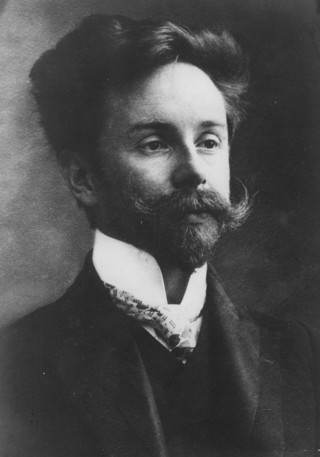
Scriabin Poem of Ecstasy

Scriabin Poem of Ecstasy

Thence the universe resounds
 With a joyful cry  I AM. These are the final lines of Alexander Scriabin's epic Poem of Ecstasy, a 300-line poem that takes nearly 10 minutes to read aloud and is one of ...

23 Heinä 51min
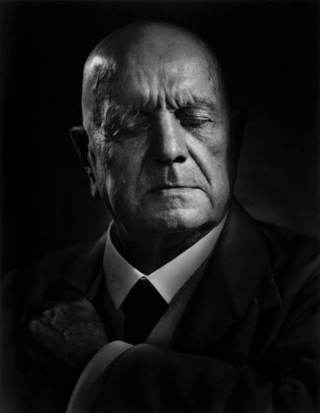
Sibelius Tapiola

Sibelius Tapiola

Ancient, mysterious, brooding savage dreams; Within them dwells the Forest's mighty God, And wood-sprites in the gloom weave magic secrets. These lines are affixed to the first page of Sibelius' tone...

10 Heinä 47min
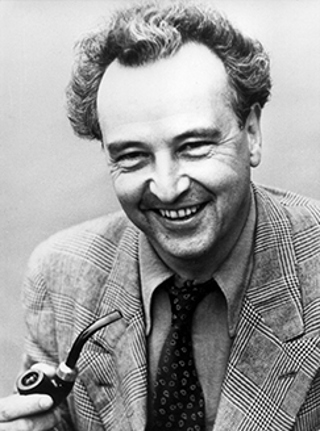
Arthur Honneger, Symphony No. 3, "Liturgique"

Arthur Honneger, Symphony No. 3, "Liturgique"

In the aftermath of World War II, the Swiss composer Arthur Honegger, who had been living in occupied Paris throughout the war, wrote a new symphony entitled "Liturgical." He wrote an extended comment...

25 Kesä 53min
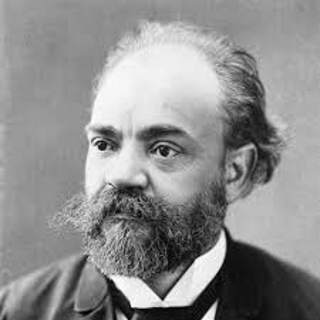
Dvorak Piano Quintet, Op. 81

Dvorak Piano Quintet, Op. 81

In 1872, at the age of 31, Dvořák wrote a Piano Quintet designated as Opus 5. Dvořák was not a prodigy like some other famous composers; instead, his development as a composer was slow and steady. Lat...

11 Kesä 49min

Suosittua kategoriassa Viihde

aamuvuoro
anni-jaajo
tuplakaak
grekovit
hei-baby-3
terveisia-perheesta
hupiklubi
antin-palautepalvelu
dear-shirly
seitseman
bella-table
ellen-jari-tamakin-viela
everypodi
the-harlin-show
antin-elokuvakerho
dear-shirly-ja-arttu
nonsensepodi
tahtitehdas
trippileiri
get-jassud