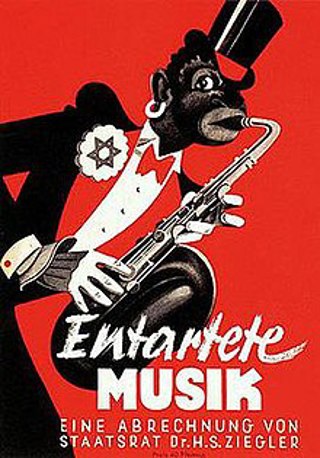
The Degenerates: Music Suppressed By The Nazis

The Degenerates: Music Suppressed By The Nazis

The center of Western Classical Music, ever since the time of Bach, has been modern-day Germany and Austria. You can trace a line from Bach, to Haydn to Mozart to Beethoven to Schubert to Schumann, Brahms, and Wagner, and finally to Mahler. But why does that line stop in 1911, the year of Mahler's death? Part of the answer is the increasing influence of composers from outside the Austro-German canon, something that has enriched Western Classical music to this day. There was also World War I getting in the way. But after the war, one could have expected that this line would continue again. The 1920's in Germany and the rest of Europe were a time of radical experimentation, a flowering of ideas, a sort of wild ecstasy of innovation across all the arts. So why don't we hear of these Austro-German experimenters and innovators anymore? Because of Adolf Hitler, Joseph Goebbels, and their Entartete, or Degenerate music. Hitler's worst crime was by no means his suppression of dozens of German, Austrian, and Eastern European composers, but it is a fact all the same that from the end of World War I until 1933, classical music in Germany and Eastern Europe(especially Czechoslovakia), was flourishing, with composers such as Zemlinsky, Krenek, Korngold, Schreker, Schulhoff, Haas, Krasa, and Ullmann taking up the mantle of the giants of the past and hoisting it upon themselves to carry it forward. The Nazis silenced, exiled, or killed off many of these musicians during the twelve years of 1933-1945, and those voices are forever lost, but the music they wrote before, during the War and the Holocaust, and after it, some of it masterpieces quite on the level of their predecessors, has been preserved. So why then are these composers not better known? I've chosen 12 composers, all of whom were writing music at the highest level. Some of them may be familiar to you, but many probably won't be. And through all of their trials and tribulations, one of the things I want to emphasize throughout these stories, even the bleakest ones, is that so many of them found the will to be able to compose this heart-rending, beautiful, and often optimistic music all as they witnessed unimaginable horrors. It may seem empty when the end for many of these artists was so horrific, but these compositions and the men and women who were behind them are a true testament to the resilience of the human spirit. These artists created a life for their friends, neighbors, and fellow inmates in concentration camps. They wrote music they knew would almost certainly not be heard in their lifetimes, from an urge that could not be destroyed, even by gas chambers. Join us to learn about them this week.

Jaksot(284)

Respighi, "The Pines of Rome"

Respighi, "The Pines of Rome"

Respighi occupies a strange place in musical history. He is almost never considered to be one of the "greats," though his mastery of orchestral color is never doubted by anyone. Today on this Patreon ...

21 Touko 202041min

Quarantine, Richter, Kleiber, Dvorak, Zander, Wearing Different Hats, and Schumann w/ Zsolt Bognar

Quarantine, Richter, Kleiber, Dvorak, Zander, Wearing Different Hats, and Schumann w/ Zsolt Bognar

Zsolt Bognar is a Renaissance Man. He is a pianist, a writer, a thinker, and the host of Living the Classical Life, an amazing show where Zsolt sits down with some of the leading lights of the classic...

18 Touko 202047min

Mahler Symphony No. 2, Part 3

Mahler Symphony No. 2, Part 3

At the end of 1893, Mahler could not find a way to end his 2nd Symphony. But the funeral of Hans Von Bulow, a conductor who Mahler worshipped even though Von Bulow hated Mahler's music, gave Mahler wh...

14 Touko 202055min

Classical Music During the Pandemic

Classical Music During the Pandemic

Today I was thrilled to have with me Matthew Szymanski of the Phoenix Orchestra and Aram Demirjian of the Knoxville Symphony on the show to talk about what classical music as a whole is going to need ...

11 Touko 202044min
Mahler Symphony No. 2, Part 2

Mahler Symphony No. 2, Part 2

Today we explore the two middle movements of Mahler's 2nd symphony. These movements were meant as intermezzi, and are both memories in their own way. The first is a nostalgic, wistful, and extraordina...

7 Touko 202036min
Debussy Prelude to the Afternoon of a Faun

Debussy Prelude to the Afternoon of a Faun

We're taking a brief detour from Mahler 2 today to discuss Debussy's legendary Afternoon of a Faun, a piece written in the same year as Mahler's 2nd symphony. It's easy to forget how revolutionary thi...

4 Touko 202035min
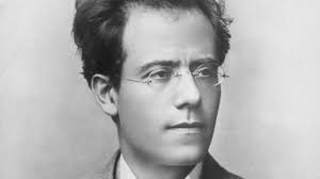
Mahler Symphony No. 2, Part 1

Mahler Symphony No. 2, Part 1

"What next? What is life and what is death? Will we live on eternally? Is it all an empty dream or do our life and death have a meaning? We must answer this question, if we are to go on living." These...

30 Huhti 202038min

A Conversation with Jan Swafford, Composer and Author

A Conversation with Jan Swafford, Composer and Author

If you ever wanted to be a fly on the wall for a slightly nerdy conversation between a conductor and a composer who also happens to be a great writer and thinker about classical music, this week's sho...

27 Huhti 202056min

Suosittua kategoriassa Viihde

anni-jaajo
tuplakaak
grekovit
hei-baby-3
terveisia-perheesta
the-harlin-show
dear-shirly
antin-palautepalvelu
bella-table
antin-elokuvakerho
verhon-takaa
everypodi
dear-shirly-ja-arttu
ootsa-kuullut-tasta-2
nonsensepodi
tahtitehdas
get-jassud
hollywood-love-stories-2
terkuin-jenna
suomen-suosituin-podcast