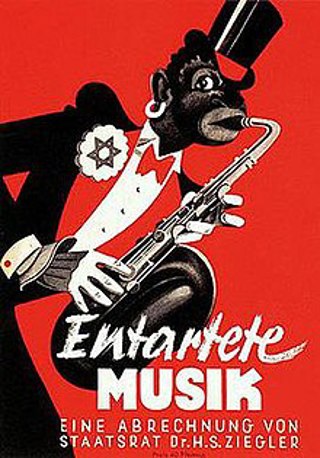

The Degenerates: Music Suppressed By The Nazis

The Degenerates: Music Suppressed By The Nazis

The center of Western Classical Music, ever since the time of Bach, has been modern-day Germany and Austria. You can trace a line from Bach, to Haydn to Mozart to Beethoven to Schubert to Schumann, Brahms, and Wagner, and finally to Mahler. But why does that line stop in 1911, the year of Mahler's death? Part of the answer is the increasing influence of composers from outside the Austro-German canon, something that has enriched Western Classical music to this day. There was also World War I getting in the way. But after the war, one could have expected that this line would continue again. The 1920's in Germany and the rest of Europe were a time of radical experimentation, a flowering of ideas, a sort of wild ecstasy of innovation across all the arts. So why don't we hear of these Austro-German experimenters and innovators anymore? Because of Adolf Hitler, Joseph Goebbels, and their Entartete, or Degenerate music. Hitler's worst crime was by no means his suppression of dozens of German, Austrian, and Eastern European composers, but it is a fact all the same that from the end of World War I until 1933, classical music in Germany and Eastern Europe(especially Czechoslovakia), was flourishing, with composers such as Zemlinsky, Krenek, Korngold, Schreker, Schulhoff, Haas, Krasa, and Ullmann taking up the mantle of the giants of the past and hoisting it upon themselves to carry it forward. The Nazis silenced, exiled, or killed off many of these musicians during the twelve years of 1933-1945, and those voices are forever lost, but the music they wrote before, during the War and the Holocaust, and after it, some of it masterpieces quite on the level of their predecessors, has been preserved. So why then are these composers not better known? I've chosen 12 composers, all of whom were writing music at the highest level. Some of them may be familiar to you, but many probably won't be. And through all of their trials and tribulations, one of the things I want to emphasize throughout these stories, even the bleakest ones, is that so many of them found the will to be able to compose this heart-rending, beautiful, and often optimistic music all as they witnessed unimaginable horrors. It may seem empty when the end for many of these artists was so horrific, but these compositions and the men and women who were behind them are a true testament to the resilience of the human spirit. These artists created a life for their friends, neighbors, and fellow inmates in concentration camps. They wrote music they knew would almost certainly not be heard in their lifetimes, from an urge that could not be destroyed, even by gas chambers. Join us to learn about them this week.

Jaksot(284)

Opus 1s: The First Works of Great Composers, Part 2

Opus 1s: The First Works of Great Composers, Part 2

Every great composer has an origin story. Every composer started somewhere. I'm fascinated with a composers first works because they tell us so much about who they are going to become. In some cases, ...

23 Huhti 202042min
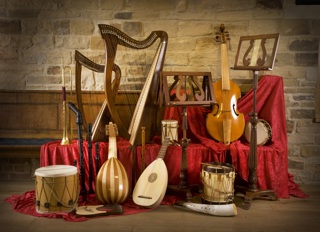
What is Historical Performance?  w/Augusta McKay Lodge

What is Historical Performance? w/Augusta McKay Lodge

Have you ever wondered what the real differences are between modern and historical performance? Why do historical performances sound so different from modern ones? This week, we take a deep dive into ...

20 Huhti 202041min
Opus 1s: The First Works of Great Composers, Part 1

Opus 1s: The First Works of Great Composers, Part 1

Every great composer has an origin story. Every composer started somewhere. I'm fascinated with a composers first works because they tell us so much about who they are going to become. We can see in s...

16 Huhti 202045min

Conductor's Roundtable

Conductor's Roundtable

This week I was proud to join the Phoenix Orchestra's livestream at twitch.tv/thephoenixorch for a quarantined conductor's roundtable featuring Matthew Szymanski, Aram Demirjian, and Gemma New. We dis...

13 Huhti 202056min
Bartok Concerto for Orchestra, Part 2

Bartok Concerto for Orchestra, Part 2

Bartok did not have an easy life in the US, and he was constantly both homesick and horrorstruck by the news from across the ocean. The final three movements of his Concerto for Orchestra display some...

9 Huhti 202047min
Bartok Concerto For Orchestra, Part 1

Bartok Concerto For Orchestra, Part 1

In 1944, Bartok, dying of Leukemia and weighing only 87 lbs, was commissioned to write a new orchestral piece. He had not written any music for years, and was barely clinging to life. The commission s...

2 Huhti 202042min

Shostakovich Symphony No. 7, "Leningrad"

Shostakovich Symphony No. 7, "Leningrad"

I've been coming back to this symphony again and again over the past couple of weeks. The story of the composition and Leningrad performance of Shostakovich 7 is one of the most remarkable stories of ...

26 Maalis 202040min
The Overtures of Beethoven

The Overtures of Beethoven

Never fear everyone, the podcasts are still coming during this crazy time! This week I'll take you through 7 of Beethoven's greatest overtures, pieces that distill Beethoven's storytelling abilities, ...

19 Maalis 202056min

Suosittua kategoriassa Viihde

anni-jaajo
tuplakaak
grekovit
hei-baby-3
terveisia-perheesta
the-harlin-show
dear-shirly
antin-palautepalvelu
bella-table
antin-elokuvakerho
verhon-takaa
everypodi
dear-shirly-ja-arttu
nonsensepodi
ootsa-kuullut-tasta-2
get-jassud
tahtitehdas
hollywood-love-stories-2
terkuin-jenna
suomen-suosituin-podcast