DHT Security Explained: Why Distributed Hash Tables Are Fundamentally Vulnerable
Technically U13 Touko

DHT Security Explained: Why Distributed Hash Tables Are Fundamentally Vulnerable

What if the technology powering BitTorrent, IPFS, and blockchain networks… is fundamentally insecure?

In this episode of Technically U, we take a deep dive into Distributed Hash Table (DHT) security—and uncover why one of the internet’s most important decentralized technologies still faces unsolved security challenges after more than 20 years of research.

DHTs enable peer-to-peer networking without central servers, making them powerful for censorship resistance and scalability. But that same openness introduces serious vulnerabilities that attackers can exploit.

🎯 In this episode, you’ll learn:

What a Distributed Hash Table (DHT) is and how it works

How DHTs power systems like BitTorrent, IPFS, blockchain node discovery, and Tor

The three major attack types:

Sybil Attacks – fake identities controlling the network

Eclipse Attacks – isolating victims from the real network

Routing & Storage Attacks – manipulating or corrupting data

Real-world examples of DHT attacks, including IPFS and Ethereum vulnerabilities

Why attackers can execute large-scale attacks at surprisingly low cost

Key defense strategies:

Proof-of-Work and Proof-of-Space

Routing table diversity and multi-path lookups

Cryptographic verification and redundancy

Reputation systems and behavioral analysis

Why no perfect solution exists (and likely never will)

The fundamental tradeoffs between security, decentralization, anonymity, and performance

🚨 Critical Insight:

DHTs are designed to be open and permissionless—but that same design makes them inherently vulnerable to Sybil attacks. Without a central authority, there is no way to fully prevent attackers from creating unlimited identities.

💡 Why this matters:

DHTs are widely used in modern infrastructure.

Understanding their limitations is critical for:

Network engineers

Cybersecurity professionals

Blockchain developers

Anyone building or relying on decentralized systems

🎧 Technically U – Tech made simple. One packet at a time.

👉 If you’re building on DHT-based systems, remember:

Use multiple layers of defense, monitor for attacks, and never treat DHT data as your only source of truth.

Tämä jakso on lisätty Podme-palveluun avoimen RSS-syötteen kautta eikä se ole Podmen omaa tuotantoa. Siksi jakso saattaa sisältää mainontaa.

Jaksot(270)

Pass-ta-Key Attacks: Is Passwordless Security Still Safe?

Pass-ta-Key Attacks: Is Passwordless Security Still Safe?

Apple, Google, Microsoft, and the security industry have spent years telling us that passkeys are the future of authentication.No passwords.Less phishing.No reusable credentials for attackers to steal...

12 Syys 23min
SaaS Bloodbath: Why Your Trusted Apps Are Now the Attack Surface

SaaS Bloodbath: Why Your Trusted Apps Are Now the Attack Surface

Your company may not get hacked through the firewall. It may get breached through the SaaS app everyone trusts.In this episode of Technically U, we break down the growing SaaS security crisis and why ...

5 Syys 36min
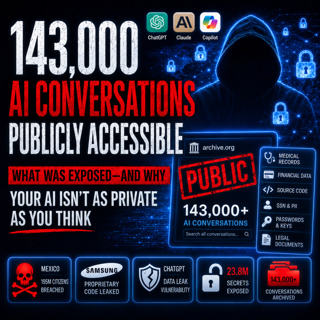
The AI Data Disaster: What ChatGPT, Claude, and Gemini Really Do With Your Secrets

The AI Data Disaster: What ChatGPT, Claude, and Gemini Really Do With Your Secrets

143,000 ChatGPT, Claude, and Copilot conversations are publicly accessible right now. Here's what was exposed—and why your AI isn't as private as you think.🚨 THE HEADLINE:143,000 user conversations w...

29 Elo 21min

The BIMI Paradox: Why 90% of Companies Are Losing Thousands.

The BIMI Paradox: Why 90% of Companies Are Losing Thousands.

The BIMI Paradox: Why 90% of Companies Are Losing Thousands—And Why Your Logo Might Be Illegal in Inboxes (2026 Reality Check).BIMI (Brand Indicators for Message Identification): 90% of companies have...

29 Elo 26min
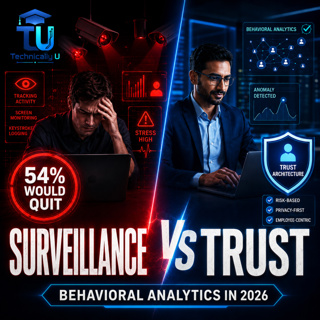
Beyond Surveillance: How Behavioral Analytics Became a Trust Problem

Beyond Surveillance: How Behavioral Analytics Became a Trust Problem

Behavioral Analytics in 2026: How Companies Are Moving From Surveillance to Trust ArchitectureThe paradox nobody talks about: 76% of companies see efficiency gains from monitoring. But 60% of employee...

20 Elo 17min

The Confidence Gap: Why Executives Think AI Agents Are Secure (And Why They're Wrong)

The Confidence Gap: Why Executives Think AI Agents Are Secure (And Why They're Wrong)

The Confidence Gap: AI Agents and the Security Crisis Nobody Is Talking AboutEighty-two percent of executives feel confident that their existing AI agent policies are enough to keep their organization...

8 Elo 18min

Seeing Is No Longer Believing: How Deepfake Fraud Targets Businesses and Families

Seeing Is No Longer Believing: How Deepfake Fraud Targets Businesses and Families

What if the voice on the phone sounds exactly like your boss, your bank, or someone in your family — but it isn’t them?In this episode of Technically U, we break down Deepfake Fraud and why it has bec...

31 Heinä 23min

The AI Criminal Playbook: How Cybercrime Changed Forever in 2026

The AI Criminal Playbook: How Cybercrime Changed Forever in 2026

The next generation of cybercrime may not come from a hacker typing code in a dark room.It may come from someone using AI to generate phishing emails, clone voices, create fake identities, manipulate ...

24 Heinä 16min