DTLS: Why VoIP Calls and Video Conferences Need Different Encryption Than HTTPS
Technically U28 Touko

DTLS: Why VoIP Calls and Video Conferences Need Different Encryption Than HTTPS

Your Zoom call, WebEx meeting, VoIP phone conversation, and WebRTC video chat may all be encrypted — but they are not using HTTPS.

Why? Because HTTPS relies on TLS over TCP, while real-time communications usually run on UDP.

In this episode of Technically U, we break down DTLS — Datagram Transport Layer Security — the encryption protocol that makes secure real-time communication possible.

DTLS gives voice, video, gaming, IoT, VPNs, and live streaming the security benefits of TLS while still supporting the speed and flexibility of UDP.

You’ll learn why traditional TLS works well for websites, APIs, and file downloads, but creates problems for real-time traffic where delays, retransmissions, and packet ordering can ruin the user experience.

We also explain how DTLS handles packet loss, out-of-order delivery, replay protection, handshake reliability, and secure key exchange.

Topics covered include:

What DTLS is

Why TLS does not work well over UDP

TCP vs UDP for real-time communications

How DTLS secures VoIP and video conferencing

DTLS-SRTP and WebRTC encryption

How DTLS is used in IoT, VPNs, gaming, and live streaming

DTLS 1.2 vs DTLS 1.3

Common DTLS security mistakes

Why certificate validation still matters

How DTLS protects real-time traffic without breaking performance

DTLS is the unsung hero behind secure real-time communications.

Every VoIP call, browser-based video meeting, WebRTC session, and many IoT communications rely on encryption that can survive packet loss, jitter, and unreliable networks.

We are Technically U, and our motto is: Tech made simple.

Subscribe for more clear breakdowns on networking, cybersecurity, encryption, protocols, enterprise technology, and the systems that power modern communication.

Tämä jakso on lisätty Podme-palveluun avoimen RSS-syötteen kautta eikä se ole Podmen omaa tuotantoa. Siksi jakso saattaa sisältää mainontaa.

Jaksot(270)

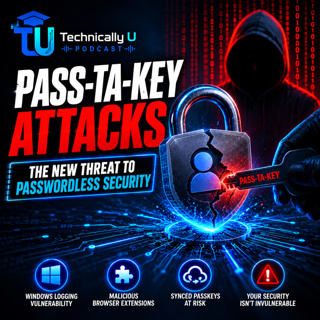
Pass-ta-Key Attacks: Is Passwordless Security Still Safe?

Pass-ta-Key Attacks: Is Passwordless Security Still Safe?

Apple, Google, Microsoft, and the security industry have spent years telling us that passkeys are the future of authentication.No passwords.Less phishing.No reusable credentials for attackers to steal...

12 Syys 23min
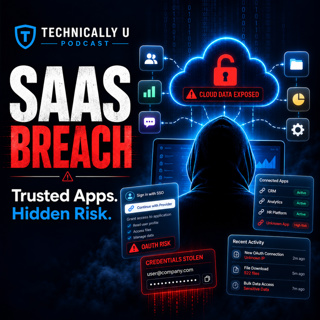
SaaS Bloodbath: Why Your Trusted Apps Are Now the Attack Surface

SaaS Bloodbath: Why Your Trusted Apps Are Now the Attack Surface

Your company may not get hacked through the firewall. It may get breached through the SaaS app everyone trusts.In this episode of Technically U, we break down the growing SaaS security crisis and why ...

5 Syys 36min
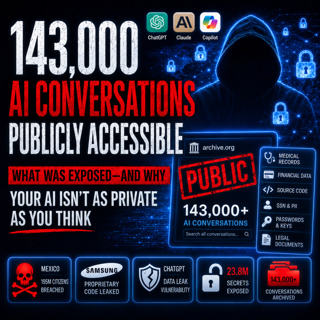
The AI Data Disaster: What ChatGPT, Claude, and Gemini Really Do With Your Secrets

The AI Data Disaster: What ChatGPT, Claude, and Gemini Really Do With Your Secrets

143,000 ChatGPT, Claude, and Copilot conversations are publicly accessible right now. Here's what was exposed—and why your AI isn't as private as you think.🚨 THE HEADLINE:143,000 user conversations w...

29 Elo 21min
The BIMI Paradox: Why 90% of Companies Are Losing Thousands.

The BIMI Paradox: Why 90% of Companies Are Losing Thousands.

The BIMI Paradox: Why 90% of Companies Are Losing Thousands—And Why Your Logo Might Be Illegal in Inboxes (2026 Reality Check).BIMI (Brand Indicators for Message Identification): 90% of companies have...

29 Elo 26min
Beyond Surveillance: How Behavioral Analytics Became a Trust Problem

Beyond Surveillance: How Behavioral Analytics Became a Trust Problem

Behavioral Analytics in 2026: How Companies Are Moving From Surveillance to Trust ArchitectureThe paradox nobody talks about: 76% of companies see efficiency gains from monitoring. But 60% of employee...

20 Elo 17min
The Confidence Gap: Why Executives Think AI Agents Are Secure (And Why They're Wrong)

The Confidence Gap: Why Executives Think AI Agents Are Secure (And Why They're Wrong)

The Confidence Gap: AI Agents and the Security Crisis Nobody Is Talking AboutEighty-two percent of executives feel confident that their existing AI agent policies are enough to keep their organization...

8 Elo 18min
Seeing Is No Longer Believing: How Deepfake Fraud Targets Businesses and Families

Seeing Is No Longer Believing: How Deepfake Fraud Targets Businesses and Families

What if the voice on the phone sounds exactly like your boss, your bank, or someone in your family — but it isn’t them?In this episode of Technically U, we break down Deepfake Fraud and why it has bec...

31 Heinä 23min

The AI Criminal Playbook: How Cybercrime Changed Forever in 2026

The AI Criminal Playbook: How Cybercrime Changed Forever in 2026

The next generation of cybercrime may not come from a hacker typing code in a dark room.It may come from someone using AI to generate phishing emails, clone voices, create fake identities, manipulate ...

24 Heinä 16min