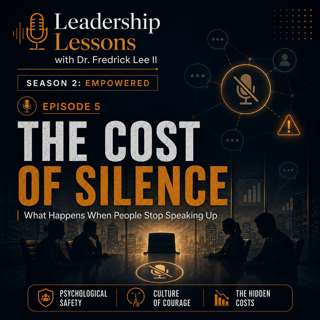

The Cost of Silence: What Happens When People Stop Speaking Up

The Cost of Silence: What Happens When People Stop Speaking Up

The Cost of Silence: What Happens When People Stop Speaking Up


One of the first signs that a culture, relationship, team, or family system is in trouble is not always noise.

Sometimes it is quiet.

A little too quiet.


In this episode of Leadership Lessons with Dr. Fredrick Lee II, Dr. Lee explores the hidden cost of silence and what happens when people stop believing their voice will matter. This conversation moves beyond the workplace and into the deeper human pattern of staying quiet to keep the peace, avoid conflict, protect ourselves, or survive environments that have not made truth feel safe.


Season 2, EMPOWERED: The Inner Work of Sustainable Change, is about understanding the human side of change through emotional intelligence, applied neuroscience, and change management. Episode 5 continues the Awareness stage of the season by helping listeners recognize silence as a signal, not just the absence of communication.


Silence may show up in a team meeting when the real conversation happens afterward in the hallway, parking lot, text thread, or private call. It may show up in relationships when someone keeps saying, “I’m fine,” while resentment quietly builds. It may show up in families where everyone knows the issue but keeps walking around it like furniture nobody wants to move. It may even show up internally, when you stop telling yourself the truth because denial feels easier than disruption.


Dr. Lee explains why silence often begins as protection, how the nervous system prioritizes safety over happiness, and why old coping patterns may have helped us survive one environment but may not serve us in the next. He also challenges leaders to stop assuming quiet means agreement and invites listeners to ask a deeper question: What is this silence protecting, and what is it costing?

This episode is for leaders, team members, high performers, caregivers, partners, family members, and anyone who has ever stayed silent to keep peace while feeling a war begin inside themselves.


In this episode, you will learn:

Why silence is not always agreement, peace, maturity, or professionalism.

How “the meeting after the meeting” reveals a breakdown in trust and psychological safety.

Why your nervous system may choose silence when honesty feels risky.

How silence can protect a moment but damage a pattern.

Why avoiding conflict can also mean avoiding intimacy.

How old coping patterns can become outdated tools.

Why leaders must create rooms where truth has somewhere safe to land.

How this lesson applies at work, in relationships, in families, and in your personal growth.

Key Reflection

When the real conversation happens after the official conversation, truth has left the room.

And when truth leaves the room, the system loses access to the wisdom, warnings, concerns, and clarity it needs to change.


Three practical things you can do right now:

  • 1. Complete a voice audit.

Choose one area of your life: work, relationship, family, friendship, or self-talk.

Finish this sentence:

“I have stopped speaking up about…”

Then ask yourself where that truth goes instead. Does it become resentment, distance, sarcasm, overthinking, fatigue, tension in your body, or side conversations?

  • 2. Do the protection and cost check.

Ask yourself two questions:

“What is my silence protecting?”

“What is my silence costing?”

Silence may be protecting your peace, your job, your reputation, your emotional energy, or your sense of belonging. But it may also be costing you clarity, connection, trust, intimacy, courage, or alignment.

  • 3. Choose one safer pathway for one honest sentence.

You do not need to deliver a speech. You do not need to unload five years of frustration in one conversation.


Start with one clear sentence.

  • At work: “I want to raise a concern before we move forward.”
  • In a relationship: “I care about us, and I need to be honest about what has been bothering me.”
  • In a family conversation: “I am willing to talk about this, but not if the conversation becomes disrespectful.”
  • With yourself: “I have been calling this peace, but it is costing me too much.”

Memorable Lines from the Episode

“When the real conversation happens after the official conversation, truth has left the room.”

“Silence is not the absence of communication. Silence is communication without a safe destination.”

“When you stay silent to keep the peace, it can start a war within yourself.”

“Your nervous system does not care about your happiness. It cares about your safety.”

“Old coping patterns are like tools from a camping trip. They may have helped you survive one environment, but they may not belong in the one you are trying to grow in now.”

“The goal is not reckless honesty. The goal is aligned honesty.”


Listen and Reflect

As you listen, ask yourself:

Where have I stopped speaking up?

What room, relationship, or system taught me to be quiet?

What is my silence protecting?

What is my silence costing?

What truth needs a safer place to land?


Call to Action

If this episode gives language to something you have experienced, share it with someone who may need it.


If you are listening on your favorite podcast platform, subscribe or follow Leadership Lessons with Dr. Fredrick Lee II so you do not miss the next part of the Season 2 journey.


If you are watching or engaging on social media, leave one word in the comments:

Voice. Truth. Safety. Peace. Courage. Alignment. Repair.


Your engagement helps this free general coaching content reach more people who are trying to lead, grow, heal, and communicate with more clarity in work, life, and relationships.


For those ready to go deeper, this is the kind of work Dr. Lee supports through coaching, emotional intelligence development, leadership development, and organizational change consulting.


Learn more at: www.mrchangeyourlife.com


Listen to the podcast at: leadershiplessons.transistor.fm


Episode Closing

This has been your Leadership Lesson, In Life!


Tämä jakso on lisätty Podme-palveluun avoimen RSS-syötteen kautta eikä se ole Podmen omaa tuotantoa. Siksi jakso saattaa sisältää mainontaa.

Jaksot(36)

Bonus Episode, Part 4 What Happens Next?

Bonus Episode, Part 4 What Happens Next?

What happens after the apology?That is where the real leadership test begins.Converse removed the campaign imagery and said it understood why the image was deeply upsetting. Congressman Troy Carter th...

21 Syys 6min

Bonus Episode, Part 3 You Cannot Apologize Away Your Impact

Bonus Episode, Part 3 You Cannot Apologize Away Your Impact

Bonus Episode, Part 3 You Cannot Apologize Away Your ImpactThe Converse Ad Controversy: History, Impact and AccountabilitySome people hear the words “We’re sorry” and believe the conversation should b...

20 Syys 6min

Bonus Episode, Part 2 This Ad Had Too Many Chances to Be Stopped

Bonus Episode, Part 2 This Ad Had Too Many Chances to Be Stopped

Bonus Episode, Part 2This Ad Had Too Many Chances to Be StoppedThe Converse Ad Controversy: History, Impact and AccountabilityThis ad did not simply appear online. Before a global campaign reaches the...

20 Syys 6min

Bonus Episode, Part 1: You See Sneakers. I See History.

Bonus Episode, Part 1: You See Sneakers. I See History.

Bonus Episode, Part 1: You See Sneakers. I See History.Some of y’all are going to look at these advertisements and say, “It’s just shoes.” And that is exactly why we need to talk.In Part 1 of this Lea...

20 Syys 6min
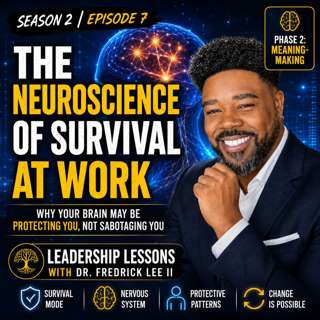
The Neuroscience of Survival at Work

The Neuroscience of Survival at Work

The Neuroscience of Survival at WorkSeason 2, Episode 7 | Phase 2: Meaning-Making — “Now I Understand Why”What if the behavior you keep criticizing in yourself is actually your nervous system trying t...

13 Elo 33min
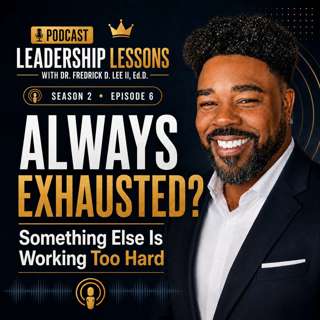
If You’re Always Exhausted, Something Else Is Working Too Hard

If You’re Always Exhausted, Something Else Is Working Too Hard

If You’re Always Exhausted, Something Else Is Working Too HardYou can be productive, dependable, successful, and still be deeply exhausted.Sometimes the problem is not simply how much you are doing. I...

27 Heinä 29min
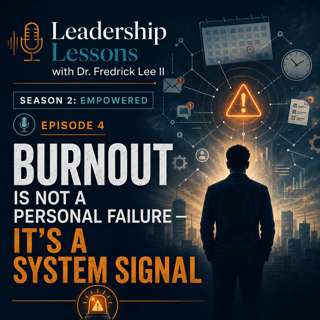
Burnout Is Not a Personal Failure — It’s a System Signal

Burnout Is Not a Personal Failure — It’s a System Signal

Episode SummaryIn this episode of Leadership Lessons, Dr. Fredrick Lee II explores burnout not as a personal weakness, but as a signal that something deeper is out of alignment. Burnout is often misun...

22 Kesä 37min

Suosittua kategoriassa Koulutus

rss-murhan-anatomia
aamukahvilla
psykopodiaa-podcast
voi-hyvin-meditaatiot-2
rss-arkea-ja-aurinkoa-podcast-espanjasta
kesken
rss-taysi-voima
koulu-podcast-2
psykologia
rss-suomen-aa-podcast
rss-hereilla
rss-liian-kuuma-peruna
aloita-meditaatio
rss-duodecim-lehti
rss-spessu
rahapuhetta
adhd-podi
rss-monarch-talk-with-alexandra-alexis
rss-niinku-asia-on
rss-narsisti