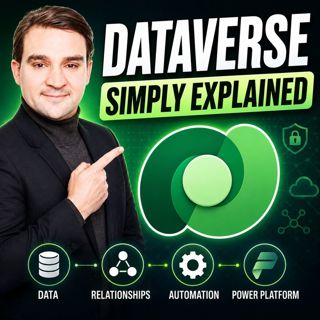

Dataverse - Simply Explained
Microsoft Dataverse is one of the most important services in the Power Platform ecosystem, yet many people assume it's simply another database. In reality, Dataverse is much more than storage. It's a fully managed business data platform that provides security, relationships, business logic, auditing, and scalability for modern business applications. In this episode, we explain Dataverse in plain English, showing how it powers Power Apps, Power Automate, Power BI, and Microsoft's growing AI ecosystem. Whether you're just starting with the Power Platform or looking to build enterprise-grade business applications, this episode provides the foundation you need.

WHY DATAVERSE EXISTS
Many organizations still rely on disconnected Excel spreadsheets, SharePoint lists, legacy databases, and siloed applications that struggle to communicate with one another. While these solutions work for small teams, they become increasingly difficult to manage as businesses grow. Duplicate data, inconsistent records, weak security, and manual processes quickly become major obstacles. Microsoft created Dataverse to provide a centralized, secure, and scalable data platform where every Power Platform solution shares the same trusted source of business information.

TABLES – THE BUILDING BLOCKS OF YOUR DATA
Everything inside Dataverse starts with tables. Similar to spreadsheets but far more powerful, Dataverse tables define structured business data using strongly typed columns for text, numbers, currencies, dates, choices, and more. Beyond simple storage, Dataverse automatically adds primary keys, auditing fields, ownership information, status columns, calculated fields, business rules, and auto-numbering. These enterprise capabilities allow developers to focus on solving business problems instead of rebuilding common database functionality for every application.

RELATIONSHIPS MAKE DATA INTELLIGENT
One of Dataverse's greatest strengths is its ability to create meaningful relationships between business data. One-to-many relationships allow records such as manufacturers and vehicles, customers and orders, or departments and employees to remain connected without duplicating information. Many-to-many relationships support more advanced scenarios where records naturally connect in multiple directions. By enforcing referential integrity, Dataverse prevents broken references, eliminates duplicate information, and ensures every application works with clean, consistent business data.

ENTERPRISE SECURITY BUILT INTO THE PLATFORM
Unlike spreadsheets and traditional lists, Dataverse includes enterprise-grade security by design. Role-based access control, business units, teams, ownership, row-level permissions, and even column-level security allow organizations to control exactly who can access specific data. Administrators assign permissions through reusable security roles rather than individual users, making governance easier while supporting large organizations with complex security requirements. This security model also extends automatically across every Power Platform application connected to Dataverse.

DATAVERSE VS SHAREPOINT
Although SharePoint Lists and Dataverse may appear similar at first glance, they serve very different purposes. SharePoint excels at document collaboration, lightweight tracking, and simple team solutions. Dataverse is designed for business-critical applications requiring millions of records, complex relationships, enterprise security, automation, auditing, and AI integration. Many organizations successfully combine both platforms by storing structured business data inside Dataverse while keeping documents within SharePoint document libraries, creating a powerful hybrid architecture.

THE HEART OF THE POWER PLATFORM
Dataverse acts as the shared data layer for Microsoft's Power Platform. Power Apps uses it to build canvas and model-driven applications. Power Automate triggers workflows whenever business data changes. Power BI connects directly for real-time reporting and analytics. Because every solution uses the same centralized data model, organizations eliminate duplication while ensuring consistency across apps, workflows, dashboards, and business processes. This unified architecture dramatically simplifies application development and long-term maintenance.

AI, COPILOT AND THE FUTURE OF BUSINESS DATA
As Microsoft continues integrating AI throughout its ecosystem, Dataverse has become even more valuable. Microsoft Copilot and AI agents use Dataverse as a trusted knowledge source, retrieving business information directly from secured organizational data rather than relying on public internet content. Future integrations with Microsoft Fabric and OneLake will further unify operational and analytical data, enabling organizations to combine transactional workloads, reporting, automation, and AI on a single intelligent data foundation.

GETTING STARTED WITH DATAVERSE
The best way to begin using Dataverse is by focusing on your business data model before building applications. Define your core tables, relationships, and security requirements first, then create apps and automations on top of that foundation. Whenever possible, start with Microsoft's standard tables such as Contacts and Accounts before creating custom entities. A well-designed data model provides the flexibility to expand your solution over time without disrupting existing applications or business processes.

KEY TAKEAWAYS
Dataverse is far more than a cloud database. It provides the secure, relational, and scalable foundation that powers the Microsoft Power Platform. By combining structured data storage, business logic, enterprise security, automation, analytics, and AI readiness into a single managed service, Dataverse enables organizations to build powerful business applications faster while maintaining consistency across every solution. If you're serious about Power Apps, Power Automate, Power BI, or Microsoft's AI capabilities, understanding Dataverse is one of the most valuable investments you can mak

Become a supporter of this podcast: https://www.spreaker.com/podcast/m365-fm-modern-work-security-and-productivity-with-microsoft-365--6704921/support.

Tämä jakso on lisätty Podme-palveluun avoimen RSS-syötteen kautta eikä se ole Podmen omaa tuotantoa. Siksi jakso saattaa sisältää mainontaa.

Jaksot(743)

How to Become a High: Performing Microsoft Partner

How to Become a High: Performing Microsoft Partner

What separates an average Microsoft partner from a high-performing one? It isn't simply winning more deals or hiring more salespeople. The most successful partners build systems that continuously gene...

15 Heinä 17min

The Microsoft Partner Journey Explained

The Microsoft Partner Journey Explained

The Microsoft AI Cloud Partner Program has evolved dramatically, but many partners are still approaching it with an outdated mindset. In this episode of m365.fm, we break down the complete Microsoft P...

15 Heinä 14min

How to Build a Winning Microsoft Partner Strategy

How to Build a Winning Microsoft Partner Strategy

What separates Microsoft partners that consistently grow from those that simply maintain their status? In this episode of m365.fm, we break down the four strategic pillars that transform Microsoft par...

15 Heinä 17min
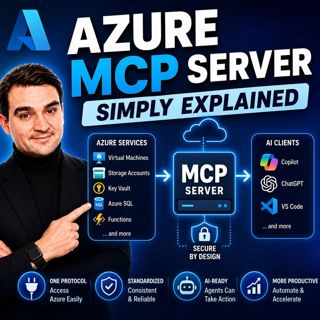
Azure MCP Server - Simply Explained

Azure MCP Server - Simply Explained

Artificial Intelligence is rapidly evolving from simply answering questions to actively performing real work. But for AI agents to become truly useful, they need secure access to cloud resources, data...

15 Heinä 17min
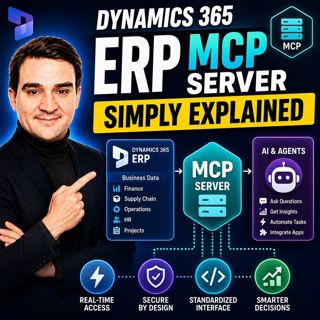
Dynamics 365 ERP MCP Server - Simply Explained

Dynamics 365 ERP MCP Server - Simply Explained

Artificial Intelligence is transforming how businesses interact with enterprise systems, but connecting AI assistants to ERP platforms has traditionally required custom APIs, complex integrations, and...

15 Heinä 13min
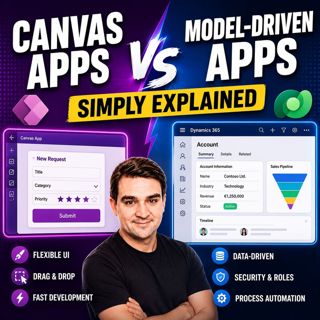
Canvas Apps vs Model-Driven Apps - Simply Explained

Canvas Apps vs Model-Driven Apps - Simply Explained

Microsoft Power Apps offers two primary ways to build business applications: Canvas Apps and Model-Driven Apps. At first glance they may appear similar, but they are designed for very different scenar...

15 Heinä 15min

Infrastructure as Code - Simply Explained

Infrastructure as Code - Simply Explained

Managing cloud infrastructure by clicking through the Azure Portal might work for a single virtual machine, but it quickly becomes slow, inconsistent, and difficult to maintain as environments grow. I...

15 Heinä 16min

Bicep - Simply Explained

Bicep - Simply Explained

Deploying Azure resources through the Azure Portal is great for learning, but it quickly becomes difficult to repeat, document, and automate. That's where Bicep comes in. In this episode, we explain M...

15 Heinä 16min

Suosittua kategoriassa Politiikka ja uutiset

aikalisa
uutiscast
ootsa-kuullut-tasta-2
rss-ootsa-kuullut-tasta
rss-seksicast
rss-vaalirankkurit-podcast
rss-podme-livebox
otetaan-yhdet
politiikan-puskaradio
tervo-halme
aihe
linda-maria
rikosmyytit
mtv-uutiset-polloraati
rss-aijat-hopottaa-podcast
rss-merja-mahkan-rahat
rss-raha-talous-ja-politiikka
rss-tekoalyfoorumi
rss-asiastudio
rss-girls-finish-f1rst