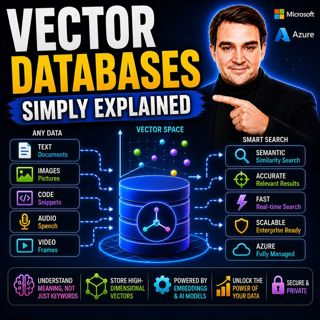
Vector Databases - Simply Explained
Large Language Models like GPT-4o, Microsoft Copilot, and ChatGPT are incredibly powerful, but they all depend on one critical technology that most people never hear about: vector databases. Traditional databases are excellent at storing structured information such as customer records, product prices, and inventory numbers, but they struggle to understand meaning. If you search for "red jacket," a traditional database won't necessarily find "crimson coat" because it only matches exact words. Vector databases solve this problem by storing mathematical representations of meaning instead of simple text. In this episode of Microsoft Knowledge Nuggets, we explain vector databases in simple terms and show why they have become the foundation of enterprise AI, semantic search, Retrieval-Augmented Generation (RAG), Microsoft Copilot, and modern Azure AI applications.

WHAT ARE VECTORS AND EMBEDDINGS?
Everything starts with a vector—a simple list of numbers that represents an object in a way computers can understand. While vectors may sound complicated, they're simply numerical descriptions of information. The real magic happens with embeddings, which are vectors generated by AI models that capture meaning instead of just words. Embedding models such as Azure OpenAI's text-embedding models analyze text, images, audio, or other content and place similar concepts close together in a high-dimensional vector space. That allows AI systems to understand that "car" and "automobile," or "red jacket" and "crimson coat," are closely related even though they use different words. Instead of performing keyword matching, AI performs similarity matching based on meaning, making search dramatically more intelligent.

WHY TRADITIONAL DATABASES AREN'T ENOUGH FOR AI
SQL databases excel at exact lookups, filtering, joins, and transactions, but they don't understand context or intent. They can tell you which products are exactly labeled "red," but they cannot determine whether another product is conceptually similar. Vector databases fill this gap by storing embeddings alongside metadata and organizing them for ultra-fast similarity search. Using advanced indexing algorithms such as HNSW and IVF, vector databases can search millions of vectors in milliseconds, allowing AI systems to retrieve the most relevant information almost instantly. Rather than replacing relational databases, vector databases complement them by adding semantic understanding to existing business data.

VECTOR DATABASES ACROSS THE MICROSOFT AZURE ECOSYSTEM
Microsoft has integrated vector search across its entire AI platform instead of requiring organizations to deploy separate specialist databases. Azure AI Search provides enterprise-grade vector search and hybrid search for Retrieval-Augmented Generation (RAG) applications. Azure Cosmos DB supports native vector indexing with DiskANN for low-latency operational workloads. SQL Server 2025 and Azure SQL Database now include native vector data types and similarity search functions, allowing organizations to combine relational data and AI-powered search in a single platform. Together with Azure OpenAI and Azure AI Foundry, these services enable developers to build intelligent copilots, AI assistants, recommendation engines, and enterprise search experiences using familiar Microsoft technologies.

REAL-WORLD USE CASES: RAG, COPILOT, RECOMMENDATIONS, AND SEMANTIC SEARCH
Vector databases power many of today's most impressive AI experiences. In Retrieval-Augmented Generation (RAG), enterprise documents are converted into embeddings so AI can retrieve relevant information before generating answers. Microsoft Copilot uses vector search to locate emails, Teams conversations, SharePoint files, and OneDrive documents that best match a user's question—even when the wording differs completely. Recommendation systems use vectors to match customers with products, movies, or content based on similarity rather than fixed categories. Semantic search helps users discover information using natural language, while anomaly detection identifies unusual behavior by comparing new events against learned patterns. Across Microsoft 365 and Azure, vector databases have become the engine that enables AI to understand context rather than simply matching keywords.

KEEPING VECTOR DATABASES UP TO DATE
Because enterprise information constantly changes, vectors must be updated as documents evolve. This process is known as Vector ETL (Extract, Transform, Load). New or modified documents are automatically discovered, divided into smaller chunks, converted into embeddings using Azure OpenAI, and indexed inside Azure AI Search or another vector-enabled database. Microsoft provides integrated indexing pipelines that automate chunking, embedding generation, and indexing without requiring custom development. Following best practices such as incremental indexing, metadata tracking, and embedding version management ensures AI applications always retrieve the most current and accurate business knowledge while controlling operational costs. GETTING STARTED WITH VECTOR DATABASES ON AZURE Getting started with vector search is easier than many developers expect. Azure AI Search allows you to create vector indexes, automatically generate embeddings, and combine keyword search with semantic search through hybrid retrieval. Developers can integrate Azure OpenAI, Azure Cosmos DB, SQL Server, and Azure AI Foundry to build enterprise-grade AI applications that understand meaning instead of simply matching text. Whether you're creating an internal knowledge assistant, an AI-powered customer support chatbot, an enterprise Copilot, or intelligent product recommendations, vector databases provide the semantic foundation that makes modern generative AI truly useful. After listening to this episode, you'll understand why vector databases have become one of the most important building blocks in Microsoft's AI ecosystem and why nearly every enterprise AI solution relies on them behind the scenes.

Become a supporter of this podcast: https://www.spreaker.com/podcast/m365-fm-modern-work-security-and-productivity-with-microsoft-365--6704921/support.

Tämä jakso on lisätty Podme-palveluun avoimen RSS-syötteen kautta eikä se ole Podmen omaa tuotantoa. Siksi jakso saattaa sisältää mainontaa.

Jaksot(778)

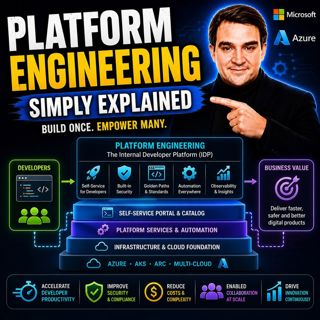
Platform Engineering - Simply Explained

Platform Engineering - Simply Explained

For years, DevOps promised to break down the barriers between development and operations by giving teams greater ownership over the software they build. While the idea was powerful, reality became far...

16 Heinä 16min
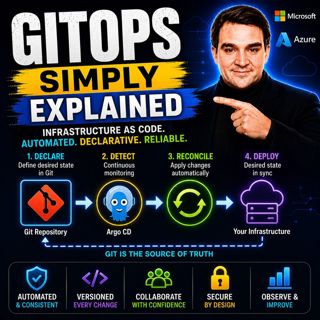
GitOps - Simply Explained

GitOps - Simply Explained

Managing Kubernetes manually quickly becomes a nightmare as environments grow. One engineer updates a deployment directly using kubectl, another changes a ConfigMap through the Azure portal, and sudde...

16 Heinä 16min
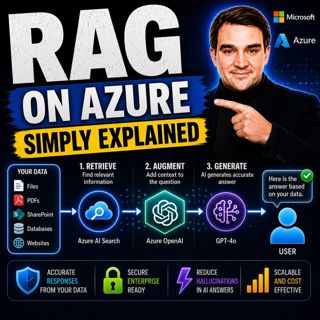
RAG on Azure — Simply Explained

RAG on Azure — Simply Explained

Large Language Models like GPT-4o are incredibly powerful, but they have two major limitations. First, their knowledge is frozen in time, meaning they don't automatically know about recent events, cha...

16 Heinä 13min
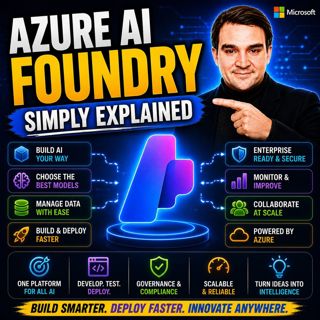
Azure AI Foundry - Simply Explained

Azure AI Foundry - Simply Explained

Artificial Intelligence is evolving faster than almost any other technology, and with new models, frameworks, and AI services appearing almost every month, it's becoming increasingly difficult to know...

16 Heinä 14min
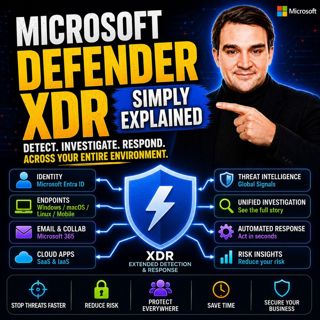
Microsoft Defender XDR - Simply Explained

Microsoft Defender XDR - Simply Explained

Modern cyberattacks rarely target a single system. An attack might begin with a phishing email, move to a compromised device, steal user credentials, access cloud applications, and finally exfiltrate ...

16 Heinä 14min
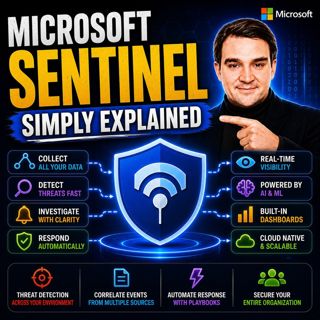
Microsoft Sentinel - Simply Explained

Microsoft Sentinel - Simply Explained

Modern cyberattacks rarely happen in a single moment. Attackers often move slowly, testing identities, exploring systems, downloading data, and establishing persistence over days, weeks, or even month...

16 Heinä 14min
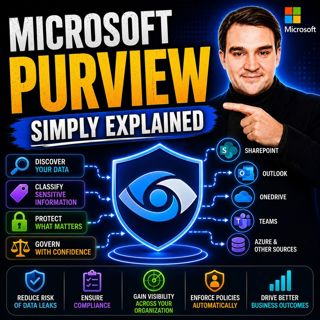
Microsoft Purview - Simply Explained

Microsoft Purview - Simply Explained

Protecting your network is no longer enough to protect your business. Modern organizations store sensitive information across Microsoft 365, Azure, SharePoint, OneDrive, Teams, Exchange, file servers,...

16 Heinä 17min

Suosittua kategoriassa Politiikka ja uutiset

aikalisa
uutiscast
ootsa-kuullut-tasta-2
rss-ootsa-kuullut-tasta
rss-vaalirankkurit-podcast
rss-podme-livebox
rss-seksicast
otetaan-yhdet
politiikan-puskaradio
tervo-halme
aihe
linda-maria
rss-raha-talous-ja-politiikka
viela-yksi-sivu
the-ulkopolitist
et-sa-noin-voi-sanoo-esittaa
rss-sveriges-radio-finska
rss-fingo-podcast
rss-tekoalyfoorumi
rss-girls-finish-f1rst