Platform Engineering - Simply Explained

Platform Engineering - Simply Explained

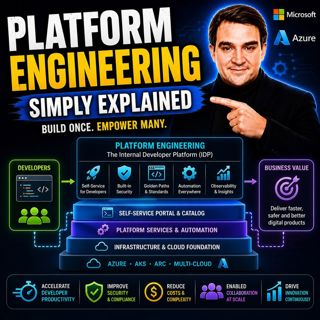
For years, DevOps promised to break down the barriers between development and operations by giving teams greater ownership over the software they build. While the idea was powerful, reality became far more complicated. Developers suddenly found themselves responsible not only for writing code, but also for Kubernetes, Terraform, CI/CD pipelines, cloud networking, monitoring, security, secret management, and dozens of Azure services. Instead of increasing productivity, many teams became overwhelmed by operational complexity. In this episode of Microsoft Knowledge Nuggets, we explain Platform Engineering in simple terms and show how Internal Developer Platforms (IDPs) help organizations reduce cognitive load, standardize infrastructure, and allow developers to focus on building great software instead of managing cloud infrastructure.

WHY DEVOPS ALONE IS NO LONGER ENOUGH
DevOps successfully removed many organizational barriers, but it also shifted operational responsibilities directly onto development teams. Every project began creating its own deployment pipelines, Kubernetes manifests, monitoring dashboards, and infrastructure templates. The result was duplicated work, inconsistent implementations, rising cloud costs, and increasing developer burnout. Platform Engineering addresses this problem by introducing a dedicated platform team responsible for building reusable infrastructure, automation, security controls, and deployment workflows that every development team can consume through simple self-service interfaces. Instead of forcing every developer to become a cloud infrastructure expert, Platform Engineering provides standardized, secure, and well-supported building blocks that dramatically simplify software delivery.

INTERNAL DEVELOPER PLATFORMS AND GOLDEN PATHS
At the center of Platform Engineering is the Internal Developer Platform (IDP). An IDP combines infrastructure provisioning, CI/CD pipelines, security policies, secret management, monitoring, logging, and deployment automation into one unified platform. Developers no longer need to manually configure Kubernetes clusters, Terraform modules, networking, or observability. Instead, they simply request a new service or environment, and the platform handles the complexity automatically. We also explore one of the most important concepts in Platform Engineering: Golden Paths. These are pre-built, recommended workflows that make the secure and supported way the easiest way. Rather than restricting innovation, Golden Paths provide fast, well-tested defaults while still allowing teams to customize solutions when necessary.

REDUCING COGNITIVE LOAD AND IMPROVING DEVELOPER EXPERIENCE
One of Platform Engineering's primary goals is reducing cognitive load. Developers should focus on solving business problems instead of remembering infrastructure configurations, Kubernetes versions, cloud networking rules, or deployment procedures. Platform teams carefully decide which technical details should be exposed and which should remain hidden behind automation and self-service capabilities. By standardizing infrastructure while maintaining transparency when needed, organizations create better developer experiences, reduce onboarding time, minimize operational mistakes, and significantly increase engineering productivity. Platform Engineering is not about hiding technology—it is about hiding unnecessary complexity while exposing the information developers actually need to be successful.

TREATING THE PLATFORM AS A PRODUCT
A successful platform is never built solely around technology—it is built around its users. This episode explains why Platform Engineering teams should think like product teams instead of infrastructure teams. Developers become internal customers whose feedback directly influences the platform roadmap. Success is measured through metrics such as onboarding time, deployment speed, developer satisfaction, and platform adoption rather than simply counting infrastructure components. Organizations like Spotify have demonstrated that treating Internal Developer Platforms as products leads to significantly higher adoption, faster software delivery, and stronger collaboration between platform engineers and development teams. If developers choose to use the platform voluntarily because it genuinely improves their daily work, the platform is succeeding.

WHY PLATFORM ENGINEERING MATTERS IN THE AGE OF AI
The rapid rise of AI coding assistants like GitHub Copilot has fundamentally changed software development. Developers can now generate significantly more code than ever before, but every application still requires secure infrastructure, automated deployment, monitoring, governance, and operational support. Without Platform Engineering, AI simply accelerates operational chaos. With a mature Internal Developer Platform, however, organizations can safely scale software delivery while maintaining consistency, governance, and security. AI also helps platform teams build reusable infrastructure, generate automation, improve documentation, and optimize developer workflows. Together, Platform Engineering and AI create the foundation for the next generation of high-performing software organizations.

HOW TO GET STARTED WITH PLATFORM ENGINEERING
Building an Internal Developer Platform doesn't begin with a massive architecture project. Instead, organizations should start by identifying one painful developer workflow and creating a single Golden Path that solves it exceptionally well. Measure deployment time, developer adoption, onboarding speed, and manual effort saved. Collect feedback, continuously improve the platform, and expand incrementally rather than attempting to automate everything at once. Whether you're building cloud-native applications on Azure, managing Kubernetes clusters, or modernizing enterprise software delivery, Platform Engineering provides a scalable operating model that enables developers to ship software faster, more securely, and with significantly less operational complexity. After listening to this episode, you'll understand why Platform Engineering has become one of the fastest-growing disciplines in cloud computing and why Internal Developer Platforms are rapidly becoming essential for modern software organizations.

Become a supporter of this podcast: https://www.spreaker.com/podcast/m365-fm-modern-work-security-and-productivity-with-microsoft-365--6704921/support.

Tämä jakso on lisätty Podme-palveluun avoimen RSS-syötteen kautta eikä se ole Podmen omaa tuotantoa. Siksi jakso saattaa sisältää mainontaa.

Jaksot(779)

Microsoft AI Agent Harness - Simply Explained

Microsoft AI Agent Harness - Simply Explained

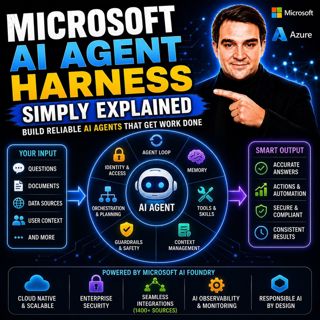
Writing the perfect AI prompt used to be the goal of every AI developer. But as businesses began asking AI to perform increasingly complex tasks—analyzing code, researching topics, coordinating workfl...

17 Heinä 16min
GitOps - Simply Explained

GitOps - Simply Explained

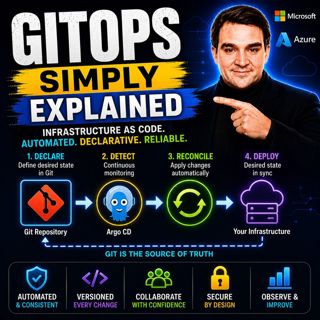
Managing Kubernetes manually quickly becomes a nightmare as environments grow. One engineer updates a deployment directly using kubectl, another changes a ConfigMap through the Azure portal, and sudde...

16 Heinä 16min
Vector Databases - Simply Explained

Vector Databases - Simply Explained

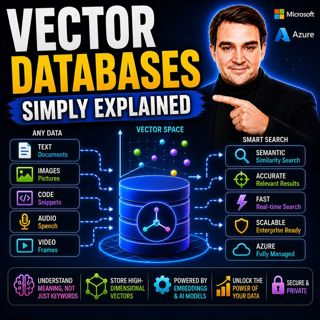
Large Language Models like GPT-4o, Microsoft Copilot, and ChatGPT are incredibly powerful, but they all depend on one critical technology that most people never hear about: vector databases. Tradition...

16 Heinä 14min
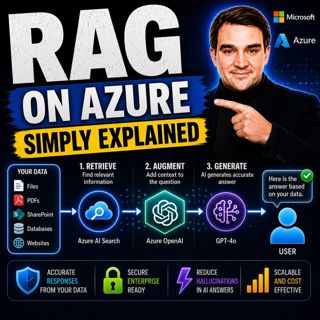
RAG on Azure — Simply Explained

RAG on Azure — Simply Explained

Large Language Models like GPT-4o are incredibly powerful, but they have two major limitations. First, their knowledge is frozen in time, meaning they don't automatically know about recent events, cha...

16 Heinä 13min
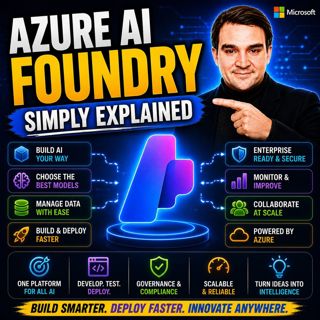
Azure AI Foundry - Simply Explained

Azure AI Foundry - Simply Explained

Artificial Intelligence is evolving faster than almost any other technology, and with new models, frameworks, and AI services appearing almost every month, it's becoming increasingly difficult to know...

16 Heinä 14min
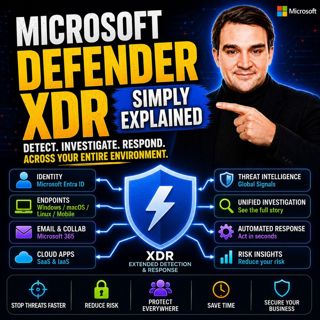
Microsoft Defender XDR - Simply Explained

Microsoft Defender XDR - Simply Explained

Modern cyberattacks rarely target a single system. An attack might begin with a phishing email, move to a compromised device, steal user credentials, access cloud applications, and finally exfiltrate ...

16 Heinä 14min

Microsoft Sentinel - Simply Explained

Microsoft Sentinel - Simply Explained

Modern cyberattacks rarely happen in a single moment. Attackers often move slowly, testing identities, exploring systems, downloading data, and establishing persistence over days, weeks, or even month...

16 Heinä 14min

Suosittua kategoriassa Politiikka ja uutiset

aikalisa
uutiscast
ootsa-kuullut-tasta-2
rss-ootsa-kuullut-tasta
rss-vaalirankkurit-podcast
rss-podme-livebox
rss-seksicast
otetaan-yhdet
tervo-halme
politiikan-puskaradio
aihe
linda-maria
rss-raha-talous-ja-politiikka
viela-yksi-sivu
the-ulkopolitist
mtv-uutiset-polloraati
et-sa-noin-voi-sanoo-esittaa
rss-sveriges-radio-finska
rss-fingo-podcast
rss-girls-finish-f1rst