Microsoft AI Agent Harness - Simply Explained

Microsoft AI Agent Harness - Simply Explained

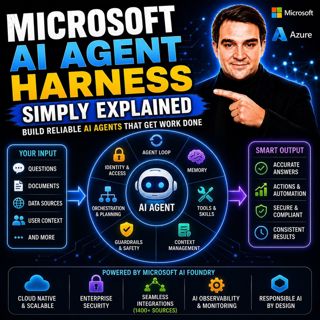
Writing the perfect AI prompt used to be the goal of every AI developer. But as businesses began asking AI to perform increasingly complex tasks—analyzing code, researching topics, coordinating workflows, and automating business processes—it became clear that prompts alone were no longer enough. Large Language Models are excellent at reasoning, but they cannot reliably manage long-running tasks, remember previous sessions, coordinate multiple tools, or enforce enterprise security on their own. In this episode of Microsoft Knowledge Nuggets, we explain the Microsoft AI Agent Harness in simple terms and show why modern AI solutions are built around complete systems rather than individual prompts. You'll learn how Microsoft AI Foundry combines memory, orchestration, context management, identity, tools, and governance into an enterprise-ready AI agent platform capable of handling real business workloads.

FROM PROMPT ENGINEERING TO HARNESS ENGINEERING
The evolution of AI development has happened in three major phases. Prompt Engineering focused on writing better instructions for language models. Context Engineering introduced technologies such as Retrieval-Augmented Generation (RAG), Model Context Protocol (MCP), and tool calling to provide AI with better information at the right time. Today, the industry has entered the era of Harness Engineering, where the focus shifts from the model itself to the complete system surrounding it. An AI agent is no longer just a model—it is a model combined with memory, orchestration, tools, guardrails, identity, and persistent context. The harness transforms a powerful language model into a reliable enterprise worker capable of completing complex, multi-step tasks over extended periods.

WHAT AN AI AGENT HARNESS ACTUALLY DOES
The AI Agent Harness provides all the capabilities that language models cannot manage independently. At its core is the agent loop, where the model repeatedly reasons, calls tools, evaluates results, and decides on the next action until the task is complete. Context management continuously summarizes conversations and prioritizes relevant information to prevent context windows from overflowing. Memory enables agents to remember previous interactions and learn from earlier tasks, while session persistence allows conversations to continue across multiple days or projects. The harness also provides enterprise tools such as web browsing, file access, database queries, code execution, and API integrations, giving AI agents the ability to perform meaningful work instead of simply generating text. Together, these capabilities create AI systems that behave more like skilled digital employees than traditional chatbots.

MICROSOFT AI FOUNDRY: THE ENTERPRISE AI AGENT PLATFORM
Microsoft AI Foundry provides the AI Agent Harness as a fully managed enterprise platform. Instead of building orchestration, identity management, context handling, security, and memory from scratch, organizations can focus entirely on their business logic while Foundry manages the underlying infrastructure. Every AI agent receives its own Microsoft Entra Agent ID, giving it a secure digital identity with auditable access to enterprise resources. Foundry also connects to more than 1,400 enterprise data sources, including Microsoft 365, SharePoint, Dynamics 365, Salesforce, Azure services, and custom business systems. Built-in procedural memory, session persistence, enterprise search, monitoring, and governance allow organizations to deploy AI agents that work securely across their existing business applications while maintaining full compliance and operational visibility.

MICROSOFT AGENT FRAMEWORK, MULTI-AGENT ORCHESTRATION, AND HERMES
This episode also explores Microsoft's Agent Framework, previously known as Semantic Kernel, which enables developers to build custom AI Agent Harnesses using Python and C#. The framework includes built-in orchestration patterns such as Sequential execution, Concurrent processing, Handoff, Group Chat, and Microsoft's Magentic coordination model for managing specialized AI agents. We also introduce Microsoft's hosted Hermes environment, where long-running AI agents operate inside isolated sandboxes with dedicated file systems, persistent memory, maintenance routines, and secure execution environments. Rather than acting as isolated chatbots, these agents can continuously plan, execute, learn, and collaborate while safely operating inside enterprise environments.

RESPONSIBLE AI, GOVERNANCE, AND SAFE AUTONOMY
Powerful AI systems require equally powerful governance. The AI Agent Harness includes guardrails that define what agents are allowed to do, maximum execution limits, approval workflows for high-risk actions, audit logging, lifecycle hooks, content safety evaluation, and policy enforcement. Microsoft AI Foundry implements the Microsoft Responsible AI Standard together with guidance from the Azure Well-Architected Framework and Cloud Adoption Framework, ensuring enterprise AI systems remain secure, transparent, and accountable. Organizations can evaluate AI agents before deployment, monitor every action they perform, and ensure compliance with corporate policies while still enabling autonomous execution. After listening to this episode, you'll understand why the future of enterprise AI isn't just about choosing the best language model—it's about building the right harness around it to create secure, reliable, and production-ready AI agents.

Become a supporter of this podcast: https://www.spreaker.com/podcast/m365-fm-modern-work-security-and-productivity-with-microsoft-365--6704921/support.

Tämä jakso on lisätty Podme-palveluun avoimen RSS-syötteen kautta eikä se ole Podmen omaa tuotantoa. Siksi jakso saattaa sisältää mainontaa.

Jaksot(780)

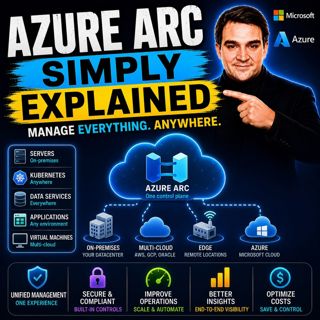
Azure Arc - Simply Explained

Azure Arc - Simply Explained

Modern IT environments rarely exist in a single cloud. Most organizations run Windows and Linux servers across on-premises data centers, Microsoft Azure, Amazon Web Services (AWS), Google Cloud Platfo...

17 Heinä 17min
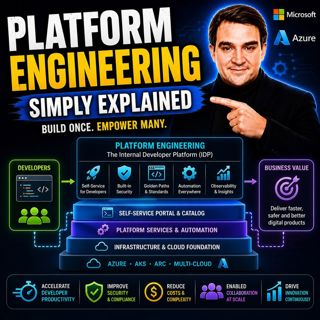
Platform Engineering - Simply Explained

Platform Engineering - Simply Explained

For years, DevOps promised to break down the barriers between development and operations by giving teams greater ownership over the software they build. While the idea was powerful, reality became far...

16 Heinä 16min
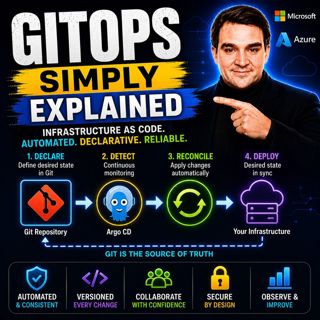
GitOps - Simply Explained

GitOps - Simply Explained

Managing Kubernetes manually quickly becomes a nightmare as environments grow. One engineer updates a deployment directly using kubectl, another changes a ConfigMap through the Azure portal, and sudde...

16 Heinä 16min
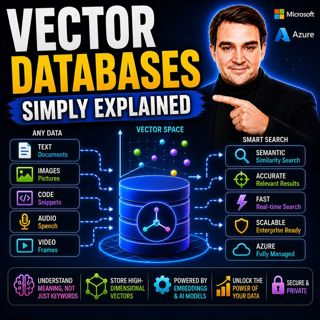
Vector Databases - Simply Explained

Vector Databases - Simply Explained

Large Language Models like GPT-4o, Microsoft Copilot, and ChatGPT are incredibly powerful, but they all depend on one critical technology that most people never hear about: vector databases. Tradition...

16 Heinä 14min
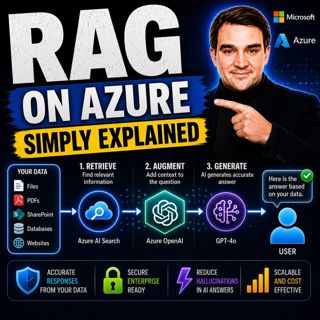
RAG on Azure — Simply Explained

RAG on Azure — Simply Explained

Large Language Models like GPT-4o are incredibly powerful, but they have two major limitations. First, their knowledge is frozen in time, meaning they don't automatically know about recent events, cha...

16 Heinä 13min
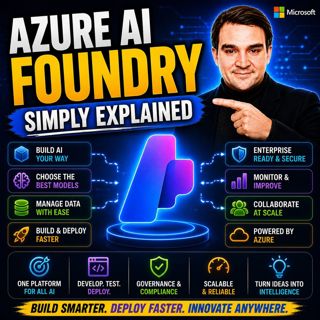
Azure AI Foundry - Simply Explained

Azure AI Foundry - Simply Explained

Artificial Intelligence is evolving faster than almost any other technology, and with new models, frameworks, and AI services appearing almost every month, it's becoming increasingly difficult to know...

16 Heinä 14min
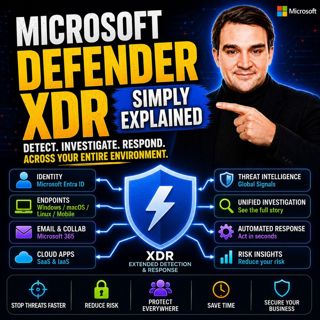
Microsoft Defender XDR - Simply Explained

Microsoft Defender XDR - Simply Explained

Modern cyberattacks rarely target a single system. An attack might begin with a phishing email, move to a compromised device, steal user credentials, access cloud applications, and finally exfiltrate ...

16 Heinä 14min

Suosittua kategoriassa Politiikka ja uutiset

aikalisa
uutiscast
ootsa-kuullut-tasta-2
rss-ootsa-kuullut-tasta
rss-vaalirankkurit-podcast
rss-podme-livebox
rss-seksicast
otetaan-yhdet
tervo-halme
politiikan-puskaradio
aihe
linda-maria
rss-raha-talous-ja-politiikka
viela-yksi-sivu
the-ulkopolitist
mtv-uutiset-polloraati
et-sa-noin-voi-sanoo-esittaa
rss-sveriges-radio-finska
rss-fingo-podcast
rss-girls-finish-f1rst