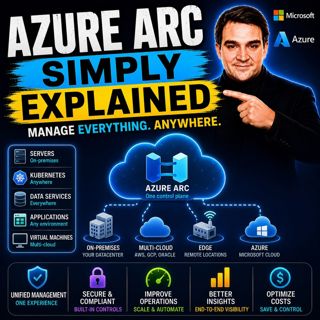
Azure Arc - Simply Explained
Modern IT environments rarely exist in a single cloud. Most organizations run Windows and Linux servers across on-premises data centers, Microsoft Azure, Amazon Web Services (AWS), Google Cloud Platform (GCP), branch offices, and edge locations. Unfortunately, every environment introduces its own management portal, security tools, monitoring platform, and patching process. The result is fragmented operations, inconsistent security, configuration drift, and unnecessary complexity. In this episode of Microsoft Knowledge Nuggets, we explain Azure Arc in simple terms and show how it extends Azure's management capabilities beyond Azure itself. Rather than moving workloads to the cloud, Azure Arc brings Azure's governance, monitoring, security, and automation to the infrastructure you already own—wherever it runs. WHAT AZURE ARC ACTUALLY IS One of the biggest misconceptions is that Azure Arc is another cloud service. It isn't. Azure Arc doesn't replace your data center, migrate workloads, or host your applications. Instead, it acts as a bridge between your existing infrastructure and Azure Resource Manager. Using the lightweight Azure Connected Machine Agent, servers running outside Azure become Azure resources with their own resource IDs, resource groups, and management capabilities. Whether your workloads run on Windows Server, Linux, VMware, Hyper-V, AWS, Google Cloud, or edge devices, Azure Arc allows them to be managed through the same Azure portal and APIs used for native Azure resources. The result is a true hybrid and multi-cloud management experience without requiring application migration. GOVERNANCE, SECURITY, AND COMPLIANCE AT SCALE Once a server is connected through Azure Arc, organizations can immediately apply Azure Policy, Azure RBAC, Azure Machine Configuration, tagging, and centralized governance across their entire infrastructure. Instead of managing different compliance tools for every environment, administrators define policies once and automatically enforce them across Azure, on-premises, and other cloud providers. Azure Arc also integrates directly with Microsoft Defender for Cloud, Azure Monitor, Microsoft Sentinel, VM Insights, Log Analytics, and Extended Security Updates for legacy Windows Server and SQL Server versions. This provides centralized threat detection, vulnerability assessments, security recommendations, monitoring, and compliance reporting regardless of where workloads physically reside. PATCH MANAGEMENT, REMOTE ADMINISTRATION, AND AUTOMATION Azure Arc dramatically simplifies day-to-day operations by providing centralized update management, automation, and remote administration. Azure Update Manager enables organizations to patch Windows and Linux servers across Azure, on-premises environments, AWS, and Google Cloud using a single maintenance schedule. Administrators can execute PowerShell and Bash scripts through the Custom Script Extension without opening inbound firewall ports, while Windows Admin Center delivers secure browser-based server management directly from the Azure portal. Combined with Azure Automation, Remote Support, and secure outbound-only communication through HTTPS, Azure Arc enables organizations to manage hybrid infrastructure efficiently without deploying VPNs or exposing management interfaces to the internet. AZURE ARC FOR KUBERNETES, SQL SERVER, AND MULTI-CLOUD Azure Arc extends far beyond traditional servers. Kubernetes clusters running anywhere can be connected to Azure using GitOps with Flux for declarative deployments, centralized monitoring, and policy enforcement. Azure Arc also enhances SQL Server with vulnerability assessments, best practice recommendations, migration readiness analysis, pay-as-you-go licensing, and Azure Arc-enabled SQL Managed Instance. Through dedicated connectors for AWS and Google Cloud Platform, Azure Arc discovers cloud resources, automatically onboards supported virtual machines, and provides unified inventory, governance, and monitoring across multiple cloud providers. Instead of managing separate Azure, AWS, and GCP environments independently, organizations gain a single operational view across their complete infrastructure estate. WHY AZURE ARC HAS BECOME ESSENTIAL FOR HYBRID CLOUD The real value of Azure Arc isn't any individual feature—it's the unified management experience it creates. Rather than maintaining separate security policies, monitoring tools, update systems, and governance processes for every environment, Azure Arc establishes a single control plane for hybrid and multi-cloud infrastructure. Organizations improve operational efficiency, strengthen security, simplify compliance, and reduce administrative overhead while preserving the freedom to run workloads wherever they make the most business sense. Whether you're managing Windows Servers, Linux systems, Kubernetes clusters, SQL Server, VMware environments, edge computing, or multiple public clouds, Azure Arc delivers consistent governance and cloud-native management without requiring large-scale migration projects. After listening to this episode, you'll understand why Azure Arc has become one of Microsoft's most important technologies for modern hybrid cloud operations and why it serves as the foundation for unified infrastructure management across Azure and beyond.

Become a supporter of this podcast: https://www.spreaker.com/podcast/m365-fm-modern-work-security-and-productivity-with-microsoft-365--6704921/support.

Tämä jakso on lisätty Podme-palveluun avoimen RSS-syötteen kautta eikä se ole Podmen omaa tuotantoa. Siksi jakso saattaa sisältää mainontaa.

Jaksot(780)

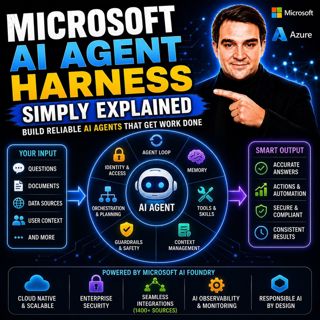
Microsoft AI Agent Harness - Simply Explained

Microsoft AI Agent Harness - Simply Explained

Writing the perfect AI prompt used to be the goal of every AI developer. But as businesses began asking AI to perform increasingly complex tasks—analyzing code, researching topics, coordinating workfl...

17 Heinä 16min
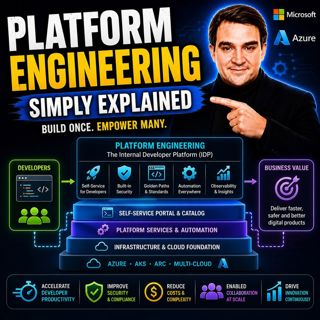
Platform Engineering - Simply Explained

Platform Engineering - Simply Explained

For years, DevOps promised to break down the barriers between development and operations by giving teams greater ownership over the software they build. While the idea was powerful, reality became far...

16 Heinä 16min
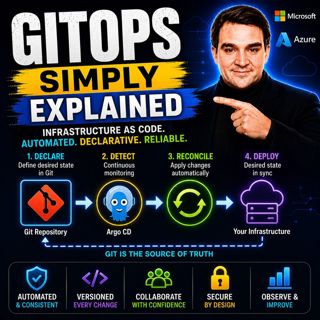
GitOps - Simply Explained

GitOps - Simply Explained

Managing Kubernetes manually quickly becomes a nightmare as environments grow. One engineer updates a deployment directly using kubectl, another changes a ConfigMap through the Azure portal, and sudde...

16 Heinä 16min
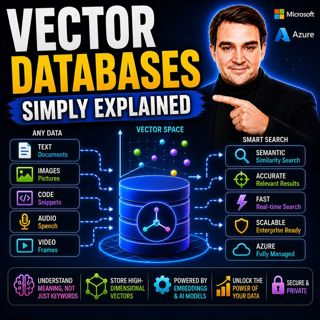
Vector Databases - Simply Explained

Vector Databases - Simply Explained

Large Language Models like GPT-4o, Microsoft Copilot, and ChatGPT are incredibly powerful, but they all depend on one critical technology that most people never hear about: vector databases. Tradition...

16 Heinä 14min
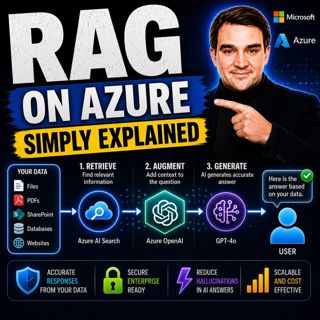
RAG on Azure — Simply Explained

RAG on Azure — Simply Explained

Large Language Models like GPT-4o are incredibly powerful, but they have two major limitations. First, their knowledge is frozen in time, meaning they don't automatically know about recent events, cha...

16 Heinä 13min
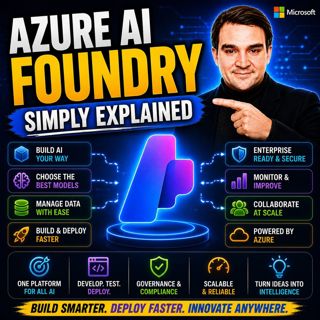
Azure AI Foundry - Simply Explained

Azure AI Foundry - Simply Explained

Artificial Intelligence is evolving faster than almost any other technology, and with new models, frameworks, and AI services appearing almost every month, it's becoming increasingly difficult to know...

16 Heinä 14min
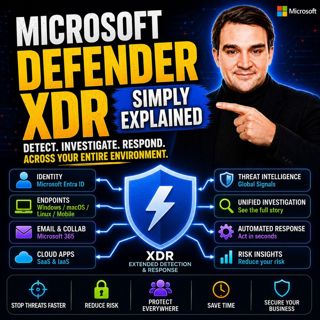
Microsoft Defender XDR - Simply Explained

Microsoft Defender XDR - Simply Explained

Modern cyberattacks rarely target a single system. An attack might begin with a phishing email, move to a compromised device, steal user credentials, access cloud applications, and finally exfiltrate ...

16 Heinä 14min

Suosittua kategoriassa Politiikka ja uutiset

aikalisa
uutiscast
ootsa-kuullut-tasta-2
rss-ootsa-kuullut-tasta
rss-vaalirankkurit-podcast
rss-podme-livebox
rss-seksicast
otetaan-yhdet
tervo-halme
politiikan-puskaradio
aihe
linda-maria
rss-raha-talous-ja-politiikka
viela-yksi-sivu
the-ulkopolitist
mtv-uutiset-polloraati
et-sa-noin-voi-sanoo-esittaa
rss-sveriges-radio-finska
rss-fingo-podcast
rss-girls-finish-f1rst