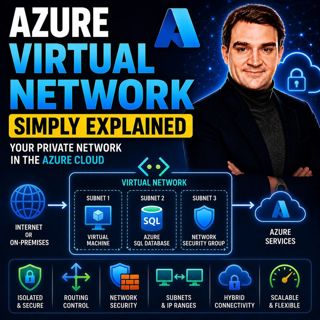
Azure Virtual Network - Simply Explained

Azure Virtual Network - Simply Explained

An Azure Virtual Network (VNet) is your own private network inside Microsoft Azure. It provides the secure foundation for virtually every cloud workload you deploy, including virtual machines, databases, containers, Kubernetes clusters, and many Platform-as-a-Service solutions. Just like a physical network in a traditional data center, a VNet defines your private IP address space, isolates your resources from other customers, and gives you complete control over connectivity, security, and routing. Every modern Azure architecture starts with a well-designed Virtual Network because it serves as the networking backbone for everything that runs in your cloud environment.

PLANNING YOUR NETWORK BEFORE YOU BUILD
Creating a VNet isn't simply about clicking a button—it requires careful planning. When you create a Virtual Network, you choose its IP address space using CIDR notation, determining how many resources your network can support. Selecting the right address range is essential because overlapping IP ranges can prevent future connectivity with on-premises environments or other Azure networks. Designing with future growth in mind allows you to scale applications without rebuilding your networking architecture later. A properly planned VNet becomes the foundation for hybrid cloud deployments, disaster recovery, and enterprise-scale Azure environments.

SUBNETS, PRIVATE IPS, AND NETWORK ISOLATION
Inside every Virtual Network are subnets, which divide the larger network into smaller, logical sections. Instead of placing every workload into one large network, organizations typically separate web servers, application servers, databases, and management resources into dedicated subnets. This improves organization while creating clear security boundaries between application tiers. Resources receive private IP addresses for internal communication, while public IP addresses are assigned only when internet access is required. By minimizing public exposure and keeping most workloads on private addresses, organizations significantly improve the security of their Azure infrastructure.

CONTROLLING TRAFFIC WITH NSGS AND ROUTING
Azure Virtual Networks provide far more than simple connectivity. Network Security Groups (NSGs) act as virtual firewalls that control inbound and outbound traffic based on IP addresses, ports, and protocols. They can be applied to entire subnets or individual network interfaces, allowing administrators to enforce granular security policies. Azure also includes powerful routing capabilities through Route Tables and User-Defined Routes (UDRs), enabling traffic to pass through firewalls, VPN gateways, or other network appliances before reaching its destination. Together, routing and NSGs give organizations complete control over how traffic flows throughout their Azure environment.

CONNECTING NETWORKS ACROSS AZURE AND BEYOND
Most enterprise environments consist of multiple Virtual Networks rather than just one. Azure Virtual Network Peering securely connects separate VNets using Microsoft's global backbone network, allowing applications to communicate with low latency and high bandwidth without using the public internet. VNets can also connect to on-premises environments through VPN Gateway or Azure ExpressRoute, creating seamless hybrid cloud architectures. Large organizations commonly adopt a Hub-and-Spoke design, where shared networking services such as firewalls, monitoring, and gateways reside in a central hub while individual applications operate in isolated spoke networks. This architecture improves scalability, simplifies management, and centralizes security.

WHY EVERY AZURE PROFESSIONAL MUST UNDERSTAND VNETS
Azure Virtual Networks are one of the most important building blocks in the Microsoft cloud. Nearly every Azure service relies on networking, making VNets essential knowledge for cloud administrators, developers, architects, and security professionals. Understanding IP addressing, subnet design, security groups, routing, and network peering allows you to build scalable, secure, and highly available cloud solutions. Whether you're deploying a single virtual machine or designing a global enterprise platform spanning multiple regions, your success depends on building a strong networking foundation—and that foundation always begins with Azure Virtual Network.

Become a supporter of this podcast: https://www.spreaker.com/podcast/m365-fm-modern-work-security-and-productivity-with-microsoft-365--6704921/support.

Tämä jakso on lisätty Podme-palveluun avoimen RSS-syötteen kautta eikä se ole Podmen omaa tuotantoa. Siksi jakso saattaa sisältää mainontaa.

Jaksot(799)

Azure Network Security Groups - Simply Explained

Azure Network Security Groups - Simply Explained

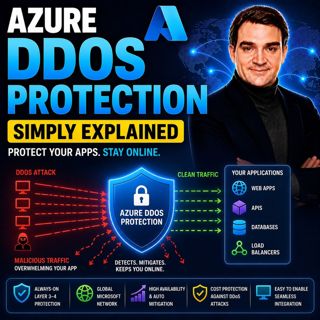
Azure DDoS Protection is Microsoft's managed service for defending internet-facing applications against Distributed Denial-of-Service (DDoS) attacks. These attacks attempt to overwhelm websites, APIs,...

18 Heinä 14min
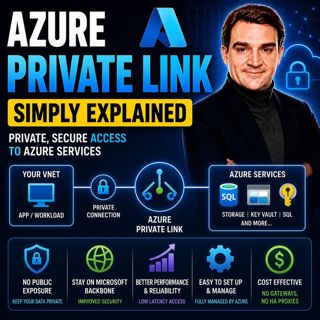
Azure Private Link - Simply Explained

Azure Private Link - Simply Explained

Azure Private Link is Microsoft's networking service that enables secure, private connectivity between your Azure Virtual Network and Azure Platform-as-a-Service (PaaS) resources such as Azure Storage...

18 Heinä 16min
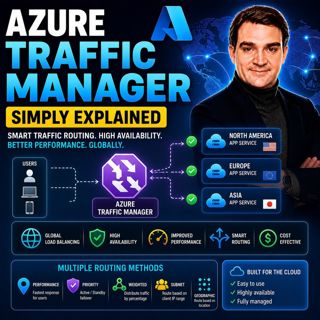
Azure Traffic Manager - Simply Explained

Azure Traffic Manager - Simply Explained

Azure Traffic Manager is Microsoft's global DNS-based traffic distribution service that directs users to the most appropriate application endpoint anywhere in the world. Instead of sending every user ...

18 Heinä 16min
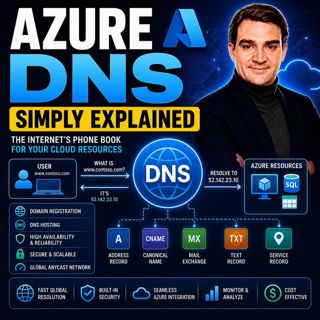
Azure DNS - Simply Explained

Azure DNS - Simply Explained

Azure DNS is Microsoft's fully managed Domain Name System (DNS) hosting service that translates human-friendly domain names like contoso.com into the IP addresses computers use to communicate. Instead...

18 Heinä 15min
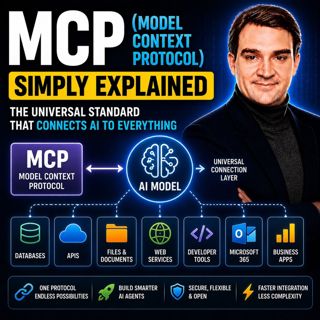
MCP (Model Context Protocol) - Simply Explained

MCP (Model Context Protocol) - Simply Explained

The Model Context Protocol (MCP) is an open standard that allows AI models to securely connect to external tools, applications, and data sources using a single, consistent protocol. Before MCP, every ...

17 Heinä 15min

Azure AI Search – Simply Explained

Azure AI Search – Simply Explained

Azure AI Search is Microsoft's fully managed cloud search service that helps developers build fast, intelligent, and AI-powered search experiences for applications, websites, and enterprise systems. U...

17 Heinä 13min
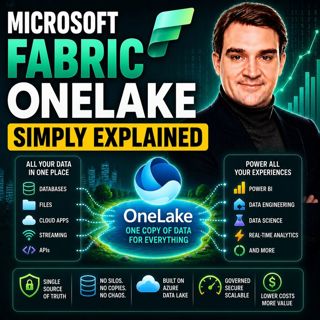
Microsoft Fabric OneLake - Simply Explained

Microsoft Fabric OneLake - Simply Explained

Microsoft Fabric OneLake is the unified storage layer at the heart of Microsoft Fabric, designed to eliminate one of the biggest challenges in modern analytics: data duplication. Instead of every depa...

17 Heinä 14min

Suosittua kategoriassa Politiikka ja uutiset

aikalisa
uutiscast
ootsa-kuullut-tasta-2
rss-ootsa-kuullut-tasta
rss-vaalirankkurit-podcast
rss-podme-livebox
rss-seksicast
otetaan-yhdet
tervo-halme
aihe
politiikan-puskaradio
linda-maria
et-sa-noin-voi-sanoo-esittaa
rss-girls-finish-f1rst
viela-yksi-sivu
the-ulkopolitist
mtv-uutiset-polloraati
rss-kovin-paikka
rss-sveriges-radio-finska
rss-raha-talous-ja-politiikka